Java Developers Transitioning to AI Engineers: New Interview Trends and Learning Roadmap

Java interviews now evaluate LLM integration skills and AI code review capabilities
Java developer interviews are undergoing a profound shift, focusing on two core competencies: "teaching AI to work" — mastering Java ecosystem AI integration technologies like Spring AI, RAG, and Function Calling; and "being accountable for AI outputs" — leveraging solid Java fundamentals to review AI-generated code for quality and security. Interviews are no longer about rote memorization but require candidates to build a compound Java+AI knowledge system.
The Interview Landscape Has Shifted: Java Developers Must Master LLM Capabilities
Java developer interviews are undergoing a profound transformation. Interviews are no longer about rote memorization of textbook concepts — interviewers have begun systematically evaluating candidates' AI capabilities. The logic behind this is clear: the nature of work has shifted from traditional CRUD development to "teaching AI to do things" and "being accountable for AI outputs."
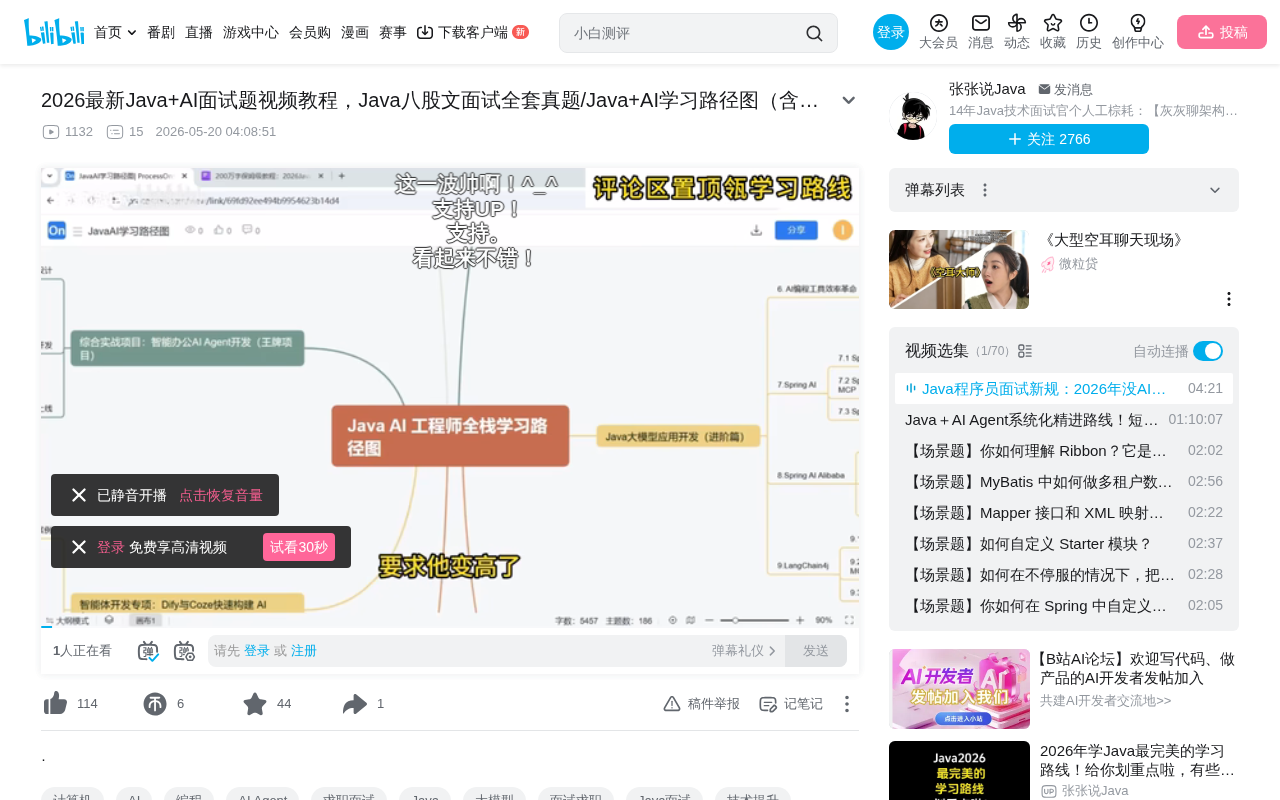
According to a tech content creator on Bilibili, the evaluation dimensions in Java interviews have fundamentally changed. Not only do you need to know how to use technology, but interviewers now dig deep into scenario-based skills, project experience, and LLM-related questions have become almost mandatory. This means if you're still using yesterday's preparation strategies for today's interviews, you'll likely hit a wall.
Two Core Competencies: Teaching AI to Work + Being Accountable for AI Outputs
Competency One: Teaching AI to Do Things
"Teaching AI to do things" essentially means the ability to leverage Java ecosystem frameworks to empower products with AI capabilities. There's a key distinction here: the vast majority of LLM tutorials online are written in Python, focusing on model training and fine-tuning — which doesn't fully align with Java development roles. Python ecosystem tools like PyTorch and Transformers are primarily aimed at model researchers, while Java developers are positioned more at the application layer — integrating pre-trained LLM capabilities into enterprise business systems.
What Java developers need to master is application-level LLM integration, specifically:
- AI Fundamentals: Function Calling, Prompt Engineering, Java engineering integration
- Development Tools: Efficient use of AI-assisted programming tools like GitHub Copilot, Cursor, Codeium
- Java AI Frameworks: Hands-on experience with Spring AI, Spring AI Alibaba, LangChain4J
About Function Calling: This is the core mechanism for LLMs to interact with external systems. Traditional LLMs can only generate text, but through Function Calling, a model can identify user intent and invoke predefined functions (such as querying databases, calling APIs, performing calculations, etc.), then integrate the function's return value into the final response. In the Java ecosystem, this means developers need to define function signatures, parameter descriptions, and register them in the LLM's context so the model can automatically trigger calls at the appropriate time. This is the foundational capability for building AI Agents and intelligent business systems.
About Prompt Engineering in Practice: In Java engineering practice, prompt engineering is no longer simple string concatenation — it requires template management, version control, and dynamic assembly. Common techniques include: Few-shot Learning (providing examples to guide output format), Chain of Thought (guiding the model through step-by-step reasoning), and System Prompt design (defining model roles and constraints). Spring AI provides a PromptTemplate mechanism that supports variable injection and conditional rendering, making prompt management as standardized as managing SQL templates. Good prompt design directly determines the output quality and stability of AI features.
About the Java AI Framework Ecosystem: Spring AI is the official Spring framework for AI integration, launched in late 2023, designed to provide Java developers with a unified abstraction layer for interacting with LLMs. It follows Spring's consistent design philosophy — using standardized interfaces to abstract away underlying differences, allowing developers to connect to OpenAI, Azure OpenAI, Ollama, and other model providers through the same API. Spring AI Alibaba is Alibaba's extension based on Spring AI, deeply integrating domestic LLMs like Tongyi Qianwen. LangChain4J is the Java port of LangChain, offering advanced abstractions like chain calls, memory management, and tool usage, suitable for building complex AI application pipelines.
Competency Two: Being Accountable for AI Outputs
The core of this competency is whether your Java fundamentals are solid enough to review AI-generated code and determine if it meets business requirements. In other words, AI can help you write code, but you must be capable of judging the quality, performance, and security of that code.
This requires deep expertise in the following areas:
- Underlying principles of Spring, Spring MVC, and other frameworks
- Deep understanding of middleware like Redis and message queues
- Hands-on experience with concurrent programming
- Solutions for high-frequency business scenarios (such as flash sale systems, authentication systems, e-commerce platforms, etc.)
In the era of AI-assisted programming, this "accountability for results" capability has become especially critical. AI-generated code may contain thread safety issues, memory leak risks, SQL injection vulnerabilities, or suffer dramatic performance degradation under high concurrency. Developers need the ability to identify these potential problems, which relies precisely on deep understanding of underlying principles rather than surface-level API usage experience.
Complete Learning Roadmap for Java+AI Engineers
Based on the learning path outlined by the content creator, the knowledge system for Java AI engineers can be divided into the following layers:
Layer 1: AI Fundamentals — Adapted for the Java Ecosystem
This layer covers AI foundational knowledge adapted for the Java ecosystem, including function calling mechanisms, prompt engineering best practices, and how to integrate AI capabilities into Java projects in an engineering-oriented way. The focus is not on deeply understanding model internals (like Transformer architecture or attention mechanisms), but on mastering "how to use" — how to call LLMs via APIs, how to handle streaming responses, how to manage token consumption and cost control, and how to design fallback strategies to ensure system availability.
Layer 2: Intermediate — RAG (Retrieval-Augmented Generation)
RAG (Retrieval-Augmented Generation) is the core technology for enterprise-level AI applications today. The fundamental problem RAG solves is the knowledge limitation of LLMs — models have training data cutoff dates and cannot directly access enterprise private data. The RAG workflow consists of three steps: first, enterprise documents are converted into vectors via Embedding models and stored in a vector database; when a user asks a question, the system first retrieves the most semantically relevant document chunks from the vector database; finally, the retrieved context is sent along with the user's question to the LLM to generate an answer. This architecture avoids the high cost of model fine-tuning while ensuring answer accuracy and timeliness.
Implementing RAG in Java frameworks requires mastering:
- Core principles and architecture design of RAG
- Usage and hands-on practice with vector databases (such as Milvus)
- Text splitting strategies and retrieval optimization
- Full-pipeline development of enterprise-grade RAG systems
About Vector Databases: Vector databases are database systems specifically designed for storing and retrieving high-dimensional vector data. In AI applications, unstructured data like text and images are converted into floating-point vectors of hundreds or even thousands of dimensions through Embedding models, where the distance between vectors (cosine similarity, Euclidean distance, etc.) represents semantic similarity. Milvus is currently one of the most popular open-source vector databases, developed by Zilliz, supporting millisecond-level retrieval across billions of vectors. Other options include Pinecone, Weaviate, Qdrant, and Chroma. In the Java ecosystem, Spring AI has built-in support for multiple vector databases, allowing developers to perform vector storage and similarity search through a unified interface.
Layer 3: Advanced Practice — Project Implementation and Production Deployment
This layer focuses on real-world project development:
- Code Assistance Tool Development: AI tools directly related to daily development
- Intelligent Customer Service Systems: A typical enterprise AI application scenario
- Agent Development: Including Dify platform usage and custom Agent construction
- Performance Optimization and Production Deployment: Security, observability, and business viability
About AI Agents: AI Agents represent the cutting edge of LLM applications today, going beyond simple Q&A to give LLMs autonomous planning, tool usage, and multi-step reasoning capabilities. A typical Agent has a complete loop of perceiving the environment, making plans, executing actions, observing results, and iteratively optimizing. Dify is an open-source LLM application development platform that provides a visual Agent orchestration interface, supporting workflow definition, knowledge base management, and API publishing, significantly lowering the barrier to Agent development. In Java enterprise applications, Agents can be used for automated operations, intelligent data analysis, complex business process orchestration, and more — representing an advanced skill for Java AI engineers.
Practical Interview Preparation Tips
Don't Sacrifice Technical Depth
While AI capabilities have become a new evaluation focus, the traditional Java tech stack remains foundational. Technical assessments in interviews now emphasize "understanding" over "recitation" — you need to be able to explain principles visually, write key code snippets, rather than mechanically repeating concepts. For example, an interviewer might no longer ask "What are the stages of the Spring Bean lifecycle?" but instead ask "If AI generates code using the @Async annotation, how would you determine whether it could cause issues given the current project's thread pool configuration?"
Scenario-Based Questions Are Now Critical
High-frequency business scenario questions and technical scenario questions have significantly increased in interview weight. Classic scenarios like login system design, e-commerce platform architecture, and flash sale system optimization require you to provide better solutions by incorporating AI capabilities. For example, when designing an intelligent customer service system, you need to consider how to use RAG technology to let the LLM answer questions based on an enterprise knowledge base, while using Redis to cache high-frequency Q&A pairs to reduce API call costs, and using message queues for asynchronous processing to handle traffic spikes.
Your Projects Must Include AI Elements
An important trend: interviewers will look for whether your projects integrate LLM capabilities. If your projects are still purely traditional CRUD, consider how to add AI-related feature modules — such as intelligent search (replacing traditional keyword matching with vector retrieval), content generation (using LLMs to automatically generate product descriptions or report summaries), or code review (integrating AI for automated review of submitted code). These features don't need to be overly complex, but they demonstrate your practical application ability and engineering mindset for AI technology.
Conclusion
Today's Java interviews are no longer simply about "textbook knowledge + project experience." The addition of AI capabilities makes the interview dimensions more multifaceted: you need to be able to leverage AI tools to boost development efficiency while having sufficient technical depth to ensure the quality of AI outputs. For Java developers preparing for interviews, establishing a "Java+AI" compound knowledge system as early as possible is the key to gaining a competitive edge.
It's worth noting that this trend is not a short-term fad but a structural transformation in the software development industry. As LLM capabilities continue to improve and enterprise AI adoption deepens, the demand for "Java+AI" hybrid talent will only grow. Now is the optimal window to begin systematic learning and practice.
Related articles
 Tutorials
Cursor + Codex Dual-IDE Collaboration: A Practical Methodology for Open-Source Project Customization
A complete methodology for open-source project customization based on real-world experience, detailing the Cursor+Codex dual-IDE workflow, seven-stage process, MVP validation, and AI source code reading techniques.
 Tutorials
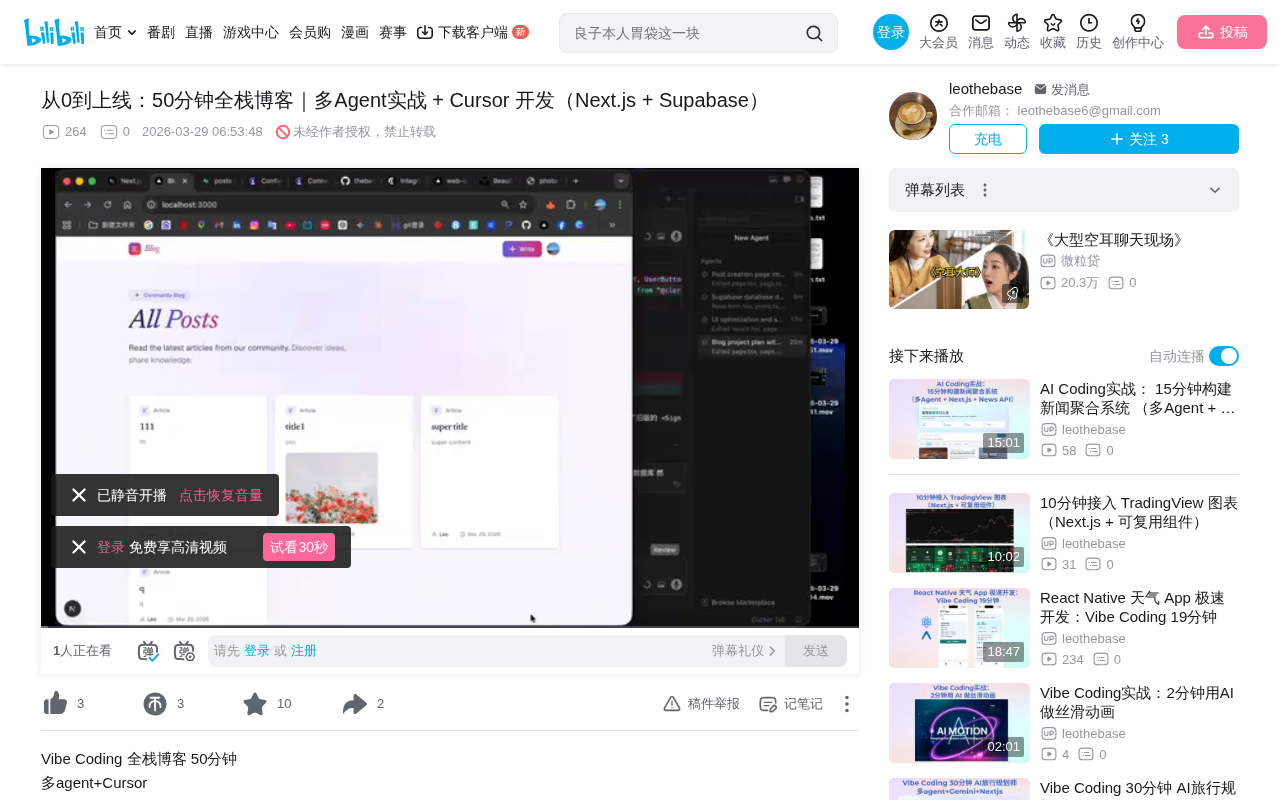
Cursor Multi-Agent in Practice: Building a Full-Stack Next.js Blog in 50 Minutes
Build a full-stack blog in 50 minutes using Cursor IDE's multi-Agent mode with Next.js, Clerk auth, and Supabase. Learn the 4-phase AI Agent workflow and key integration pitfalls.
 Tutorials
Building an AI Software Factory from Scratch: A Cursor Engineer's Hands-On Experience with Multi-Agent Collaboration
Cursor engineer Eric shares practical insights on building an AI software factory: automation levels, guardrail design, parallel Agent management, and scaling to 1000+ Agents for 24/7 development.