Kiro AI Account Pool Manager: How Multi-Account Rotation Promises Unlimited Tokens — and the Risks Involved

Kiro AI account pool tool enables unlimited free tokens via multi-account rotation, but carries ban and legal risks.
A recently surfaced account pool manager for Amazon's Kiro AI coding IDE enables continuous token usage by bulk-importing free accounts and auto-switching when quotas run out. While the tool has a low barrier to entry, it violates terms of service and faces risks from device fingerprinting, mass bans, and potential legal action. Its emergence reflects the broader tension between AI coding tool pricing and developer needs.
Disclaimer
This article provides a technical analysis of the recently circulated Kiro AI account pool tool. It does not encourage any behavior that violates terms of service. Abusing free-tier quotas may result in account bans and legal consequences.
Tool Overview
Recently, tutorial videos about a Kiro AI "Account Pool Manager" have appeared on Bilibili (a Chinese video platform), claiming to enable "unlimited" AI coding tokens through multi-account rotation. The tool is hosted on GitHub, and its core function is managing multiple free Kiro accounts, automatically switching to the next available account when one's quota is exhausted.
It's worth understanding what tokens mean in AI coding tools: a token is the basic unit of text processing for large language models. Typically, one English word corresponds to 1–2 tokens, while one Chinese character corresponds to 2–3 tokens. AI coding tools usually bill based on total token consumption or request count, with free tiers offering limited monthly token quotas — exceeding that requires a paid upgrade. This billing model stems from the inference cost of the underlying models: every API call consumes GPU compute, and platforms must balance user acquisition against cost control.

What Is Kiro AI?
Before diving into how the tool works, it helps to understand Kiro's product background. Kiro is an AI-powered coding IDE launched by Amazon (AWS), released in preview in mid-2025. Built on VS Code, it features built-in AI agent capabilities that can automatically generate requirement documents, design documents, and task lists, and autonomously execute coding tasks. Kiro's key differentiator is its "Spec-driven development" philosophy, aiming to make AI not just a code completion tool but a development partner that understands the full project context. Its free tier offers limited AI interactions, while paid tiers unlock higher usage frequency and access to more powerful models. It's precisely this gap between free and paid that created demand for account pool tools.
How It Works
Account Pool Rotation Mechanism
The underlying logic is straightforward, involving three steps:
- Bulk-register or import multiple free Kiro accounts (stored in JSON format)
- Use the manager to monitor each account's remaining quota and available models in real time
- When the current account's quota runs out, right-click to switch to the next account
In short, it trades quantity for quota — a single free account has limited tokens, but ten or twenty accounts combined can last much longer.

Quota Monitoring Panel
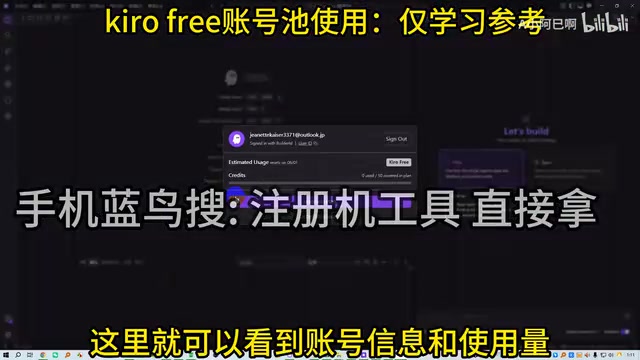
The tool includes a built-in status panel showing each account's usage, remaining quota, and available models. According to the video demo, Kiro's free accounts can access some Core-tier models, which is one reason the tool attracts users.
Import Methods
Account import supports two methods: pasting account information in JSON format directly, or bulk importing via file. An "Import" button sits at the top of the interface, and the entire process has an extremely low barrier to entry — virtually no technical background required.

Risks and Considerations
Compliance and Security Risks
Behind the seemingly "free ride" lurk significant costs:
- Terms of Service (ToS) violation: Multi-account abuse explicitly violates the usage agreements of nearly all AI services, and Kiro is no exception
- Mass ban risk: Platforms are fully capable of identifying and batch-banning linked accounts through device fingerprinting, IP addresses, and behavioral patterns
- Potential legal risk: Large-scale, organized abuse of free resources may constitute computer fraud in some jurisdictions
Device Fingerprinting and Risk Control Explained
Device fingerprinting is a technique platforms use to identify and track user devices — even when users switch accounts or clear cookies. Common fingerprinting dimensions include: browser User-Agent, screen resolution, installed font lists, Canvas rendering characteristics, WebGL information, timezone settings, hardware concurrency, and more. In AI service contexts, platforms also combine IP address clustering, API call frequency patterns, and code submission behavioral signatures for multi-dimensional correlation analysis. Modern risk control systems typically employ machine learning models that can rapidly identify anomalous multi-account association patterns across massive user bases. In other words, even if the tool implements some isolation measures, platform detection capabilities continue to evolve.
Legal Risk Boundaries
Legal standards vary significantly across jurisdictions. In the United States, the Computer Fraud and Abuse Act (CFAA) defines "unauthorized access to computer systems" or "exceeding authorized access" as a federal crime. Whether multi-account abuse constitutes "exceeding authorized access" remains legally debated, though the Supreme Court narrowed CFAA's scope after the 2022 Van Buren v. United States case. In China, similar behavior may implicate Article 285 ("illegal intrusion into computer information systems") or Article 286 ("sabotaging computer information systems") of the Criminal Law, though enforcement typically targets large-scale, commercialized abuse. On the civil side, violating terms of service itself constitutes breach of contract, and platforms have the right to terminate service and pursue damages.
The Underlying Industry Tension
The emergence of such gray-area tools reflects a real pricing dilemma in AI coding tools. When free quotas can't sustain a developer's daily coding needs, and paid plans are prohibitively expensive for individual developers, gray-market tools inevitably arise.
Looking at industry data, mainstream AI coding tools are generally priced at $20–50/month (e.g., GitHub Copilot at $19/month, Cursor Pro at $20/month). This is manageable for professional developers in developed countries, but remains a significant burden for students, indie developers, and programmers in developing nations. Meanwhile, although inference costs for underlying models continue to decline (thanks to model distillation, quantization, and inference optimization), per-call costs for high-end models (like Claude Sonnet, GPT-4o) remain substantial. This leads platforms to set conservative free quotas, which in turn fuels demand for gray-area tools.
For platforms like Kiro, finding the right balance between anti-abuse mechanisms and user experience is a question worth serious consideration. Potential solutions include: more flexible pay-as-you-go models, discount programs for students and open-source contributors, and raising free-tier quotas by reducing per-call costs through more efficient models.
Conclusion
An account pool manager is essentially automated packaging of free-tier abuse. It may work in the short term, but as platform risk control systems continue to evolve, such tools typically have short lifespans. For developers with long-term AI coding needs, rather than testing boundaries in gray areas, choosing a legitimate paid plan is more stable and less stressful.
Key Takeaways
- The Kiro AI account pool manager enables continuous token usage through multi-account rotation
- Free accounts can access some Core-tier models
- Supports bulk account import in JSON format
- This practice violates terms of service and carries risks of account bans and legal consequences
- Platform risk control technologies (device fingerprinting, behavioral analysis, IP clustering) are continuously evolving, limiting the lifespan of gray-area tools
- Reflects the tension between AI tool pricing and user demand — the industry needs to explore more sustainable business models
Related articles
 Tutorials
Cursor + Codex Dual-IDE Collaboration: A Practical Methodology for Open-Source Project Customization
A complete methodology for open-source project customization based on real-world experience, detailing the Cursor+Codex dual-IDE workflow, seven-stage process, MVP validation, and AI source code reading techniques.
 Tutorials
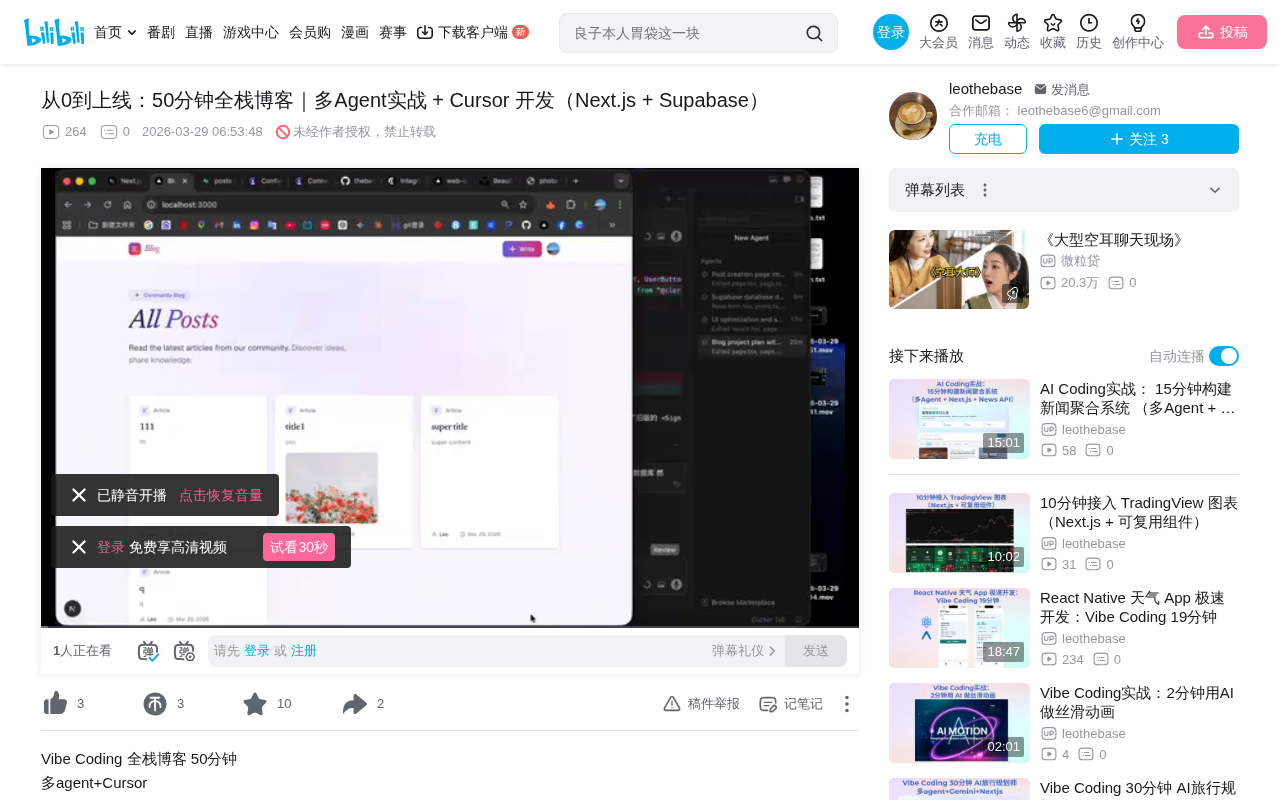
Cursor Multi-Agent in Practice: Building a Full-Stack Next.js Blog in 50 Minutes
Build a full-stack blog in 50 minutes using Cursor IDE's multi-Agent mode with Next.js, Clerk auth, and Supabase. Learn the 4-phase AI Agent workflow and key integration pitfalls.
 Tutorials
Building an AI Software Factory from Scratch: A Cursor Engineer's Hands-On Experience with Multi-Agent Collaboration
Cursor engineer Eric shares practical insights on building an AI software factory: automation levels, guardrail design, parallel Agent management, and scaling to 1000+ Agents for 24/7 development.