Kunpeng AI Agent Architecture: Why General-Purpose Computing Matters as Much as AI Computing

Kunpeng's AI Agent solution shows why agents need strong general-purpose computing, not just GPUs.
Huawei Kunpeng's AI Agent solution highlights a critical but overlooked truth: agents depend heavily on general-purpose computing for memory systems, tool calling, and secure runtimes — not just AI computing for model inference. The architecture positions the agent core as a Gateway orchestrating upstream and downstream operations, with most runtime logic running on CPU-based infrastructure.
The Agentic AI Era: More Than Just a Computing Power Challenge
With the explosion of the Agent concept, the Agentic AI era has officially arrived. However, most attention has been focused on the AI computing (intelligent computing) required for large model inference, overlooking a critical fact — agents demand just as much, if not more, from general-purpose computing, and the complexity involved is often greater.
It's worth clarifying the boundary between these two types of computing. AI computing refers specifically to computing power for AI training and inference, typically relying on specialized accelerators like GPUs and NPUs, with large-scale parallel matrix operations as the core workload. General-purpose computing refers to traditional CPU-centric capabilities that handle OS scheduling, network communication, database I/O, business logic processing, and other general tasks. Over the past few years of AI hype, industry attention has been heavily concentrated on the AI computing side — whoever has more GPU clusters has stronger AI capabilities. But this mindset needs correcting in the Agent era, because running an agent is a complex systems engineering challenge involving substantial non-inference computing tasks.
Huawei's Kunpeng team made this point explicitly in a recent technical presentation: the arrival of Agentic AI poses enormous challenges to IT infrastructure — challenges that come not only from the AI computing layer but equally from the general-purpose computing layer. This insight breaks the simplistic industry thinking of "just get more GPUs" and provides a more complete perspective for understanding the full agent technology stack.
Deconstructing Agent Architecture: How the Brain and Body Work Together
To understand why general-purpose and AI computing are equally important, we first need to break down the complete Agent architecture. According to the Kunpeng team's analysis, a complete agent architecture consists of the following core components:
Upper Layer: Large Model Inference (The Brain)
Large model inference serves as the agent's "brain," responsible for understanding, reasoning, and decision-making. This layer runs on AI computing clusters, powered by GPU/NPU accelerators — and it's the part that currently gets the most industry attention.
Lower Layer: The Agent Core and Toolchain (The Body)
The agent core functions as a Gateway, connecting downward to three key modules:
- Memory System: Stores and retrieves contextual information and interaction history
- Action Module: Executes specific operations and tasks
- Tool Calling: Interfaces with external APIs, databases, and application systems

The Gateway is a classic design pattern in software architecture, originally popularized in microservices as the API Gateway, handling request routing, load balancing, authentication, and authorization. Framing the agent core as a Gateway means it serves as the central hub for all upstream and downstream interactions: connecting upward to the large model inference service for decisions, and orchestrating memory retrieval, tool execution, and external API calls downstream. This architecture aligns closely with the design philosophy of mainstream Agent frameworks like LangChain, AutoGPT, and CrewAI — the Agent core is fundamentally an Orchestration Layer, not merely a model invocation layer.
The key insight is this: only large model inference runs on AI computing infrastructure, while the agent core, memory system, tool calling, and other modules all run on general-purpose computing infrastructure.

This means that when an agent executes a task, the bulk of the work — data processing, state management, API calls, security checks — is handled by general-purpose computing. If general-purpose computing capacity is insufficient or poorly optimized, overall agent responsiveness and reliability will suffer significantly, no matter how fast the model inference is. Think of it this way: even the most brilliant mind can't perform effectively with uncoordinated limbs and dull senses.
Kunpeng AI Agent Solution: Two Core Systems in Focus
Based on this deep understanding of agent architecture, Huawei Kunpeng has launched an AI Agent solution designed to help developers build more efficient agents on the Kunpeng platform.

The solution focuses on two core systems plus one foundational layer:
Memory System: The Agent's Context Engine
The memory system is the foundation for contextual understanding and long-term learning. In practice, an agent needs to manage short-term memory (current conversation context), long-term memory (user preferences, historical knowledge), and working memory (current task state). An efficient memory system directly determines the agent's effective "intelligence" — whether it can remember what was said before, what was done, and whether it can maintain consistency across complex tasks.
From a technical implementation perspective, agent memory systems involve a combination of storage and retrieval technologies. Short-term memory is typically managed through the Context Window, constrained by the model's token length limit. Long-term memory relies on vector databases (such as Milvus, Pinecone, Chroma, etc.) for semantic retrieval — encoding historical information as high-dimensional vectors and performing similarity searches to quickly recall relevant content when needed. Working memory functions like a computer's RAM, maintaining the current task's execution state, intermediate results, and pending queues. RAG (Retrieval-Augmented Generation) is currently the most critical technical paradigm in memory systems, significantly improving answer accuracy and timeliness by retrieving relevant knowledge fragments before inference. Notably, all these memory operations — database reads/writes, vector computations, state management — run entirely on general-purpose computing infrastructure, further confirming the critical impact of general-purpose computing on agent performance.
Tool Calling System: The Bridge to the Outside World
The tool calling system is the agent's primary channel for interacting with the external world. An agent's value lies not just in the ability to "think" but in the ability to "act." Through tool calling, agents can query databases, invoke APIs, manipulate file systems, trigger workflows, and more — making the leap from conversation to action.
Tool Use / Function Calling is the core capability that distinguishes agents from ordinary chatbots. OpenAI pioneered Function Calling in 2023, allowing large models to identify user intent during conversations and generate structured function call requests, which are then executed by external systems with results returned to the model. This paradigm quickly became an industry standard. In production agent systems, tool calling involves API gateway management, request serialization and deserialization, timeout retries, result parsing, permission checks, and a host of other engineering tasks. Emerging protocols like MCP (Model Context Protocol) are working to standardize the communication interface between agents and external tools, reducing integration complexity. The performance and stability of these engineering components directly determine whether an agent can operate reliably in production.
Secure Runtime Environment: The Foundation for Enterprise Deployment
Beneath the two core systems, the Kunpeng solution provides a secure runtime environment as the foundational layer. This addresses the security, stability, and controllability challenges of running agents in production — precisely the concerns enterprises care about most when deploying agents.
Enterprise agent deployment faces security challenges far beyond those of typical applications. Agents have autonomous decision-making and action capabilities, meaning that hallucinations, prompt injection attacks, or permission escalation could directly lead to data leaks, erroneous operations, or even business disruptions. Core issues that the secure runtime environment must address include: sandbox isolation (preventing agents from executing malicious code), least-privilege access (limiting the resources an agent can access), audit trails (recording every decision and action the agent takes), and input/output filtering (preventing sensitive information leakage). Research firms like Gartner have identified AI Agent security as a top concern for enterprise AI deployment in 2025, turning the secure runtime environment from a "nice-to-have" into a "must-have."
Kunpeng Ecosystem and the Strategic Significance of Domestic AI Infrastructure
To fully appreciate the Kunpeng AI Agent solution, it must be viewed within the broader context of China's domestic AI infrastructure landscape. Huawei's Kunpeng processors are independently designed based on the ARM architecture and represent a flagship product in domestic general-purpose computing chips. The Kunpeng ecosystem spans the complete IT infrastructure stack, including servers, operating systems (openEuler), databases (openGauss), and middleware. In the AI domain, Huawei also has its Ascend series of AI processors for AI computing, forming a "Kunpeng + Ascend" dual-engine approach — Kunpeng for general-purpose computing, Ascend for AI computing. This hardware-software synergy makes Huawei one of the few vendors capable of delivering a complete solution across both general-purpose and AI computing. Given increasing international supply chain uncertainties, this capability holds significant strategic importance for domestic enterprises building self-reliant, controllable AI infrastructure.
Takeaways for Developers
The release of the Kunpeng AI Agent solution sends a clear message: in the Agentic AI era, developers should look beyond model-layer capabilities and pay equal attention to the completeness of the infrastructure layer.
Specifically, several points deserve attention:
- Architecture-first thinking: Building an agent isn't as simple as calling a large model API — it requires designing complete memory management, tool orchestration, and security control systems
- Don't underestimate general-purpose computing: Most of an agent's runtime logic runs on the general-purpose computing side; choosing the right platform is critical to overall performance
- Platforms lower the barrier: Comprehensive Agent solution platforms like Kunpeng let developers focus on business logic rather than low-level infrastructure setup
As agents move from concept to large-scale deployment, the co-optimization of general-purpose and AI computing will become a decisive factor in agent experience. Kunpeng's positioning in this direction offers a noteworthy technical path for the development of domestic AI infrastructure.
Related articles
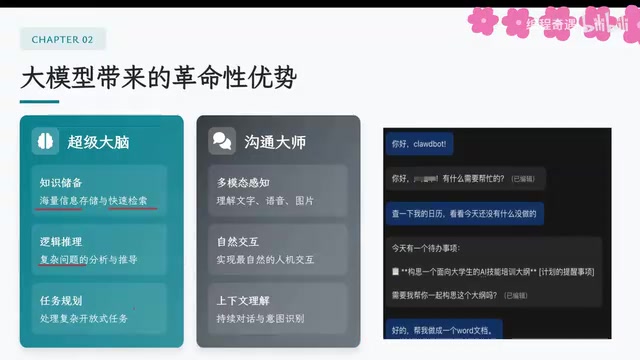
AI Agent Core Architecture Breakdown: From Concept to Enterprise-Grade Intelligent Agent Development
Deep dive into AI Agent architecture: perception, brain, and action modules. Covers RAG memory systems, tool calling mechanisms, Chain of Thought reasoning, and enterprise agent development roadmap.
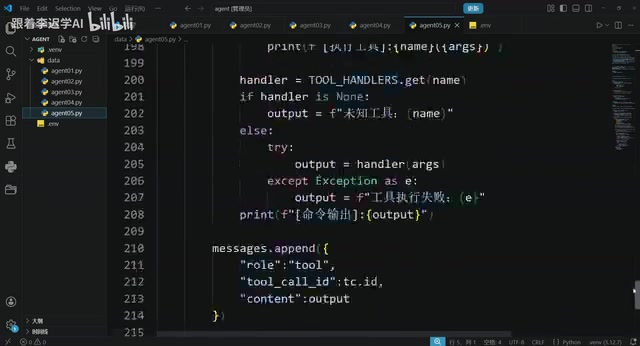
Hands-On Tutorial: Build an AI Agent from Scratch with 200 Lines of Python
Build an AI Agent from scratch with 200 lines of Python, covering prompts, memory, tool calling, RAG, and Skills — a practical guide for developers.
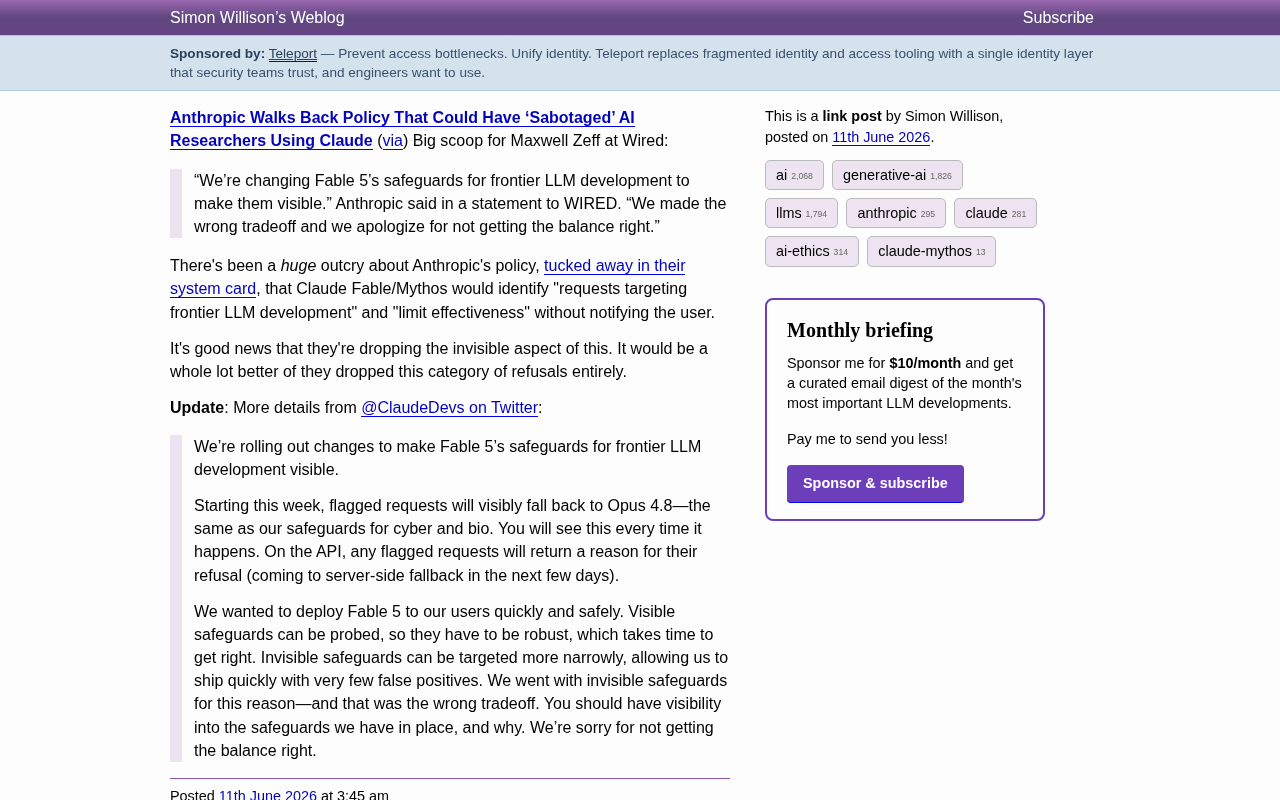
Anthropic Reverses Controversial Policy of Secretly Throttling AI Researchers Using Claude
Anthropic reverses its controversial policy of secretly throttling Claude Fable/Mythos responses to frontier LLM development requests after community backlash, raising critical questions about AI transparency.