Loopcraft Explained: Loop-Stacking Architecture Design in AI Agent Development
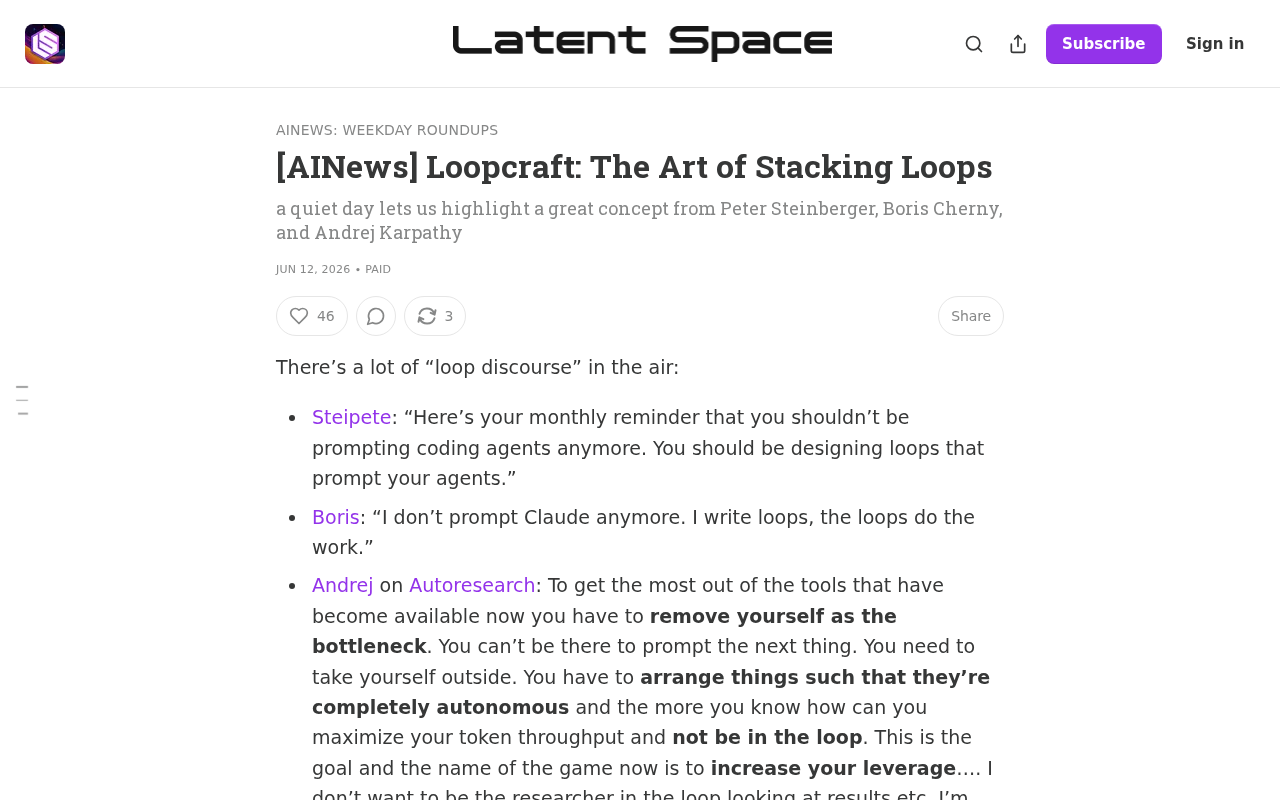
Loopcraft uses layered loop architectures to tame LLM uncertainty in AI Agent systems.
Loopcraft is a loop-stacking architecture philosophy for AI Agent development, championed by Peter Steinberger, Boris Cherny, and Andrej Karpathy. It proposes three layers of loops — basic retry, self-validation, and meta-learning — to handle the inherent uncertainty of LLM outputs. Rather than seeking perfect single-pass results, Loopcraft designs iterative mechanisms that progressively converge on optimal solutions, forming the backbone of modern AI Agent frameworks.
Introduction: An Underestimated Programming Paradigm
In the field of AI engineering, some concepts appear simple on the surface yet embody profound design philosophies. "Loopcraft" — the art of loop stacking — is precisely one such concept worth exploring in depth. This idea, articulated by Peter Steinberger, Boris Cherny, and renowned AI researcher Andrej Karpathy, reveals how carefully designed loop structures can enhance the reliability and intelligence of AI systems.
What Is Loopcraft? The Core Idea of Loop Stacking
Loopcraft, at its core, is about building more powerful AI systems through multi-layered, nested, and stacked loop structures. This isn't the simple nested for-loop of traditional programming — it's a systematic architectural design philosophy that layers feedback loops, iterative optimization, and self-correction mechanisms on top of one another to create a system capable of self-improvement.
In traditional software engineering, we're accustomed to linear input-process-output workflows. But in the era of AI Agents and large language model (LLM) applications, a single inference pass is often unreliable. The output uncertainty of LLMs stems from their autoregressive generation mechanism based on probability distributions — when generating the next token, the model computes a probability distribution across the entire vocabulary and then selects an output through sampling strategies (such as temperature, top-p, top-k). Even with identical inputs, different sampling parameters or random seeds can produce different outputs. This randomness is an advantage in creative writing, but in production environments requiring structured output (such as JSON, code, or SQL queries), it becomes a serious engineering challenge. The deterministic assumption of traditional software engineering — "the same input always produces the same output" — completely breaks down here, and this is precisely the fundamental technical motivation behind the birth of Loopcraft.
The philosophy of Loopcraft is: Rather than pursuing perfect output in a single pass, design elegant loop mechanisms that allow the system to progressively converge on the optimal solution through multiple iterations.
Understanding Loopcraft from Karpathy's Perspective
As former Tesla AI Director and OpenAI co-founder, Andrej Karpathy has long championed simple yet effective engineering practices. His attention to Loopcraft is no coincidence — across his many technical talks, he has repeatedly emphasized the importance of iterative development and feedback loops. In LLM application development, this mindset is especially critical: a well-designed retry-validate-correct loop often improves system performance more than a larger model or more complex prompt engineering.
The Three-Layer Practice Architecture of Loopcraft
Layer 1: Basic Retry Loop
The most fundamental loop is a simple retry mechanism. When an LLM's output doesn't meet expected format or quality standards, the system automatically re-requests. While this seems straightforward, in production environments, a well-designed retry strategy can improve system reliability by an order of magnitude.
Exponential Backoff is a classic strategy for handling transient failures in distributed systems, and it's particularly important in LLM API call scenarios. The basic principle is: the first retry waits 1 second, the second waits 2 seconds, the third waits 4 seconds, and so on — the wait time grows exponentially. Since API providers (such as OpenAI, Anthropic) typically enforce rate limiting, blindly retrying at high speed not only fails to solve the problem but may trigger even stricter throttling. Mature implementations also add jitter — a random offset on top of the exponential backoff — to prevent multiple clients from synchronously retrying at the same moment, causing a "thundering herd" effect. Beyond backoff strategies, a robust basic retry loop also needs error classification (distinguishing retryable errors from non-retryable ones) and context adjustment (modifying the prompt or parameters for the next request based on error information). Together, these elements form the foundational reliability guarantee of Loopcraft's lowest layer.
Layer 2: Self-Validation Loop
A more advanced loop involves having the AI system validate its own output. For example, one LLM generates code, and then another (or the same) LLM reviews that code, regenerating it if issues are found. This "generate-validate-correct" loop pattern is one of the core design patterns in current AI Agent frameworks.
The design inspiration for this layer partly comes from the ReAct (Reasoning and Acting) framework. Proposed by Yao et al. in 2022, ReAct's core idea is to have the model alternate between reasoning (Thought) and acting (Action) while solving problems, adjusting subsequent strategies based on environmental feedback observations (Observation). Unlike traditional Chain-of-Thought, which only reasons internally, ReAct introduces interaction loops with external tools and environments. For instance, a model might first reason "I need to query a certain API to get data," then execute the query action, observe the returned results, and reason about the next step based on those results. Each round of thought-action-observation forms a basic loop unit, and multiple rounds of interaction create stacked loops — a natural fit for Loopcraft's design philosophy.
Layer 3: Meta-Learning Loop
The highest level of looping involves system-level learning and adaptation. By recording the success and failure patterns of each loop iteration, the system can progressively optimize its loop strategies themselves — this is the "loop of loops," and the essence of the "stacking" in Loopcraft.
Meta-Learning, or "learning to learn," is an important research direction in machine learning. In traditional machine learning, meta-learning refers to optimizing the learning algorithm itself through training experience across multiple tasks, enabling models to quickly adapt to new tasks (e.g., classic algorithms like MAML and Reptile). In the Loopcraft context, the meaning of the meta-learning loop extends further: it refers to the system dynamically adjusting its loop strategies by recording and analyzing historical loop execution patterns — which prompt strategies have higher success rates in which scenarios, which error types require specific correction strategies, and what the optimal number of loop iterations is. This adaptive mechanism can be implemented through vector databases for storing historical experience, few-shot learning for dynamically adjusting prompts, and other approaches. It represents the critical leap from a static engineering pattern to a dynamic intelligent system in Loopcraft.
Why Loopcraft Is Essential in the AI Agent Era
As AI Agents move from concept to production, engineers face a core challenge: LLM outputs have inherent uncertainty. Traditional software's deterministic thinking breaks down here. Loopcraft offers an elegant solution — not eliminating uncertainty, but taming it through loop structures.
Peter Steinberger and Boris Cherny, in their articulation of this concept, particularly emphasized the "craft" aspect of loop design. Good loops aren't added arbitrarily — they require careful consideration of the following elements:
- Termination conditions: When should the loop stop? Infinite loops are catastrophic.
- Convergence guarantees: Is each iteration actually moving toward a better outcome?
- Cost control: Each additional loop layer means more API calls and latency — how do you balance quality and efficiency?
- Observability: How do you monitor system behavior within deeply nested loops?
Connection to Mainstream AI Agent Frameworks
If you've followed AI Agent frameworks like LangChain, CrewAI, or AutoGen, you'll notice that their core architectures are essentially concrete implementations of Loopcraft.
The current AI Agent framework ecosystem is in a period of rapid evolution. LangChain was the first framework to gain widespread adoption, providing infrastructure for chain-based calls, tool integration, and memory management, though it has also drawn criticism from some developers for over-abstraction. CrewAI focuses on multi-Agent collaboration scenarios, allowing developers to define Agent teams with different roles and objectives that complete complex tasks through collaborative loops. Microsoft's AutoGen emphasizes conversational interaction between Agents, supporting hybrid loop modes with human-AI collaboration. There are also native solutions like OpenAI's Assistants API and Anthropic's Claude tool-use capabilities. Although these frameworks differ in design philosophy, they all rely on loop structures at the foundational level to handle the uncertain outputs of LLMs, validating Loopcraft's value as a universal design paradigm.
More specifically, the think-act-observe loop in the ReAct pattern and the branch-evaluate-backtrack loop in Tree of Thoughts are both manifestations of the art of loop stacking. Tree of Thoughts (ToT), proposed by Yao et al. in 2023, is a significant extension of Chain-of-Thought. Traditional chain-of-thought is linear — the model reasons step by step along a single path. ToT models the reasoning process as a search tree: at each reasoning step, the model can generate multiple candidate thought branches, then score each branch through an evaluation function, select the most promising path to continue exploring, and backtrack to previous nodes to try other branches when necessary. This essentially combines classic AI search algorithms (such as BFS, DFS, beam search) with LLM generation capabilities, where the evaluation itself can form an inner loop — perfectly illustrating Loopcraft's design philosophy of loop nesting and stacking.
Practical Advice for Developers: How to Implement Loopcraft
For developers building AI applications, here are key recommendations for putting Loopcraft principles into practice:
- Start designing from the innermost loop: First ensure the basic input-output loop is stable and reliable, then gradually add outer loops. This is similar to the "inside-out" testing strategy in software engineering — the stability of inner loops is a prerequisite for outer loops to function correctly.
- Every loop layer must have clear exit conditions: Set maximum iteration counts, timeout limits, and quality thresholds. In practice, it's recommended to set at least two exit conditions for each loop layer: one based on quality achievement (normal exit) and one based on resource exhaustion (safe exit), to prevent the system from falling into infinite loops that consume large amounts of API call costs.
- Maintain loop observability: Record the inputs, outputs, and decision rationale for each iteration to facilitate debugging and optimization. It's recommended to use structured logging and distributed tracing tools (such as LangSmith, Weights & Biases, etc.) and establish independent monitoring metrics for each loop layer.
- Beware of loop complexity explosion: More layers aren't always better — each additional layer should have a clear value justification. In real projects, three to four loop layers is typically a reasonable upper limit — beyond this, debugging difficulty and latency costs tend to increase dramatically while marginal returns diminish.
Conclusion
Loopcraft represents a mindset shift in AI engineering from "one-shot calls" to "iterative systems." In an era where LLM capabilities continue to improve but remain imperfect, well-designed loop structures are the key engineering tool for bridging the gap between model capabilities and production requirements. The fact that Peter Steinberger, Boris Cherny, and Andrej Karpathy have all focused on this concept speaks to its importance in AI engineering practice.
Mastering the art of loop stacking may well be one of the most worthwhile skills for AI developers to invest in today.
Related articles
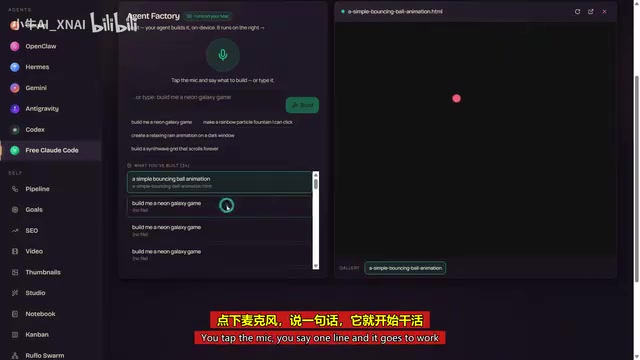
N2 Model as a Free Claude Code Alternative: Does Voice-Driven AI Coding Actually Work?
N2 model, built on Qwen 3.5, is completely free and integrates with Claude Code. Real-world tests show voice commands generating full landing pages, with AgentOS enabling shared memory and multi-model collaboration for zero-cost AI coding.
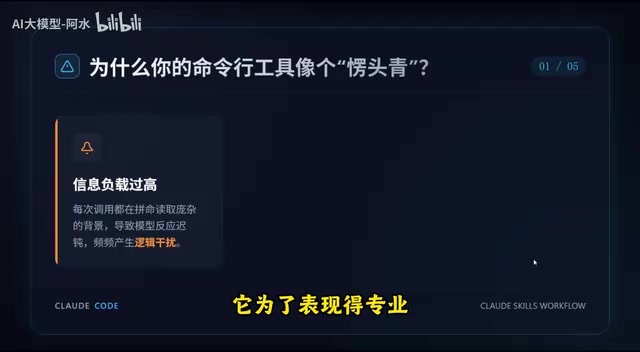
Claude Code Skills Mechanism Explained: On-Demand Loading for Token Savings and Better Performance
Deep dive into Claude Code's Skills mechanism: on-demand loading replaces bulk context dumping, cutting Token costs and boosting output quality with modular expertise.

Multi-Agent Cost-Cutting Guide: 4 Documents to Slash 60-80% of Your Token Spending
Multi-agent bills out of control? This article breaks down two core token cost pain points and provides 4 actionable documents to cut multi-agent task costs by 60-80%.