Major Codex Plugin Upgrade: One-Click Install Transforms AI into Professional Role-Based Assistants

Codex plugins upgraded to role-based solutions, enabling one-click deployment of professional AI assistants
OpenAI has significantly upgraded Codex's plugin system, transforming it from simple tool integrations into complete role-based solutions. Users can install plugins with one click—no coding required—to turn Codex into a specialized professional assistant. Currently connected to 62 mainstream applications with 110 skills across sales, data analytics, creative production, product design, and public equity investing, this marks a strategic shift for AI assistants from general conversation to vertical scenario specialization.
Codex Plugin Ecosystem Gets a Major Upgrade
OpenAI recently announced a significant expansion of Codex's plugin system, upgrading it from simple tool integrations to a complete role-based solution. Users can now transform Codex into a specialized professional assistant for specific domains with just one click—no coding required.
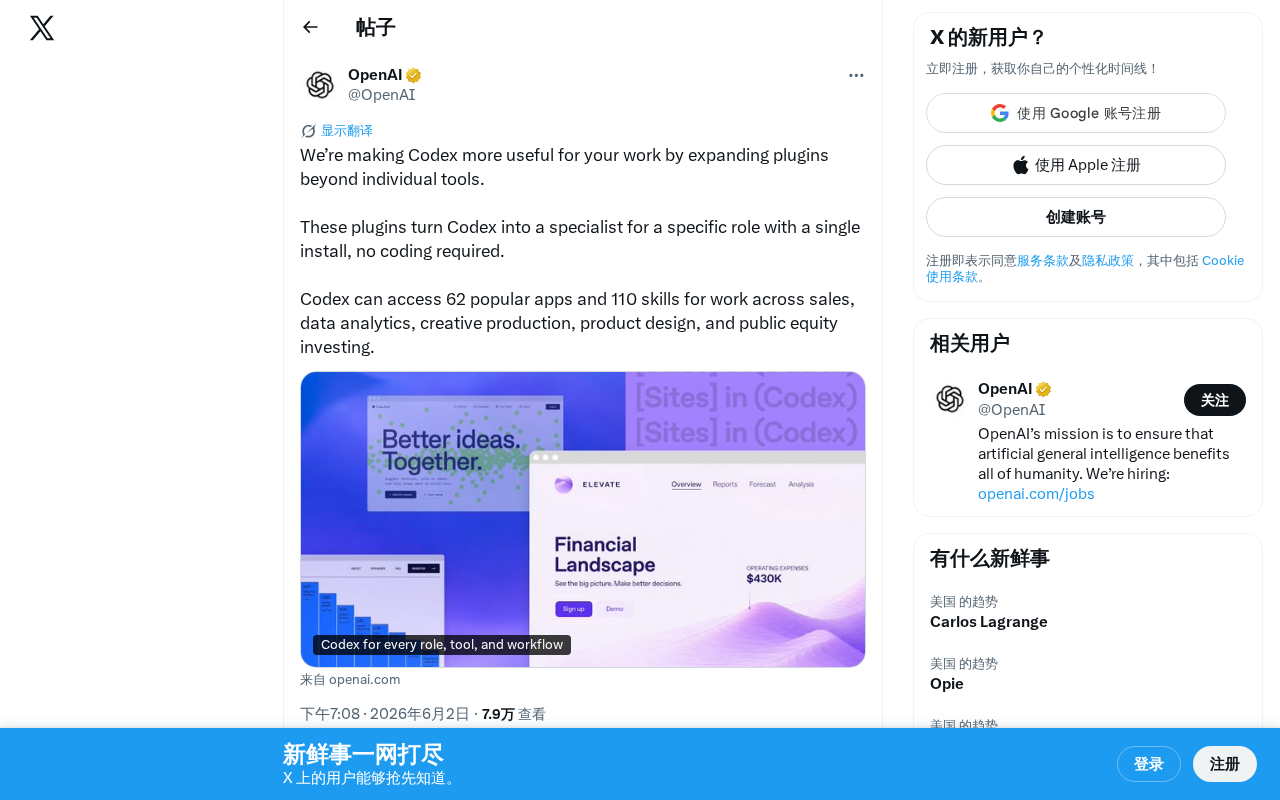
OpenAI's plugin system was first launched in March 2023, originally designed as a bridge connecting ChatGPT to external services, allowing models to interact with third-party APIs through Function Calling mechanisms. Early plugins used OpenAPI specifications to describe interfaces, but each plugin could only complete a single task—users had to manually combine multiple plugins to accomplish complex workflows. This Codex upgrade essentially bundles multiple tool calls, system prompts, domain knowledge bases, and output templates into a unified package, achieving a leap from the "tool layer" to the "application layer."
From Tools to Roles: A Paradigm Shift in Codex Plugins
Beyond Simple Tool Calls
In the past, AI assistant plugins were typically single-function tools—connecting a calendar, querying a database, or accessing an API. Codex's upgrade takes a fundamentally different approach: each plugin is no longer an isolated tool, but a complete "professional role package."
This shift in design philosophy is profoundly significant. Under the traditional model, users had to combine multiple tools themselves, write prompts, and design workflows to get AI to complete complex tasks. Now, a single plugin can equip Codex with all the capabilities needed for a specific professional role—including domain knowledge, workflows, tool calls, and output formats.
From a technical implementation perspective, the core of role-based plugins lies in packaging Prompt Engineering, RAG (Retrieval-Augmented Generation—allowing AI to retrieve external knowledge bases when answering to improve accuracy), and Agent workflows (frameworks that let AI autonomously plan and execute multi-step tasks) into standardized installable packages. Specifically, a role plugin typically contains: preset system instructions (defining AI's behavioral boundaries and professional identity), domain-specific knowledge bases (providing industry terminology and best practices), tool chain configurations (preset API call sequences and conditional logic), and output templates (ensuring results meet professional standards). This encapsulation approach is similar to the "containerization" concept in software engineering, abstracting complex configurations into standardized units that users can deploy with one click.
Covering Five Core Domains
According to official announcements, Codex can now connect to 62 mainstream applications and has mastered 110 work skills, covering the following five domains:
- Sales: Customer management, lead tracking, sales forecasting, etc.
- Data Analytics: Data cleaning, visualization, report generation, etc.
- Creative Production: Content creation, design assistance, asset management, etc.
- Product Design: Prototyping, user research, requirements analysis, etc.
- Public Equity Investing: Financial analysis, market research, portfolio management, etc.
The scale of 62 mainstream application integrations means Codex is building an automation connectivity layer similar to Zapier or Make (formerly Integromat), but at a higher level—not just data flow, but intelligent decision-driven business process automation. These applications likely include CRM systems (such as Salesforce, HubSpot), project management tools (such as Jira, Asana), data analytics platforms (such as Tableau, Google Analytics), design tools (such as Figma), and financial data terminals (such as Bloomberg Terminal, FactSet). This broad application integration creates network effects: the more applications connected, the more complex cross-system tasks role plugins can accomplish, and the stronger user stickiness becomes.
Practical Value of Codex Plugins for Enterprise Users
Zero-Barrier Professional Deployment
"No coding required" is one of the most noteworthy features of this upgrade. Even non-technical business professionals can quickly configure Codex as a specialized assistant for their work domain. For small and medium-sized enterprises, this dramatically lowers the technical barriers and human resource costs of AI implementation.
This design directly addresses the core pain point of enterprise AI deployment. The so-called "last mile" of AI implementation refers to the gap between technical feasibility and business usability. According to McKinsey's 2024 survey, over 70% of enterprises encountered deployment difficulties during the AI pilot phase, with primary obstacles including: lack of AI engineering talent, business staff unable to articulate requirements, and general AI models unable to directly adapt to specific business processes. Traditional solutions typically require specialized AI engineers spending weeks or even months on custom development. Codex's role-based plugin model, by pre-packaging professional knowledge, allows business users to skip technical configuration and directly obtain usable AI assistants—essentially replacing custom development with product standardization.
From General-Purpose to Vertical: A Competitive Strategy
From a strategic perspective, OpenAI is accelerating the penetration of AI assistants from "general conversation" into "vertical scenarios." The integration of 62 applications means Codex is building an ecosystem network covering mainstream enterprise software, while 110 skills represent deep understanding of specific business processes.
This "role-based plugin" model essentially uses a productized approach to solve the "last mile" problem of AI implementation—users don't need to understand AI, they just need to know what role they need.
In the current competitive landscape of AI assistants, Microsoft Copilot focuses on productivity enhancement within the Office ecosystem, Google Gemini emphasizes search and information integration, and various vertical AI tools (such as Jasper for marketing content, Harvey for legal documents) specialize in single domains. Codex's role-based plugin strategy takes a differentiated path: it neither confines itself to a single software ecosystem nor attempts to solve all problems with one general model. Instead, it lets users assemble professional capabilities on demand through modular role plugins. This "platform + plugins" model shares similarities with Salesforce's AppExchange or Shopify's App Store, with core competitiveness lying in ecosystem richness and quality.
Future Outlook for the Codex Plugin Ecosystem
As the plugin ecosystem continues to expand, several trends are foreseeable:
- Plugin Marketplace: Third-party developers will create role plugins for more vertical industries
- Multi-Role Collaboration: Collaborative work between different role plugins will become possible
- Deep Industry Customization: Evolution from general roles to industry-specific roles
This Codex upgrade marks the transition of AI assistants from the "can chat about anything" stage to a new "can do anything" stage. For enterprise users, now is a good time to reassess the positioning of AI tools within their workflows.
Key Takeaways
- Codex plugins upgraded from single tools to role-based solutions—one-click install transforms AI into a professional assistant
- Now connected to 62 mainstream applications with 110 work skills, covering sales, data analytics, creative production, product design, and investing
- Zero-coding design dramatically lowers technical barriers for enterprise AI deployment
- The role-based plugin model represents the strategic direction of AI assistants penetrating from general conversation into vertical scenarios
Related articles
 Tech Frontiers
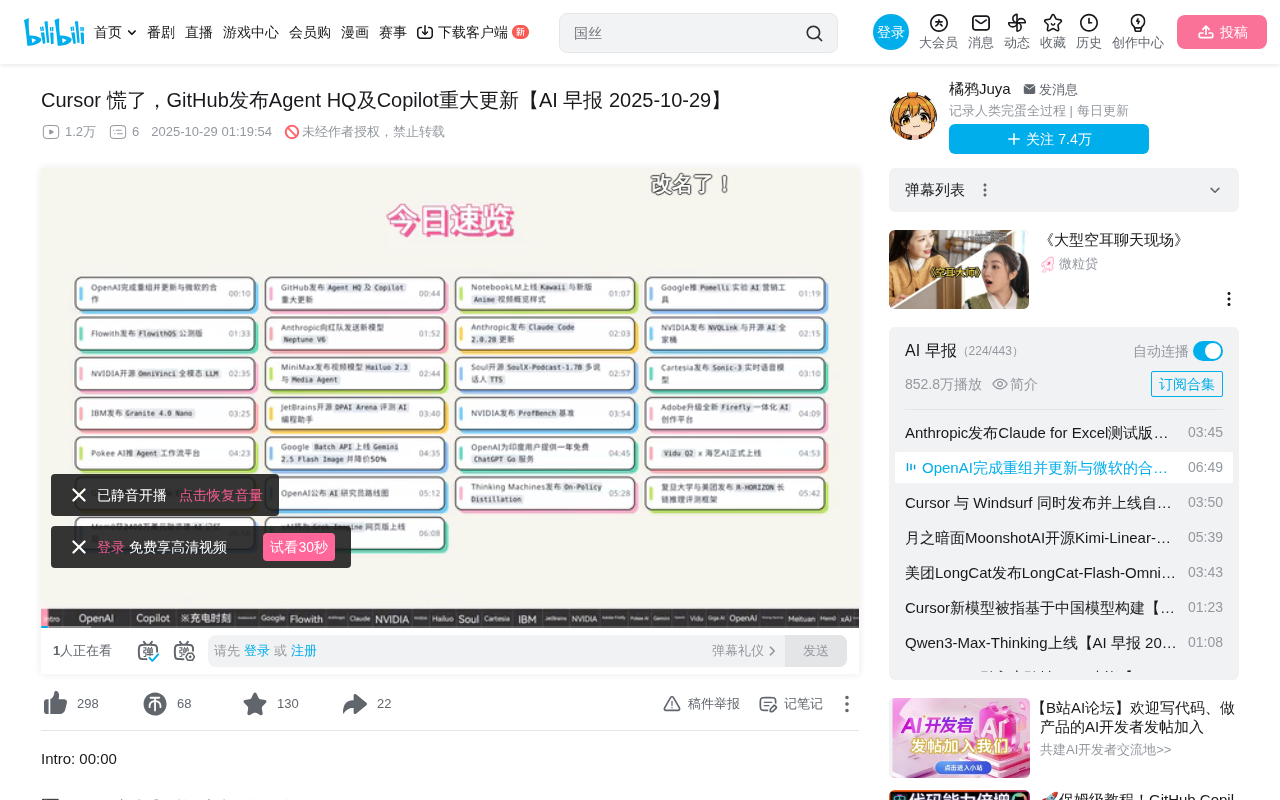
GitHub Agent HQ Launch: AI Coding Tools Enter the Era of Platform Competition
GitHub Universe unveils Agent HQ platform for unified coding agent management, Copilot upgrades with multi-model support. OpenAI completes restructuring, Anthropic tests new model, NVIDIA open-sources AI models.
 Tech Frontiers
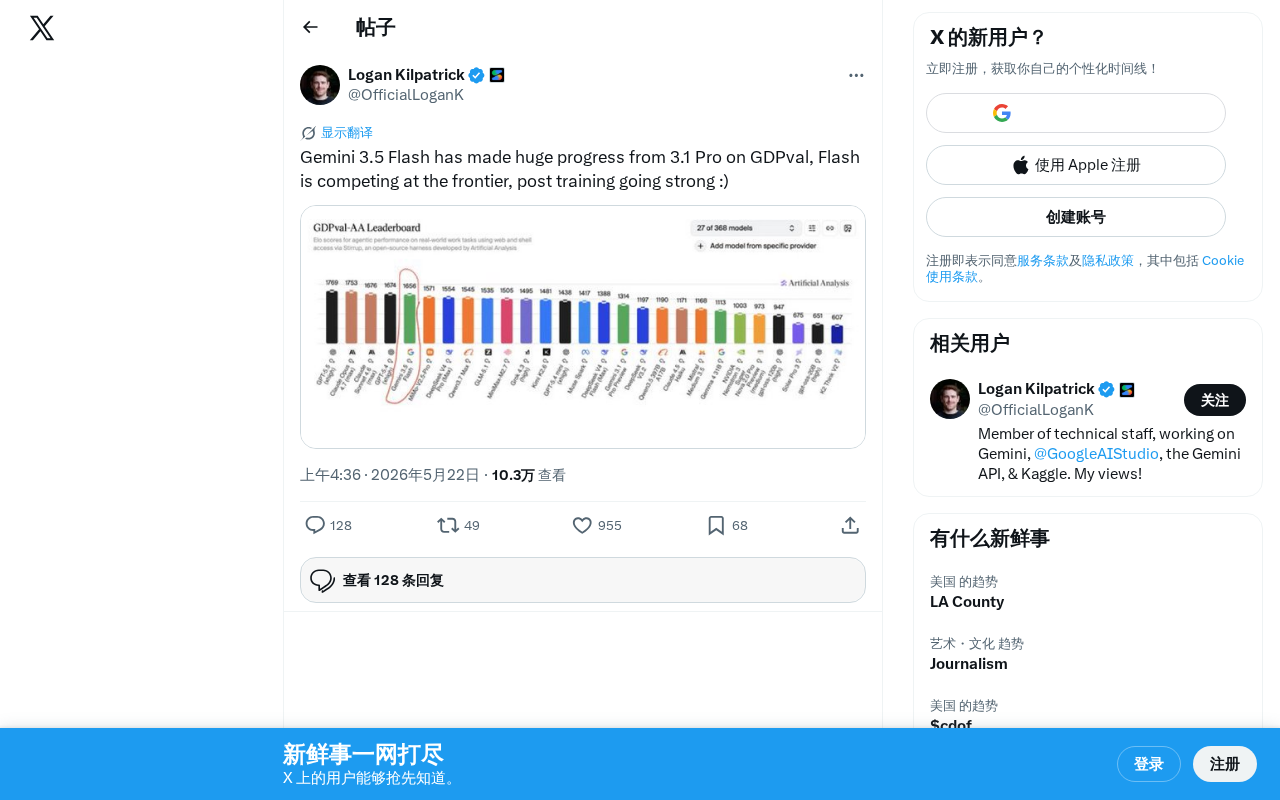
Gemini 3.5 Flash Achieves a Massive Leap on the GDPval Benchmark
Google Gemini 3.5 Flash surpasses Gemini 3.1 Pro on the GDPval benchmark. The lightweight Flash model leverages post-training techniques to approach frontier-level performance, redefining the balance between quality and cost.
 Tech Frontiers
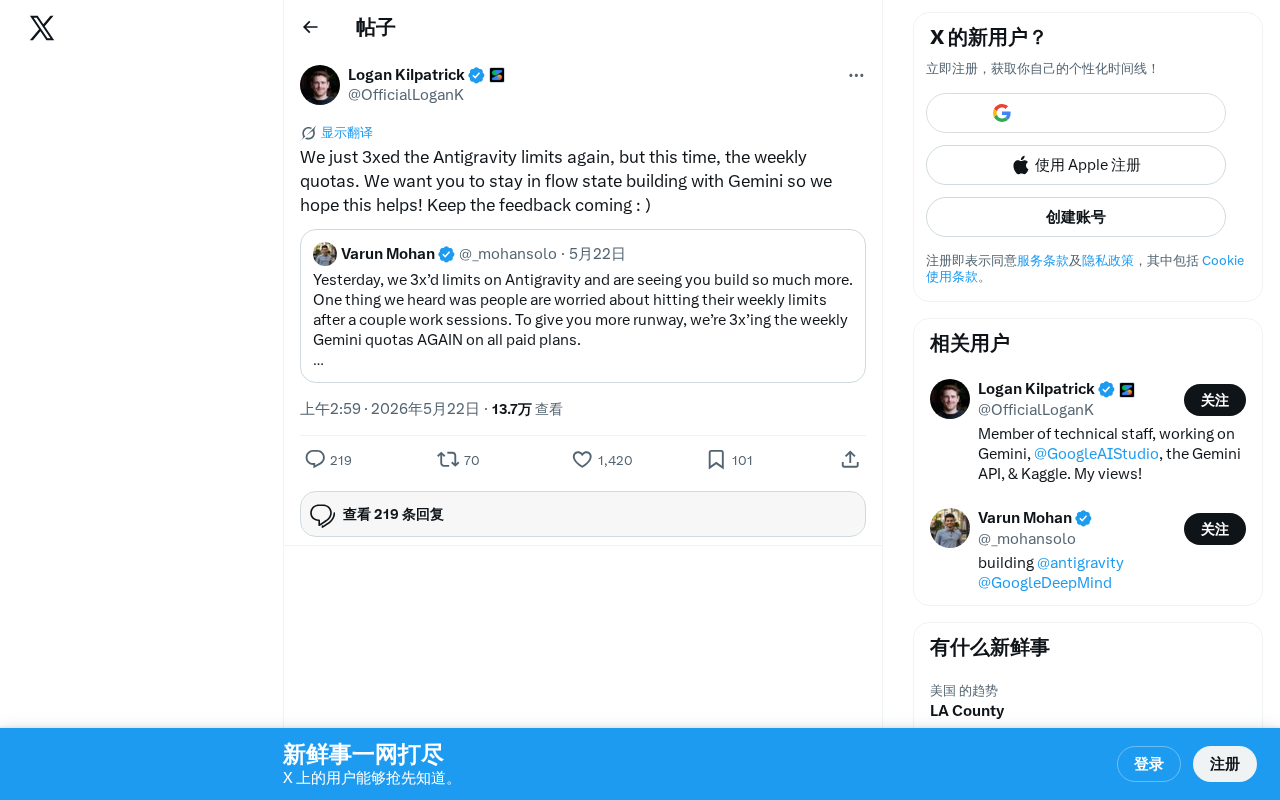
Google Gemini Antigravity Weekly Quota Tripled — AI Coding Without Limits
Google Gemini triples Antigravity weekly quotas following a prior daily quota boost. Analyzing the impact on developers and its strategic significance in AI coding.