MCP and A2A Protocols Explained: The USB Era of Agent Interoperability
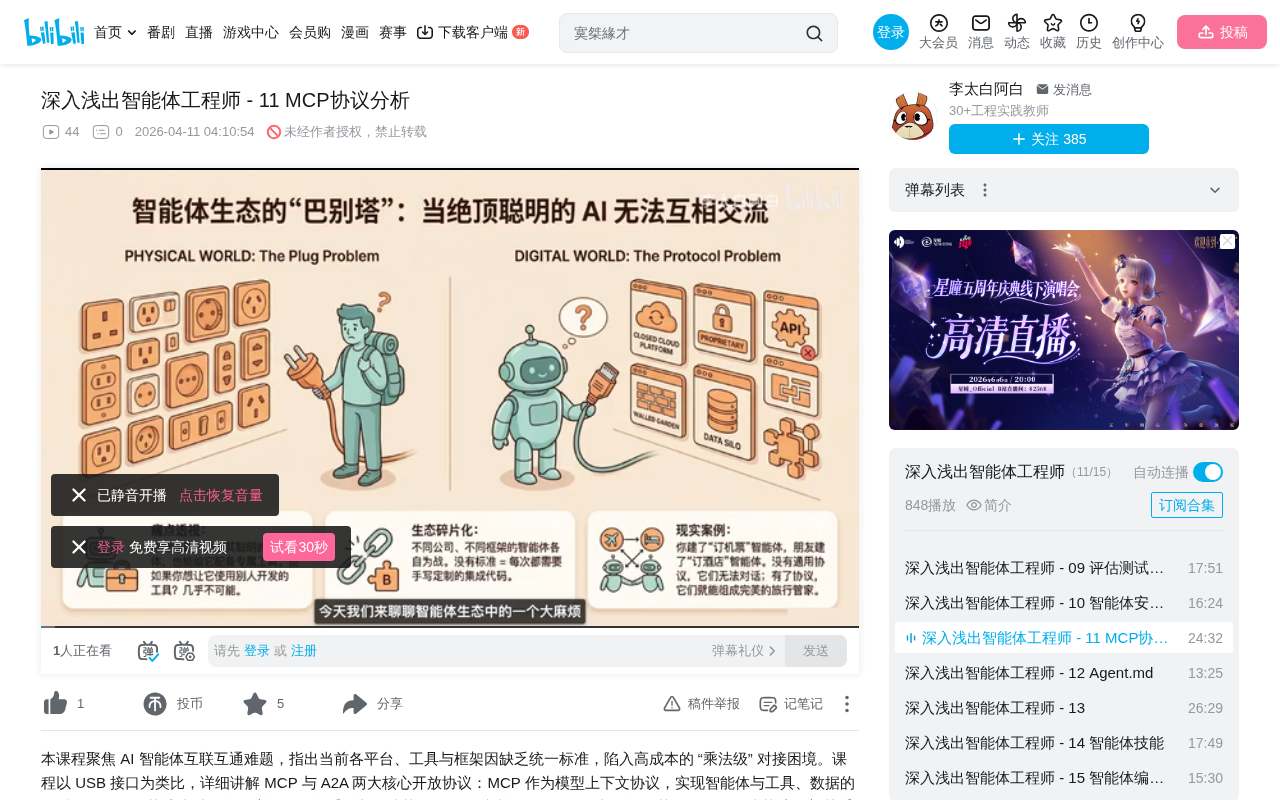
How MCP and A2A protocols solve the standardization challenge of AI agent interoperability
This article explains the integration dilemma (the N×M problem) facing AI agents due to the lack of universal protocols, and provides a detailed introduction to two complementary protocols: MCP (Model Context Protocol) for connecting agents to tools and data sources, and A2A (Agent-to-Agent Protocol) for inter-agent collaboration and communication. Together, they reduce integration complexity from multiplication to addition, forming the standardized infrastructure for future AI systems.
The "Plug Problem" for Agents: Why We Need Universal Protocols
Imagine traveling abroad with your hair dryer, only to find that every wall outlet is a completely different shape — that's the "Digital Tower of Babel" dilemma facing today's AI agents. We can build incredibly smart agents and equip them with great tools, but here's the pain point: if you want your agent to use tools developed by someone else, it's nearly impossible.
Agents built by different companies and frameworks operate in silos with no universal protocol. You build a flight-booking agent, your friend builds a hotel-booking agent, and because their protocols don't align, they can't communicate. You're left writing piles of custom code just to connect them.
Looking back at computing history, before USB came along, printers used parallel ports, keyboards used PS/2 — every new device required its own dedicated cable. The USB revolution enabled plug-and-play, directly fueling a 20-year explosion in hardware ecosystems. Our AI agent world is currently stuck in that "pre-USB era."
From N×M to N+M: The Mathematical Elegance of Universal Protocols
The N×M Integration Nightmare
Suppose you have 5 different agent frameworks and 10 commonly used external tools (email, calendar, CRM, etc.). Without a universal protocol, each framework needs custom code to connect to each tool. This is the classic N×M dilemma — 5×10 = 50 custom integrations, with costs growing exponentially. Every time a new tool is added, you're forced to rewrite 5 sets of code handling authentication, error management, and format conversion.
It's like hosting an international conference with ten countries — without a common language, every participant would need to learn nine foreign languages to communicate with everyone.
The Elegant N+M Solution
When a universal protocol layer (like MCP or A2A) sits in the middle, the logic changes entirely: agents only need to learn to "speak" the protocol, and tools only need to learn to "listen" to it. The formula shifts from N×M to N+M, slashing total integrations from 50 down to 15.
More critically, it enables seamless scalability: if you develop a brand-new tool, you only need to adapt it to the protocol once, and every framework that supports the protocol can instantly connect to it. It's like airport check-in systems — no matter which airline you booked with, the process is standardized.
MCP Protocol Deep Dive: The Universal Adapter Connecting LLMs to the Real World
What Is MCP (Model Context Protocol)?
MCP stands for Model Context Protocol, created by Anthropic (the company behind Claude), and has rapidly become an industry-standard open protocol. Its core mission is straightforward: enable any protocol-compatible agent to use any compatible data source or tool with zero friction.
Previously, if you wanted AI to read a local database, you had to write a bunch of custom interfaces. Now, developers simply wrap their database or local files as an MCP Server, and all AI platforms can immediately recognize and use it. This "build once, use everywhere" logic is the fundamental reason MCP has taken the developer community by storm.
MCP's Three-Layer Architecture: A Restaurant Analogy
MCP's collaborative architecture consists of three layers:
- Host: Like the diner at a restaurant — the user-facing interface (such as an IDE editor or chat window), focused on "ordering" and "enjoying the meal," not running errands
- Client: Like the waiter, responsible for protocol negotiation, managing the connection to the kitchen, and ensuring requests are accurately relayed
- Server: The kitchen itself, exposing specific tool capabilities or database interfaces, "preparing dishes" according to the order
For example, when coding in VSCode, VSCode is the Host, the built-in MCP Client handles the legwork, and the GitHub repository or local database you're calling is the Server.
MCP's Three Core Primitives
MCP defines three core atomic actions, like different components of a Swiss Army knife:
- Tools — The AI's "hands": Functions the model can actively invoke to change real-world state, such as
search_databaseorsend_email - Resources — The AI's "eyes": Contextual data the model passively reads, like employee records or system logs, letting the AI see the full picture before taking action
- Prompts — The AI's "instruction manual": Pre-defined standardized interaction templates that let users trigger complex task flows with a single click
Combined, a single MCP Server can fully define what the AI can see, what it can do, and what playbook it should follow.
A2A Protocol Deep Dive: The Professional Social Network for Agents
From Tool Invocation to Agent Collaboration
Agent interaction follows two fundamental paths:
- Agent→Tool (tool invocation): Like using a calculator — synchronous calls with explicit instructions, e.g., "Look up today's temperature in Beijing"
- Agent→Agent (agent collaboration): Like hiring a consultant — you give a high-level goal and delegate, e.g., "Plan a three-day Tokyo itinerary for me"
A2A (Agent to Agent) is an open protocol developed by Google that enables different agents to discover each other, communicate, and delegate specialized tasks.
Agent Card: The Digital Business Card for Agents
In the A2A protocol, each agent hosts a fixed file on its server (typically at /.well-known/agent) containing:
- Name: Clear identity, e.g., "Global Hotel Booking Concierge"
- Skills: A skill inventory clearly listing what it can do
- Auth: Authentication rules, such as whether OAuth2 is required
This Agent Card eliminates communication barriers — agents read each other's résumés before collaborating, and compatibility is determined in an instant.
A2A Task Lifecycle
Collaboration between agents follows a transparent pipeline:
- Created: e.g., "Write me a market report"
- Processing: The worker agent starts executing and pushes progress updates
- Needs Input: Pauses for confirmation when encountering edge cases
- Artifact: Returns the final deliverable
MCP vs A2A Comparison: A Power Duo, Not Competitors
| Dimension | MCP | A2A |
|---|---|---|
| Connects to | Inanimate tools (databases, APIs) | Intelligent agents |
| Interaction mode | Synchronous invocation | Asynchronous collaboration |
| Analogy | Using a calculator | Hiring a consultant |
| Core capability | Fetching low-level data | Assembling high-level teams |
A core agent's left hand connects to calendars, spreadsheets, and weather data via MCP (its working hands), while its right hand connects to various expert agents via A2A (its brain trust). MCP and A2A are absolutely not competitors — they are the ultimate complement — "Brain + Hands + Brain Trust" is the dominant architecture for future AI systems.
Security Guardrails and Practical Guidelines
Three Major Security Pitfalls
- Context bloat: Connecting too many MCP Servers consumes massive amounts of tokens, making the system sluggish and expensive
- Namespace collisions: Multiple Servers offering identically named tools (e.g.,
search) can cause the AI to invoke the wrong underlying system - Security blind spots: MCP currently lacks fine-grained permission controls, and third-party Servers of unknown origin may contain malicious instructions
Step-by-Step Implementation Roadmap
- Shallow end (beginner): Start with a single, officially trusted MCP Server, lock down versions, and monitor token consumption
- Transition zone (intermediate): Create two agents locally for internal A2A drills, define clear collaboration contracts and failure fallback logic
- Deep end (production): Connect to the external ecosystem, integrate massive data sources, or join external expert agent networks
Security principles apply throughout: verify identity (TLS encryption + mutual authentication), enforce least privilege, validate results, and maintain audit logs.
Conclusion: The Dawn of Agent Interoperability
MCP is already at the "World Wide Web stage," with a highly mature ecosystem and hundreds of community servers ready to use; A2A is at the "email stage" — still early but gaining powerful momentum. Mastering these two protocols means mastering the highway construction technology of the future digital world. From fragmentation to interoperability, from multiplication nightmares to addition elegance — this is the next decade of the agent ecosystem.
Related articles
 Deep Dives
Deep Dive into How OpenClaw (Open-Source Crayfish) AI Agent Works
Deep analysis of OpenClaw AI Agent internals: System Prompt, tool calling, SubAgents, Skill system, memory, and Context Engineering explained.
 Deep Dives
Demystifying Transformer: A Word-Continuation Function, Deconstructed
Understand Transformer through the lens of word continuation. Breaking down language generation into Embedding, Transformer Block, and Probability output modules for intuitive understanding.
 Deep Dives
Five Core Differences Between Claude Code and Regular AI Chat
A detailed comparison of Claude Code vs regular AI chat across five dimensions: interaction, context understanding, execution, memory, and tool integration.