MCP Protocol Explained: The Unified Standard for AI Agent-Tool Communication
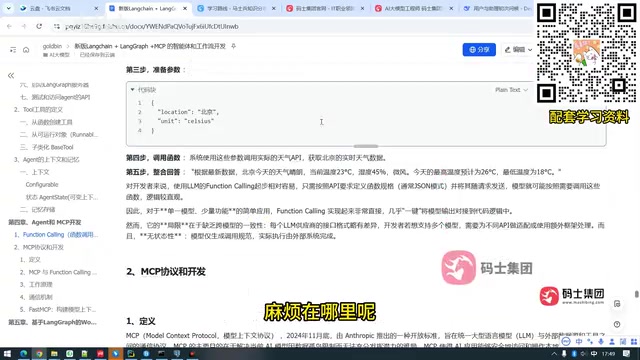
MCP is the unified open protocol replacing Function Calling for AI agent-tool communication.
MCP (Model Context Protocol), introduced by Anthropic in late 2024, is an open standard that decouples AI agents from tools through standardized network communication. Supporting Stdio, SSE, and the new Streamable HTTP, MCP enables remote tool invocation, built-in authentication, and a growing global ecosystem with major tech companies already on board, positioning it as essential infrastructure for enterprise AI development.
Why Do We Need MCP? Starting with the Pain Points of Function Calling
A significant technical evolution is underway in the AI development landscape: MCP (Model Context Protocol) is replacing traditional Function Calling as the mainstream approach for agents to invoke tools.
Traditional Function Calling has two core pain points:
- Lack of a unified standard: Different model providers (OpenAI, Anthropic, Zhipu, etc.) have varying interfaces and formats, forcing developers to write different adapter code for each platform.
- No unified framework for tool execution: Actual tool execution relies on external frameworks, but there's no standardized external framework on the market, leading to frequent code modifications across different environments.
In short, if you're still using Function Calling to build AI agents, your tech stack may already be behind the industry mainstream.
What Is MCP? A Plain-Language Guide to the Model Context Protocol
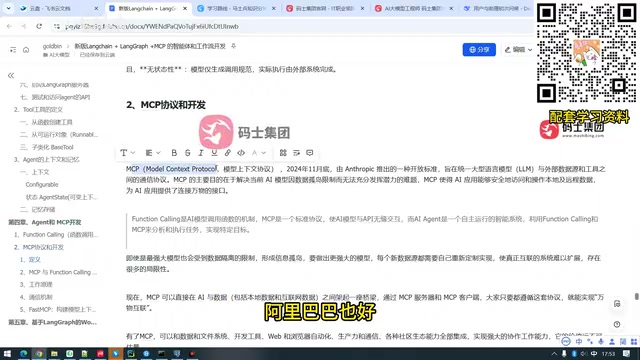
MCP stands for Model Context Protocol, an open standard introduced by Anthropic in late November 2024.
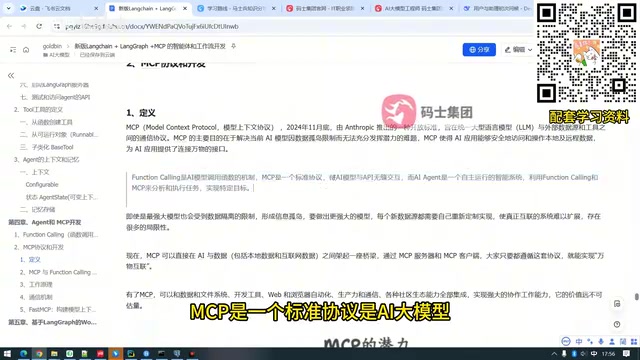
In one sentence: MCP is a unified communication protocol between models (agents) and tools.
Why Do We Need This Protocol?
In the traditional development model, agents and tools are tightly coupled — when you create an agent, the tool code must run within the same project. But in real-world enterprise development, this approach has obvious problems:
- If someone has already built a general-purpose tool and wants multiple agents to reuse it, do they really have to copy the code into every single project?
- If a tool is maintained by another team, how do you enable cross-team collaboration?
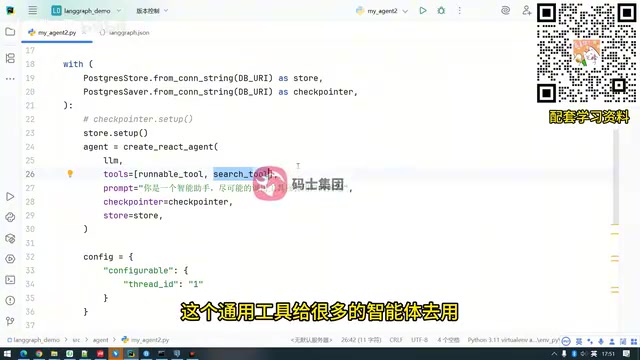
With MCP, agents and tools can be completely decoupled. Tools can be deployed on remote servers, and agents invoke them through a standardized network protocol — all they need is a network address.
Three Communication Mechanisms Supported by MCP
MCP currently supports three communication methods:
-
Stdio (Standard Input/Output): A local communication mechanism that works through the system's standard I/O. While it exists, it's rarely used in production — since local tools can be called directly within the same process, using MCP would only add communication overhead.
-
SSE (Server-Sent Events): An HTTP-based server push mechanism that served as the primary remote communication method in earlier versions.
-
Streamable HTTP: A new communication mechanism added in late March 2025, and the future mainstream direction. Compared to SSE, it offers more flexible and efficient bidirectional communication capabilities.
MCP Architecture Design: Server and Client
MCP Server
The MCP server is the provider of tools and data. On the server side, you can define:
- Tools: Functional endpoints that can be invoked by agents
- Resources: Static or dynamic data accessible to the model
You may not have noticed, but the MCP server has already been updated to version 2.0, bringing a number of API changes.
MCP Client
The MCP client is responsible for invoking tools on the server side. Common clients include:
- LangChain: Integrates MCP through the
langchain-mcp-adapterslibrary - LangGraph: Also supports functioning as an MCP client
- Other AI frameworks that support the MCP protocol
MCP Security: Authentication and Authorization
Many developers are concerned about MCP's security. In practice, the MCP protocol already has built-in authentication mechanisms:
- Internal company MCP services: Typically don't require additional authentication and can be called directly
- Public-facing MCP services: Require token-based authentication. A token must be passed when invoking tools, and the server only allows execution after successful verification
Authentication supports mainstream encryption methods such as JWT, providing robust security guarantees.
MCP Ecosystem: Current State and Growth Potential
Major Players Already on Board
Numerous major companies, both domestic and international, have published their MCP tool interfaces to the public internet:
- Tencent
- Alibaba
- Zhipu
- And many more AI companies worldwide
This means developers can already invoke tools and services provided by these tech giants within their own agents through the MCP protocol.
MCP's Long-Term Potential
To illustrate MCP's significance with an analogy: MCP is to AI agents what internet protocols are to personal computers.
Before MCP, each agent was like an isolated personal computer. With MCP:
- Agents across different departments within a company can interconnect and share tools
- Any company worldwide that exposes MCP interfaces to the public internet can have its tools invoked by other companies' agents
- The functional boundaries of agents are dramatically expanded, enabling integration of global resources
Key Differences Between MCP and Function Calling
| Dimension | Function Calling | MCP |
|---|---|---|
| Nature | Function invocation mechanism | Communication transport protocol |
| Standardization | Each vendor implements its own | Unified open standard |
| Tool Location | Typically local | Supports remote network calls |
| Ecosystem | Fragmented | Globally unified ecosystem |
| Use Cases | Simple tool invocation | Enterprise-grade agent development |
Conclusion and Outlook
The MCP protocol is rapidly becoming foundational infrastructure for AI agent development. With the release of server version 2.0, the Streamable HTTP communication mechanism, and an ever-growing number of major companies joining the MCP ecosystem, it's foreseeable that MCP will cover virtually all agent projects and workflow projects in production environments within the next one to two years.
For AI developers, now is the best time to learn and master MCP. Whether you're building agents, orchestrating workflows, or providing AI tool services externally, MCP will be an indispensable part of your tech stack.
Related articles
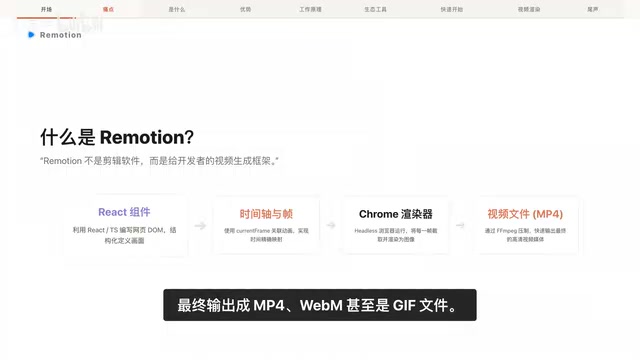
Remotion: The Open-Source Framework for Code-Driven Video Production with React
Deep dive into Remotion, the open-source framework for writing videos with React components. Covers core principles, use cases, comparison with traditional editors, and quick start guide.
Nex N2 Pro Real-World Testing: Top 5 on Official Benchmarks, Only 12th in Independent Tests
Deep-dive testing of Nex N2 Pro open-source Agent model comparing official benchmarks vs independent results. The 397B parameter model shows decent frontend generation but ranks 12th independently, not top 5 as claimed.
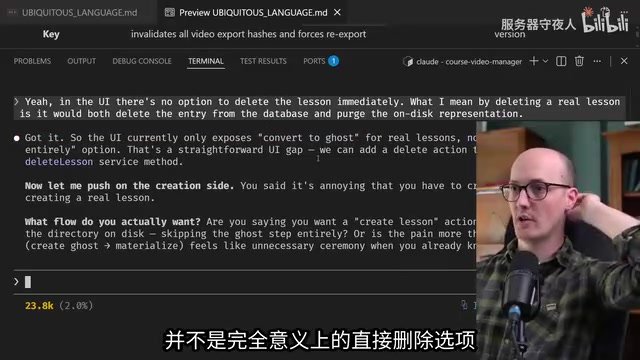
Claude Code Workflow in Practice: From Requirement Grilling to AFK Agent Auto-Coding
A detailed walkthrough of building real features with Claude Code: Grill Me requirement interrogation, auto-generated PRDs, AFK agent coding, and QA iteration loops with DDD and TDD strategies.