Nex N2 Pro Real-World Testing: Top 5 on Official Benchmarks, Only 12th in Independent Tests
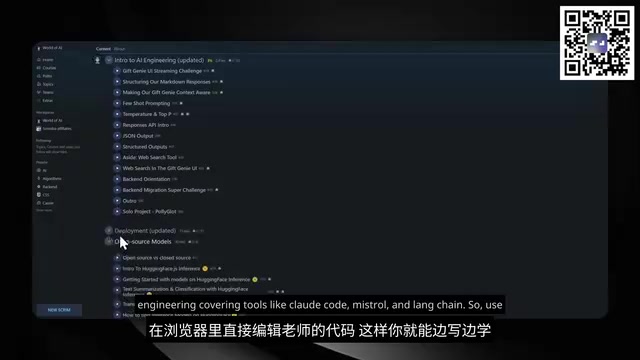
Nex N2 Pro claims top-5 performance but independent testing reveals it actually ranks 12th among frontier models.
Nex N2 Pro is a 397B-parameter open-source Agent model with a unified reasoning loop architecture. While official benchmarks claim top-5 frontier performance, independent testing places it at 12th. It shows solid frontend generation and GPT-style output quality for free, but suffers from slow generation speed and inflated official scores.
An Underrated Open-Source Agent Model Family
While all eyes are fixed on closed-source giants like GPT-5, a lab called NextAGI quietly released an ambitious open-source Agent model family — Nex N2. This isn't just another "thinking model" — it's an Agent system built specifically for execution, unifying coding, search, tool calling, deep research, and long-horizon workflows within a single reasoning loop.
According to in-depth testing by a content creator, this model's official benchmark scores are quite impressive, claiming to compete head-to-head with frontier models like GPT-5.5 and Opus 4.7. But how does it actually perform? How big is the gap between official data and independent testing? This article breaks it all down.
Model Architecture: The Unified Reasoning Loop Is the Core Highlight
The Nex N2 family includes two models:
- Nex N2 Mini: 35B total parameters, ~3B active parameters, suitable for local deployment
- Nex N2 Pro: 397B total parameters, 17B active parameters, the flagship model
The Pro model is based on the QN3.5 architecture, supports text and image input, and features reasoning, Function Calling, and structured output capabilities with a context window of 262K tokens.
Notably, Nex N2's parameter design reveals its underlying Mixture of Experts (MoE) architecture. The 397B total parameters with only 17B active parameters means the model is internally divided into multiple "expert" sub-networks, with only a small subset activated during each inference pass. This design has been widely adopted in models like DeepSeek V3 and Mixtral. The core advantage: maintaining a large model's knowledge capacity while reducing actual computational cost to a fraction of what a dense model would require. This explains how a nearly 400B parameter model can run on relatively limited hardware.
The model's core design philosophy is this: it doesn't treat coding, browsing, planning, and tool calling as separate, independent skills. All tasks follow the same structured process — decompose the objective, track current state, adjust strategy, verify results, then iterate continuously.
This is a crucial distinction and represents the fundamental difference between Agent architectures and traditional large language models. Traditional LLMs are essentially "one-shot generators" — they receive input, produce output, and the interaction ends. Agent architectures introduce a persistent loop mechanism: the model can observe environmental feedback, maintain internal state, dynamically adjust strategy, and execute across multiple steps. Current mainstream Agent frameworks (like LangChain's ReAct pattern, AutoGPT, etc.) are built on similar principles, but Nex N2's distinguishing feature is that this loop is built directly into the model weights rather than relying on an external orchestration layer for coordination. This means it can independently complete multi-step tasks without complex external toolchains.
Real development tasks are rarely just writing code or searching the web in isolation. They're a messy mixture: check context first, write code, call tools, debug errors, revise the approach, and finally validate with output results. Nex N2 is designed precisely for this kind of "chaotic blend" of real-world workflows.
Official Benchmarks: The Numbers Are Indeed Impressive
According to NextAGI's published benchmark data, Nex N2 Pro's performance is remarkable:
- BrowserComp: Surpassed Opus 4.7
- TerminalBench: 75.3 points
- SwapBench Pro: 58.8 points
- DeepSway: Surpassed TimK 2.6
- GDPVOL: Nearly 1600 points
Officially, the team claims the model can not only compete with closed-source giants but actually outperforms DeepSeek V4 Pro and GLM 5.1. For an open-source model, these numbers are genuinely eye-catching.
Even more exciting, NextAGI announced that Nex N2 Pro would be completely free for two weeks with unlimited usage. The Mini model also offers quantized versions at different precision levels for local deployment. Users have already successfully run Nex N2 Mini locally with 8-bit quantization, reporting stable performance.
Real-World Testing: GPT-Style Output and Actual Capabilities
Obvious GPT Distillation Traces
In actual use, one very obvious characteristic stands out: Nex N2's output style is highly similar to GPT-series models. From UI element color palettes and fonts to overall output structure, it's clear this model heavily distilled GPT-style outputs during post-training.
It's worth explaining the sensitivity around "knowledge distillation" in the current industry. Knowledge Distillation was originally a legitimate model compression technique — using a large model's outputs to train a smaller model. But in the fiercely competitive AI industry, using closed-source model API outputs to train open-source competitors has sparked serious intellectual property disputes. Companies like OpenAI explicitly prohibit this in their terms of service, but it's nearly impossible to fully prevent in practice. Common indicators of distillation include: highly similar output formatting, specific phrases or structures appearing repeatedly, and performance patterns on specific tasks that closely match the teacher model. DeepSeek R1 was previously questioned for similar reasons.
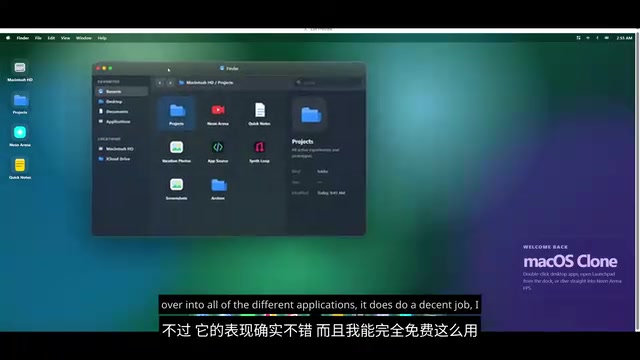
The tester had the model generate a MetalOS clone on OpenRouter, and the output clearly bore GPT characteristics. However, this isn't necessarily bad for users — you get near-GPT-level output quality for free.
Solid Frontend Generation Capabilities
Across multiple frontend generation tests, Nex N2 Pro showed respectable strength:
- Windows 95 clone: Impressive level of detail — icons and Start menu were well-coded, with functional sub-applications including Paint, Calculator, and MS-DOS prompt
- Tower defense game: Generated a complete, playable game with decent performance
- SVG lava lamp simulation: All components intact, physics working correctly, glow effects properly rendered
- Descriptive frontend pages: When given detailed descriptions, could fully generate hero sections, scroll-triggered effects, different fonts, and dynamic motion

However, notable shortcomings exist: in the racing game test, none of the functions worked properly; some UI components weren't fully generated; and scroll-triggered effect quality was inconsistent.
Official Benchmarks vs. Independent Testing: How Big Is the Gap?
This is the most important section. The tester used their own independent benchmark tool to conduct a comprehensive evaluation of Nex N2 Pro. The conclusion: official benchmarks show clear signs of inflation.
Specifically:
- Officially claimed to rank in the top 5 at frontier model level
- Actual ranking in independent benchmarks: 12th
- Performance was less stable than official data suggests under more comprehensive, rigorous evaluation
This gap reflects the long-standing "Benchmark Gaming" problem in AI. Model developers can achieve high scores on specific evaluations through various means: fine-tuning on test sets, selectively reporting best-run results, designing training data that closely matches test formats, or only publishing benchmarks where their model excels. This is why the industry increasingly values third-party independent evaluations — like LMSYS Chatbot Arena's human blind ratings — and multi-dimensional evaluation frameworks. The reference value of single official benchmarks continues to decline, and users need to synthesize multiple data sources to judge a model's true capabilities.
This kind of gap is not uncommon. Many models perform excellently on specific benchmarks but show noticeable drops in broader real-world scenario testing. Nex N2 Pro is no exception — it's genuinely impressive in certain demo scenarios, but its overall capability still falls short of top-tier closed-source models.
Speed Issues: The Cost of Agent Capabilities
Another noteworthy issue is generation speed. Because Nex N2 uses adaptive thinking, it goes through multiple stages during output generation — planning, reasoning, self-checking, and repeated iteration. This design is extremely valuable for Agent workflows, but if you need fast output, the experience suffers significantly.
This is fundamentally a capability vs. efficiency tradeoff: deeper reasoning loops deliver better task completion quality but also mean longer wait times. For development scenarios requiring rapid iteration, this could be a non-trivial bottleneck.
Conclusion: Underrated but Requires a Realistic Perspective
Overall, Nex N2 Pro is an open-source Agent model that's worth watching but requires realistic expectations:
Clear strengths:
- Advanced Agent architecture with unified reasoning loop design
- Open-source and free, lowering the barrier to entry
- Solid frontend generation and code output quality
- 262K context window covers most use cases
Real limitations:
- Significant gap between official benchmarks and independent test results
- Heavy distillation of GPT-style output raises originality questions
- Slow generation speed
- Incomplete implementation of some complex features
For developers, this model's greatest value is: you get a competent Agent model for free, especially suitable for coding assistance, frontend generation, and tool calling scenarios. But don't be misled by official benchmark scores — evaluate whether it fits your specific needs by referencing multiple independent benchmark results.
The open-source community needs more projects like Nex N2 that dare to challenge closed-source giants. But it also needs more transparent, trustworthy evaluation systems to help users make informed decisions.
Related articles
12 Practical Tips for Vibe Coding with Trae SOLO: From Getting Started to Efficient Collaboration
12 practical tips for vibe coding with Trae SOLO covering agent selection, Plan mode, context management, custom rules, and more to build an efficient AI programming workflow.
Trae + WPS: Building a Zero-Code JSA Login Authorization System — A Practical Tutorial
Learn how to use Trae AI programming tool with WPS Bitable to build a JSA login authorization system with zero handwritten code, covering online tables, Web API auth scripts, and remote user management.

Superpowers: Installing Work Standards for Your AI Coding Assistant
How the Superpowers methodology constrains AI coding assistants through requirement clarification, task decomposition, TDD, and verification loops — with setup tips for Trae.