MCP Protocol Practical Guide: The Standard Interface for Connecting LLMs to Everything
MCP Protocol Practical Guide: The Stan…
MCP is the standard interface for connecting LLMs to external tools, driving AI's evolution from chatbots to agents.
MCP (Model Context Protocol), open-sourced by Anthropic, is a standardized protocol for connecting LLMs to external tools — similar to how USB unified peripheral interfaces. It solves the standardization challenge of agent-tool interaction, while Google's A2A protocol addresses multi-Agent collaboration, together forming the foundational infrastructure of the agent ecosystem. For developers, Java + Spring AI + MCP has become the mainstream tech stack for AI production projects; for general users, tools like Cherry Studio make MCP accessible without any programming.
Why AI Agents Are Experiencing Explosive Growth
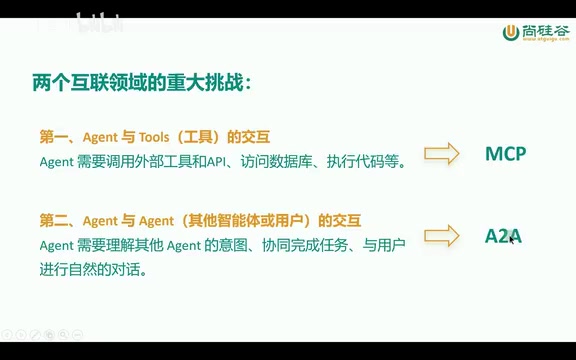
2025 is widely recognized as the inaugural year of AI agents. From OpenAI to Google, from China's DeepSeek to major tech giants worldwide, everyone is betting that Agents will become the next trillion-dollar market. However, in the world of AI agents, there are two major challenges in the realm of interconnection:
- How agents interact with external tools — accessing databases, executing code, calling APIs, etc.
- How different agents collaborate with each other — how Agents on the same platform or across platforms work together to complete tasks
Solving both challenges depends on standardized protocols. MCP (Model Context Protocol) was born to address the first challenge, while Google's recently released A2A (Agent-to-Agent) protocol targets the second.
A core formula has become an industry consensus: LLM + MCP ≈ Agent. If a large model cannot use external tools, it is essentially just a chatbot — unable to perform even basic functions like checking the weather or getting the current time. Tool invocation is the critical step in a large model's evolution into an agent.
Core Concepts and Working Principles of MCP
The Standard Interface for Connecting LLMs to Everything
MCP (Model Context Protocol) was officially open-sourced by Anthropic in November 2024. Before MCP, every AI application that wanted to call external tools required developers to manually write "glue code" — implementing custom interface adapters for each individual tool. This approach was not only time-consuming and labor-intensive but also led to ecosystem fragmentation. MCP borrows from the USB standardization philosophy: just as USB unified the connection methods for various peripherals, MCP defines a universal client-server communication specification that allows any tool following the protocol to be directly invoked by any MCP-compatible large model.
Therefore, MCP can be understood as the standard interface for connecting LLMs to everything. With just a few lines of code, developers can integrate a vast array of external tools, dramatically lowering the barrier to agent development.
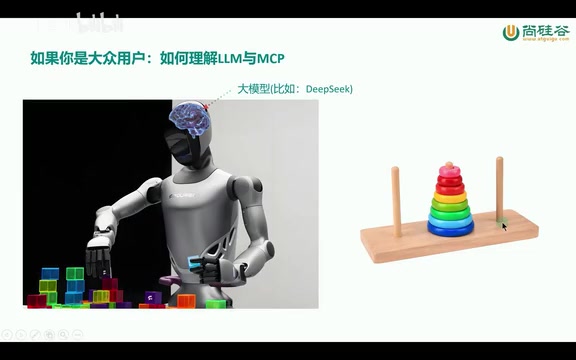
Here's an analogy: if the brain of an intelligent robot is the large model, then MCP is the protocol that gives it "eyes" and "arms" — enabling it not only to think but also to see and interact with the world.
MCP Server: The Core Component for Building the AI Tool Ecosystem
In the MCP architecture, various external tools exist in the form of "MCP Servers." Whether it's real-time stock data, email sending, image processing, database operations, or API calls, all can be packaged as MCP Servers for large models to invoke.
These Servers have now grown to thousands in number, earning the title of "the crown jewel of AI large models." An unexpected outcome is that the fierce competition among large models has been unified by this standard protocol — regardless of which large model you use, you can access the same tool ecosystem through MCP.
A2A Protocol: Completing the Multi-Agent Collaboration Puzzle
Google released the A2A (Agent-to-Agent) protocol in April 2025, specifically addressing collaboration issues in multi-agent systems. In complex task scenarios, a single Agent often has limited capabilities and requires multiple specialized Agents to divide labor — for example, one responsible for information retrieval, one for code execution, and one for result aggregation. A2A defines discovery mechanisms, task delegation formats, and state synchronization methods between Agents, enabling cross-platform, cross-vendor Agents to collaborate like team members. A2A complements MCP: MCP handles the vertical connection between Agents and tools, while A2A handles the horizontal collaboration between Agents, together forming the complete infrastructure of the agent ecosystem.
The Value of MCP for Developers and General Users
The AI Transformation Path for Java Developers
For programmers, especially Java backend developers, AI-powered projects are becoming the main battleground in job recruitment. A clear technology stack consensus has already formed within the industry:
Java + Spring AI / LangChain4J + MCP = AI-Powered Production Projects
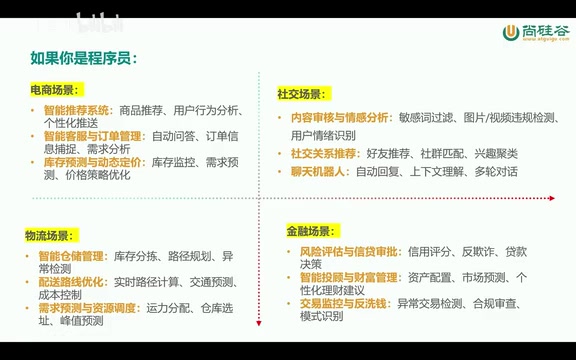
Spring AI is the official AI integration framework from the Spring ecosystem, providing Java developers with a unified abstraction layer for large model invocation. It supports multiple model backends including OpenAI, Azure OpenAI, Ollama, and more, with native MCP client support built in. LangChain4J is the Java port of the famous LangChain framework from the Python ecosystem, offering advanced features such as chain-of-calls, memory management, and vector retrieval. Both significantly lower the barrier for Java developers entering the AI field, allowing existing Java expertise to smoothly transition into AI agent project development.
This means mastering MCP is no longer optional — it's an essential skill for programmers to remain competitive in the AI era. From developing client-server MCP projects to integrating with various frameworks, these are core requirements in real-world projects.
How General Users Can Enhance Their AI Experience with MCP
For general users, having access to large models like DeepSeek is like having an intelligent assistant. But we want it to take on more functions — not limited to simple conversations, but also interacting with various external tools. MCP makes all of this possible.
Cherry Studio is a desktop AI client designed for general users that supports simultaneous access to multiple large models (including DeepSeek, Claude, GPT, etc.) with built-in MCP client functionality. Users don't need to write any code — they simply configure MCP Server connection information through the graphical interface, enabling the large model to directly invoke local file systems, browsers, databases, and other tools. The emergence of such tools marks that the barrier to using MCP has been lowered from "developer-exclusive" to "accessible to general users," representing an important step in the democratization of AI capabilities. Using MCP through Cherry Studio combined with DeepSeek makes large models more useful and closer to true agents.
Detailed Breakdown of MCP Practical Course Content
This comprehensive MCP practical course covers the complete path from theory to practice:
- MCP Fundamentals — Understanding MCP's capability boundaries from both developer and general user perspectives
- Platform Support Status — Which platforms currently support MCP and how to discover available MCP services
- Hands-on Tool Demonstrations — Demonstrating real MCP use cases through Cursor and Claude, explaining the communication mechanism
- Working Principle Analysis — MCP's theoretical foundations and complete workflow
- Code Development Practice — Building client-server MCP projects from scratch
- General User Guide — Using MCP through Cherry Studio + DeepSeek
- Popular MCP Server Recommendations — Curating and demonstrating over a dozen high-quality MCP Servers
- A2A Protocol Explanation — Filling the gap in inter-agent communication
Conclusion: MCP Is the Key Protocol to the Agent Era
The emergence of MCP is significantly accelerating the adoption of agents. It solves the standardization problem of large model interaction with the external world, eliminating the need for developers to write custom integration code for each tool. Combined with Google's A2A protocol, the two core challenges of the agent ecosystem — tool invocation and multi-Agent collaboration — now have standardized solutions.
For technology professionals, now is the best time to learn and master MCP. Whether you're a programmer looking to boost your career competitiveness or a general user wanting to make your AI assistant more powerful, MCP is the essential path to the agent era.
Related articles
 Tutorials
Cursor + Codex Dual-IDE Collaboration: A Practical Methodology for Open-Source Project Customization
A complete methodology for open-source project customization based on real-world experience, detailing the Cursor+Codex dual-IDE workflow, seven-stage process, MVP validation, and AI source code reading techniques.
 Tutorials
Cursor Multi-Agent in Practice: Building a Full-Stack Next.js Blog in 50 Minutes
Build a full-stack blog in 50 minutes using Cursor IDE's multi-Agent mode with Next.js, Clerk auth, and Supabase. Learn the 4-phase AI Agent workflow and key integration pitfalls.
 Tutorials
Building an AI Software Factory from Scratch: A Cursor Engineer's Hands-On Experience with Multi-Agent Collaboration
Cursor engineer Eric shares practical insights on building an AI software factory: automation levels, guardrail design, parallel Agent management, and scaling to 1000+ Agents for 24/7 development.