Monetizing Claude Code: 4 Proven Revenue Paths Broken Down

Four proven ways to monetize Claude Code: freelancing, tool products, methodology sales, and content creation.
This article breaks down four validated monetization paths for Claude Code: AI-accelerated freelancing (profiting from efficiency gaps), one-person dev teams shipping tools at scale, selling methodology and prompt templates, and content creation. Each path is analyzed with core resource requirements, startup difficulty, and revenue ceilings, helping readers identify the best fit for their skills and resources.
The Era of Monetizing AI Programming Tools Has Arrived
"Everyone says AI can make money, but the people actually generating income with Claude Code are doing four very different things."
This statement captures a reality in the current AI programming tool landscape — most people are still stuck in the "AI is amazing" admiration phase, while a select few have already built actual revenue models with Claude Code. After analyzing four validated monetization paths, each with distinct core logic and barriers to entry, they're worth breaking down one by one.
Claude Code is a command-line interactive AI programming tool developed by Anthropic. It's fundamentally different from IDE-embedded assistants like GitHub Copilot and Cursor that we're familiar with. Copilot primarily provides code completion and suggestions, Cursor integrates AI conversation capabilities at the editor level, while Claude Code runs directly in the terminal — capable of reading an entire project's codebase context, executing file operations, running commands, and performing multi-step complex programming tasks. This means it's not just a "code suggester" but more like an AI engineer that can understand the full picture of a project and independently execute development tasks. It's precisely this "Agentic Coding" capability that makes it a particularly powerful tool for monetization scenarios.



Path 1: AI-Accelerated Freelancing — Profiting from the Efficiency Gap
This is the most direct way to monetize Claude Code. The core logic is simple: A small project that used to take a week to deliver can now be done in two days — the time difference is your profit.
The economics behind this model deserve deeper understanding. In the traditional software outsourcing industry, pricing is typically based on "person-days" — estimating how many engineers working how many days a project requires, then multiplying by daily rates to get the total price. Clients pay for "effort," not for "deliverables." When AI tools compress actual development time to one-fifth or even one-tenth of the original, if you still quote based on traditional person-day models, an enormous profit margin emerges. This is essentially "information asymmetry arbitrage" — you've mastered a more efficient production tool while market pricing hasn't fully reflected this efficiency gain. Of course, as AI programming tools become widespread, this arbitrage window will gradually narrow. The first-mover advantage lies in securing client relationships and reputation.
But there's a key misconception to correct here — the core competitive advantage on this path isn't "being able to code" but rather the ability to acquire projects and control delivery quality. Claude Code can help you rapidly generate code, but what clients want isn't the code itself — it's a working product. Whether requirements are understood accurately, whether deliverables are stable, whether communication is efficient — these are what determine whether you can sustain a steady flow of projects.
For those with some technical background and client resources, this path has the lowest startup cost and fastest results. You don't need to build products or create content — you just need to boost your existing outsourcing efficiency by 3-5x.
Path 2: One-Person Dev Team — Shipping Tools at Scale
The second path is using Claude Code as your own "development team," building and launching various small tool products solo. Typical product formats include:
- Chrome browser extensions
- VS Code editor plugins
- Various ready-to-use utility tools
The characteristic of this path is that individual products may not generate much revenue, but you can ship many simultaneously. It's essentially a "cast a wide net" strategy — develop 10 small tools, and as long as 1-2 gain traction, they can bring in sustained passive income.
Behind this strategy is the thriving "Indie Hacker" movement of recent years. This community advocates for individuals or tiny teams building profitable internet products, with representative platforms including Product Hunt (product launch community) and Gumroad (digital product sales platform). The Chrome Web Store currently hosts over 180,000 extensions, and the VS Code Marketplace has over 50,000 plugins — both ecosystems have mature distribution channels and payment mechanisms. MVP (Minimum Viable Product) is the core methodology of this model — don't pursue perfection; first validate market demand with a minimal feature set, then iterate based on user feedback. Previously, MVP development costs were still significant, but AI programming tools have made "one MVP per day" possible, fundamentally changing the trial-and-error economics for indie developers.
The fundamental reason this model has become viable in the AI era is that Claude Code has drastically reduced development costs. Building a Chrome extension used to take one to two weeks for a solo developer; now an MVP might be completed in one to two days. When development costs are low enough, the "multi-product experimentation" strategy becomes economically viable.
The key challenge: you need the eye for spotting demand — knowing what kind of small tools users actually need. Technical implementation is actually the easiest part.
Path 3: Selling Methodology — Packaging Experience as a Product
The third path isn't selling code but selling the "how to use Claude Code" methodology. Content that can be packaged and sold includes:
- Prompt template libraries
- CLAUDE.md and other Skill configuration files
- Workflow best practice documentation
- Project-level usage experience guides
Let me explain the concept of CLAUDE.md here. CLAUDE.md is a Markdown configuration file placed in the project root directory that Claude Code automatically reads on startup, extracting project background information, coding standards, architectural conventions, common commands, and other context. Think of it as an "onboarding document" written for an AI engineer — it tells Claude Code what tech stack the project uses, what code style to follow, and what pitfalls to watch out for. A carefully crafted CLAUDE.md can significantly improve Claude Code's output quality and consistency. Meanwhile, Prompt Engineering as an emerging field has evolved from simply "asking the right questions" into a complete methodological framework encompassing system prompt design, chain-of-thought guidance, few-shot learning, role assignment, and more. Systematizing and productizing these experiences is the core of this monetization path.
This path seems to have the lowest barrier but actually has the highest. Because you need to genuinely be good at it before others will pay for your experience. The market isn't short on "learn to use AI" content — what's scarce is methodology that's been battle-tested in real projects and can be directly reused.
A good prompt template or Skill configuration file might have dozens of hours of debugging and optimization behind it. This kind of "concentrated experience" is enormously valuable for beginners because it helps them skip massive amounts of trial and error.
If you've accumulated deep Claude Code usage experience in a specific vertical (such as frontend development, data analysis, or automated testing), this path is worth serious consideration.
Path 4: Content Creation — The Most Underestimated Monetization Path
The fourth path is turning your Claude Code usage process into videos or articles. This is also the "most easily underestimated" path.
The reason is simple: AI tool content is in a traffic growth phase, and "skilled user + skilled communicator" is itself a scarce persona.
Looking at platform data, AI-related content has seen continuously rising search volume and views on YouTube, Bilibili, Xiaohongshu, and other platforms over the past two years. On YouTube, for example, keywords like "AI coding" and "Claude Code tutorial" show clearly upward search trends. The commercialization paths for technical content creators are also very mature: beyond platform ad revenue sharing, they include brand sponsorship collaborations, paid communities (like Discord memberships or Zhishi Xingqiu), online courses (through Udemy, self-built platforms, etc.), and consulting services among other diversified income sources. A technical content creator with a stable audience often earns far more annually than a full-time engineer at the same level. More importantly, content creation has a "flywheel effect" — content brings traffic, traffic brings trust, trust brings business opportunities, and business practice generates new content material.
Most technical experts aren't good at communication, and most content creators don't understand technology deeply enough. If you happen to possess both qualities, you occupy a very advantageous ecological niche. This type of content can not only monetize through platform traffic but also build your personal brand, which in turn drives revenue from the first three paths.
In the long run, content creation may have the strongest compound interest effect among all four paths.
Comparing the Four Paths: How to Choose the Right Direction?
There's no absolute best answer among the four paths. The key is what resources you have at hand:
| Path | Core Resource Requirements | Startup Difficulty | Revenue Ceiling |
|---|---|---|---|
| AI-Accelerated Freelancing | Client resources, delivery capability | Low | Medium |
| Shipping Tools at Scale | Demand insight, product thinking | Medium | High |
| Selling Methodology | Deep usage experience | Medium | Medium |
| Content Creation | Communication skills, consistent output | Low | High |
In simple terms:
- If you can land clients, go land clients — monetize quickly through the efficiency gap
- If you can build tools, ship products at scale — aim for a breakout hit
- If you can explain things clearly, create content — build a long-term brand
Of course, these four paths aren't mutually exclusive. Many success stories are actually combinations of multiple paths — for example, freelancing to accumulate experience while turning that experience into content output, and simultaneously shipping a few small tools in spare time.
Conclusion: Programming Ability Is Now Infrastructure — Differentiation Is Key
The emergence of AI programming tools like Claude Code has essentially transformed "programming ability" from a scarce resource into infrastructure. When programming itself is no longer the bottleneck, what becomes truly scarce is requirements understanding, product thinking, accumulated experience, and communication ability.
This phenomenon of "capability becoming infrastructure" isn't appearing for the first time in technology history. Looking back over the past twenty years, we've gone from hand-writing HTML to the proliferation of CMS systems like WordPress, then to the rise of no-code website builders like Wix and Squarespace. Each time technical barriers were lowered, it redefined "what capabilities are truly scarce." Low-Code/No-Code platforms experienced explosive growth between 2019-2022, enabling non-technical people to build simple applications. AI programming tools represent the latest stage in this evolutionary path — they don't eliminate programming but transform it from a "craft" into a "conducting art." Future competitive advantages will increasingly manifest in "knowing what to build" rather than "knowing how to build it," which poses profound transformation demands on every practitioner's skill structure.
Regardless of which path you choose, the core is the same: Start using it, find your differentiated advantage through practice, then convert that advantage into sustainable income.
Related articles

AI Aggregator Platforms Tested: A Complete Guide to Using GPT 5.5 and Other Top Models for Free
A hands-on guide to using GPT 5.5, Gemini 3.1 Pro, and Grok 4.2 for free via AI aggregator platforms, covering cross-model context memory, account pool mechanisms, and key security risks.
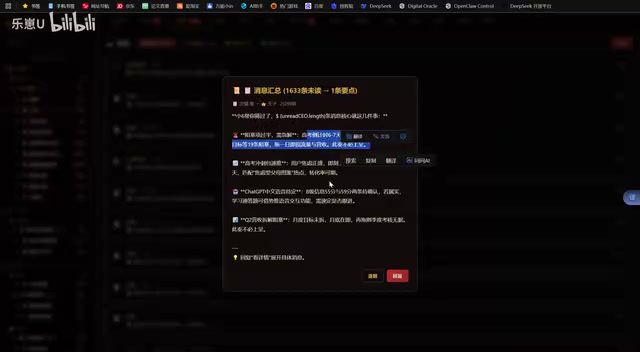
Vibe Coding in Practice: A Junior Student Uses Cursor to Build a Multi-Agent System with 51 AI Officials Based on the Three Departments and Six Ministries Framework
A junior student uses Cursor and Vibe Coding to build a multi-agent system with 51 AI officials modeled on China's Three Departments and Six Ministries, featuring task distribution, approval workflows, and Token cost visualization.
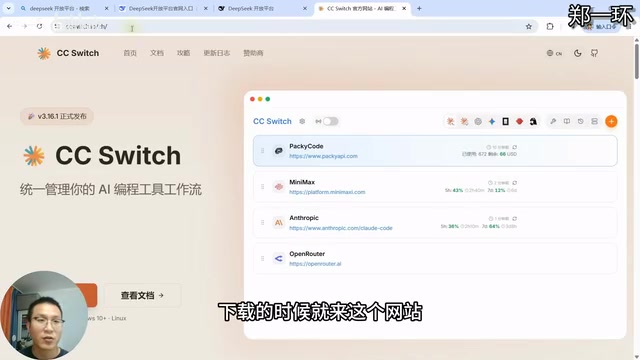
How to Connect Codex to DeepSeek Models: Free Switching via CC Switch
Learn how to connect OpenAI Codex to DeepSeek models via CC Switch, enabling free switching between DeepSeek and GPT with complete setup and routing guide.