MrBeast's Guess the YouTuber Challenge: Decoding Creator Brand Recognition and the Formula for Virality

A YouTuber guessing game reveals why brand recognition is a creator's most valuable asset.
Starting from a MrBeast-style "Guess the YouTuber" challenge video, this article explores how top creators build instant brand recognition through content labeling, cross-creator traffic strategies, and algorithm-friendly formats. It examines the creator economy's $250B+ market, YouTube's recommendation mechanics, and the growing polarization between recognizable top creators and the struggling mid-tier — revealing that in the attention economy, a clear personal brand is the ultimate competitive advantage.
A Creator Ecosystem Revealed Through a Guessing Game
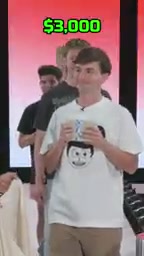
A fun challenge video on YouTube has been turning heads: participants must guess which YouTuber matches a set of limited clues, winning $1,000 for each correct answer. While the format seems simple on the surface, it actually reflects a core phenomenon in today's creator economy — the personal brand recognition of top creators has become a cultural symbol in its own right.
The Creator Economy refers to the complete commercial ecosystem built around independent content creators, encompassing ad revenue sharing, brand sponsorships, paid subscriptions, e-commerce, and other monetization models. According to a 2023 Goldman Sachs report, the global creator economy is valued at over $250 billion and is projected to reach $480 billion by 2027. As one of the core platforms in this ecosystem, YouTube has over 2 million active YouTube Partner Program members and pays creators billions of dollars annually through ad revenue sharing. It's against this industry backdrop that a creator's brand recognition carries real monetary value.
In the video, participants make rapid judgments based on various clues. When they hear "I live in New York City, I like to vlog," they need to narrow down the target from a vast pool of YouTubers. Meanwhile, the name "MrBeast" is guessed almost instantly — a testament to his extraordinary brand power.
MrBeast (real name Jimmy Donaldson) is one of the most-subscribed individual creators in YouTube history, surpassing 300 million subscribers as of 2024. His success lies not just in his content, but in his deep understanding of the YouTube algorithm and his systematic approach to channel management — he began studying YouTube's recommendation system at age 13, spending years analyzing thumbnail click-through rates, title optimization, and audience retention curves. Today, his business empire extends to the Feastables chocolate brand, MrBeast Burger virtual restaurants, and other ventures, with estimated annual revenue exceeding $700 million. He has become a benchmark case of transitioning from content creation to a full-fledged business empire within the creator economy. The fact that he can be guessed instantly is a direct reflection of this extreme brand-building effort.
Clue Design: A Microcosm of Creator Labeling
The clues in the video are cleverly designed, with each one corresponding to a creator's most distinctive trait:
- "I've got a Fortnite icon skin" — Points to a creator with gaming crossovers and brand collaborations
- "Tech guy" — The iconic label for tech review creators
- "Dude Perfect" — The team famous for trick shots and stunts
- "We've done pancake art, slime" — Typical content tags for DIY and craft creators

It's worth noting that the Fortnite Icon Series is a line of exclusive in-game skins created by Epic Games for real-world cultural figures and content creators. Earning an Icon Skin means a creator's influence has transcended platform boundaries and entered the core of gaming culture. Previous recipients include Ninja, Loserfruit, TheGrefg, and others. This cross-media collaboration model reflects the trend of "IP cross-pollination" in contemporary digital culture — creators are no longer confined to a single platform but have become cultural symbols that span platforms and media. As such, the clue "I've got a Fortnite icon skin" inherently carries significant brand weight.
As for Dude Perfect, this is a YouTube channel founded in 2009 by five former Texas A&M University roommates, known for trick shots, extreme stunts, and various world record challenges. As of 2024, the channel has over 60 million subscribers and more than 20 billion cumulative views. Their success represents the classic trajectory of "team-based creators" on YouTube — building brand moats through high-production-value, visually impactful content, and gradually evolving into a full media company encompassing TV shows, live tours, and brand licensing.
These clues are essentially a creator's content tags. In an algorithm-driven platform ecosystem, creators who can be summed up in a single sentence often have the strongest brand penetration. Platform recommendation algorithms favor vertical content precisely for this reason — the clearer the tag, the more precise the recommendation, and the higher the reach efficiency.
YouTube Content Creation Trends Through the Lens of Entertainment

This type of "Guess the YouTuber" challenge video is itself a highly efficient content format, featuring several key elements worth noting:
Interactivity and Audience Engagement
Viewers instinctively participate in the guessing while watching, and this psychological interaction significantly boosts completion rates and watch time. From a content design perspective, this aligns perfectly with the "user engagement" metrics that YouTube's recommendation system prioritizes, helping the video earn more algorithmic recommendations.
YouTube's recommendation system is built on a deep neural network architecture, primarily divided into two stages: candidate generation and ranking. The system evaluates hundreds of signals, including watch history, search behavior, and demographic characteristics, but the highest-weighted metrics are "watch time" and "user satisfaction" (inferred from behaviors like likes, shares, and comments). After 2022, YouTube further introduced the concept of "valued watch time," focusing not only on how long users watch but also on their satisfaction feedback afterward. This means content with high completion rates and high interaction rates receives exponential recommendation amplification, creating a Matthew effect where the strong get stronger. Challenge formats like the guessing game, which naturally stimulate viewers' desire to interact, precisely hit the algorithm's core preferences.
Cross-Creator Traffic Strategy
The video mentions multiple well-known YouTubers, and each mention represents a potential cross-channel traffic opportunity. This "creator interconnection" model is becoming increasingly common in the YouTube ecosystem. At its core, it's a decentralized content distribution strategy that effectively expands audience reach for all parties involved.
High Information Density in Compact Content
The entire video moves at a breakneck pace, with each guessing segment lasting only a few seconds and packing in a high density of information. This style is clearly influenced by short-form video platforms. Even on a long-form video platform like YouTube, fast-paced, high-density content is becoming the dominant approach to capturing audience attention.
Since TikTok's global expansion in 2018, the fast-paced narrative style of short-form video has profoundly reshaped the content ecosystem across all video platforms. YouTube launched Shorts in 2020 as a response, and Shorts now garners over 70 billion daily views. Research shows that the average human attention span has dropped from 12 seconds in 2000 to approximately 8 seconds in 2023. This has forced even traditional long-form creators to adopt faster editing rhythms, denser information output, and more frequent "hook" designs — placing suspense or stimulation points at the beginning of each segment to prevent viewer drop-off. The guessing challenge video analyzed here is a textbook example of "short-form thinking infiltrating long-form content": each guessing round functions as a self-contained micro-narrative unit, maintaining the cohesive narrative framework of a long-form video while delivering the instant gratification of short-form content.
The Core Takeaway from the Creator Economy: Brand Recognition Is Your Greatest Asset
Although this video is pure entertainment, it reveals an important truth: In the attention economy, personal brand recognizability is a creator's greatest asset. MrBeast can be guessed in an instant, while clues for some other creators leave participants completely stumped ("I don't got it") — this gap directly reflects the varying effectiveness of brand building.
From a broader perspective, this disparity in brand recognition is accelerating polarization within the creator economy. Top creators leverage clear brand positioning to earn sustained algorithmic favor, which in turn attracts more brand partnerships and business opportunities, creating a positive flywheel effect. Meanwhile, mid-tier creators lacking distinctive labels face an increasingly fierce battle for attention. Statistics show that the top 1% of YouTube channels account for over 90% of the platform's total views — a figure that starkly illustrates the decisive role of brand recognition in the platform economy.
For content creators, finding your own "one-sentence label" and building clear, distinctive brand recognition may be far more important than blindly chasing trends. When an audience can think of you from just a single keyword, that's when your personal brand has truly taken hold.
Key Takeaways
Related articles

CodeGraph: The 50K-Star Open-Source Tool That Cuts AI Coding Token Usage in Half
CodeGraph is a 50K-star open-source tool that builds a code knowledge graph so AI coding assistants can locate code instantly—cutting Token usage by 47%, boosting speed by 22%, all running 100% locally.
VibeCoding Beginner's Guide: A Complete Guide to Building Software with Natural Language from Scratch
VibeCoding lets anyone build software through natural language conversations with AI. Learn the core concepts, learning path, and practical methods to get started.
Using UU Accelerator to Speed Up Cursor: A Compliant Solution for Stable AI Coding in China
Learn how to use NetEase UU Accelerator to speed up Cursor AI coding tool in China, with step-by-step setup including node selection and launch configuration.