VibeCoding Beginner's Guide: A Complete Guide to Building Software with Natural Language from Scratch
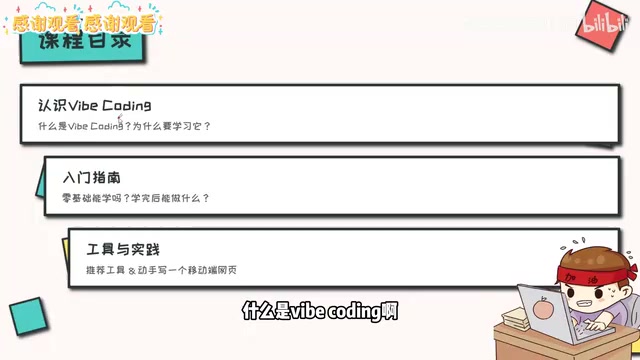
A complete beginner's guide to VibeCoding — building software by chatting with AI in natural language.
VibeCoding is a new software development paradigm where you describe what you want in natural language and AI writes the code. Coined by Andrej Karpathy in 2025, it eliminates the need to learn programming languages or software architecture. This guide covers the three-stage learning path, essential prompt engineering skills, popular tools like Cursor, Claude Code, and Bolt.new, and why now is the ideal time to start.
What Is VibeCoding
VibeCoding is a brand-new approach to software development that has rapidly gained popularity. Its core concept is remarkably simple: you just tell the AI what you want in natural language, and the AI writes the code for you.
The concept was first coined by Andrej Karpathy — former Tesla AI Director and OpenAI co-founder — in early 2025. He shared his experience using AI for programming on social media, calling it "Vibe Coding" — a way of programming where you're fully immersed in the creative flow without worrying about code details. Karpathy is a top expert in deep learning, and his endorsement sparked a massive response precisely because even the most technically proficient people are choosing to "not write code" — signaling a fundamental shift in the software development paradigm.
Taken literally, "Vibe" refers to the atmosphere or feeling, and "Coding" means programming. Together, VibeCoding means programming while immersed in your wildest ideas — describing the features you want through a chat window and letting the AI handle the implementation.
This represents three fundamental shifts:
- No need to think about architecture: You don't have to think about software architecture, system design, or technology choices like a formally trained professional
- No need to learn programming languages: You communicate in natural language — if you can talk or type, you're good to go
- Develop like you're chatting: Tell the AI what you want, and it builds it for you
These three shifts are made possible by breakthrough advances in code generation by Large Language Models (LLMs). Modern LLMs, built on the Transformer architecture, have been pre-trained on massive code repositories (including billions of lines of open-source code on GitHub) and natural language text, giving them the ability to "translate" human intent into executable code. In simple terms, during training the AI has "read" virtually all publicly available code ever written by humans, so it not only understands programming language syntax but has also mastered a vast array of design patterns, best practices, and solutions to common problems. That's why you can describe your needs in everyday language and the AI can output well-structured code.
A Vivid Analogy: Programming Like Writing Poetry
If the description above still feels abstract, think of it this way:
Imagine you're writing a poem or painting a picture. Would you stop mid-stroke to research what brand of pen you're using? Would you pause to ask what material the paper is made of and whether it's suitable? Of course not. You'd just focus on the creative work itself.

VibeCoding works the same way — by leveraging AI's capabilities, programming is no longer a technical skill but becomes a low-burden approach to software development, much like writing poetry or painting. You focus on "what I want to build," not "how do I implement it."
To appreciate the significance of this shift, consider how much traditional software development requires you to learn. A complete web application typically involves multiple layers of technology: the frontend requires HTML, CSS, JavaScript, and frameworks like React or Vue; the backend requires server-side languages like Python, Java, or Node.js and their frameworks; the database layer requires knowledge of SQL syntax and database systems like MySQL or PostgreSQL; deployment requires understanding server configuration, domain resolution, HTTPS certificates, and other DevOps knowledge. On top of that, there are version control (Git), package management, build tools, testing frameworks, and a whole suite of engineering tools. For a beginner starting from zero, it typically takes 6 to 12 months of systematic study to independently complete a full project. VibeCoding encapsulates all these technical details within AI's capabilities, allowing users to skip this lengthy learning curve and go directly from idea to product.
The Three-Stage VibeCoding Learning Path

For beginners with zero technical background, learning VibeCoding can be divided into three stages:
Stage 1: Building Awareness — Understanding How VibeCoding Differs from Traditional Programming
Understand what VibeCoding is and how it fundamentally differs from traditional programming. Traditional programming requires you to master programming language syntax, data structures, algorithms, frameworks, and a vast amount of technical knowledge, whereas VibeCoding delegates all these technical details to AI.

Put simply, traditional programming is "building the house yourself," while VibeCoding is "telling the architect what kind of house you want." But this doesn't mean you can be completely ignorant of basic "house" concepts. In VibeCoding, while you don't need to write code, having a rough understanding of a software's basic components — such as what the frontend is (the interface users see), what the backend is (the logic that processes data on the server), and what a database is (where information is stored) — will help you describe your requirements more precisely to the AI, leading to better results.
Stage 2: Getting Started — Understanding What VibeCoding Can Do
Zero technical background is absolutely fine. What you need to understand at this stage is: what can you do after learning? The answer is — you can attempt virtually any common software need, from web applications to mobile pages, from data processing tools to automation scripts.
However, there's one critical skill to develop at this stage: Prompt Engineering. A prompt is the instruction text you input to the AI, and prompt engineering is the study of how to write more effective instructions so the AI understands your intent more accurately. In the VibeCoding context, prompt engineering means learning how to describe your requirements clearly, specifically, and with structure. For example, instead of saying "make me a website," say "create a personal blog website with a homepage article list, article detail pages, and an about me page, using a clean white background design style with mobile responsiveness." The more precise your description, the closer the AI's output will be to your expectations. In the VibeCoding era, communication skills are productivity.
Stage 3: Tool Practice — Choosing Tools and Getting Hands-On
Choose the right VibeCoding tools and start practicing. It's recommended to begin with simple mobile web pages and gradually take on more complex projects. Hands-on practice is the most effective way to master VibeCoding.
The current VibeCoding tool ecosystem is quite rich, with different tools suited to different use cases:
- Cursor: An AI-powered code editor based on VS Code and one of the most popular VibeCoding tools today. It integrates AI conversation directly into the code editor, making it ideal for users who want to get a slightly deeper understanding of the code. Cursor supports multiple AI models and allows you to chat with AI, have it modify code, and explain code logic right within the editor.
- Claude Code (Anthropic): A command-line AI programming tool from Anthropic, known for its powerful code comprehension and generation capabilities, especially excelling at complex multi-file projects and long-context requirements.
- Codex / ChatGPT (OpenAI): OpenAI's code generation capabilities are deeply integrated into ChatGPT, where users can directly request complete application code in conversation. The latest Codex tool even supports automatically running and debugging code in a cloud sandbox environment.
- Bolt.new / Lovable / v0: These tools go a step further by providing fully visual interfaces — you simply describe your requirements in natural language on a webpage, and the tool automatically generates a complete, runnable application that can even be deployed with one click. For users with absolutely zero background, these tools have the lowest barrier to entry.
- Windsurf (Codeium): Another AI code editor known for its "Flow" mode, where the AI acts like a pair-programming partner, proactively understanding your project context and offering suggestions.
Beginners are recommended to start with visual tools like Bolt.new or v0 to experience the magic of VibeCoding, then gradually transition to more flexible tools like Cursor or Claude Code.
Why Now Is the Best Time to Learn VibeCoding
With the rapid improvement of LLM capabilities, AI can now understand complex requirement descriptions and generate high-quality code. This means VibeCoding is moving from concept to practical reality:
- Dramatically lower barriers to entrepreneurship: People with ideas but no technical background can now quickly validate product prototypes. In the past, an MVP (Minimum Viable Product) might have required weeks of development time and tens of thousands in outsourcing costs. Now with VibeCoding, a first version can potentially be completed in an afternoon. Y Combinator (the world's top startup accelerator) has publicly stated that an increasing number of product prototypes from their portfolio companies are being rapidly built using AI programming tools.
- Multiplied personal productivity: Even for professional developers, VibeCoding can boost development speed several times over. According to multiple industry surveys, AI-assisted programming can improve efficiency on routine development tasks by 30% to 80%, with particularly significant gains in writing boilerplate code, debugging errors, and writing test cases.
- New career opportunities: New roles like "AI Product Manager" and "Prompt Engineer" are emerging. The core competency for these positions isn't writing code but understanding business requirements, expressing intent precisely, and evaluating AI output quality — exactly the skills that VibeCoding cultivates.
From a technology evolution perspective, 2024 to 2025 represents a critical leap in AI code generation capabilities. The new generation of models represented by GPT-4, Claude 3.5/4, Gemini, and others have achieved qualitative improvements in code generation accuracy, context understanding, and multi-file collaboration. This means VibeCoding's usability and reliability are improving rapidly. Getting in now lets you enjoy the technology dividend while building an experience advantage in the early stages of this new paradigm.
For anyone looking to get into software development, VibeCoding offers an unprecedentedly low-barrier path.
Final Thoughts
VibeCoding isn't about replacing traditional programming — it's about opening the door to software development for more people. For beginners with zero background, it's a low-barrier entry path; for experienced developers, it's a powerful productivity multiplier.
That said, it's important to maintain a clear-eyed view of VibeCoding's current limitations. AI-generated code still faces challenges in the following scenarios: Architecture design for large, complex systems — AI excels at handling individual feature modules, but large projects requiring holistic architectural thinking still need experienced developers to steer the direction; High-security scenarios — in sensitive areas involving payments and user privacy data, AI-generated code requires rigorous security review; Performance optimization — AI-generated code typically runs correctly, but may need manual tuning under extreme performance requirements like high concurrency and low latency. Additionally, AI occasionally generates code that looks reasonable but contains logical errors (known in the industry as "hallucinations"), so maintaining awareness of the need to verify and test AI output is also important.
But these limitations don't diminish VibeCoding's practical value in the vast majority of everyday scenarios. For personal projects, product prototypes, internal tools, and automation scripts, VibeCoding is already more than sufficient.
Regardless of your technical background, VibeCoding is worth trying right now. Start with a simple mobile web page, and you'll discover — building software can actually be this easy.
Related articles
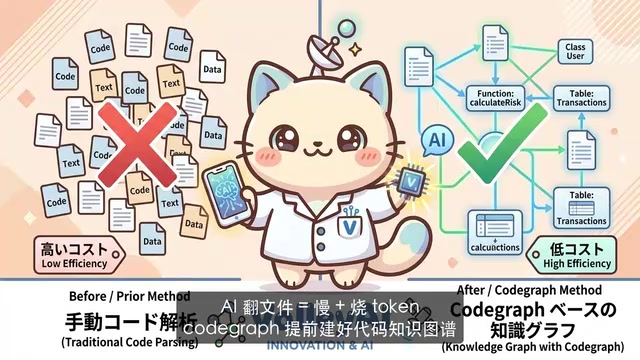
CodeGraph: The 50K-Star Open-Source Tool That Cuts AI Coding Token Usage in Half
CodeGraph is a 50K-star open-source tool that builds a code knowledge graph so AI coding assistants can locate code instantly—cutting Token usage by 47%, boosting speed by 22%, all running 100% locally.
Using UU Accelerator to Speed Up Cursor: A Compliant Solution for Stable AI Coding in China
Learn how to use NetEase UU Accelerator to speed up Cursor AI coding tool in China, with step-by-step setup including node selection and launch configuration.
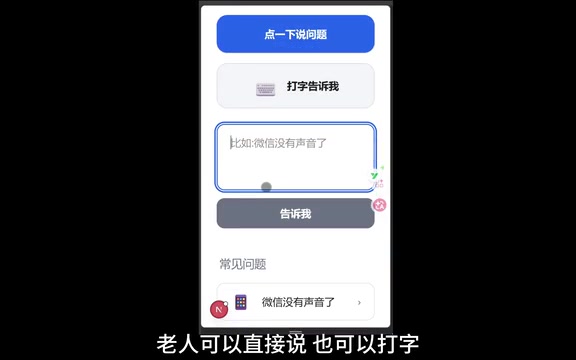
EasyPhone AI: Teaching Seniors to Use Smartphones with Voice — and Hitting the Brakes on Scams
EasyPhone AI is a voice-powered smartphone coach for seniors, featuring large-text UI, step-by-step guidance, and error tolerance. It auto-blocks scam scenarios and generates family help cards.