Multi-Agent Collaborative Novel Writing: A Practical Tutorial from Template Setup to Continuous Creation

Build an AI novel writing team with Glutter's multi-Agent collaboration to solve long-form fiction consistency challenges.
This article explains how to use Glutter's multi-Agent template feature to build an AI novel writing system that simulates a real publishing team. Through division of labor among Agents playing Editor-in-Chief, Author, and Proofreader roles, it effectively solves character inconsistency, plot disconnection, and forgotten foreshadowing common with single large models. The article details the complete workflow from template import, team configuration, and creative communication to continuous writing, while emphasizing that human creators still need to periodically intervene to maintain directional control.
Introduction
Long-form novel writing has always been a challenge in AI applications—a single large model often struggles to maintain character consistency, plot coherence, and long-running foreshadowing. The multi-Agent collaborative approach offers a completely new solution to this problem. This article explains how to use the multi-Agent template feature on the Glutter platform to build a professional "novel writing team" for high-quality, sustained long-form novel output.

What is Multi-Agent Novel Writing
Core Concept: AI Collaboration That Simulates a Real Publishing Team
The traditional AI writing approach involves users directly chatting with a single model, having it write chapter by chapter. This method has obvious limitations: limited context windows, characters easily going "off-personality," and difficulty maintaining plot connections across chapters.
To understand the root causes of these limitations, we need to look at the current technical bottlenecks of large language models. While mainstream models have expanded their context windows from an early 4K tokens to 128K or even longer, a standard full-length novel typically ranges from 200,000 to 500,000 Chinese characters, far exceeding the capacity of any single context window. More critically, research has shown that LLMs suffer from a "Lost in the Middle" phenomenon—the model pays significantly less attention to information in the middle of the context compared to the beginning and end. This means that even if large amounts of text can technically be crammed in, the model struggles to effectively utilize all the details within it, leading to plot disconnections and character personality drift.
The multi-Agent approach simulates the workflow of a real publishing house—different AI members with distinct roles each handle their own responsibilities: there's an "Editor-in-Chief" responsible for overall architecture, an "Author" responsible for writing specific chapters, and a "Proofreader" responsible for checking setting consistency. These Agents can communicate with each other and cross-validate, ensuring quality across the long-form work.
From a technical perspective, Multi-Agent Systems (MAS) represent an important research direction in artificial intelligence. The core idea is to decompose complex tasks among multiple intelligent agents with specific capabilities, accomplishing through collaboration what a single agent cannot handle alone. In the era of large language models, multi-Agent architecture typically refers to multiple LLM instances each playing different roles, interacting through predefined communication protocols and workflows. Representative open-source frameworks include Microsoft's AutoGen, Stanford's Generative Agents, and CrewAI. The key advantage of this architecture is that each Agent can have independent system prompts, independent memory contexts, and dedicated tool-calling capabilities, enabling true "professional division of labor."
Character Consistency: The Core Advantage of Multi-Agent Architecture
Character Consistency is one of the core challenges in AI-generated fiction. In cognitive science, human authors maintain an overall understanding of characters through long-term memory, while LLMs are fundamentally statistical probability-based next-token predictors that lack a true "character mental model." When generated text exceeds the context window, the model's "memory" of early character settings gradually decays. Multi-Agent architecture mitigates this problem by setting up a dedicated "character guardian" Agent—this Agent holds the complete character setting document and performs cross-validation each time new content is generated, essentially introducing an external persistent memory module to the system.
Why Choose the Glutter Platform
Glutter provides a ready-made template store, so users don't need to build a multi-Agent system from scratch. The platform's template feature allows one-click import of pre-configured team setups, including role definitions, prompt settings, and collaboration workflows for each member, significantly lowering the barrier to entry.
It's worth elaborating on the critical role of Prompt Engineering in multi-Agent systems. Each Agent's behavioral boundaries, professional capabilities, and collaboration methods are essentially defined through carefully designed system prompts. In the novel writing scenario, the "Editor-in-Chief" Agent's prompts might include narrative structure theory, pacing control strategies, and conflict design principles; the "Author" Agent's prompts focus on literary expression techniques, dialogue style, and scene description methods; the "Proofreader" Agent's prompts emphasize logical consistency checks, setting conflict detection, and timeline verification. This is precisely where the template store adds value—it packages prompt combinations that have been repeatedly tested and optimized, so users don't need to figure out the optimal prompt configuration for each role from scratch.
Detailed Steps for Multi-Agent Novel Writing
Step 1: Import a Writing Template from the Template Store
After entering the Glutter platform, click "Template Store" and find templates related to long-form novel writing. Before downloading, you can click "Preview" to see which member roles are included in the template and whether each role's prompt settings meet your needs. Once confirmed, click "Use" and the system will automatically create all preset team members.
Step 2: Configure Agent Team Members
After importing the template, the first thing to do is have the system review the "Team Building Guide." The purpose of this step is to check the current team's prompt settings and each member's ID, then replace the default IDs with identifiers that match your actual project. The system will automatically modify the relevant member configurations to ensure the team collaboration workflow runs properly.
Step 3: Communicate Creative Direction with the AI Editor-in-Chief
This is the most critical creative phase. You need to have an in-depth conversation with the "Novel Editor-in-Chief" role in the team to clarify the following:
- Genre: Fantasy, urban, sci-fi, romance, etc.
- World-building: Power systems, social structures, core rules
- Main characters: Personality traits, relationships, character arcs
- Plot framework: Main conflict, key turning points, ending direction
The Editor-in-Chief will provide professional suggestions based on your direction, guiding you step by step to refine the novel's overall settings. This process is similar to a real planning meeting between an editor and an author.
Step 4: Launch Multi-Agent Continuous Writing
Once settings are complete, the team will begin continuous writing in the designated channel. The advantages of multi-Agent collaboration are fully demonstrated here:
- Character consistency: A dedicated Agent monitors whether characters' words and actions align with their settings
- Long-running foreshadowing: The Editor-in-Chief Agent tracks hooks planted in earlier text, ensuring subsequent chapters follow through
- Pacing control: Avoids the "forgetting what was written earlier" problem common with single models
Usage Tips and Considerations
Early Investment Determines Later Quality
The more thorough your early communication with the Editor-in-Chief, the higher the quality of subsequent writing. Don't rush into writing the main text—spending sufficient time polishing the world-building and character settings is the foundation for a successful long-form novel.
Intervene and Adjust Direction When Needed
Although multi-Agents can collaborate automatically, creators still need to regularly review output content and provide directional guidance at key junctures. AI is a tool, not a replacement—human aesthetic judgment and creative intuition remain indispensable.
In the field of AI-assisted creation, the industry has gradually formed a consensus model of "humans leading creative direction, AI handling execution and expansion." Related research from Stanford University and MIT shows that human-AI collaborative creative text output outperforms both pure human and pure AI solo creation in both novelty and coherence. The key is finding the right granularity of intervention: over-intervention limits AI's generative diversity, while completely hands-off approaches easily lead to quality loss of control. For long-form novels, the recommended intervention rhythm is a directional review every 3 to 5 chapters, with deep adjustments at the turning points of each major plot arc (typically 10 to 15 chapters). This rhythm ensures both creative efficiency and human control over narrative direction.
Best-Suited Creative Scenarios
This workflow is particularly suitable for web novel creation requiring continuous updates, serial story development, and fantasy/sci-fi genres that need to maintain consistency across large amounts of world-building.
From an industry perspective, China's online literature market has exceeded 40 billion RMB in scale, with over 20 million active authors. The core characteristic of web novel creation is high-frequency updates—top authors typically need to maintain a daily output of 4,000 to 10,000 characters, which is an enormous challenge for both physical stamina and creative reserves. At the same time, web novel readers are extremely sensitive to setting consistency and plot coherence—"character collapse" and "botched endings" are the most common reasons for negative reviews. This demand for high output and high consistency aligns perfectly with the capabilities of multi-Agent collaborative systems. AI isn't meant to replace web novel authors' creativity, but rather to serve as reliable "creative infrastructure" that helps authors maintain their output rhythm while ensuring a quality baseline.
Conclusion
The multi-Agent collaborative approach provides a structured solution for AI long-form novel writing. By simulating the division of labor in a real creative team, it effectively solves the consistency and coherence problems that single models face in long-text generation. Glutter's template feature further lowers the setup barrier, allowing ordinary users to quickly get started with this new creative approach.
Related articles
 Tutorials
Cursor + Codex Dual-IDE Collaboration: A Practical Methodology for Open-Source Project Customization
A complete methodology for open-source project customization based on real-world experience, detailing the Cursor+Codex dual-IDE workflow, seven-stage process, MVP validation, and AI source code reading techniques.
 Tutorials
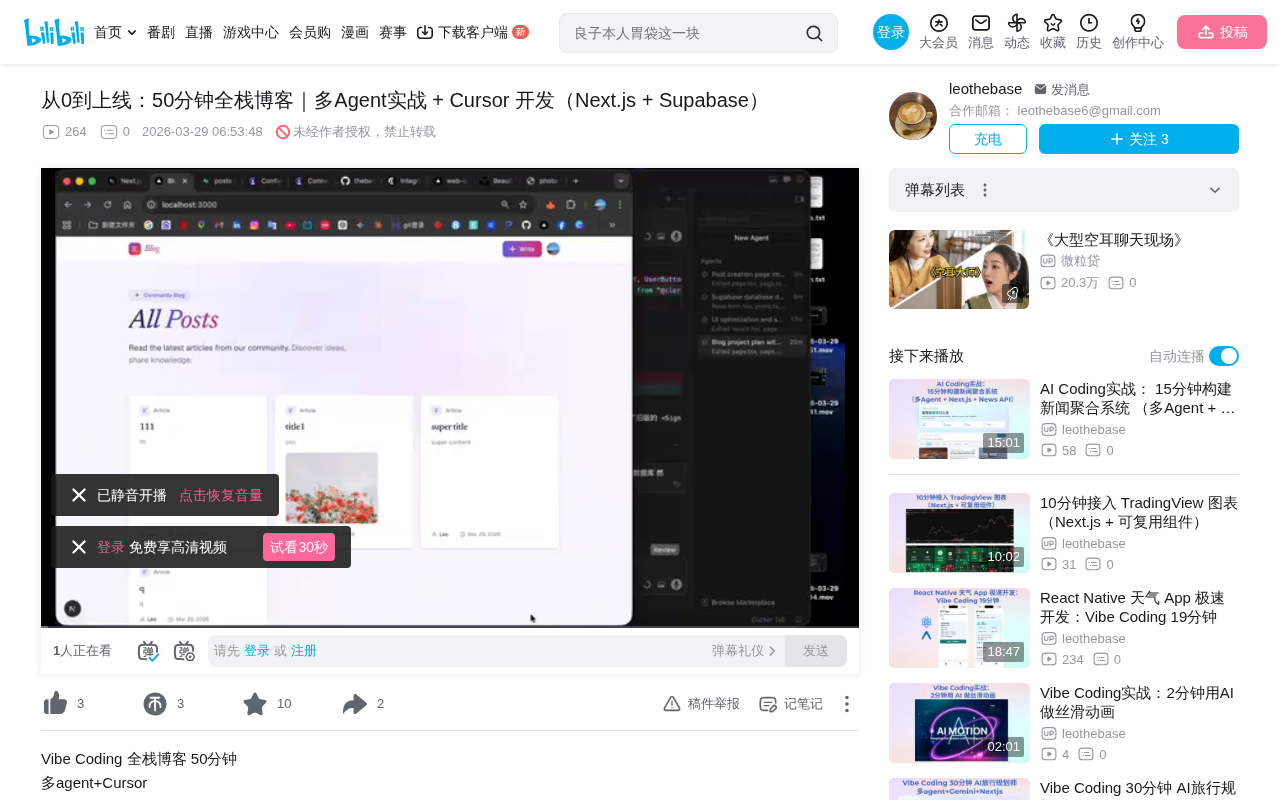
Cursor Multi-Agent in Practice: Building a Full-Stack Next.js Blog in 50 Minutes
Build a full-stack blog in 50 minutes using Cursor IDE's multi-Agent mode with Next.js, Clerk auth, and Supabase. Learn the 4-phase AI Agent workflow and key integration pitfalls.
 Tutorials
Building an AI Software Factory from Scratch: A Cursor Engineer's Hands-On Experience with Multi-Agent Collaboration
Cursor engineer Eric shares practical insights on building an AI software factory: automation levels, guardrail design, parallel Agent management, and scaling to 1000+ Agents for 24/7 development.