Multi-Tenant Architecture Data Isolation: Comparing Three Approaches with a Business Scenario Selection Guide
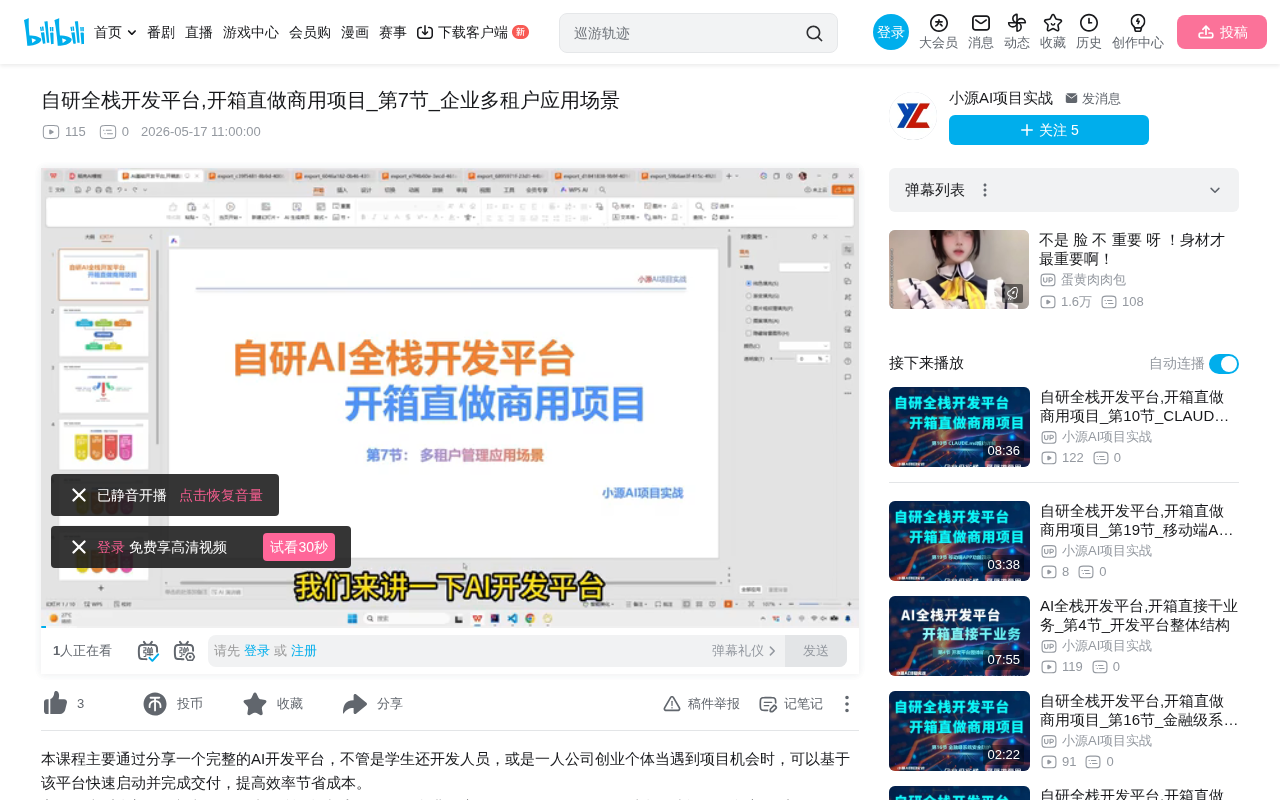
A comparison and selection guide for three multi-tenant data isolation approaches.
This article systematically reviews three data isolation approaches for multi-tenant architecture: shared schema (field-level isolation), separate schema, and separate database. It compares them across dimensions such as isolation level, cost, and security, and provides selection guidance through typical scenarios including corporate group management, supply chain operations, and e-commerce platforms. The key takeaway is to choose flexibly based on your business stage, starting lightweight and evolving progressively.
Introduction
With the growing trend toward SaaS and platform-based solutions, multi-tenancy architecture has become a core topic in enterprise application development. How to serve multiple customers with a single system while ensuring data security and isolation is a challenge every technical team must face.
This article systematically reviews three data isolation approaches for multi-tenant architecture and their applicable scenarios. Combined with practical multi-tenant management experience from the DII full-stack development platform, it helps developers make informed technical decisions in real-world projects.
What Is Multi-Tenant Architecture?
The core concept of multi-tenancy is simple: a single, unified software system or platform serves multiple tenants simultaneously, where each tenant operates independently without interfering with others.
To achieve this goal, two seemingly contradictory requirements must be addressed at the infrastructure level:
- Data sharing: All tenants' data needs to be stored and managed in a unified manner
- Data isolation: Data between different tenants must be completely isolated and invisible to each other
The core challenge of multi-tenant architecture lies in finding the balance between these two. The choice of data isolation approach directly determines the system's security, cost, and operational complexity.
Three Multi-Tenant Data Isolation Approaches Explained
At the database level, there are three classic approaches to multi-tenant data isolation, with increasing levels of isolation.
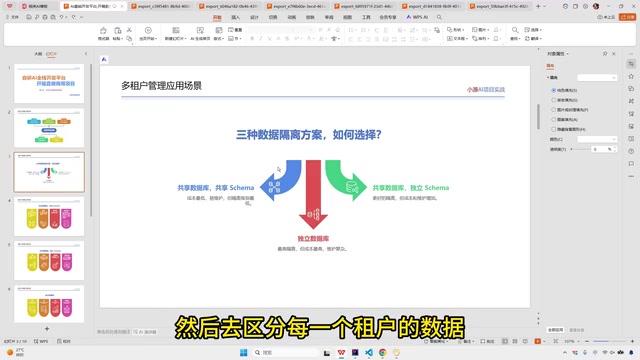
Approach 1: Shared Database + Shared Schema (Field-Level Isolation)
This is the most lightweight multi-tenant data isolation approach. All tenants' data is stored in the same database, under the same schema, in the same tables. A tenant_id column is added to the table structure to distinguish data belonging to different tenants.
Pros:
- Lowest cost — only one set of table structures to maintain
- Easy to scale — adding a new tenant only requires assigning a new
tenant_id - Simple development and deployment
Cons:
- Lowest isolation level with moderate data security
- All query operations must strictly filter by
tenant_id; any omission could lead to data leakage - Single-table data volume grows quickly, potentially causing performance bottlenecks
Best for: Startups, small-to-medium customers, and business scenarios without extreme data isolation requirements.
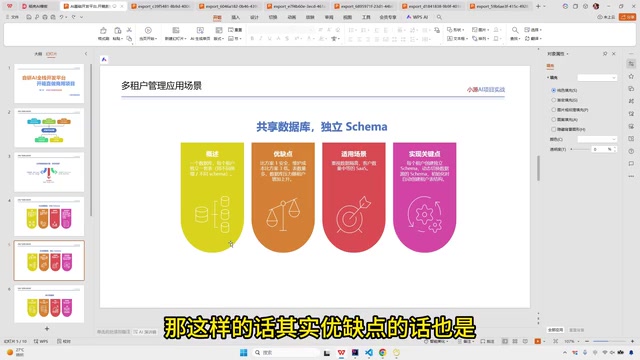
Approach 2: Shared Database + Separate Schemas (Schema-Level Isolation)
Each tenant has its own independent schema within the same database. The table structures are identical, but data is completely separated. The application dynamically switches schemas to access different tenants' data.
Pros:
- Significantly better isolation than Approach 1, with higher data security
- Each tenant's data is physically stored separately, making management clearer
Cons:
- The number of tables multiplies (number of tenants × number of tables), increasing database pressure
- Higher maintenance cost — schema changes must be synchronized across all tenants
- Requires implementing dynamic schema-switching logic in the application
Best for: SaaS products that prioritize data isolation, especially when serving medium-to-large customers.
Approach 3: Separate Databases (Full Physical Isolation)
Each tenant is assigned a completely independent database instance, achieving the highest level of physical isolation.
Pros:
- Highest security, meeting the strictest compliance requirements
- Database issues for one tenant do not affect others
- Enables independent backup, migration, and scaling per tenant
Cons:
- Highest cost — each tenant requires dedicated database resources
- Operational complexity increases significantly
- Database scaling and unified management become more difficult
Best for: Industries with extremely high compliance and data security requirements, such as finance and government.
Three Typical Business Scenarios and Approach Selection
After understanding the technical approaches, the key is choosing the right one based on actual business scenarios. Here are three typical multi-tenant application scenarios.
Scenario 1: Multi-Subsidiary Management for Corporate Groups
A large corporate group oversees multiple subsidiaries, each operating as an independent tenant. The business characteristics are: each subsidiary needs its own permission system and data space, but the group headquarters needs unified management and data aggregation.
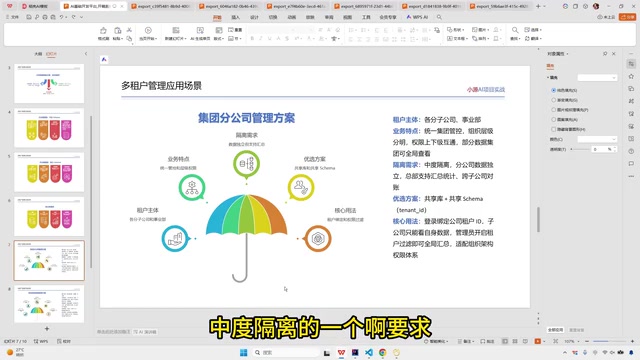
This scenario requires moderate isolation. Since the group needs cross-subsidiary data analytics and management, the shared database + shared schema approach (distinguishing by subsidiary ID/tenant_id) is usually the optimal choice — it meets isolation requirements while facilitating data aggregation at the group level.
Scenario 2: Supply Chain Distributor Management
Manufacturers need to manage downstream distributors, agents, and other channel partners. Each distributor operates independently with its own inventory and order data, but the manufacturer needs unified oversight of all distributors.
The isolation requirements for this scenario are slightly stronger than the corporate group scenario. However, considering the manufacturer's need for holistic distributor management, the shared schema approach remains the better choice from an operational cost perspective, with data isolation implemented at the distributor dimension.
Scenario 3: E-Commerce/Payment Merchant Platforms
Each merchant operates as an independent tenant, dealing with sensitive data such as transactions and billing, requiring higher isolation.
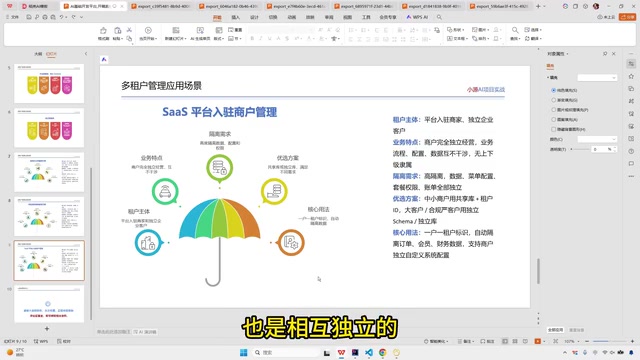
This scenario presents a clear transitional zone:
- Small merchants can use the shared database + shared schema approach to reduce costs
- Large clients or merchants with strict compliance requirements should upgrade to separate schemas or even separate databases
This illustrates an important principle: there are no absolute boundaries between the three approaches. You should choose flexibly based on actual business needs, and you can even mix approaches within the same platform.
DII Platform's Multi-Tenant Implementation
The DII full-stack development platform adopts the shared database + shared schema approach for multi-tenant support, implementing data isolation through the tenant_id field.
In practice, the platform supports:
- Creating and managing different tenants within the permission management module
- Each tenant having its own independent users, roles, and permission system
- After switching tenant login, users see a completely independent data management interface
This approach aligns with the practical needs of most small-to-medium projects — maximizing development and operational cost savings while ensuring basic data isolation.
Technical Selection Recommendations for Multi-Tenant Approaches
When selecting a multi-tenant approach for real projects, it's recommended to evaluate from the following dimensions:
| Evaluation Dimension | Shared Schema | Separate Schema | Separate Database |
|---|---|---|---|
| Isolation Level | Low | Medium | High |
| Development Cost | Low | Medium | High |
| Operational Cost | Low | Medium | High |
| Data Security | Moderate | Good | Best |
| Scalability | Good | Moderate | Limited |
| Best Stage | Early stage / SMB customers | Growth stage / Mid-to-large customers | Mature stage / High-compliance customers |
Core principle: There is no best approach — only the one that best fits your current business stage. Many successful SaaS products start with shared schema and gradually evolve toward separate schemas or even separate databases as customer scale and compliance requirements grow.
Conclusion
Multi-tenant architecture is one of the foundational capabilities of enterprise applications. Understanding the pros, cons, and applicable scenarios of the three data isolation approaches helps developers make sound architectural decisions early in a project, avoiding large-scale refactoring later. Regardless of which approach you choose, the core objective remains the same: finding the optimal balance between data sharing and data isolation.
Related articles
 Tutorials
Cursor + Codex Dual-IDE Collaboration: A Practical Methodology for Open-Source Project Customization
A complete methodology for open-source project customization based on real-world experience, detailing the Cursor+Codex dual-IDE workflow, seven-stage process, MVP validation, and AI source code reading techniques.
 Tutorials
Cursor Multi-Agent in Practice: Building a Full-Stack Next.js Blog in 50 Minutes
Build a full-stack blog in 50 minutes using Cursor IDE's multi-Agent mode with Next.js, Clerk auth, and Supabase. Learn the 4-phase AI Agent workflow and key integration pitfalls.
 Tutorials
Building an AI Software Factory from Scratch: A Cursor Engineer's Hands-On Experience with Multi-Agent Collaboration
Cursor engineer Eric shares practical insights on building an AI software factory: automation levels, guardrail design, parallel Agent management, and scaling to 1000+ Agents for 24/7 development.