Musk's Never Give Up Philosophy: From Near Bankruptcy to Industry Disruption
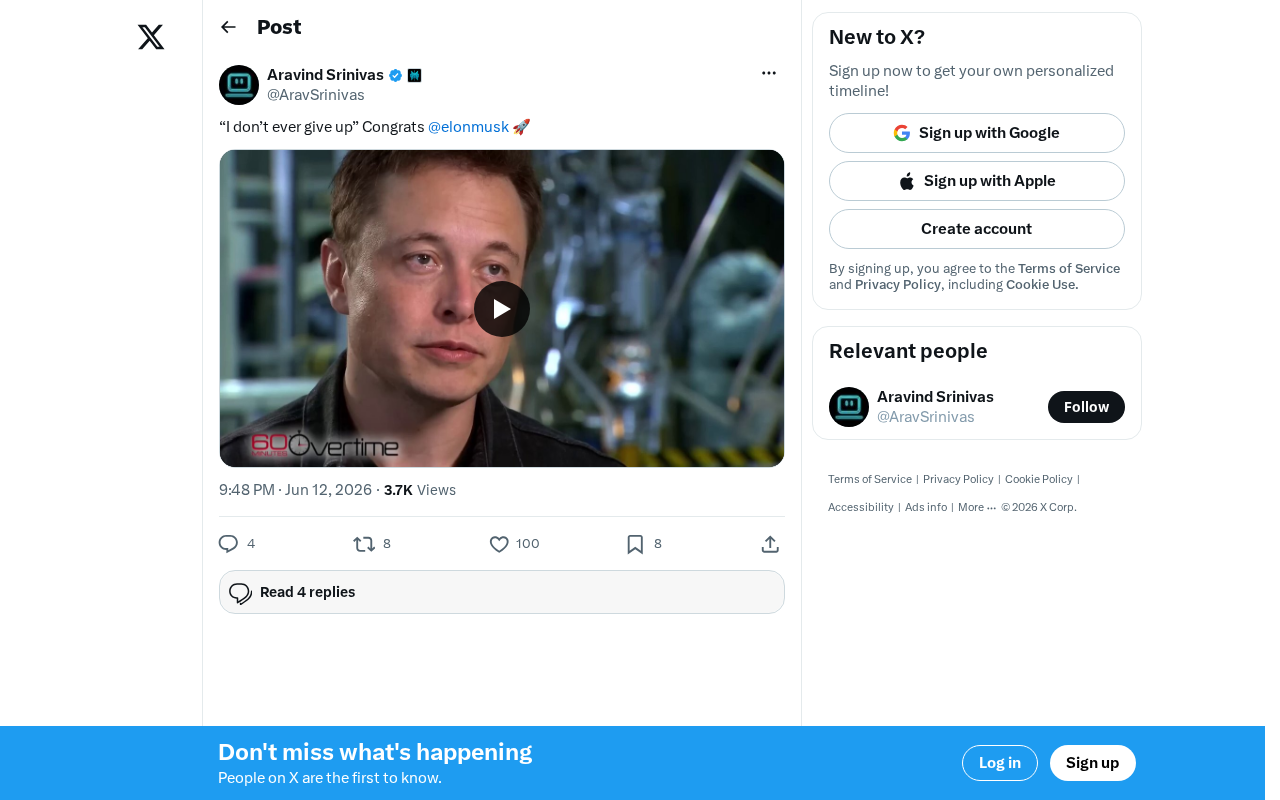
How Musk's relentless persistence philosophy carried him from near-bankruptcy to industry disruption.
This article explores the real experiences behind Elon Musk's famous 'I don't ever give up' philosophy, from SpaceX's three consecutive rocket failures and Tesla's production hell to his latest ventures in xAI and Neuralink, revealing how extreme persistence in validated directions can overcome seemingly impossible odds in tech entrepreneurship.
Musk Sparks Discussion Once Again
Recently, a tweet about Elon Musk went viral on social media. The post quoted Musk's classic statement — "I don't ever give up" — along with congratulations.
This short yet powerful statement encapsulates the core spirit of Musk's decades-long entrepreneurial journey. From SpaceX to Tesla, from Neuralink to xAI, "never give up" isn't just a slogan — it's a survival doctrine validated through repeated real-world tests.
The Real Stories Behind "Never Give Up"
From Near Bankruptcy to Industry Disruption
Musk's "never give up" is far from an empty motivational catchphrase. Looking back at his entrepreneurial history, multiple experiences of persevering on the brink of collapse give these words genuine weight:
- SpaceX's consecutive early rocket launch failures: The first three launches all ended in explosions, nearly exhausting all company funds, until the fourth successful launch saved the entire project
SpaceX was founded in 2002, when the global commercial space industry was essentially monopolized by United Launch Alliance (ULA), a joint venture between Lockheed Martin and Boeing. The technical barriers to rocket launches are extremely high, involving cross-disciplinary challenges in propulsion systems, guidance control, and materials science, with single launch costs reaching hundreds of millions of dollars. Musk chose to develop engines and reusable rocket technology from scratch — considered nearly impossible at the time. SpaceX's first three launches used the Falcon 1 rocket with liquid oxygen-kerosene propellant, with each failure stemming from different causes — from fuel leaks to stage separation malfunctions — each requiring the team to extract data from debris and redesign. It was precisely this ability to iterate rapidly from failure that ultimately allowed SpaceX to achieve orbit on its fourth attempt.
- Tesla's Model 3 production hell: During the ramp-up period, Musk spent consecutive weeks sleeping on the factory floor, personally going down to the production line to identify bottlenecks
The term "Production Hell" was Musk's own description of the Model 3 mass production crisis. Traditional automotive manufacturing has developed mature large-scale production systems over a century of accumulation, with Toyota's lean manufacturing model considered the industry benchmark. As a newcomer, Tesla attempted to disrupt traditional production lines through heavy automation, but quickly discovered that over-automation became the bottleneck itself — robotic arms were far less flexible than human workers when handling soft materials and complex assemblies. In early 2018, Model 3 weekly production briefly fell below 2,000 units, far short of the 5,000-unit target. Musk ultimately had to set up temporary tent production lines in the Fremont factory parking lot and revert some automated processes to manual operations before gradually breaking through the capacity bottleneck.
- The 2008 cash flow crisis: Facing financial distress at both SpaceX and Tesla simultaneously, he put in every last personal asset
These experiences demonstrate that true perseverance isn't blind optimism — it's choosing to act even after seeing the full scope of the difficulties ahead.
The Relevance of This Persistence Today
In today's era of rapid AI and tech iteration, Musk's philosophy of persistence remains powerfully instructive. Whether it's the development of xAI's Grok large language model or the continued advancement of Neuralink's brain-computer interface technology, his style of making heavy bets in high-risk domains has never changed.
xAI was founded in July 2023 as Musk's response to his dissatisfaction with OpenAI's technical direction. Its core product, the Grok LLM, competes directly with GPT-4, Claude, Gemini, and others. The large model space has entered a "compute arms race" phase, where training a frontier model requires tens of thousands of high-end GPUs running continuously for months, with single training runs costing tens to hundreds of millions of dollars. In 2024, xAI built a supercomputing cluster with 100,000 H100 GPUs and deeply integrated it with X platform's real-time data, attempting to establish competitive moats through differentiated data sources.
Meanwhile, Neuralink is developing implantable brain-computer interfaces (BCI), with its core technology involving the implantation of ultra-thin flexible electrode threads into the cerebral cortex to read neural electrical signals in real-time and decode them into digital commands. This field faces multiple technical challenges including biocompatibility, signal decoding precision, and wireless transmission bandwidth. In early 2024, Neuralink completed its first human implant surgery, with the patient successfully controlling a computer cursor through thought alone, though issues like electrode thread retraction still require ongoing resolution. Once mature, this technology could fundamentally transform the quality of life for paralyzed patients and potentially usher in a new era of human-machine integration.
The underlying logic of this approach is clear: once you've confirmed the direction is correct, concentrate all resources and use time and execution to crush uncertainty.
Long-Term Thinking in the Tech World
Musk's attitude isn't unique in Silicon Valley, but his execution intensity and the breadth of domains he spans are genuinely rare. In today's fierce AI competition, the "never give up" spirit is being practiced by an increasing number of entrepreneurs — choosing persistence over retreat when facing technical bottlenecks, funding pressure, and market skepticism.
For tech professionals, Musk's story conveys more than an inspirational quote — it's a methodology validated through practice:
Once you've confirmed the direction is correct, extreme persistence can carry you through cycles and ultimately achieve breakthroughs.
Whether you're an entrepreneur struggling through fundraising difficulties or an engineer repeatedly hitting walls in technical R&D, these six words — "I don't ever give up" — may be exactly the reminder you need right now.
Key Takeaways
Related articles
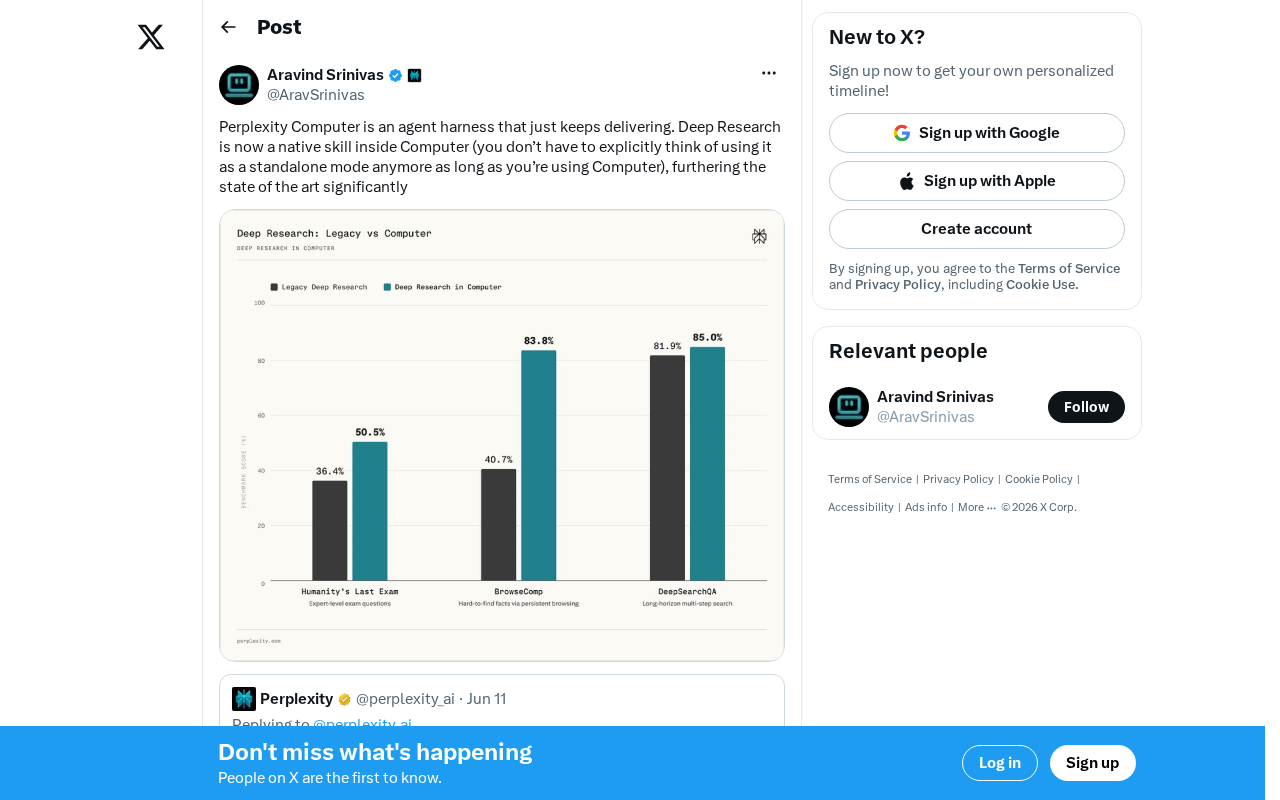
Perplexity Computer Integrates Deep Research as a Native Skill: A New Paradigm for AI Agent Capability Fusion
Perplexity integrates Deep Research as a native skill in Computer, enabling automatic invocation without manual mode switching. Analyzing the Agent Harness design philosophy and AI capability fusion trends.
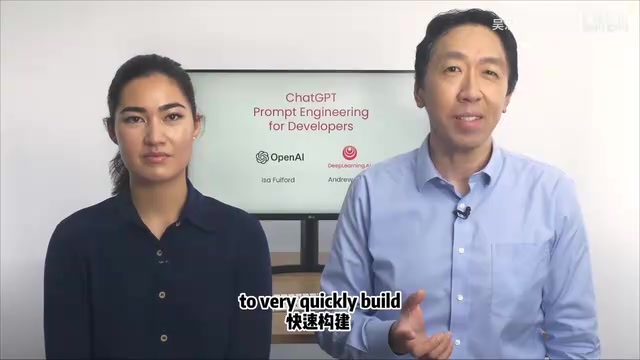
Key Takeaways from Andrew Ng × OpenAI's Prompt Engineering Course: Two Core Principles Explained
Deep dive into Andrew Ng & OpenAI's ChatGPT Prompt Engineering course: Base LLM vs instruction-tuned models, two core prompting principles, and API-first development thinking for developers.
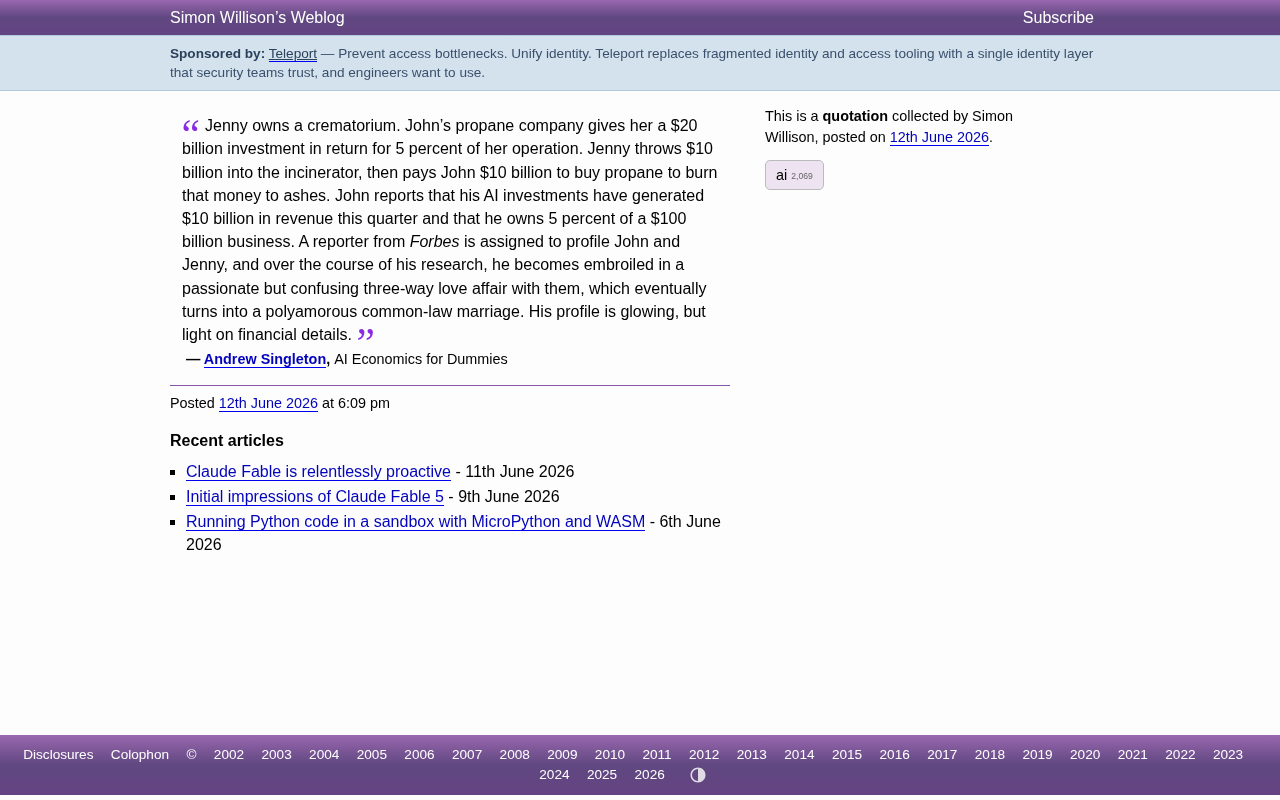
The Absurd Parable of AI Economics: How the Capital Bubble Gets Inflated
A brilliant AI economics satire exposes the absurd capital loop in AI investment: investment becomes revenue, valuations are conjured, and media becomes complicit.