Ningbo Bank AI Agent Interview Questions: Reasoning Optimization + Agent Debugging + Python Key Topics

Core technical questions from a Ningbo Bank AI Agent position interview
Based on a real interview for Ningbo Bank's Java AI Agent position, this article covers core technical questions on large model reasoning optimization and agent debugging. It focuses on improving LLM output stability through multi-path sampling (Self-Consistency strategy) — performing multiple independent samplings for the same problem to generate different reasoning chains, then selecting the optimal answer via majority voting, trading computational resources for reasoning reliability.
Introduction
As large model technology accelerates its adoption in the financial industry, banks' demand for AI Agent development talent continues to grow. This article is based on a real interview recording for a Java AI Agent position at Ningbo Bank, systematically covering the core technical questions asked during the interview, spanning multiple dimensions including large model reasoning optimization, agent debugging and troubleshooting, and Python fundamentals. Whether you're preparing for a bank AI position interview or want to understand the tech stack behind banking intelligent agent projects, this article provides practical reference.



Large Model Reasoning Optimization: How Multi-Path Sampling Improves Output Stability
The interviewer began with questions about the stability of large model reasoning. The candidate mentioned a key approach: improving answer quality through multiple inferences (multi-path sampling).
When a large model generates multiple candidate answers, quality inevitably varies. Core optimization strategies include:
- Multi-path reasoning verification: Allowing correct answers to be derived through multiple reasoning paths, enhancing result stability
- Incorrect answer filtering: Wrong answers tend to be sporadic (occasional rather than consistent), and can be effectively filtered out through multiple sampling
- Conditional judgment optimization: In scenarios involving mathematical calculations or logical judgments, design multiple reasoning chains pointing to the correct result
This approach aligns perfectly with OpenAI's proposed Self-Consistency strategy — by sampling multiple reasoning paths and selecting the most frequently occurring answer as the final output, reasoning accuracy is significantly improved.
Technical Principles and Applications of the Self-Consistency Strategy
Self-Consistency was formally proposed by Google Research in their 2022 paper "Self-Consistency Improves Chain of Thought Reasoning in Language Models." The core idea is: perform multiple independent samplings for the same problem (typically setting temperature to 0.7 or above to increase diversity), generate multiple different Chains of Thought, and ultimately select the most frequently occurring answer through Majority Voting. Experiments show that on the GSM8K mathematical reasoning benchmark, Self-Consistency can improve accuracy by approximately 17 percentage points compared to single greedy decoding.
The essence of this method is trading computational resources for reasoning reliability. It's worth noting that Self-Consistency is not simply "majority voting"
Related articles
 Tutorials
Cursor + Codex Dual-IDE Collaboration: A Practical Methodology for Open-Source Project Customization
A complete methodology for open-source project customization based on real-world experience, detailing the Cursor+Codex dual-IDE workflow, seven-stage process, MVP validation, and AI source code reading techniques.
 Tutorials
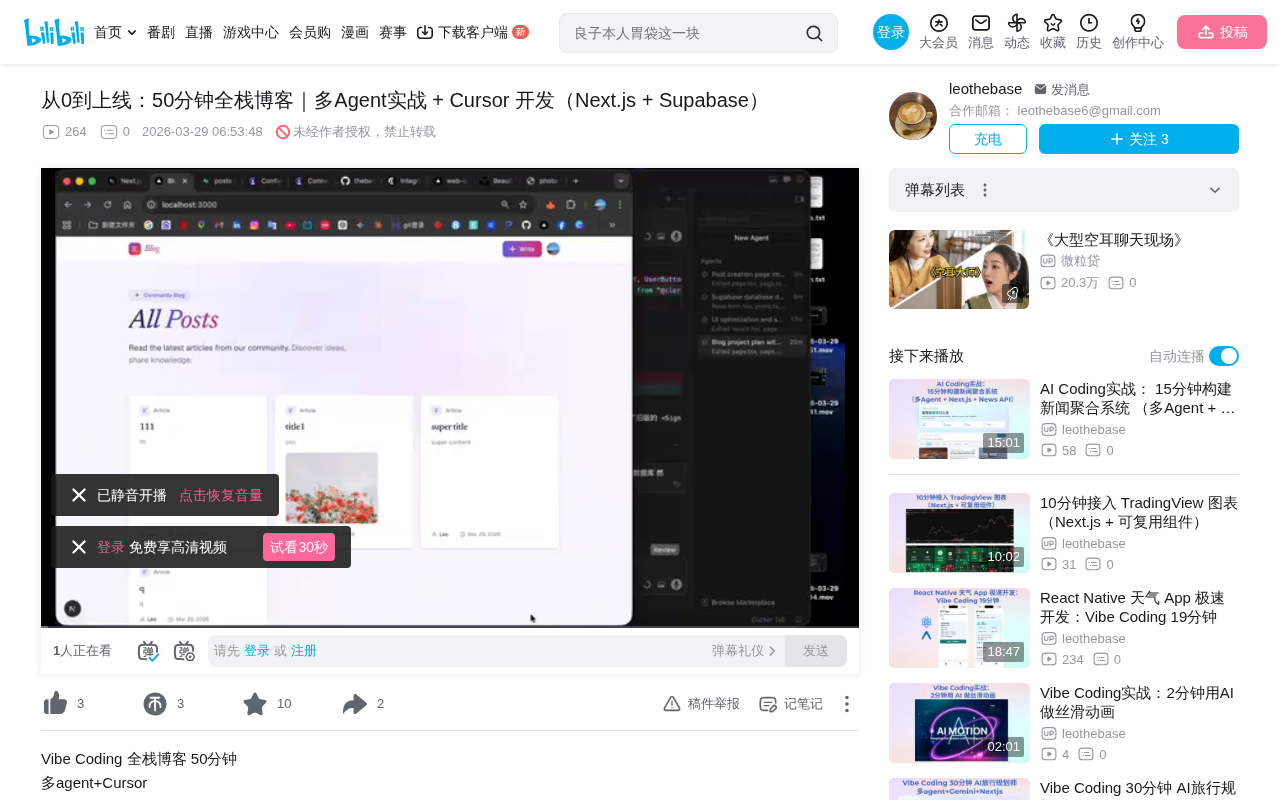
Cursor Multi-Agent in Practice: Building a Full-Stack Next.js Blog in 50 Minutes
Build a full-stack blog in 50 minutes using Cursor IDE's multi-Agent mode with Next.js, Clerk auth, and Supabase. Learn the 4-phase AI Agent workflow and key integration pitfalls.
 Tutorials
Building an AI Software Factory from Scratch: A Cursor Engineer's Hands-On Experience with Multi-Agent Collaboration
Cursor engineer Eric shares practical insights on building an AI software factory: automation levels, guardrail design, parallel Agent management, and scaling to 1000+ Agents for 24/7 development.