NotebookLM Anniversary Data Revealed: The Source-Driven AI Revolution Behind 1.5 Billion Notebooks
NotebookLM hits 1.5 billion creations, proving source-grounded AI is the future of knowledge work.
Google's NotebookLM celebrates its anniversary with 1.5 billion notebooks, audio overviews, and slide decks created. The source-driven AI tool differentiates itself from general chatbots by grounding answers in user-uploaded materials via RAG architecture, reducing hallucinations. Its viral Audio Overview feature and expanding capabilities signal a shift from AI content creation to AI-assisted understanding.
NotebookLM (Tailwind) Celebrates Its Anniversary
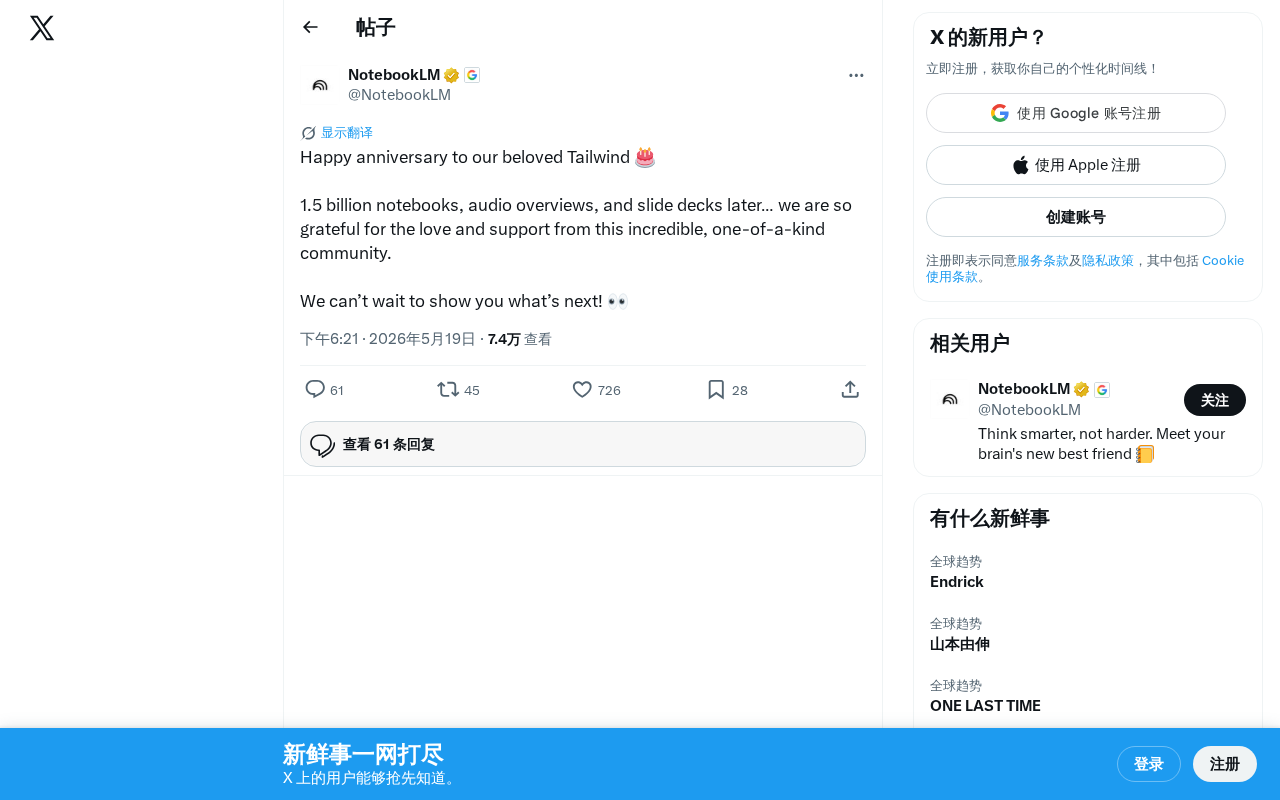
Google's AI knowledge assistant NotebookLM (internal codename Tailwind) recently marked its product anniversary. The official team shared a celebratory post on social media, revealing a striking milestone: users have collectively created 1.5 billion notebooks, audio overviews, and slide decks.
This figure marks NotebookLM's rapid growth in the AI-assisted knowledge management space and reflects strong user demand for source-driven AI tools. From its origins as an experimental project to a mature product with a massive user base, NotebookLM's trajectory is worth a closer look.
The Product Logic Behind 1.5 Billion Uses
Three Core Features Driving Usage
NotebookLM's 1.5 billion usage count spans three core product formats:
- Notebooks: Users upload documents, PDFs, web pages, and other materials, and the AI answers questions and generates summaries based on these source materials
- Audio Overviews: Automatically transforms complex documents into podcast-style audio conversations — a feature that sparked widespread discussion on social media
- Slide Decks: Automatically generates presentations based on source materials
These three output formats cover the entire workflow of knowledge workers — from learning and understanding to presenting. The 1.5 billion figure shows that NotebookLM has evolved from a novelty tool into an indispensable part of many people's daily workflows.
Audio Overview: The Killer Feature That Went Viral
NotebookLM's Audio Overview feature went viral on social media in the second half of 2024. The feature leverages Google's text-to-speech (TTS) technology and dialogue generation capabilities to automatically transform uploaded documents into natural conversations between two virtual hosts. Unlike traditional TTS, Audio Overview doesn't simply read text aloud — instead, the AI first understands the document's core content, generates a dialogue script featuring Q&A interactions and contrasting viewpoints, and then renders it through high-quality speech synthesis. This format reduces the cognitive load of complex information and is particularly well-suited for scenarios where reading isn't possible, such as commuting or exercising. The feature's popularity also reflects a broader trend: audio is rapidly growing as a medium for knowledge consumption, and the booming podcast market has provided a natural mental model for AI-generated audio content.
The Differentiating Advantage of Source-Driven Design
Unlike general-purpose conversational AI tools like ChatGPT and Claude, NotebookLM's core philosophy is "answering questions based on your materials." This source-grounded design effectively reduces AI hallucination issues, allowing users to build trust in the AI's output — because every answer can be traced back to a specific source document.
AI hallucination is one of the core challenges facing large language models, referring to instances where models generate text that appears plausible but is actually inaccurate or entirely fabricated. This problem stems from how LLMs work — they are fundamentally probability-based next-token predictors without genuine fact-verification capabilities. NotebookLM's source-driven design is essentially a productized implementation of Retrieval-Augmented Generation (RAG) architecture. RAG technology retrieves relevant passages from a specified knowledge base before generating an answer, injecting the retrieved results as context into the prompt, thereby constraining the model's generation scope to verifiable source materials. This approach not only reduces hallucination rates but also provides traceability — users can click on citations to view original sources, which is especially critical in enterprise applications.
This positioning is particularly strong in scenarios that demand high accuracy, such as academic research, legal document analysis, and business report interpretation.
From Tailwind to NotebookLM: The Product Evolution
The official team deliberately used the name "Tailwind" in their celebratory tweet — this was NotebookLM's codename during its internal development phase at Google, serving as a nod to the product's origins.
NotebookLM originally debuted as an experimental project at Google I/O. Google I/O is Google's annual developer conference, typically held in May, and serves as the primary stage for Google to announce new technologies, products, and platform updates. NotebookLM was first publicly unveiled at Google I/O 2023 under the name Project Tailwind, positioned as an experimental AI-first note-taking tool. Google has a tradition of opening internal experimental projects to the public for testing through its Labs program, a mechanism that allows products to gather real user feedback before official launch. The evolution from Tailwind to NotebookLM exemplifies Google's typical path for productizing AI research: first demonstrating possibilities with a research prototype, then finding product-market fit (PMF) through user validation, and ultimately developing it into an independent product line with a commercial version.
NotebookLM subsequently went through several major updates:
- Support for more source material formats (YouTube videos, audio files, etc.)
- Launch of the viral Audio Overview feature
- Addition of slide deck generation capabilities
- Release of NotebookLM Plus, a paid subscription tier
Each iteration expanded the boundaries of AI's ability to help humans understand complex information.
Where Is NotebookLM Headed Next?
The official team left an intriguing hint at the end of their tweet: "We can't wait to show you what's next!"
Given Google's continued investment in Gemini model capabilities and the rapid evolution of multimodal AI technology, NotebookLM may push forward in the following directions:
- More powerful multimodal source material understanding (chart parsing, deep video content analysis)
- Richer content output formats
- Deeper integration with the Google Workspace ecosystem
- Enhanced team collaboration features
Gemini is the latest generation of multimodal large language models developed by Google DeepMind, first released in December 2023. Unlike its predecessor PaLM, Gemini natively supports understanding and generation across multiple modalities — including text, images, audio, video, and code — from the training stage. Its latest Gemini 2.5 series features significant improvements in reasoning capabilities, long-context processing (supporting context windows of up to 1 million tokens), and tool calling. For NotebookLM, Gemini's long-context capability means it can process more source documents at once, while its multimodal capabilities lay the foundation for understanding non-text content like charts and videos. NotebookLM is essentially a vertical application layer built on Gemini's capabilities — every leap in model performance directly translates into improved product experience.
Implications for the AI Knowledge Tools Space
NotebookLM's growth validates a key trend: users don't just want smart AI — they want trustworthy, fact-based AI. In an environment of information overload, helping users extract insights from their own materials is often more practically valuable than having AI generate content from scratch.
The AI knowledge management space that NotebookLM occupies is heating up rapidly. Competitors include Perplexity (focused on AI search and research), Elicit (academic research assistance), Mem (AI-enhanced notes), and Microsoft Copilot's knowledge integration capabilities within the Office ecosystem. Traditional note-taking tools like Notion and Obsidian are also actively integrating AI features. The key competitive dimensions in this space include: breadth of source material support, accuracy of AI understanding, diversity of output formats, and depth of integration with existing workflows. NotebookLM's unique advantage lies in Google's model capabilities and ecosystem resources, but its challenge is finding a clear position within Google's vast product matrix and avoiding feature overlap with products like Google Docs and Google Search.
1.5 billion uses is a milestone, but the direction it represents is even more significant — AI is shifting from "creating content" to "understanding content," and from "replacing thinking" to "assisting thinking." This may be the truly sustainable path for AI tools to integrate into knowledge work.
Related articles
Vibe Coding in Practice: A Junior Student Uses Cursor to Build a Multi-Agent System with 51 AI Officials Based on the Three Departments and Six Ministries Framework
A junior student uses Cursor and Vibe Coding to build a multi-agent system with 51 AI officials modeled on China's Three Departments and Six Ministries, featuring task distribution, approval workflows, and Token cost visualization.
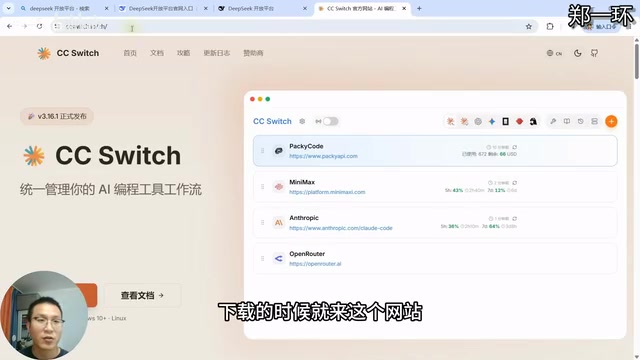
How to Connect Codex to DeepSeek Models: Free Switching via CC Switch
Learn how to connect OpenAI Codex to DeepSeek models via CC Switch, enabling free switching between DeepSeek and GPT with complete setup and routing guide.
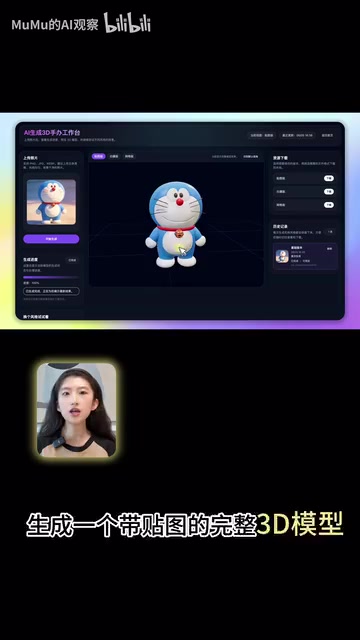
AI Coding Deployment Guide: A Complete Hands-On Workflow from Local Demo to Live Website
Most AI Coding tutorials stop at local demos. This guide walks through 8 key steps to deploy an AI-powered 3D figurine website from Codex coding to live server deployment.