One Command to Use GPT-5.5 for Free with OpenClaw
One Command to Use GPT-5.5 for Free wi…
OpenClaw calls GPT-5.5 via Codex plugin with one command, reusing GPT membership at zero extra cost.
OpenClaw is a CLI-based AI coding assistant that masquerades as a Codex client through its plugin mechanism, directly reusing GPT membership authentication to call the official GPT-5.5 model with just one command. Compared to API proxy services, this solution avoids model substitution risks, requires no additional API top-ups, and reuses existing membership benefits at zero cost — though users should be aware of rate limits and potential future policy changes from OpenAI.
Overview
OpenClaw is a command-line interface (CLI) based AI coding assistant tool, similar in design philosophy to Anthropic's Claude Code. It's designed to let developers collaborate with large language models directly in the terminal environment for code writing, debugging, refactoring, and other tasks. Unlike IDE plugin-based AI assistants, CLI-based coding assistants are closer to developers' native workflows, capable of directly operating on the file system, executing Shell commands, and making context-aware code modifications across multi-file projects. OpenClaw supports extending model backends through a plugin mechanism, which is the technical foundation that makes this solution possible.
For developers using OpenClaw as their AI coding assistant, model selection has always been a key concern. Many people either rely on third-party API proxy services or need to top up API credits separately. Now, leveraging OpenAI's Codex mechanism, you can have OpenClaw directly call the first-party GPT-5.5 model with just one command — provided you already have a GPT membership subscription.
Steps: One Command Is All It Takes
The entire configuration process is remarkably simple. The core idea is to use OpenClaw's plugin mechanism to call OpenAI's official GPT-5.5 model under the guise of Codex.
Here are the specific steps:
- Run the configuration command: Enter the specified configuration command in your terminal and press Enter to complete the initialization
- Verify the configuration: Enter the check command and review the output
- Confirm success: If the output contains
OpenAI-HODLX, the configuration was successful
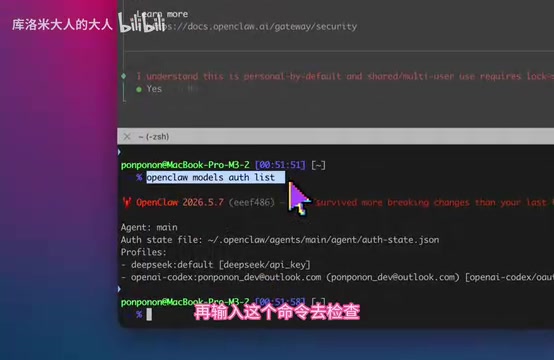
Once configured, you'll see the GPT-5.5 option in OpenClaw's model selection list. During conversations, the model will explicitly confirm that it's using GPT-5.5, indicating the entire pipeline is working correctly.
Technical Principles Explained
The principle behind this solution isn't complicated, but it's cleverly designed.
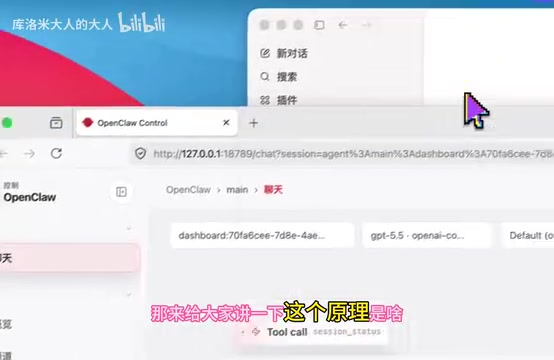
OpenAI's Codex is an AI coding agent product designed for software development scenarios, positioned as an intelligent agent capable of autonomously executing programming tasks in the cloud. Its launch directly targets Anthropic's Claude Code — which has accumulated a large user base in the developer community thanks to its powerful code comprehension and terminal operation capabilities. The competition between Codex and Claude Code is essentially a head-to-head clash between OpenAI and Anthropic in the "AI-native development tools" space. Precisely because Codex, as an official OpenAI product, has legitimate access to call GPT-series models, OpenClaw can bypass API Key restrictions by "masquerading as a Codex client" and directly reuse ChatGPT membership authentication.
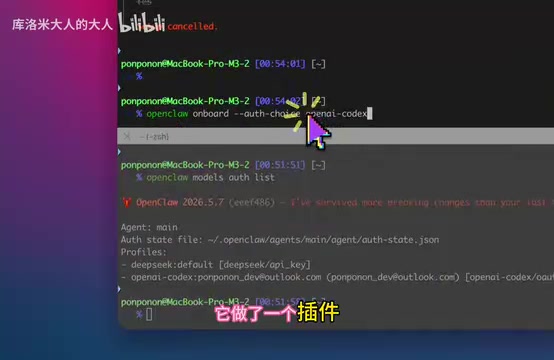
In other words, the essence of this solution is:
- OpenClaw masquerades as a Codex client through its plugin
- It leverages your existing local GPT membership authentication
- It directly requests GPT-5.5 model inference services from OpenAI's official servers
The only prerequisite is that you already have a GPT membership locally (such as a ChatGPT Plus or Pro subscription). With that in place, everything runs smoothly.
Three Core Advantages
Compared to the traditional API proxy model, this solution offers three significant benefits:
1. Say Goodbye to Unreliable API Proxies
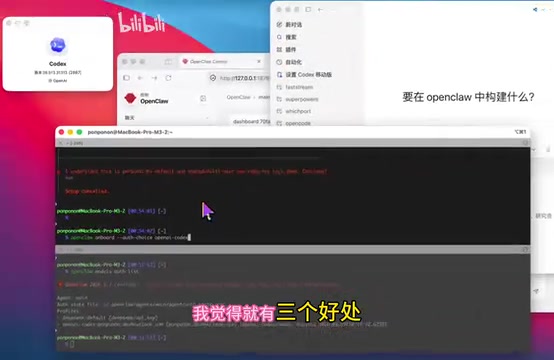
API proxies (also called API mirrors or relay services) are third-party services that forward requests to overseas AI providers like OpenAI and Anthropic. Their business model typically involves bulk-purchasing API credits and reselling at lower prices, or providing access through shared account pools. These services carry multiple core risks: Model substitution is the most insidious — providers may actually return GPT-3.5 or other low-cost model responses when users request GPT-4o, and users can't easily tell from the output quality alone. Additionally, there are data security concerns (sensitive information like code and business logic passes through third-party servers) and poor service stability (proxies can shut down at any time due to policy or funding issues). Using a first-party direct connection fundamentally eliminates all of these risks.
2. Membership Subscriptions Are More Convenient Than API Top-ups
ChatGPT membership subscriptions (Plus/Pro) and OpenAI API credits are two completely independent billing systems designed for different use cases. Membership subscriptions use a fixed monthly fee (Plus at $20/month, Pro at $200/month), allowing users unlimited access to corresponding models through the ChatGPT web interface or official app during the subscription period, without worrying about token consumption. API credits, on the other hand, use a pay-as-you-go model based on actual token consumption, requiring credit card binding, prepayment, and self-monitoring usage to prevent overspending. For most programmers, subscribing to a GPT membership is far simpler than topping up API credits — it's a one-time setup with automatic monthly renewal, hassle-free.
3. Zero Additional Cost Through Membership Resource Reuse
The vast majority of developers already have their own GPT membership. In this case, you simply share your existing membership benefits with OpenClaw, enabling the coding assistant to use GPT-5.5 directly without any additional expense or effort. This is a highly efficient form of resource reuse.
Summary and Considerations
The core value of this solution lies in lowering the barrier to entry. It bridges OpenAI's consumer-level membership benefits with professional-grade coding tools, allowing developers to use the latest GPT-5.5 model in OpenClaw without additional payment.
However, a few things to keep in mind:
- Whether OpenAI will restrict this method of calling through the Codex identity in the future remains uncertain
- Membership rate limits still apply. Rate Limits are access control mechanisms set by AI service providers to prevent resource abuse, typically measured in "requests per minute (RPM)" or "tokens per day (TPD)." Both ChatGPT Plus and Pro members face certain frequency limits when using advanced models, and may encounter queuing or temporary downgrades during peak hours. Therefore, this solution is better suited for low-to-moderate frequency use cases — heavy users should still evaluate whether they need to supplement with API credits
- It's recommended to follow OpenClaw's official updates to ensure the plugin version stays current
Overall, for developers who already have a GPT membership, this is a solution worth trying — it's just one command, so why not give it a shot?
Related articles
 Tutorials
Cursor + Codex Dual-IDE Collaboration: A Practical Methodology for Open-Source Project Customization
A complete methodology for open-source project customization based on real-world experience, detailing the Cursor+Codex dual-IDE workflow, seven-stage process, MVP validation, and AI source code reading techniques.
 Tutorials
Cursor Multi-Agent in Practice: Building a Full-Stack Next.js Blog in 50 Minutes
Build a full-stack blog in 50 minutes using Cursor IDE's multi-Agent mode with Next.js, Clerk auth, and Supabase. Learn the 4-phase AI Agent workflow and key integration pitfalls.
 Tutorials
Building an AI Software Factory from Scratch: A Cursor Engineer's Hands-On Experience with Multi-Agent Collaboration
Cursor engineer Eric shares practical insights on building an AI software factory: automation levels, guardrail design, parallel Agent management, and scaling to 1000+ Agents for 24/7 development.