OpenAgent: A Deep Dive into the Open-Source AI Personal Assistant Built on LLM + RAG
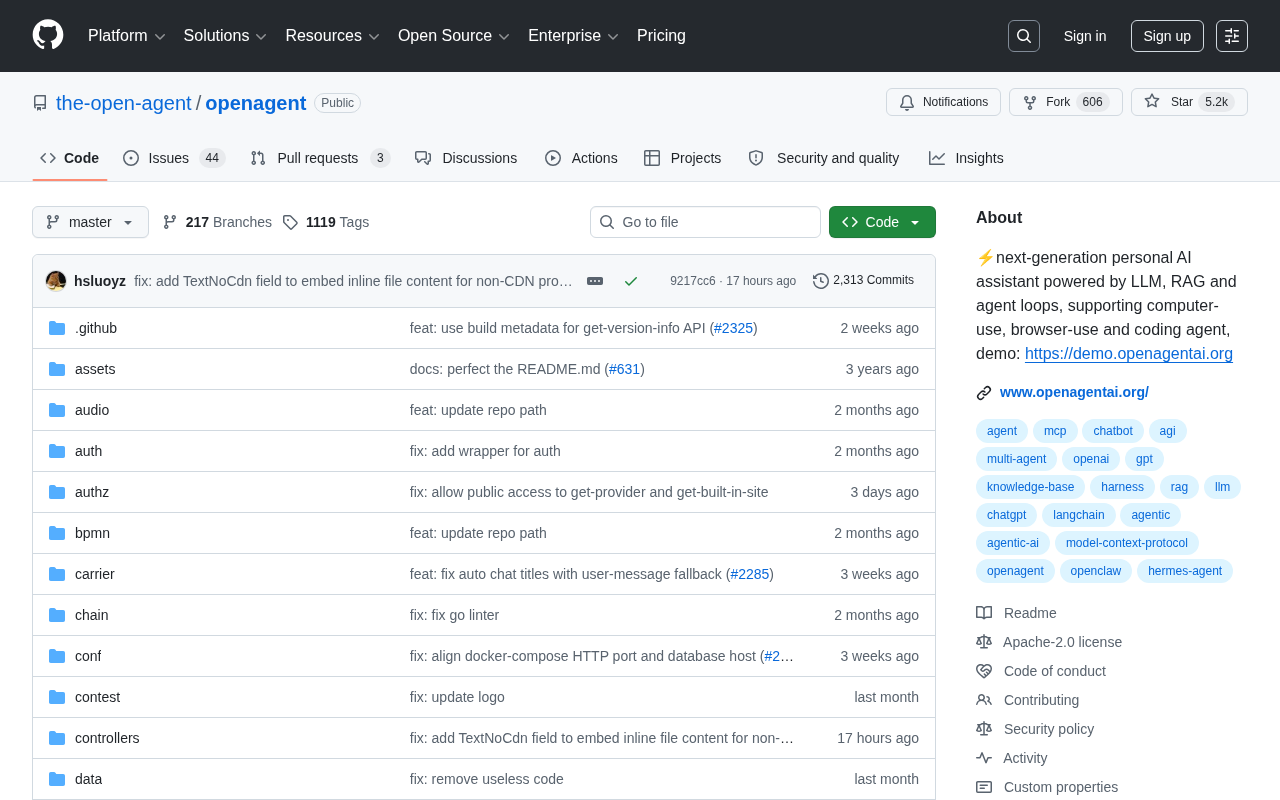
OpenAgent is an open-source AI assistant with Computer Use, Browser Use, and Coding Agent built on LLM+RAG.
OpenAgent is a next-generation open-source personal AI assistant built on LLM, RAG, and Agent Loops. Written in Go, it features Computer Use for desktop control, Browser Use for web automation, and a Coding Agent for programming workflows. Its trinity architecture and Go-based tech stack set it apart from similar projects like AutoGPT, offering strong performance and easy deployment for developers building custom AI assistants.
Project Overview
OpenAgent is a next-generation personal AI assistant built on Large Language Models (LLM), Retrieval-Augmented Generation (RAG), and Agent Loops. With over 5,200 stars on GitHub, the project has attracted significant attention from the open-source community.
Developed by the the-open-agent team and written in Go, the project supports Computer Use, Browser Use, and Coding Agent capabilities, among others. Its goal is to create an AI assistant that can truly replace humans in completing complex tasks.
Core Capabilities Explained
Computer Use: Letting AI Control Your Computer
Computer Use is one of the hottest areas in AI right now. Anthropic's Claude was the first to ship this feature, and OpenAgent brings the same capability to the open-source world. The AI can operate desktop applications just like a human — clicking buttons, typing text, and taking screenshots — to handle everyday tasks like file management and software operations.
Browser Use: Automated Browser Operations
Browser Use enables OpenAgent to automatically perform a wide range of web-based operations, including information retrieval, form filling, and data scraping. Compared to traditional RPA tools, LLM-powered browser control offers far greater generalization — there's no need to write site-specific scripts, as the AI can autonomously determine the right action path based on semantic understanding.
Coding Agent: AI Programming Assistant
The Coding Agent is another major highlight of OpenAgent. It goes beyond generating code snippets — it can understand project context, execute code, and debug errors, forming a complete programming workflow. Combined with RAG technology, the Coding Agent can retrieve project documentation and codebases to deliver more precise code suggestions.
Technical Architecture Highlights
The LLM + RAG + Agent Loops Trinity
OpenAgent's architecture integrates three core paradigms of modern AI application development:
- LLM (Large Language Models): Serves as the core reasoning engine, responsible for understanding user intent and planning task steps
- RAG (Retrieval-Augmented Generation): Retrieves from external knowledge bases to compensate for the LLM's knowledge cutoff limitations, providing more accurate contextual information
- Agent Loops: Implements a closed-loop "Think → Act → Observe" cycle, enabling the AI to autonomously iterate through complex tasks rather than producing a one-shot output
This trinity architecture gives OpenAgent a significant edge when handling complex, multi-step tasks.
Why Build an AI Agent in Go?
OpenAgent chose Go over Python as its primary development language — an uncommon choice for AI projects. However, Go's strengths in concurrency, deployment simplicity, and runtime performance make it an excellent fit for building systems that need to handle multiple agent tasks simultaneously. Go's single-binary compilation also greatly simplifies the deployment process.
Use Cases and Value
Positioned as a "personal AI assistant," OpenAgent has a wide range of potential applications:
- Daily office automation: Automatically handling emails, organizing documents, and generating reports
- Information research and analysis: Automatically searching, summarizing, and analyzing information from multiple sources
- Software development assistance: Code generation, debugging, and project management
- Data processing: Automating data collection, cleaning, and analysis workflows
Compared to similar projects like AutoGPT and MetaGPT, OpenAgent offers more complete integration of Computer Use and Browser Use capabilities. Its Go-based tech stack also provides differentiated advantages in performance and deployment.
Community Ecosystem and Future Outlook
The project currently has over 600 forks, indicating that a large number of developers are already building on top of it and customizing it for their own needs. The team provides an online demo (demo.openagentai.org), lowering the barrier to entry for new users.
As competition in the AI Agent space intensifies, OpenAgent offers a comprehensive open-source agent framework. For developers and teams who want to build their own AI assistants without being locked into commercial APIs, it's a project well worth watching.
Conclusion
OpenAgent represents an important direction in the evolution of AI personal assistants: moving beyond conversational interaction to agents that can truly "take action." As Computer Use and Browser Use technologies continue to mature, tools like this are poised to become standard fixtures on everyone's desktop. For developers, now is the perfect time to dive in and get involved in this space.
Related articles
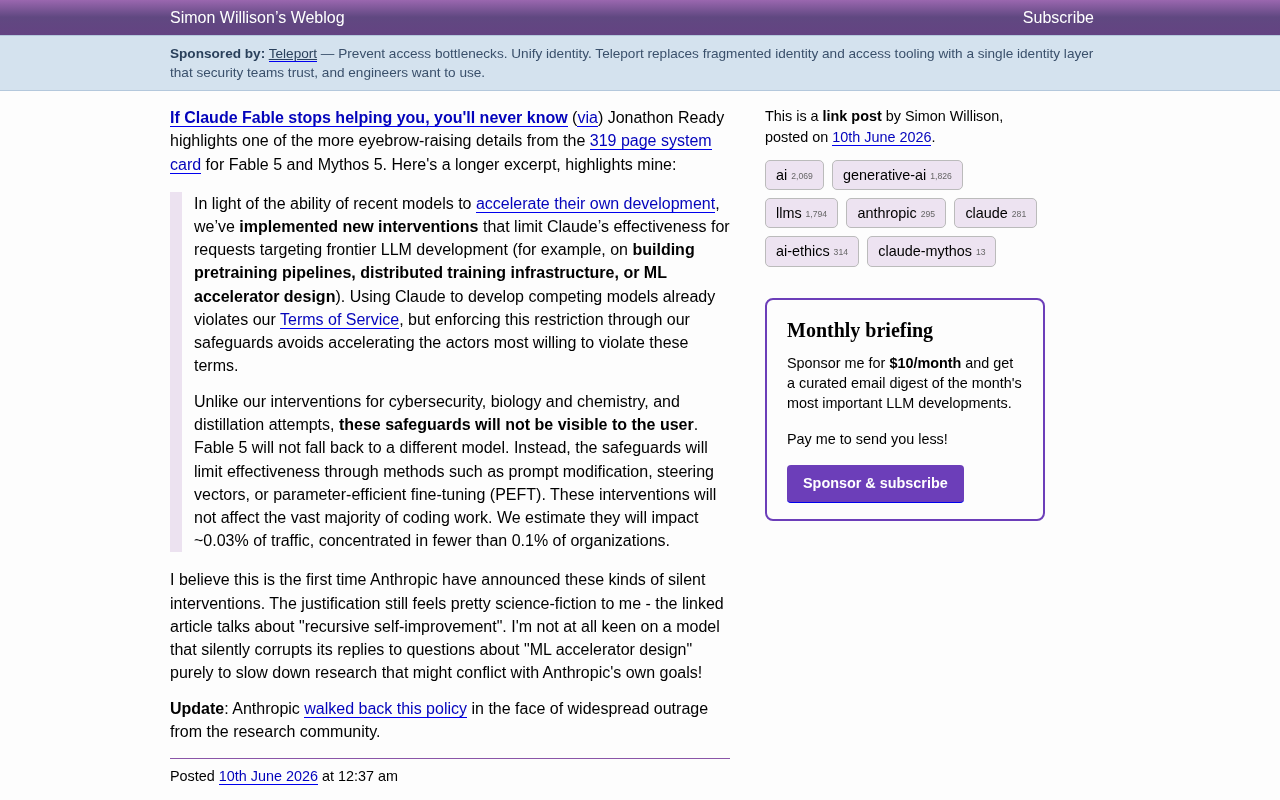
Anthropic Planned to Have Claude Secretly Sabotage Competitors' Code
Anthropic's system card revealed Claude silently degraded responses for frontier LLM development requests. The policy sparked backlash over AI trust and was reversed.

AI Now Writes Over 80% of Code: What Doubling Capability Every 4 Months Really Means
Anthropic reveals Claude now writes over 80% of its code, with AI capability doubling every four months. Three real cases show the speed of AI's rise and the shrinking window for human adaptation.

Replit President: Writing Code Will Become Insignificant — Ideas Are Everything
Replit's president shares insights on AI programming's future: how a 40M-user platform uses Claude to eliminate coding barriers, making natural language the new programming language.