Replit President: Writing Code Will Become Insignificant — Ideas Are Everything
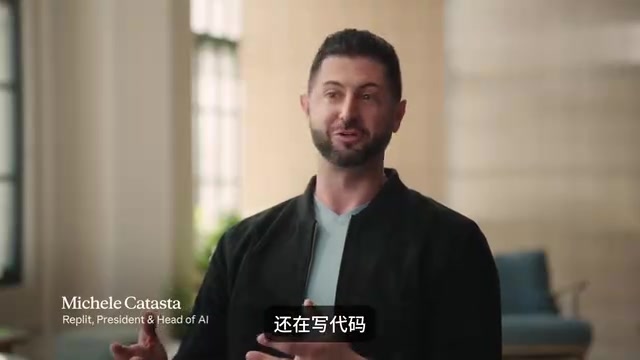
Replit's president argues AI is making coding skills irrelevant — ideas and execution are what matter now.
Replit's president shares how the platform evolved from a browser-based IDE to an AI-native app builder with 40 million users. By choosing Anthropic's Claude as its core engine, Replit Agent enables anyone to turn natural language descriptions into working applications. He argues that coding barriers are being demolished, natural language is the new programming language, and a new wave of citizen developers is emerging.
The president of Replit recently shared his profound insights on the future of AI-powered programming in an interview. From being a 16-year-old open-source developer to now leading a platform with 40 million registered users, he believes AI is completely demolishing the barriers to programming — in the future, people won't need to learn to code; they'll just need to have ideas.
From Open-Source Teenager to AI Programming Evangelist
The Replit president recalled that at age 16, he aspired to become an outstanding open-source developer. Today, he's still working with the same passion he had as a teenager, viewing it as his lifelong mission. This personal journey reflects the massive transformation the programming world is undergoing.
Replit (short for Read-Eval-Print Loop) was originally founded by Amjad Masad in 2016 as a browser-based online integrated development environment. Traditional software development requires installing programming language runtimes, package managers, code editors, and a whole suite of tools on a local machine — the environment setup alone is enough to scare off countless beginners. Replit moved all of this to the cloud, allowing users to write, run, and deploy code simply by opening a browser. With the arrival of the AI wave, Replit transformed from a developer tools platform into an AI-native application building platform, dramatically expanding its user base from professional developers to ordinary people with zero programming experience.
Replit's positioning is crystal clear: It's a place where you bring your ideas, need zero programming skills, and use natural language to express what you want to build. The magical experience users feel when they see their ideas become real applications for the first time is the core value Replit pursues.
As he put it: "We've made programming so accessible that people don't even feel like they're writing code — they're just turning the ideas in their heads into an app, a website."
Why Claude: The Model Is the Engine
In building Replit Agent, the team experimented with different AI models and ultimately chose Anthropic's Claude. The Replit president used a vivid analogy to explain this decision:
"The model is like the engine of a car, and we're building the entire car around it."

He emphasized that to truly eliminate the entry barrier to programming, model capability is the decisive factor. Replit needs "genius-level" AI agents, and that's precisely why they chose Claude.
Anthropic was co-founded in 2021 by former OpenAI Research VP Dario Amodei and Daniela Amodei. The AI safety company is known for its "Constitutional AI" methodology, emphasizing model safety and controllability. The Claude Sonnet series is its mid-tier model optimized for real-world application scenarios, with particularly outstanding code generation capabilities. This choice began when Sonnet 3.5 was released — the model achieved leading scores on multiple programming benchmarks (such as SWE-bench and HumanEval), demonstrating significant advantages in understanding complex codebase context, multi-step reasoning, and generating production-grade code. Since then, Anthropic has maintained its leading position in the programming model space.
Notably, Replit Agent represents the cutting-edge "AI Agent" paradigm in current AI application development. Unlike traditional chat-based AI assistants, AI Agents can autonomously plan tasks, break down steps, invoke tools, and execute iteratively. In programming scenarios, this means the Agent can not only generate code snippets but also understand overall project architecture, create file structures, install dependencies, configure databases, debug errors, and even deploy applications to production. This end-to-end autonomous execution capability is the key technical foundation that enables non-technical users to go from natural language descriptions directly to running applications.
Christmas Morning with a New Toy: The Thrill of Model Iterations
The Replit president revealed an interesting work detail: as a practitioner in the applied AI space, one of his favorite parts of the job is getting early access to Anthropic's latest model research previews.

He compared this experience to "getting a shiny new toy on Christmas morning" — the process of exploring what a new model can do is the most exciting window of time they have.
Anthropic gave Replit early access to Sonnet 3.7, and the team quickly built Replit Agent v2 based on the new model, launching the new Agent on the same day Anthropic officially released the model. Sonnet 3.7 introduced extended thinking capabilities, enabling the model to perform deeper reasoning before generating code — critical for handling complex software engineering tasks. This also brought significant improvements to Agent v2's task planning accuracy and multi-step execution reliability. The simultaneous launch generated "incredible market response."
This detail reveals a key dynamic in AI application-layer competition. In the AI industry, foundation model companies typically provide research previews to core partners weeks or even months before official release, giving them time for prompt engineering optimization, system integration testing, and product experience tuning. This "early access" partnership is becoming an important competitive moat — teams that can ship adapted products on the day a new model launches gain not only a technical first-mover advantage but also massive market exposure from the media attention surrounding the model release. Leaps in model capability directly drive qualitative improvements in product experience, and teams that adapt to new models first gain enormous first-mover advantages.
Behind 40 Million Users: The Real Impact of Democratizing Programming
When asked whether Replit is still a "hidden secret," the Replit president offered an impressive number: the platform recently surpassed 40 million registered users.
More importantly, there's been a breakthrough at the user experience level. He noted that users are experiencing something unprecedented in the product, which has brought massive attention to the platform.
What makes Replit unique is that it removes all the complexity that makes software engineering difficult. That barrier has been completely demolished by Replit. He shared a profound observation:
"Some people have spent their entire lives feeling they weren't 'qualified' to create software. They've always had great business ideas, and now they're rapidly completing the entire zero-to-one journey. This is changing people's lives."
This statement highlights the deepest social significance of AI programming tools — they're not just efficiency tools but a mechanism of empowerment. The democratization of programming isn't an entirely new concept of the AI era; it's a technological evolution that has continued for decades. From the birth of the BASIC language in the 1960s (designed to let non-computer-science students program), to the popularization of visual programming tools in the 1990s (like Visual Basic and Dreamweaver), to the rise of low-code/no-code platforms in the 2010s (like Bubble, Webflow, and Airtable), each technological leap lowered the barrier to software creation by an order of magnitude. However, the transformation brought by AI programming tools is a qualitative leap — for the first time, it truly achieves direct conversion from "natural language intent" to "runnable software," completely eliminating the need for users to understand any technical abstractions.
In the past, turning an idea into a software product required years of programming study or expensive outsourcing costs; now, this process has been compressed to just minutes of natural language description. According to Gartner's forecast, by 2026, 80% of software products will involve non-professional developers in their creation — a trend that is shifting from prediction to reality.
The Future of Programming: Code Itself No Longer Matters
From the Replit president's insights, we can distill several key trends in AI programming development:
First, natural language is becoming the new programming language. When users "don't even feel like they're writing code," programming skills in the traditional sense are being redefined. Natural language programming relies on the synergistic breakthroughs of large language models across three dimensions: semantic understanding, intent inference, and code generation. Users describe requirements in everyday language, and the model needs to accurately understand the underlying business logic, infer technical details that weren't explicitly stated, and ultimately generate structured, executable code. The maturity of this process is the core metric determining the practicality of AI programming tools.
Second, underlying model capability determines the product ceiling. Replit's "engine-car" analogy precisely describes the current competitive landscape of AI applications — innovation at the application layer is highly dependent on the capability boundaries of foundation models. This also means that the fate of AI application companies is largely tied to their chosen model provider, and every major model upgrade has the potential to reshape the competitive landscape of the entire application ecosystem.
Third, the democratization of programming is creating a new class of entrepreneurs. People who have never written a single line of code are becoming creators of software products. This isn't about replacing programmers — it's about massively expanding the creator community. Just as the proliferation of personal computers didn't eliminate IT professionals but instead created a vast digital economy ecosystem, the widespread adoption of AI programming tools will give rise to a new group of "citizen developers" who compensate for the lack of technical skills with domain knowledge and creativity, building solutions in their respective industries that professional developers might never have imagined.
Writing code itself is indeed becoming "insignificant." But the ability to turn ideas into reality — understanding requirements, designing products, solving real problems — these capabilities are actually becoming even more valuable in the AI era. The future belongs to those with great ideas who dare to act, not merely to those who can write code.
Related articles

AI Large Model Learning Roadmap Breakdown: Three Stages from Application Development to Model Fine-Tuning
Deep breakdown of a popular AI large model learning roadmap covering LangChain, RAG, Agent, and LoRA fine-tuning across three stages, with analysis of its strengths and limitations for career changers.
AI Agent Development: A Complete 6-Week Systematic Learning Roadmap
A 6-week systematic learning roadmap for AI Agent development, covering core architecture, ReAct principles, multi-agent collaboration, RAG integration, and deployment.
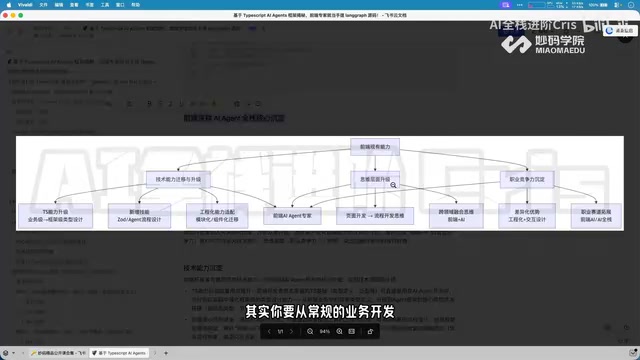
Four Core Advantages Frontend Developers Have When Transitioning to AI Agent Development
Frontend developers have key advantages for AI Agent development: TypeScript ecosystem fit, low-barrier full-stack bridging, and state management isomorphism. Learn the transition path here.