OpenAI Codex Deep Dive: Core Capabilities and Engineering Best Practices Guide
A comprehensive guide to OpenAI Codex's engineering capabilities, from Agent Loops to Specification-Driven Development.
This article provides an in-depth analysis of OpenAI Codex's core capabilities beyond simple code generation, covering its multi-task parallel processing with Git Worktree, Agent Loop mechanism that simulates human development workflows, and the paradigm shift from prompt engineering to Specification-Driven Development (SDD). It also explores context engineering optimizations including RAG-based retrieval, AST awareness, and MCP protocol integration.
Codex: Far More Than an AI Coding Assistant
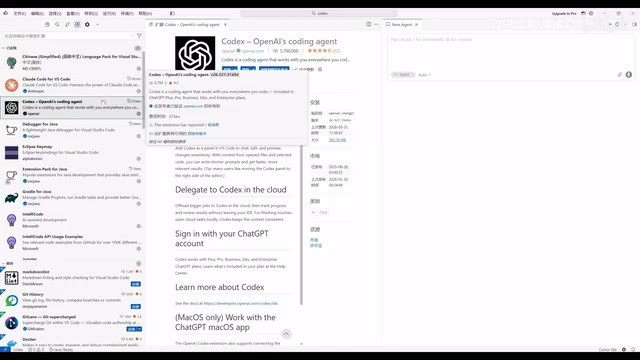
Codex is an official AI programming tool from OpenAI, but its capabilities have far surpassed the scope of a mere "coding assistant." It can be used in three ways: App desktop client, CLI command line, and IDE plugins (supporting VS Code and Cursor).
For developers who prefer working in an IDE, installing the Codex plugin directly is recommended—this allows seamless AI invocation during coding without the hassle of switching windows. The CLI mode is better suited for advanced users who prefer command-line operations, allowing developers to batch-dispatch AI tasks through scripting and seamlessly integrate with existing Shell workflows.
Codex's core use cases include:
- Code generation: Building projects from scratch through conversational interaction
- Code reading: Analyzing open-source project structures and quickly understanding legacy code
- Code review: Built-in review commands that automatically analyze potential issues in PRs
- Bug investigation: Inputting production logs to quickly locate issues and provide fix suggestions
- Automated development: Full-cycle development from requirements analysis to testing and debugging
Core Capabilities Overview: Multi-Task Parallelism and Environment Interaction
Multi-Threaded Task Processing
Codex employs a multi-threaded mechanism that can handle multiple tasks simultaneously. For example, you can have it analyze the code structure of three projects in parallel and ultimately merge the output into a comparative report. This cross-project multi-task processing capability makes it excel in complex engineering scenarios.

Even more noteworthy is its built-in Git Worktree mechanism. Git Worktree is a feature introduced in Git 2.5 that allows creating multiple independent working directories under the same repository, where each directory can check out different branches or commits while sharing the same .git directory to save disk space. In traditional development, multi-person collaboration requires creating multiple branches and merging them, or frequently using git stash to stash changes when switching contexts. Codex achieves parallel development under a single repository through Worktree—each AI Agent works in an independent worktree with code isolation and no interference, eliminating the operational cost of frequent branch creation and merging. The outputs from each Agent are then integrated through intelligent merge strategies.
Remote Connection and Cross-Device Control
Codex supports remote connections, allowing you to remotely control Codex on your computer from your phone to execute tasks. Additionally, it can:
- Operate browsers and manage Chrome extensions
- Execute terminal commands
- Screenshot recognition and image generation/editing (integrating DALL·E 3 and other models)
- Invoke macOS system applications to complete automation tasks
This cross-device control capability means developers are no longer tied to their workstations. You can start a code refactoring task from your phone during your commute, and by the time you arrive at the office, Codex has already completed the modifications on your computer and is waiting for review.
Engineering Design Philosophy: Three Core Principles
Specification Engineering Replaces Prompt Engineering
Codex's most significant design philosophy shift is—moving from prompt-driven to specification-driven development (SDD, Specification-Driven Development).
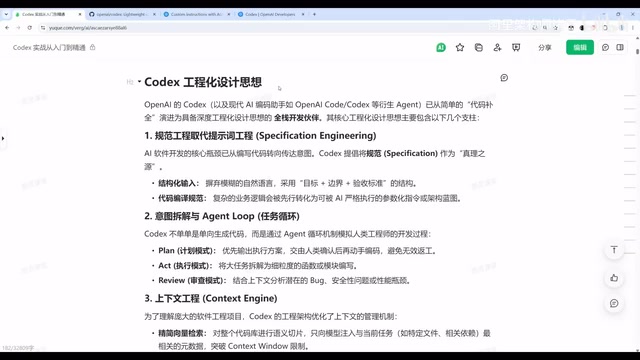
This philosophy has deep engineering roots. Early AI programming tools relied on users describing requirements in natural language on the fly (i.e., prompt engineering), an approach with inherent flaws including high ambiguity, poor reproducibility, and difficulty in verification. SDD draws from mature software engineering concepts like TDD (Test-Driven Development) and DDD (Domain-Driven Design), requiring structured documentation that clearly defines system behavior, interface contracts, and acceptance criteria before coding begins.
Specifically, Codex requires developers to first write agents.md and Rules specification files that clearly define goals, boundaries, and acceptance criteria, after which the AI generates code based on these specifications. The agents.md file is essentially a behavioral specification for AI Agents—it tells the AI "who you are, what you can do, and where your boundaries are," similar to a Software Requirements Specification (SRS) in traditional software development, but more machine-readable and executable. This is fundamentally different from the previous approach of casually describing requirements in natural language.
OpenAI practices this philosophy internally as well. According to their published articles, three people using the Harness Engineering methodology generated over 1 million lines of code with AI in five to six months, shipping a large-scale project without writing a single line of code manually. Harness Engineering is an AI-assisted engineering methodology practiced internally at OpenAI and gradually promoted externally. Its core idea is transforming the human engineer's role from "code writer" to "AI driver"—the engineer's primary responsibilities become defining clear specification documents, designing verification strategies, reviewing AI-generated code quality, and managing AI Agent workflows. Based on these numbers, the average output was approximately 3,000 lines of effective code per person per day, far exceeding the industry average of 50-100 lines per person per day in traditional development, fully demonstrating the power of specification engineering.
Agent Loop Mechanism Simulates Human Development Workflow
Codex is no longer a simple "input requirements → output code" tool. Instead, it simulates the complete development process of a human engineer through its Agent Loop mechanism. The Agentic Loop is a core design pattern in current AI Agent architecture, distinct from traditional single-shot inference. In single-shot inference mode, the user inputs a prompt, the model returns a result, and the interaction ends there. The Agent Loop introduces an iterative closed loop of "observe-think-act-feedback." The theoretical foundation for this approach is the ReAct (Reasoning + Acting) framework proposed by Google and Princeton University in 2022, which has now become the standard architectural paradigm for mainstream AI Agents.
Codex's Agent Loop consists of four specific phases:
- Planning phase: First creates a detailed development plan, including task decomposition, technology selection, and implementation paths
- Confirmation phase: Human engineers confirm the plan (supports both confirmation mode and fully automatic mode—developers can flexibly choose based on task risk level)
- Execution phase: Breaks tasks down to individual functions and modules, progressively generating code and automatically executing it
- Review phase: Analyzes potential bugs, security issues, and performance bottlenecks in context; if problems are found, it automatically returns to the execution phase for corrections
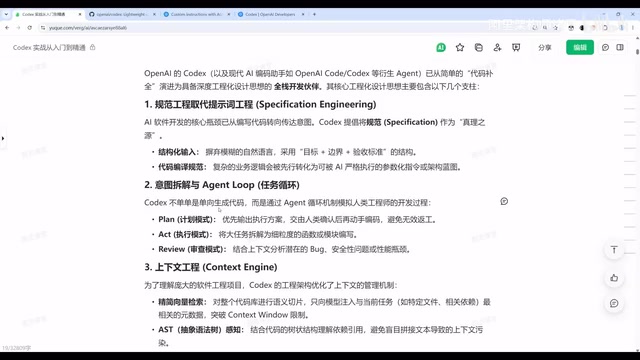
Because the complete loop verification happens internally—AI generates code, automatically runs it, observes results, analyzes errors, corrects code, and iterates until all validations pass—the code users ultimately see is basically ready to run directly, no longer producing the frequent errors common with early AI tools.
Deep Optimization of Context Engineering
Codex implements three key optimizations in context management:
Streamlined vector retrieval: Rather than loading the entire project into the model at once, it semantically matches relevant code snippets and metadata based on the current task, avoiding context overflow. The underlying technical principle is RAG (Retrieval-Augmented Generation): project code is first chunked and converted into vector embeddings stored in a vector database. When a user submits a task, the system retrieves the most relevant code snippets through semantic similarity and injects only those snippets into the model's context window. This ensures the model receives sufficient information while avoiding attention dilution and token waste caused by overly long contexts.
AST (Abstract Syntax Tree) awareness: The Abstract Syntax Tree is a core concept in compiler theory that parses source code into a tree-like data structure where each node represents a syntactic construct in the code (such as function declarations, conditional statements, variable assignments, etc.). Unlike simple text matching, AST captures the semantic structure of code—it knows which function calls which module and which variable is referenced in which scope. Codex uses AST-aware analysis of inter-module dependency relationships, automatically tracking dependency graphs during code generation to ensure import statements are complete, function signatures match, and type systems are consistent, rather than simply concatenating code text. This fundamentally solves the compilation errors and missing module issues common in early AI tools.
External tool collaboration: Codex has powerful environment interaction capabilities, directly invoking compilers, debuggers, package managers, and other tools. When code errors occur, it automatically reads logs, locates the cause, and completes the fix, achieving fully automated problem resolution. This capability relies on standardized protocols like MCP (Model Context Protocol). MCP is a communication standard proposed and open-sourced by Anthropic in late 2024, establishing a unified JSON-RPC communication interface between AI models and external tools. Codex's support for the MCP protocol means developers can extend Codex's capability boundaries by writing MCP Servers—for example, connecting to enterprise internal knowledge bases, CI/CD pipelines, or monitoring systems for deeper engineering integration.
Learning Resources and Advanced Paths
For developers who want to dive deeper into Codex, two official resources are recommended:
- OpenAI Developer Documentation: Contains complete API guides, concept explanations, and best practices
- Codex Open Source Repository: CLI source code,
agents.mdtemplates, and other core files can be found here
The key to mastering Codex isn't memorizing each individual feature, but having a holistic integration mindset—connecting multi-task processing, specification engineering, Agent Loops, MCP protocols, and other capabilities into a complete workflow to truly maximize its value. Developers are advised to start by writing high-quality agents.md specification files—this is the most critical skill for harnessing Codex and the key step in advancing from "prompt engineer" to "AI engineering architect."
Key Takeaways
Related articles
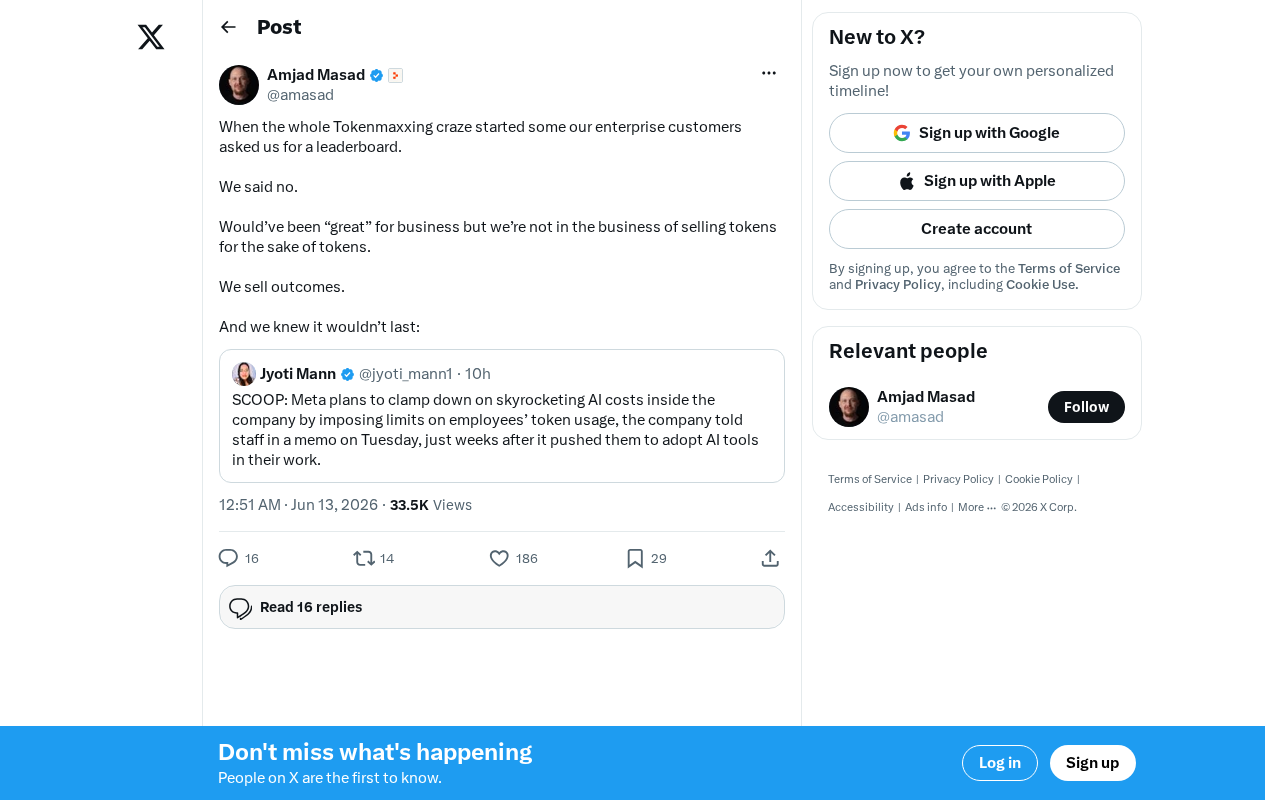
The Decline of Tokenmaxxing: Why Selling Outcomes Matters More Than Selling Tokens
The Tokenmaxxing craze is fading as enterprise AI procurement shifts from chasing Token counts to focusing on actual business outcomes. Learn why outcome-based AI evaluation is the right approach.
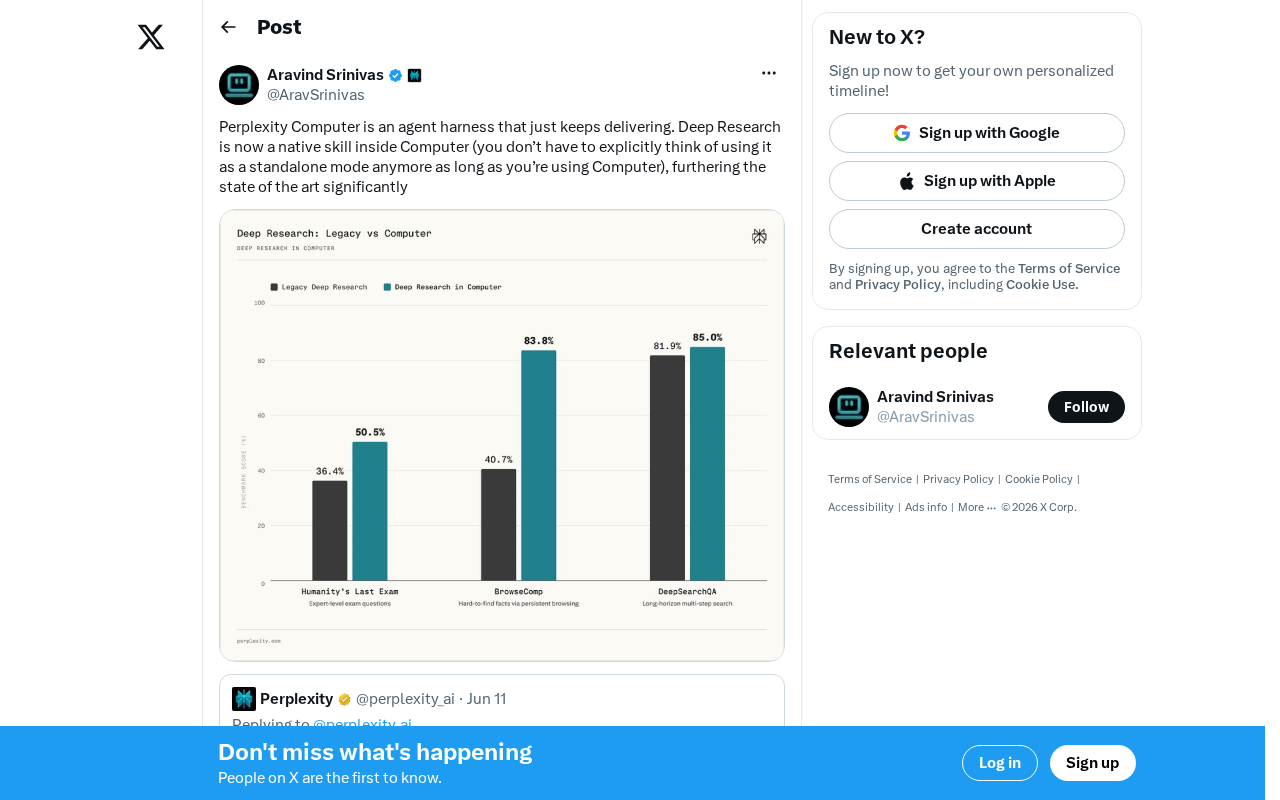
Perplexity Computer Integrates Deep Research as a Native Skill: A New Paradigm for AI Agent Capability Fusion
Perplexity integrates Deep Research as a native skill in Computer, enabling automatic invocation without manual mode switching. Analyzing the Agent Harness design philosophy and AI capability fusion trends.
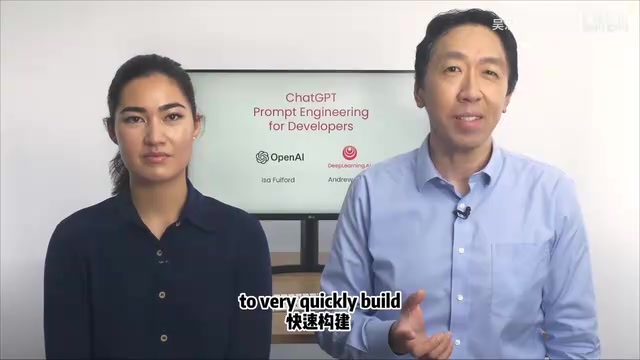
Key Takeaways from Andrew Ng × OpenAI's Prompt Engineering Course: Two Core Principles Explained
Deep dive into Andrew Ng & OpenAI's ChatGPT Prompt Engineering course: Base LLM vs instruction-tuned models, two core prompting principles, and API-first development thinking for developers.