OpenAI Codex New Version Released: A Major Upgrade for the AI Programming Assistant

OpenAI releases a new version of Codex, enhancing its AI programming assistant to compete in an intensifying market.
OpenAI has announced the official release of a brand-new version of Codex, its AI programming assistant and the core engine behind GitHub Copilot. The new version likely brings significant improvements in code generation accuracy, multi-language support, and Agentic Coding capabilities to compete with rivals like Cursor, Claude Code, and Windsurf. Industry research shows AI programming tools can boost development efficiency by 30%-55%, evolving from auxiliary tools into indispensable development partners.
Overview of the New OpenAI Codex Release
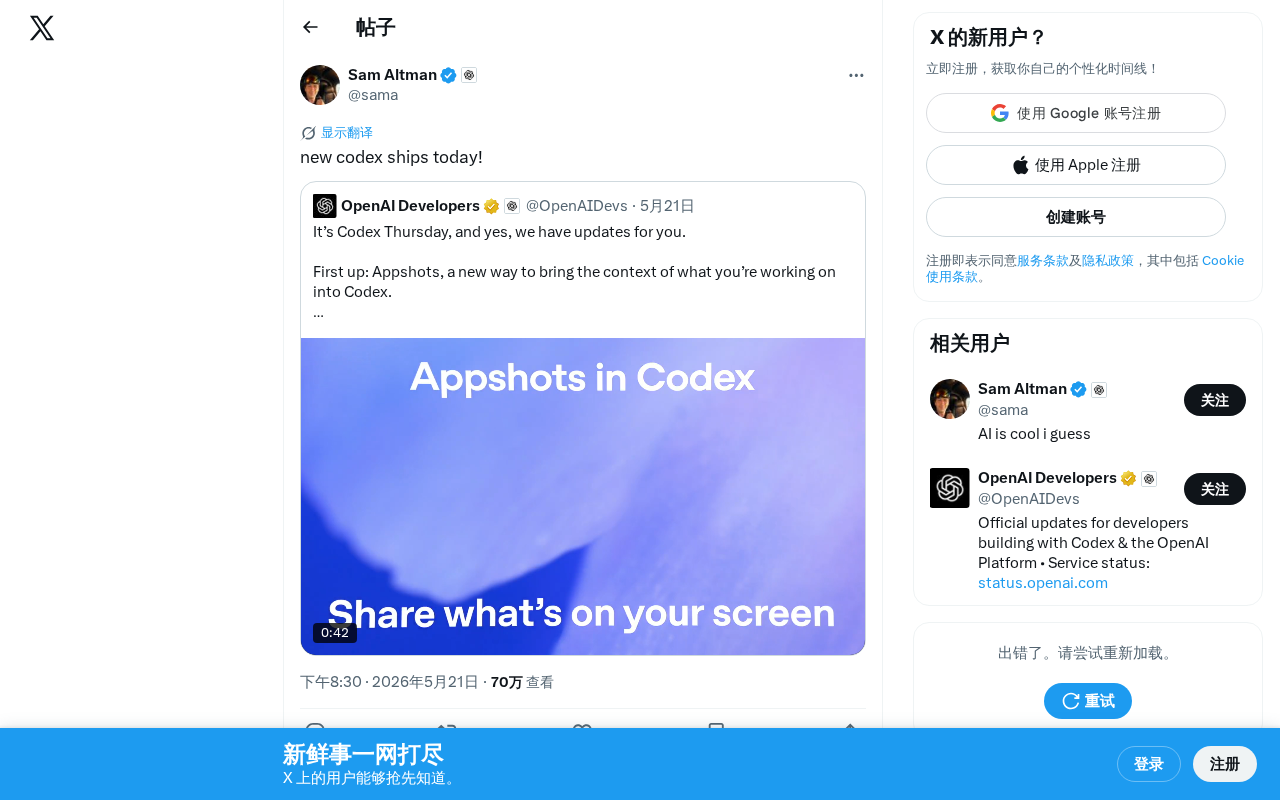
OpenAI has announced the official release of a brand-new version of Codex. The news broke via social media platforms, and while the announcement was brief, it's undoubtedly a significant development for the developer community following the evolution of AI programming tools.
What Is Codex? A Deep Dive into OpenAI's AI Programming Assistant
Codex is OpenAI's AI programming assistant product, designed to help developers write, understand, and debug code more efficiently. As a core developer-facing tool in OpenAI's product portfolio, Codex has long been one of the benchmark products in the AI-assisted programming space.
The Evolution from GPT to a Dedicated Programming Tool
Codex was originally released in August 2021, built on the GPT-3 architecture but fine-tuned with massive public code repositories from GitHub—covering over 54 programming languages and approximately 154 billion tokens of code data. This specialized fine-tuning gave it far superior performance on coding tasks compared to general-purpose language models, establishing its position as a pioneer in AI programming tools.
Codex can not only generate code from natural language descriptions but also handle code completion, bug fixing, code explanation, and many other tasks. More importantly, it was the core engine powering GitHub Copilot when it launched in 2021—a partnership that marked a pivotal moment when AI programming tools transitioned from academic research to large-scale commercial deployment, giving Codex's technical influence a reach far beyond its own product recognition.
What Improvements Does the New Codex Bring?
While the specific update details of this release haven't been fully disclosed, based on OpenAI's recent technical roadmap, the new Codex likely brings substantial improvements in several areas.
Significant Boost in Code Generation Performance and Accuracy
With the continuous evolution of OpenAI's foundation models (such as the GPT-4o, o1, and o3 series), the new Codex likely achieves notable improvements in code generation accuracy, contextual understanding, and multi-language programming support. Notably, the o1 and o3 series reasoning models are specifically designed for multi-step logical reasoning—perfectly aligned with programming scenarios that require deep reasoning, such as debugging and architecture planning—providing stronger underlying capabilities for the new Codex.
Intensifying Competition in the AI Programming Space: How Does Codex Respond?
The AI programming assistant market has evolved into a multi-polar competitive landscape, with competition dimensions far more complex than in the early days. Cursor, built as a deep modification of VSCode, focuses on codebase-level contextual understanding; Windsurf (formerly Codeium) rapidly accumulated users through a free-tier strategy; Anthropic's Claude Code excels in complex tasks with its ultra-long context window and strong reasoning capabilities; Google has also entered the fray with Gemini Code Assist. The core competitive dimensions of these products have evolved from simple code completion to multi-file collaborative editing, autonomous task execution, and deep integration with terminals and browsers. OpenAI's decision to update Codex at this time clearly aims to consolidate its competitive advantage in this critical space.
Deep Integration with Developer Workflows: The Rise of Agentic Coding
The trend in modern AI programming tools is moving from simple code completion toward full-workflow development assistance—an evolution the industry calls "Agentic Coding." Unlike traditional passive response modes, Agentic Coding means AI can autonomously plan multi-step tasks, invoke external tools (such as running test suites, searching technical documentation, executing terminal commands), and continuously refine code through feedback loops until objectives are met. The new Codex may offer deeper support in project-level code understanding, automated test generation, and code review, further integrating into developers' daily workflows in an agentic manner.
Industry Impact and Future Outlook for AI Programming Tools
AI programming tools are transitioning from "nice-to-have" to "indispensable." Multiple rigorous industry studies provide quantitative support for this trend: GitHub's official research shows that developers using Copilot complete specific tasks an average of 55% faster; McKinsey's 2023 report indicates that AI-assisted programming can shorten software development cycles by approximately 20%-45%, with the specific improvement varying by task type—highly repetitive, pattern-fixed code (such as CRUD operations and unit tests) sees the most significant gains, while tasks involving complex architectural decisions show relatively limited improvement. This explains why AI programming tools first gained widespread adoption in frontend development and test automation before gradually penetrating more complex engineering scenarios.
The release of the new Codex will further accelerate this trend. For developers, continuously following and experimenting with the latest AI programming tools has become an important way to maintain technical competitiveness.
Summary
Although the information in this release is relatively concise, every product update from OpenAI in the AI programming space deserves close attention from the developer community. From laying the industry foundation in 2021 to evolving once again amid the Agentic Coding wave, Codex's technical trajectory reflects the development arc of the entire AI programming tools industry. As more technical details are disclosed, we'll be able to more clearly assess the new Codex's performance and value in real-world development scenarios. Developers who are interested are encouraged to try the new version promptly and experience the changes in its capability boundaries firsthand.
Key Takeaways
- OpenAI has announced the official release of a brand-new version of Codex
- Codex is OpenAI's core AI programming assistant for developers and the original technical foundation of GitHub Copilot
- The new version likely features significant improvements in code generation accuracy and multi-language support, benefiting from enhanced capabilities of the o3 series reasoning models
- Competition in the AI programming assistant market is intensifying, with Cursor, Claude Code, Windsurf, and others forming a fiercely competitive landscape
- The industry trend is evolving from code completion to Agentic Coding, with AI transforming from an auxiliary role into an indispensable autonomous collaboration partner for developers
- Multiple studies confirm that AI programming tools can boost development efficiency by 30%-55%, with particularly notable results in repetitive tasks
Related articles
 Tech Frontiers
GitHub Agent HQ Launch: AI Coding Tools Enter the Era of Platform Competition
GitHub Universe unveils Agent HQ platform for unified coding agent management, Copilot upgrades with multi-model support. OpenAI completes restructuring, Anthropic tests new model, NVIDIA open-sources AI models.
 Tech Frontiers
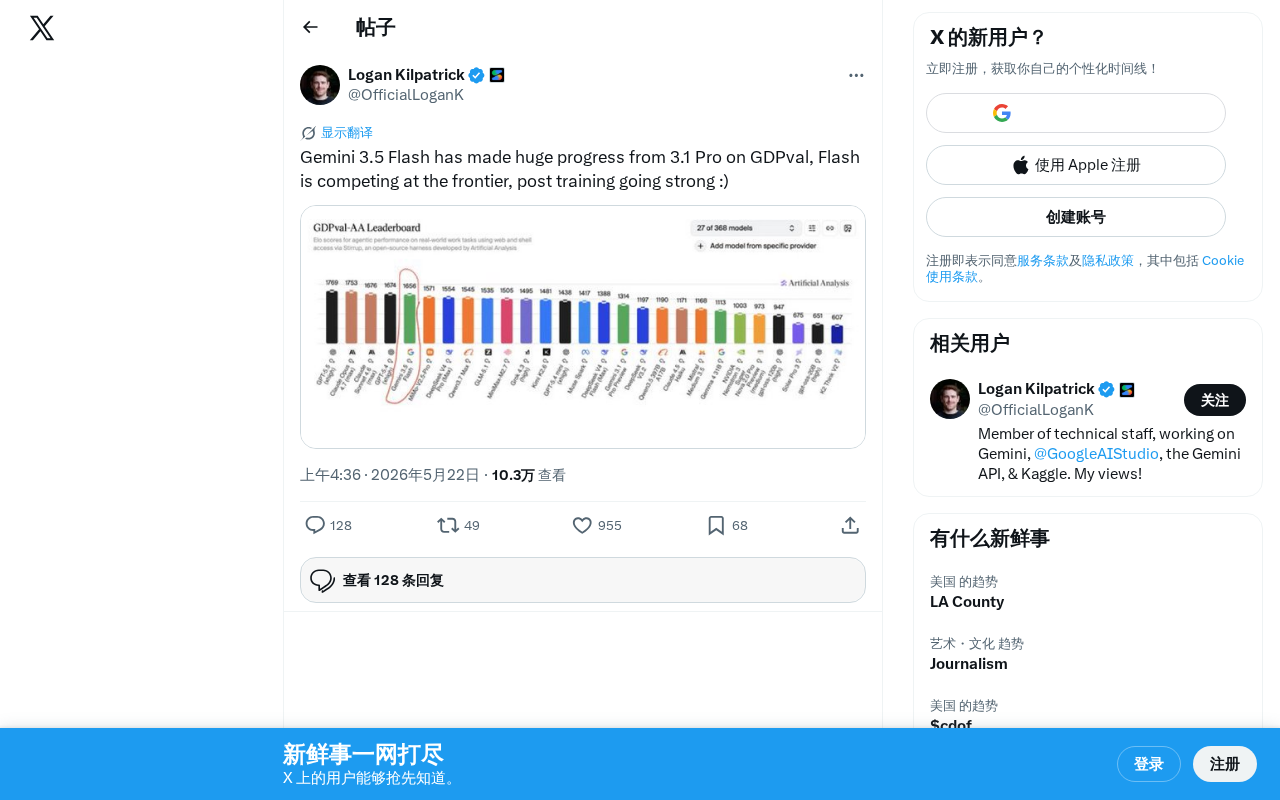
Gemini 3.5 Flash Achieves a Massive Leap on the GDPval Benchmark
Google Gemini 3.5 Flash surpasses Gemini 3.1 Pro on the GDPval benchmark. The lightweight Flash model leverages post-training techniques to approach frontier-level performance, redefining the balance between quality and cost.
 Tech Frontiers
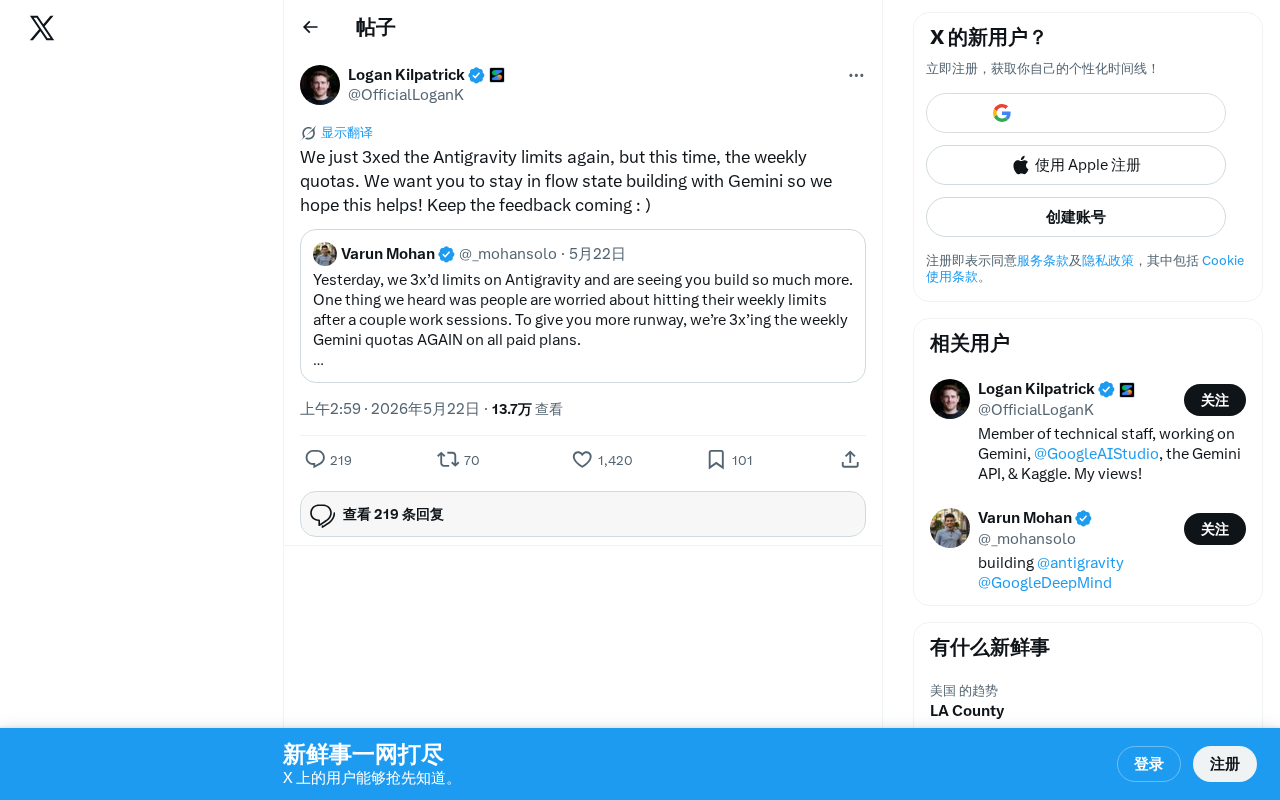
Google Gemini Antigravity Weekly Quota Tripled — AI Coding Without Limits
Google Gemini triples Antigravity weekly quotas following a prior daily quota boost. Analyzing the impact on developers and its strategic significance in AI coding.