OpenAI Investor Innovation Day: How Codex Is Reshaping Enterprise Workflows
OpenAI Investor Innovation Day: How Co…
OpenAI's Investor Innovation Day shows how Codex is shifting enterprise AI from Q&A tools to execution engines.
At OpenAI's Investor Innovation Day, enterprise users revealed how AI is evolving from simple Q&A to active workflow execution. Key applications include RAG-powered real-time decision support for deal analysis, ChatGPT's Excel plugin for rapid data processing, and a flywheel effect from 2,700 ChatGPT Enterprise licenses spawning hundreds of custom GPTs. The shift from "asking mode" to "doing mode" represents the broader industry transition toward agentic AI and true organizational transformation.
From "Asking Mode" to "Doing Mode": AI's Evolving Role in the Enterprise
At OpenAI's recent Investor Innovation Day, multiple enterprise users shared their in-depth experiences with OpenAI products. One core theme ran throughout: AI is evolving from a simple Q&A tool into a true enterprise-grade productivity engine capable of actually "getting things done."
One speaker candidly shared that when first using Codex, they were still stuck in "asking mode" — treating AI as an advanced search engine. But as they deepened their usage, they gradually understood that Codex's true value lies in "doing mode" — having AI directly participate in solving complex problems.
OpenAI Codex is an AI system based on the GPT series of large language models, specifically fine-tuned for code generation and comprehension. Originally released in 2021, it serves as the underlying engine for GitHub Copilot. In enterprise scenarios, Codex's value has transcended mere code completion, evolving into an intelligent agent capable of understanding business logic and automating complex workflows. The shift from "asking mode" to "doing mode" fundamentally reflects the leap of large language models from an information Retrieval paradigm to an Agentic paradigm — one of the most important technology trends of 2024-2025.
This transformation is not an isolated case but represents the universal evolution path of enterprise AI applications from shallow to deep adoption.
Three Core Enterprise Application Scenarios
Context-Aware Real-Time Decision Support
The speaker specifically highlighted a high-value scenario: connecting all contextual information within a deal folder and then asking questions in real time. This has had a significant impact on investment and business decision-making workflows.
In the traditional model, analysts need to manually sift through large volumes of documents, financial statements, and meeting notes to form a comprehensive understanding of a company. Now, AI can instantly answer deep questions about a deal based on complete contextual understanding, dramatically shortening decision preparation time.
The technical foundation for this scenario is Retrieval-Augmented Generation (RAG) architecture. RAG works by vectorizing and storing enterprise private data (such as contracts, financial reports, and due diligence documents), dynamically retrieving relevant document fragments when users ask questions, and then injecting them as context into the large language model for reasoning. Compared to stuffing all data into the model's context window, RAG offers significant advantages in cost, accuracy, and data timeliness. In investment decision scenarios, a typical deal folder may contain hundreds of documents and thousands of pages. Traditional manual analysis takes days or even weeks, while RAG-based AI systems can complete cross-document associative reasoning in seconds.
A Qualitative Leap in Data Processing Efficiency
ChatGPT's Excel plugin was specifically mentioned as a daily efficiency powerhouse. For finance and consulting professionals who frequently process spreadsheet data, such tools compress the process of "quickly understanding a company" from hours to an extremely short timeframe.
This is not incremental improvement — it's a fundamental transformation of how work gets done. When data processing is no longer a bottleneck, human energy can truly focus on judgment and decision-making.
The Flywheel Effect of Organization-Wide GPTs Ecosystems
The most impressive data point: the enterprise already has 2,700 employees with ChatGPT Enterprise licenses, with hundreds of custom GPTs created and used across the organization.
ChatGPT Enterprise is OpenAI's enterprise-facing product version launched in August 2023. Its core differences from the consumer version include: enterprise-grade data security guarantees (data is not used for model training), SOC 2 compliance certification, unlimited GPT-4 access, longer context windows (up to 128K tokens), and enterprise governance features like admin consoles. The scale of 2,700 licenses reflects large enterprises' commitment to generative AI investment, with annual spending potentially reaching millions of dollars.
GPTs is a feature launched by OpenAI in November 2023 that allows users to create AI assistants optimized for specific tasks without programming. Users can customize GPT behavior by uploading documents, setting system prompts, and configuring external API calls. In enterprise environments, custom GPTs are essentially a lightweight AI application development paradigm, compressing what traditionally required weeks of development into hours or even minutes.
This creates a powerful flywheel effect:
- Employees create GPTs to solve specific problems
- These GPTs are promoted into daily operations
- More people are inspired to create more GPTs
- The entire organization's AI application density and operational efficiency continuously improve
The speaker described it as a "giant force multiplier for the business." The use of this military term suggests that AI delivers not a 10% or 20% efficiency gain, but an order-of-magnitude change. "Force multiplier" originates from military strategy, referring to factors that significantly amplify a unit's combat effectiveness. McKinsey's 2024 research estimates that generative AI could add $2.6 to $4.4 trillion in annual value to the global economy, with the most significant productivity gains in knowledge-intensive industries (such as finance, consulting, and law), where output efficiency for some roles could increase by 40%-60%.
From Tool to Organizational Transformation: Deeper Insights on Enterprise AI Adoption
This presentation revealed an important insight: true enterprise AI transformation is not simply deploying a tool — it requires solving "truly difficult problems" to unlock "complete organizational change."
Enterprises typically go through the following stages in their AI implementation journey:
- Exploration Phase: Employees use AI in asking mode, gaining initial value perception
- Deepening Phase: AI begins to be embedded in core workflows, shifting from "asking" to "doing"
- Diffusion Phase: AI capabilities spread horizontally across the organization through custom GPTs and similar mechanisms
- Transformation Phase: AI becomes organizational infrastructure, driving process restructuring
This evolution path closely aligns with Gartner's technology adoption curve. It's worth noting that most enterprises are still in the first or second phase, with organizations that have truly entered the diffusion and transformation phases remaining a minority. The leap from exploration to transformation often requires a combination of top-down strategic push and bottom-up employee innovation — relying solely on either approach makes it difficult to achieve transformation at scale.
Implications for Enterprise AI Strategy
OpenAI's choice to showcase these enterprise cases at its Investor Innovation Day sends a clear signal: the enterprise market is the core battleground for its commercialization. 2,700 enterprise licenses, hundreds of internal GPTs — these numbers demonstrate ChatGPT Enterprise's product-market fit.
From a competitive landscape perspective, OpenAI faces intense competition in the enterprise market from Microsoft (deeply integrating the Office 365 ecosystem through its Copilot product suite), Google (Gemini for Workspace), Anthropic (Claude for Enterprise), and others. OpenAI's differentiated advantage lies in its model capability leadership and the network effects generated by the GPTs ecosystem — when an organization accumulates hundreds of custom GPTs internally, migration costs rise significantly, creating a powerful customer lock-in effect.
For enterprises considering AI transformation, the key takeaway is: don't stop at the stage of having employees "ask AI questions." Instead, systematically think about how to have AI truly participate in core business processes and solve those "truly difficult problems." Only then can an organization upgrade from being a tool user to becoming an AI-native organization.
Key Takeaways
Related articles
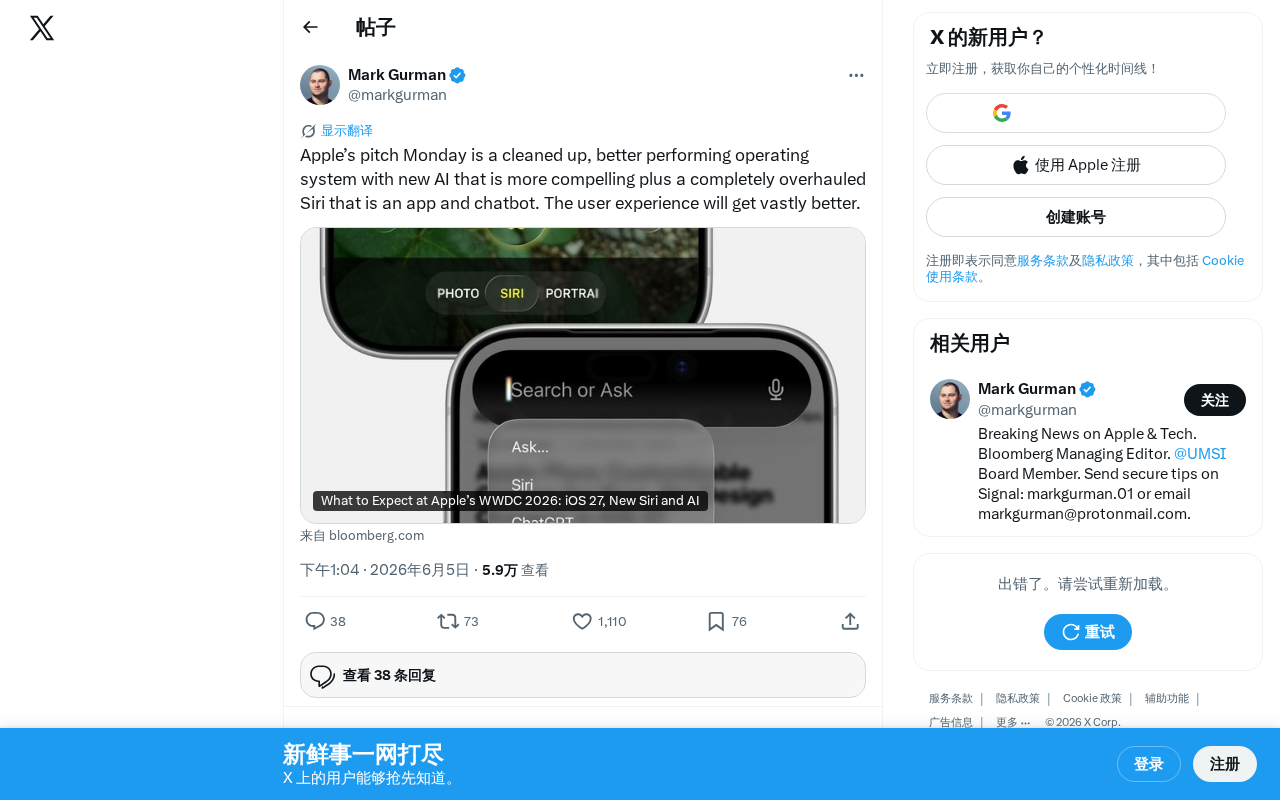
WWDC Keynote Preview: Complete Siri Overhaul, Major AI Upgrades, and System Performance Optimization
Apple's WWDC keynote set to unveil major system updates including a completely overhauled Siri chatbot, more compelling AI features, and significantly optimized OS performance.
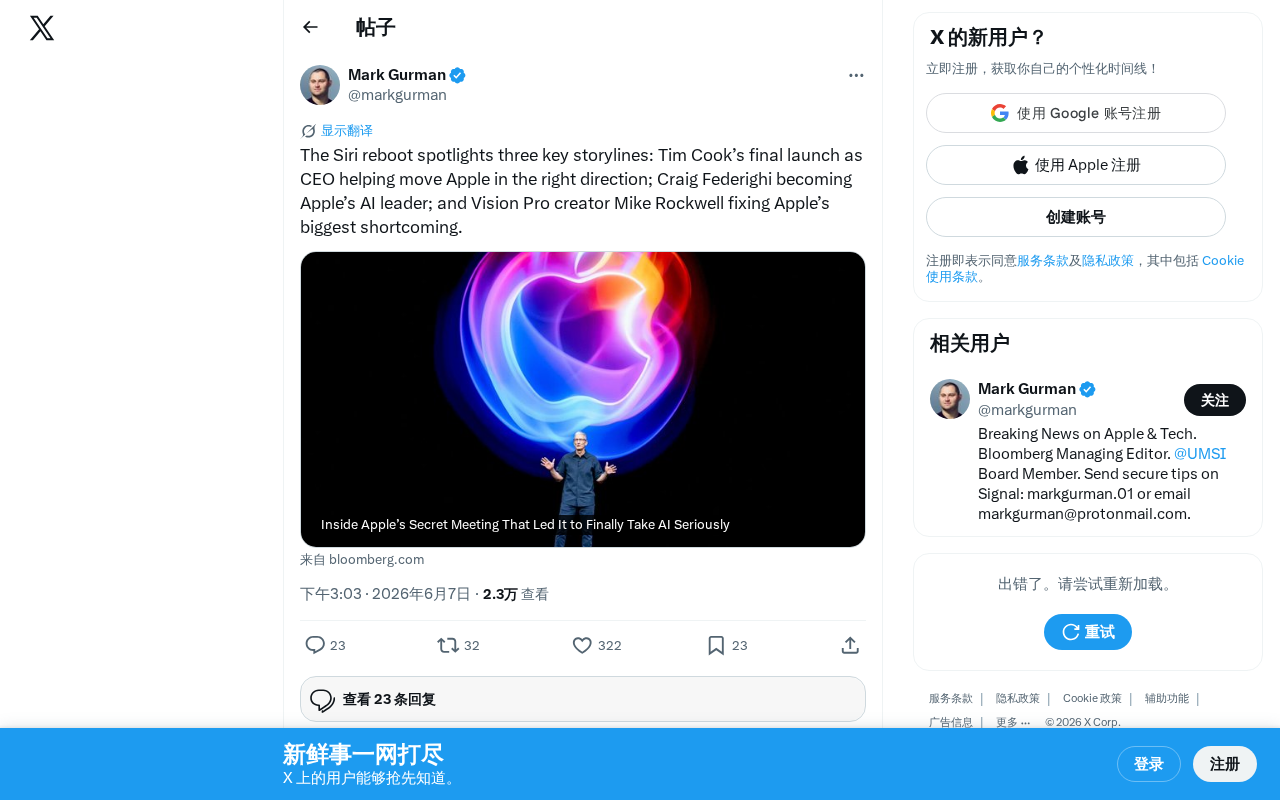
Three Key Narrative Threads Behind Siri's Reboot
Apple's Siri is undergoing its biggest reboot ever. Tim Cook sets AI strategy, Craig Federighi leads integration, and Mike Rockwell rebuilds Siri from the ground up.
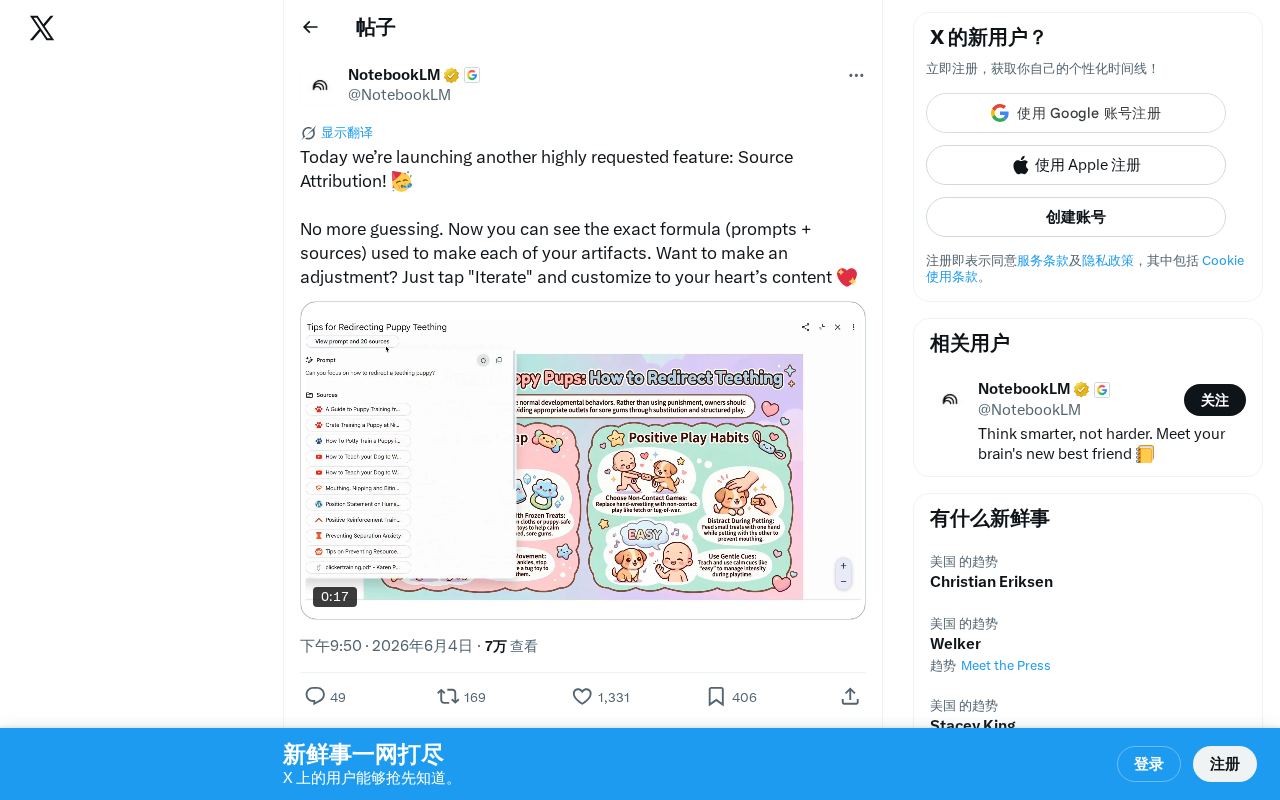
Exa Launches Source Attribution: A New Benchmark for AI Content Traceability and Transparency
Exa launches Source Attribution, letting users view prompts, cited sources, and full recipes behind AI-generated content, with one-click iteration support.