Three Key Narrative Threads Behind Siri's Reboot
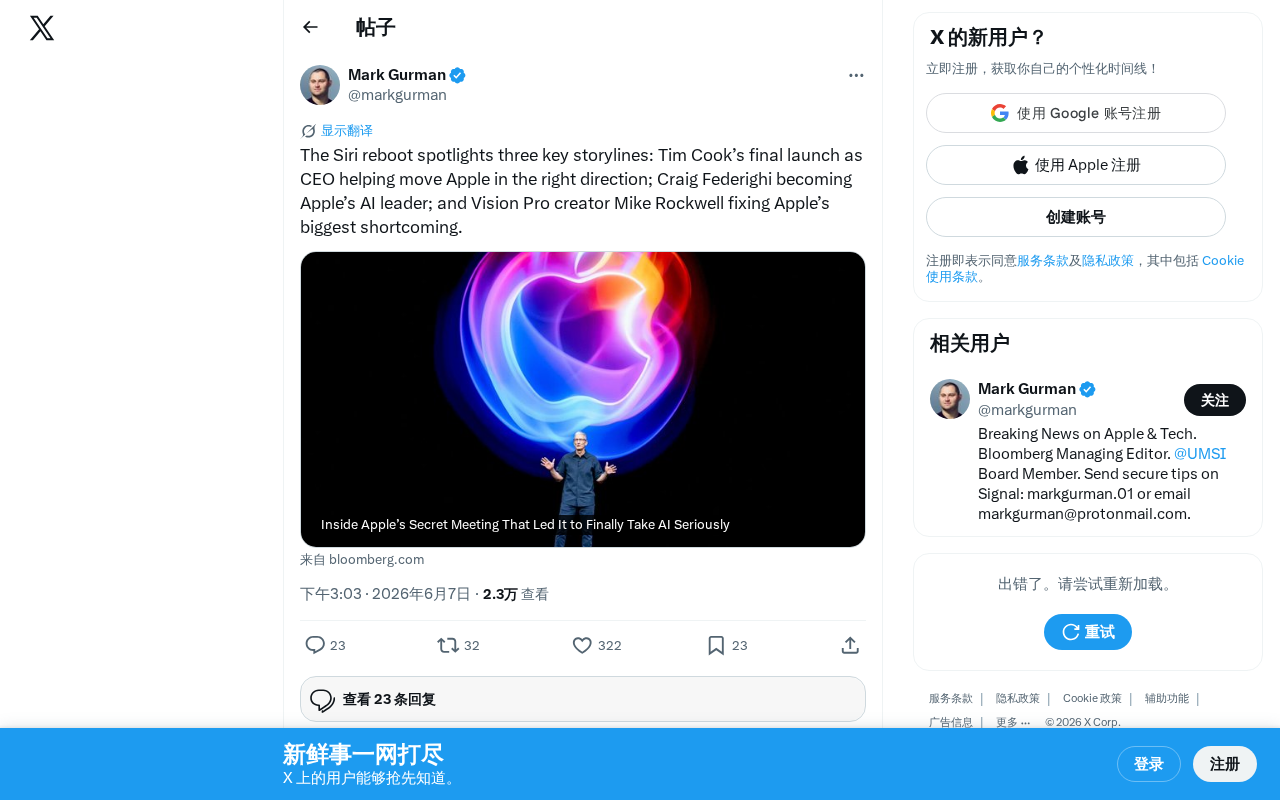
Three key figures drive Apple's biggest-ever Siri reboot to catch up in the AI race.
Apple is rebooting Siri from scratch, driven by three converging narrative threads: Tim Cook establishing an AI-first strategic direction in a pivotal moment of his tenure, Craig Federighi consolidating AI leadership to deeply integrate intelligence across Apple's software ecosystem, and Vision Pro creator Mike Rockwell rebuilding Siri's architecture from the ground up. Together, they signal Apple's serious bid to compete in the AI era.
Siri Faces Its Biggest Transformation Ever
Apple's voice assistant Siri is undergoing a complete reboot, and behind this transformation lie three critically important narrative threads — ones that concern not just Siri's future, but Apple's entire strategic direction in the AI era. Renowned tech analyst Mark Gurman recently wrote that this Siri reboot centers on three key figures and the distinct missions each carries.
Siri's history traces back to SRI International's CALO project. It launched as a standalone app on the App Store in 2010 and was acquired by Apple in 2011, debuting as a built-in feature on the iPhone 4S. Early Siri was built on traditional natural language processing (NLP) techniques, using an Intent Recognition and Slot Filling architecture — meaning the system relied on predefined intent categories and extracted key parameters from user utterances. While this architecture performed reliably in specific scenarios, it scaled poorly. Every new feature required extensive manual annotation and rule-writing, which is the fundamental technical reason Siri's capabilities expanded so slowly over the years. Now, all of that is being torn down and rebuilt from scratch.
Tim Cook's Final Push: Setting Apple's AI Direction
As Apple's current CEO, Tim Cook is driving what may be the last major product initiative of his tenure. Siri's reboot isn't merely a product update — it's a defining move to establish Apple's direction in AI.
For years, Apple has been perceived as trailing competitors like Google, Microsoft, and OpenAI in the AI space. The arrival of ChatGPT made Siri look increasingly outdated, and user complaints about Siri have never ceased — poor comprehension, limited functionality, and stilted conversations. The launch of ChatGPT in late 2022 marked the moment large language models (LLMs) entered the public consciousness. Unlike traditional voice assistants such as Siri, LLMs are built on the Transformer architecture and acquire powerful language understanding and generation capabilities through self-supervised learning on massive text datasets. This paradigm shift means AI assistants no longer need to be individually programmed for each task — instead, they handle open-ended requests through In-Context Learning and Instruction Following. Google followed with Gemini, and Microsoft deeply integrated GPT-4 into Copilot. The rapid moves by these competitors dramatically increased the pressure on Apple.
Cook understands that if Apple cannot turn the tide on the AI front, its ecosystem moat faces an unprecedented threat. This Siri reboot can be seen as Cook laying the foundation for Apple's AI strategy at a pivotal moment in his tenure as CEO. Regardless of who succeeds him, this directional decision will profoundly shape Apple's trajectory for the next decade.
Craig Federighi: The Central Leader of Apple's AI Strategy
The second narrative thread focuses on Craig Federighi, Apple's Senior Vice President of Software Engineering. Federighi is emerging as the central leader of Apple's AI strategy.
This role shift carries significant weight. In the past, Apple's AI efforts were scattered across multiple teams with no unified vision or strong central leadership. Specifically, the Siri team handled the voice assistant, the machine learning team (led by John Giannandrea) focused on foundational model research, and individual product lines — camera, keyboard prediction, health, and so on — each developed their own AI features independently. This fragmented structure led to inconsistent tech stacks, an inability to share data across teams, and a lack of unified model training infrastructure. By contrast, Google's DeepMind and Microsoft's deep partnership with OpenAI both adopted far more centralized AI R&D models.
Federighi has long overseen the development of core operating systems like iOS and macOS, giving him a deep understanding of Apple's software ecosystem. Consolidating AI leadership under Federighi signals that Apple intends to deeply integrate AI capabilities across its entire software platform, rather than treating AI as a standalone feature module.
This integration philosophy is entirely consistent with Apple's longstanding product ethos — technology should blend seamlessly into the user experience, not exist as a separate tool users must consciously learn to use. Federighi's elevated role signals that Apple's AI will be delivered in a more systematic, platform-wide manner.
Mike Rockwell: From Vision Pro to Fixing Apple's Biggest Weakness
The third — and most striking — narrative thread involves Mike Rockwell, the creator of Vision Pro. Reports indicate that Rockwell is being entrusted with a critical mission: fixing Apple's biggest weakness, namely its shortcomings in Siri and AI capabilities.
This personnel move is deeply telling. During his leadership of the Vision Pro project, Rockwell demonstrated the ability to translate cutting-edge technology into consumer-grade products. While Vision Pro's market performance fell short of expectations, its technical breakthroughs — spatial computing, eye tracking, gesture recognition — proved the team's engineering prowess. Notably, the Vision Pro project (internal codename T288) took nearly a decade to develop and involved the engineering deployment of multiple frontier AI technologies: real-time Scene Understanding, machine learning-based gesture and eye tracking, intelligent spatial audio processing, and chip-level optimizations for running complex AI models under extremely low latency requirements. The R1 chip in Vision Pro, specifically designed for real-time inference on sensor data, exemplifies the deep integration of AI inference with dedicated hardware. This experience has direct technical transfer value for building the next-generation Siri — particularly for running large models on-device while preserving user privacy and delivering intelligent experiences.
By assigning a leader who built an entirely new computing platform to reshape Siri, Apple is clearly sending a signal: this is not a simple feature upgrade — it's a complete rebuild from the ground up, spanning foundational architecture to user experience. Siri doesn't need patching. It needs a Vision Pro-caliber zero-to-one innovation.
Three Threads Converge: The Full Picture of Apple's AI Strategy
Examining these three narrative threads together reveals the complete picture of Apple's AI strategy:
- Strategic level: Tim Cook establishes an AI-first direction at a pivotal point in his tenure, ensuring company resources tilt toward this domain
- Execution level: Craig Federighi oversees the deep fusion of AI and software, ensuring AI capabilities permeate every corner of the Apple ecosystem
- Product level: Mike Rockwell leverages his experience building revolutionary products to fundamentally reshape Siri's technical architecture and user experience
This three-pronged approach reflects Apple's serious stance on AI competition. Apple may have been a late starter in AI, but with its massive user base, powerful custom silicon, and complete ecosystem, once it finds the right direction and commits sufficient resources, its ability to close the gap should not be underestimated.
Particularly noteworthy is Apple's differentiated path in AI. The Apple Intelligence framework unveiled at WWDC 2024 outlined a clear three-tier architecture: on-device models handle the majority of requests, Private Cloud Compute processes tasks requiring greater compute power, and optional integration with third-party models (such as ChatGPT) is available when needed. The Neural Engine integrated into Apple's custom chips (M-series and A-series) provides the hardware foundation for on-device large model inference. This architectural design means Apple's AI assistant can deliver intelligent services without uploading user data to the cloud — a structural advantage that Google and Microsoft would find difficult to replicate. However, it also places extremely high demands on model compression and inference efficiency. The combination of privacy-first principles and on-device computing is the core strategy Apple is using to carve out a unique lane in the AI race.
Conclusion
Siri's reboot is more than a product story — it's a microcosm of Apple's self-reinvention in the AI era. Whether the combination of Tim Cook's strategic vision, Federighi's technical integration expertise, and Rockwell's product innovation experience can propel Apple from behind to the front of the AI race is a story worth watching closely. For the hundreds of millions of Apple users worldwide, a truly intelligent Siri may finally be more than just a distant hope.
Related articles
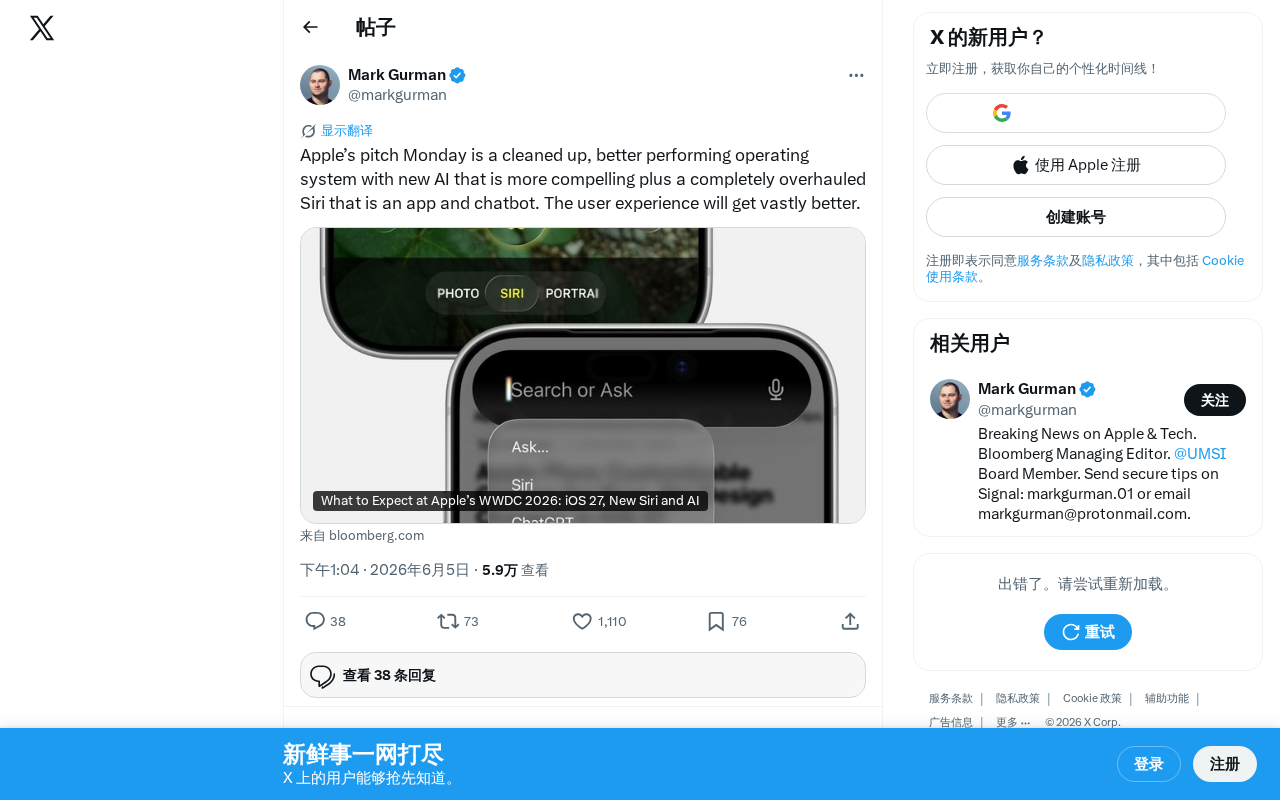
WWDC Keynote Preview: Complete Siri Overhaul, Major AI Upgrades, and System Performance Optimization
Apple's WWDC keynote set to unveil major system updates including a completely overhauled Siri chatbot, more compelling AI features, and significantly optimized OS performance.
OpenAI Investor Innovation Day: How Co…
OpenAI Investor Innovation Day: How Codex Is Reshaping Enterprise Workflows
OpenAI Investor Innovation Day reveals new enterprise AI trends: from asking to doing mode, how Codex and ChatGPT Enterprise drive workflow transformation through contextual decision support, data processing acceleration, and organization-wide GPTs ecosystems.
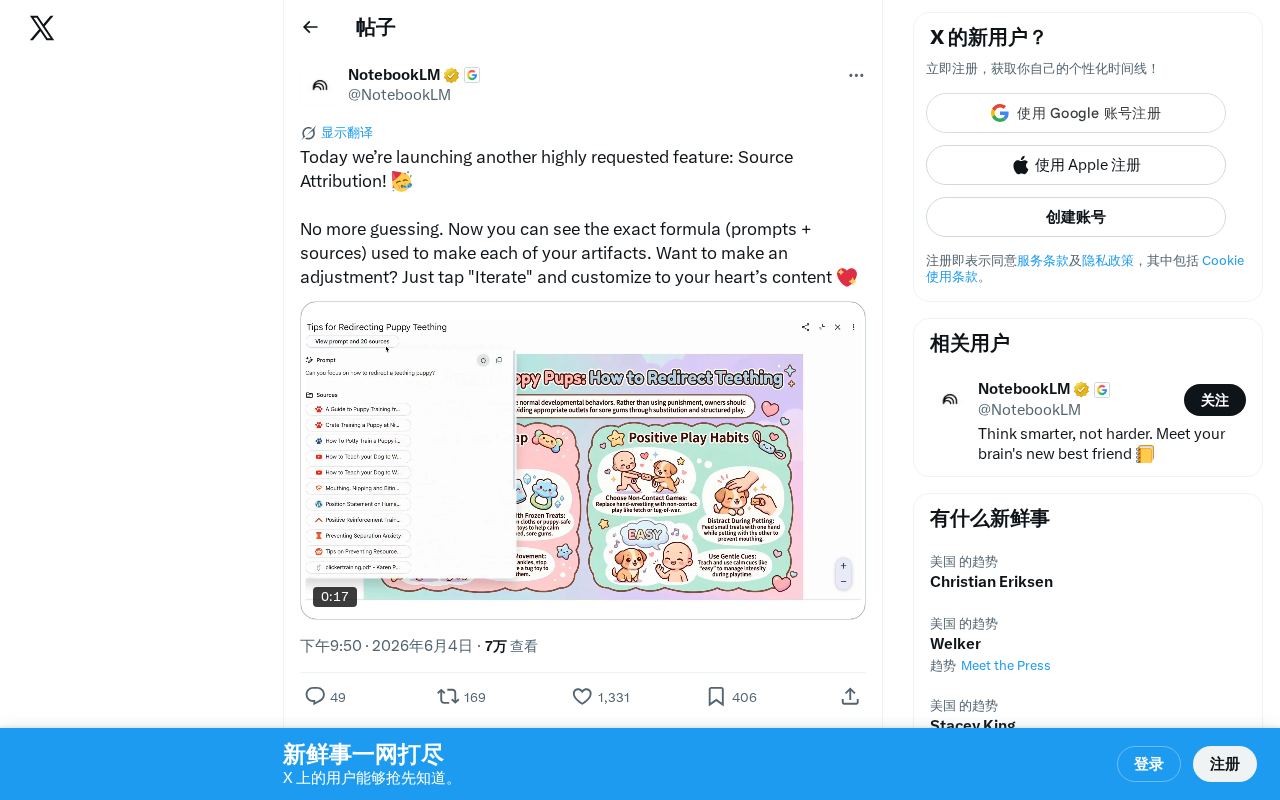
Exa Launches Source Attribution: A New Benchmark for AI Content Traceability and Transparency
Exa launches Source Attribution, letting users view prompts, cited sources, and full recipes behind AI-generated content, with one-click iteration support.