OpenAI Responds to White House AI Executive Order: Decoding New Signals in U.S. AI Regulation

OpenAI publicly supports the White House AI Executive Order, expressing willingness to collaborate on implementation.
OpenAI recently responded publicly to the White House AI Executive Order, calling it "an important step toward strengthening American AI leadership" and expressing eagerness to collaborate on implementation. This move continues OpenAI's proactive embrace of regulation but also raises concerns about "regulatory capture." The U.S. choice to advance AI governance through executive orders rather than legislation reflects a desire for policy flexibility, contrasting with the EU's legislative approach and China's fine-grained regulatory management.
Background
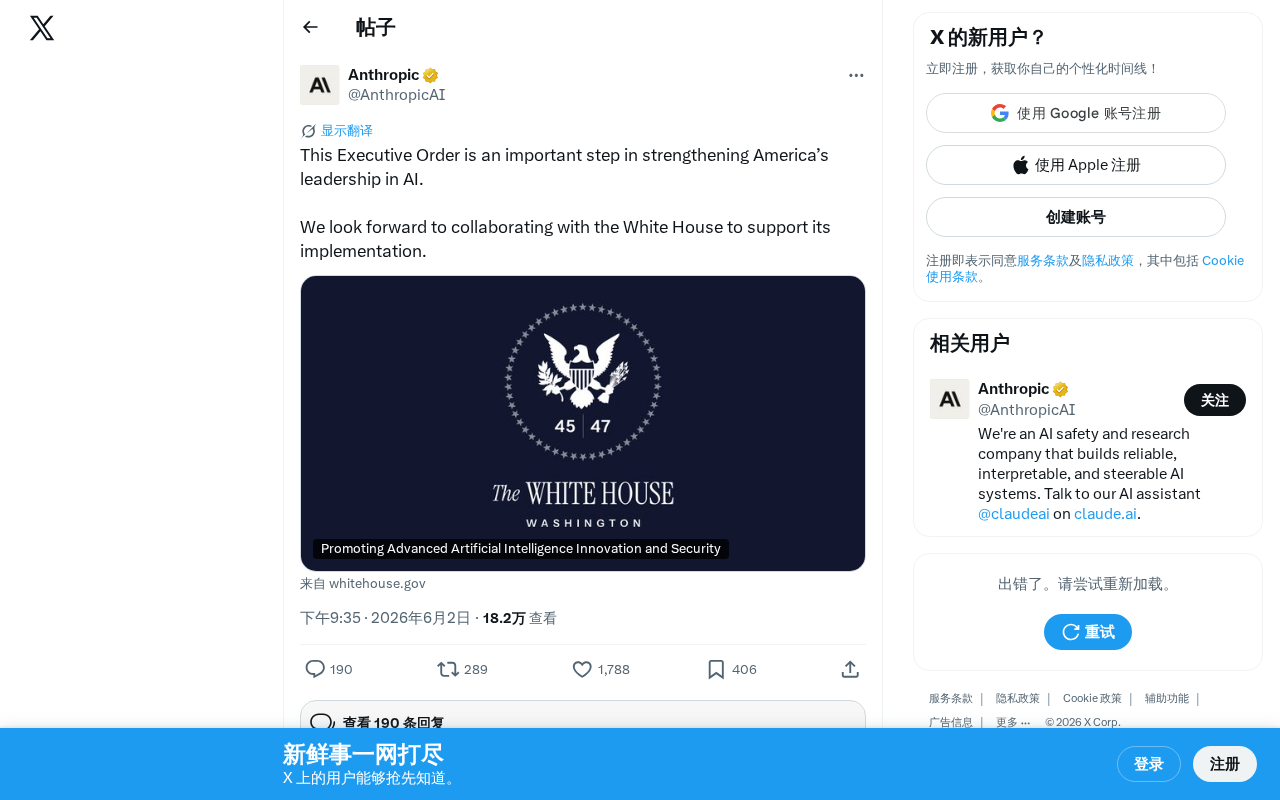
OpenAI recently responded publicly on social media to the White House's AI Executive Order, calling it "an important step toward strengthening American AI leadership" and expressing eagerness to collaborate with the White House in supporting its implementation.
The Institutional Context of AI Executive Orders
An Executive Order in the United States is a legally binding directive issued by the President directly to federal government agencies without going through the congressional legislative process. Compared to formal legislation, executive orders offer the advantages of speed and flexibility, but their authority is limited to the executive branch and can be revoked by subsequent presidents. In the field of AI governance, because the pace of technological iteration far outstrips traditional legislative cycles, executive orders have become the preferred tool for administrations to respond quickly to technological change. The Biden administration's Executive Order 14110, issued in October 2023, was previously the most comprehensive U.S. AI regulatory framework, covering safety testing, standards development, privacy protection, and more—but it was revoked by the Trump administration. The issuance of this new executive order represents the current administration's redefinition of its approach to AI governance.
OpenAI's Statement and Position
From OpenAI's brief statement, we can identify several key signals:
Actively Embracing Regulation
OpenAI clearly expressed support for government AI regulation, using positive language like "important step." This is consistent with OpenAI's longstanding advocacy for "responsible AI development." As one of the world's most influential AI companies, OpenAI's decision to publicly support government regulation sends a clear signal to the entire industry.
The Evolution of OpenAI's Regulatory Stance
OpenAI's position on AI regulation has undergone significant evolution. In its early days as a nonprofit research organization, OpenAI's core mission centered on open research and safety. In 2023, Sam Altman proactively called for AI regulation during a U.S. congressional hearing, proposing an AI licensing system similar to nuclear energy regulatory bodies—an extremely rare move in the tech industry. However, as OpenAI's commercialization has accelerated—transitioning from a nonprofit to a capped-profit company, and now considering full for-profit status—outside observers have questioned the true motivations behind its regulatory stance. Critics argue that leading companies supporting regulation may be a form of "regulatory capture": by participating in rule-making and setting high compliance thresholds, they create barriers against smaller competitors.
Seeking Collaboration, Not Confrontation
The phrase "look forward to collaborating" indicates that OpenAI hopes to play an active role in the policy-making and implementation process. This posture reflects both corporate social responsibility and a strategic choice—by participating in the policy-making process, the company can help ensure that regulatory frameworks both safeguard safety and avoid excessively restricting technological innovation.
Industry Impact Analysis
Signal Value for the AI Industry
As an industry leader, OpenAI's statement carries bellwether significance. When leading companies proactively embrace regulation, compliance expectations across the entire industry are redefined. Other AI companies may face greater pressure to follow suit and adjust their own compliance strategies.
The Bigger Picture of U.S. AI Strategy
The issuance of the White House AI Executive Order signals that the U.S. government is shifting from observation to actively shaping the rules framework for AI development. Against the backdrop of increasingly fierce global AI competition, striking a balance between promoting innovation and mitigating risks is a shared challenge for governments worldwide. The U.S. choice to advance through executive orders rather than legislation reflects a desire to maintain policy flexibility in a rapidly changing technological landscape.
Comparing Global AI Governance Approaches
The U.S. approach to AI governance stands in stark contrast to other major economies. The European Union officially passed the AI Act in 2024, adopting a risk-tiered legislative regulatory model that classifies AI systems into four levels—unacceptable risk, high risk, limited risk, and minimal risk—imposing strict compliance requirements on high-risk applications. China has implemented a series of targeted regulations—including the Interim Measures for the Management of Generative AI Services and the Algorithm Recommendation Management Provisions—for fine-grained management of specific AI application scenarios. The UK has chosen a "pro-innovation" light-touch regulatory approach, relying on existing regulatory bodies rather than establishing new ones. The U.S. approach of advancing through executive orders rather than legislation reflects both congressional divisions on AI issues and a prioritization of maintaining technological competitiveness.
Future Outlook: The Direction of Government-Industry Collaboration
The specific implementation details of the executive order will determine its actual impact on the AI industry. OpenAI's stated intention to participate in the implementation process suggests we may see more technical dialogue and policy consultation between companies and the government going forward. For the entire AI ecosystem, a clear regulatory framework serves both as a constraint and as institutional support for the industry's long-term healthy development.
The Interest Dynamics in Government-Industry Collaboration
Government-industry collaboration in AI involves complex interest dynamics. The government needs corporate technical expertise to develop practical regulatory standards, while companies hope to influence the direction of rules by participating in policy-making. This "revolving door" style of interaction is not uncommon in U.S. tech policy history—from the early internet's Section 230 provisions to content moderation debates in the social media era, industry participants have always played key roles in rule-making. In the AI field, due to the technology's high specialization and rapid iteration, government dependence on corporate technical input is even more pronounced. Companies like OpenAI, Google, and Anthropic have already deeply embedded themselves in the U.S. AI policy ecosystem through various channels—including voluntary commitments, technical standards development, and safety testing cooperation.
It's worth noting that whether this government-industry collaboration model can truly balance safety and innovation will need to be continuously tested and adjusted in practice.
Key Takeaways
- OpenAI publicly supports the White House AI Executive Order, calling it an important step toward strengthening American AI leadership
- OpenAI expressed willingness to collaborate with the White House on implementation, demonstrating a posture of actively embracing regulation
- Leading AI companies proactively supporting regulation carries bellwether significance for industry-wide compliance expectations
- The U.S. approach of advancing AI governance through executive orders reflects a desire to maintain policy flexibility in a rapidly changing field
- Global AI governance is taking diverse paths: EU legislative regulation, China's fine-grained management, UK's light-touch approach, and U.S. flexible advancement through executive orders
- The government-industry collaboration model carries "regulatory capture" risks, and the motivations of leading companies participating in rule-making deserve scrutiny
Related articles
 Tech Frontiers
GitHub Agent HQ Launch: AI Coding Tools Enter the Era of Platform Competition
GitHub Universe unveils Agent HQ platform for unified coding agent management, Copilot upgrades with multi-model support. OpenAI completes restructuring, Anthropic tests new model, NVIDIA open-sources AI models.
 Tech Frontiers
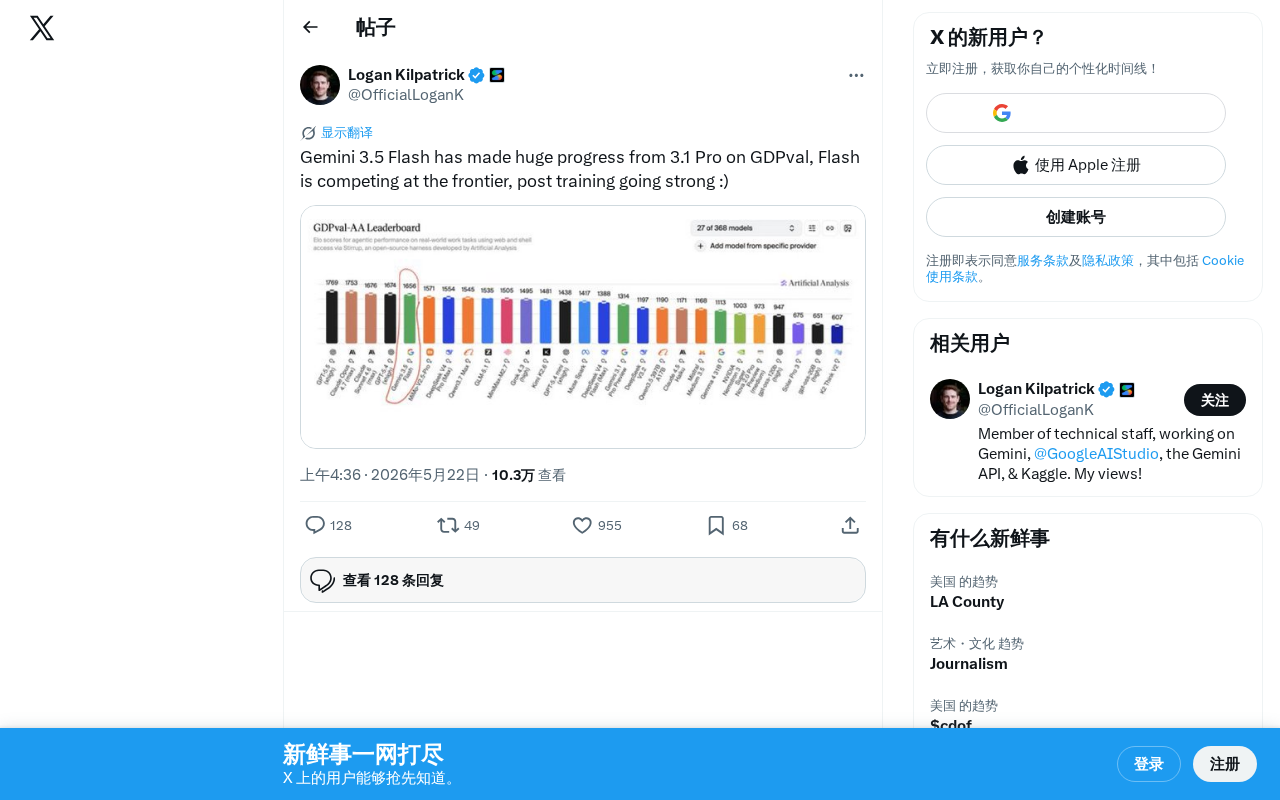
Gemini 3.5 Flash Achieves a Massive Leap on the GDPval Benchmark
Google Gemini 3.5 Flash surpasses Gemini 3.1 Pro on the GDPval benchmark. The lightweight Flash model leverages post-training techniques to approach frontier-level performance, redefining the balance between quality and cost.
 Tech Frontiers
Google Gemini Antigravity Weekly Quota Tripled — AI Coding Without Limits
Google Gemini triples Antigravity weekly quotas following a prior daily quota boost. Analyzing the impact on developers and its strategic significance in AI coding.