OpenAI Responses API Image Search Feature Explained: A Practical Guide to Multimodal Search Development
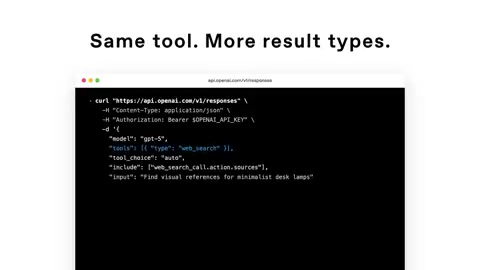
OpenAI Responses API now supports image search, enabling multimodal search in a single API call.
OpenAI's Responses API now supports image search results alongside text, allowing developers to build richer multimodal applications through a single interface. This eliminates the need to integrate third-party image search APIs, reducing complexity, cost, and latency. The update positions OpenAI competitively against Google Gemini and Perplexity while serving key verticals like e-commerce, travel, and education.
Overview
OpenAI recently announced that the Web Search feature in its Responses API now officially supports image search results. Previously, this feature only returned text results. Now, developers can retrieve both text and image search results within their applications, opening up new possibilities for building richer multimodal applications.
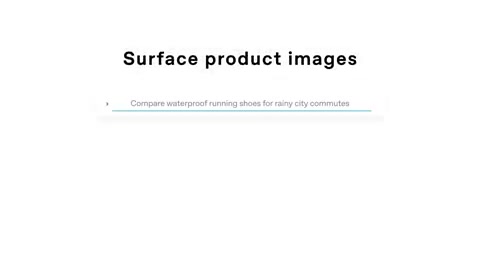


Feature Deep Dive: From Plain Text to Rich Visual Content
Core Capability Upgrade
The Responses API is a set of interfaces provided by OpenAI for building AI applications. Its built-in Web Search tool allows models to retrieve real-time internet information while generating responses. The key change in this update is that search results are no longer limited to text links — they can now also return image resources relevant to the query.
Notably, the Responses API is a next-generation API architecture launched by OpenAI in early 2025, designed to replace the previously widely-used Chat Completions API. Compared to its predecessor, the Responses API's biggest design philosophy shift is the introduction of native "Tools" support — capabilities like Web Search, Code Interpreter, and File Search are packaged as composable built-in tools, eliminating the need for developers to orchestrate complex call chains themselves. In the Web Search scenario, the model automatically determines whether internet retrieval is needed based on the user's query, then injects search results as context into the generation process. The addition of image search is essentially a dimensional expansion of this tool capability — upgrading from a single text retrieval channel to a dual text-and-image retrieval channel.
This means developers can build applications that present the following:
- Product displays: Return product images directly when searching for products, enhancing the user experience for e-commerce applications
- Location visualization: Include real-world photos when querying geographic locations or tourist attractions
- Visual references: Provide intuitive image inspiration for design and creative needs
- Images with source links: Every image comes with a source link, ensuring traceability and copyright transparency
Practical Value for Developers
Previously, if developers wanted to display both text and image search results in an AI application, they typically needed to integrate third-party image search APIs (such as Google Images API, Bing Image Search, etc.), which not only increased development complexity but also introduced additional costs and latency.
Specifically, the pain points of integrating third-party image search services are far more complex than one might imagine. First, there's API quota and cost management: Google Custom Search JSON API's free tier is limited to just 100 queries per day, with charges of $5 per thousand queries beyond that, while Bing Image Search API's free tier also has strict rate limits. Second, there's the result format unification problem: different search APIs return varying data structures, requiring developers to write extensive adapter code to standardize image URLs, thumbnail dimensions, source information, and other fields. Even more challenging is the latency stacking effect — when a single user request needs to call both an LLM interface and an image search interface simultaneously, the total latency of two asynchronous requests often far exceeds users' tolerance threshold (typically 3-5 seconds), forcing developers to implement complex concurrency control and caching strategies. Additionally, maintaining multiple API keys, handling different providers' error code systems, and dealing with their respective service degradation strategies all significantly increase operational burden.
Now, with a single Responses API call, developers can obtain both text and image results simultaneously, dramatically simplifying the development workflow for multimodal search applications. This one-stop capability integration is an important move by OpenAI to continuously strengthen its API platform competitiveness.
Industry Context and Competitive Landscape
Multimodal Search Becomes an Industry Standard
The addition of image search capability reflects a clear trend in AI application development: multimodal is transitioning from an advanced feature to a foundational capability. Competitors like Google's Gemini and Perplexity have long integrated text and image content in their search results. OpenAI's move can be seen as a necessary catch-up to match industry standards.
From a technical evolution perspective, the rise of multimodal search is no coincidence. Early search engines treated text search and image search as completely independent functional modules — users had to manually switch to the "Images" tab to get visual results. This paradigm shift began with OpenAI's release of CLIP (Contrastive Language-Image Pre-training) in 2021, which first demonstrated that text and images could be mapped into the same semantic vector space, making it possible to "retrieve images using natural language descriptions." Since then, Multimodal Embedding technology has rapidly matured. Google's Gemini natively supports mixed text-image understanding and generation, while Perplexity achieves interleaved text-and-image presentation in answers by integrating multiple search sources. These technological advances have collectively driven changes in user expectations: people are no longer satisfied with text-only AI responses and instead expect visually rich, information-dense responses.
Competitor Multimodal Search Capability Comparison
At the implementation level, each player's multimodal search strategy differs significantly. Google Gemini, leveraging its parent company's deep expertise in search, can directly access Google Search's full image index, and its native multimodal architecture allows the model to seamlessly fuse text and image information during inference — it can even understand and analyze the content of searched images. Perplexity employs an aggregation strategy, pulling image results from multiple search engines like Bing and Google, and embedding them as cards within answers. Its advantage lies in source diversity and citation transparency. Microsoft Copilot relies on the Bing search ecosystem, directly embedding Bing image search results in conversations and supporting DALL-E image generation as a supplement. In contrast, OpenAI's addition of image search to the Responses API focuses more on providing building blocks for third-party developers rather than using it solely in their own products — a positioning difference worth noting.
API Platform Ecosystem Competition
You may not have noticed, but OpenAI's choice to launch this feature at the Responses API level (rather than only at the ChatGPT product level) reflects its emphasis on the developer ecosystem. By continuously enriching the API's native capabilities, OpenAI aims to make more developers choose it as their preferred platform for building AI applications, rather than merely being a model provider.
Typical Use Cases
This update brings new possibilities to multiple vertical domains:
- E-commerce and shopping assistants: After users describe their needs, the AI not only recommends products but also displays actual product images and purchase links
- Travel planning tools: Automatically present attraction photos, hotel exteriors, and other visual information when querying destinations
- Education and knowledge applications: Complement scientific concept explanations with charts, diagrams, and other visual aids
- Creative design platforms: Provide designers with style references, color inspiration, and other image resources
Image Copyright and Compliance Considerations
In practical applications, developers need to pay special attention to copyright and compliance issues related to image search results. Unlike text search results, image copyright attribution is more complex — images returned by search engines may be subject to different levels of copyright protection, ranging from fully open Creative Commons licenses to strict commercial copyright protection. OpenAI's inclusion of source links for each image in this update addresses traceability to some extent, but it does not equate to granting usage permission. When building applications for end users, developers need to clearly distinguish the legal boundary between "displaying thumbnails from search results" (generally considered fair use) and "downloading and reusing original images" (which may constitute infringement). Furthermore, the legal definitions regarding the citation of third-party images in AI-generated content are still evolving across different jurisdictions — the EU's Digital Services Act and the U.S. copyright fair use doctrine offer different interpretive frameworks. Developers are advised to incorporate compliance mechanisms such as image source attribution and copyright notice prompts in their product design to mitigate legal risks.
Summary
The addition of image search support to the Responses API may appear to be an incremental update, but it represents OpenAI's continued investment direction in API platform capability building — enabling developers to build richer multimodal experiences with less code. As AI applications evolve from pure text interaction toward multimodal directions including text, images, audio, and video, the refinement of such foundational capabilities will become a key differentiating factor in platform competition.
Key Takeaways
Related articles

A Gen-Z Woman Making $1.5M/Month: Deconstructing the Growth Methodology Behind AI Apps
Gen-Z indie dev Nicole built 4 hit AI apps earning $1.5M/mo. Deep dive into her industrialized UGC engine, traffic testing system, and minimalist tech stack.
Replit's AI Loops Workflow Explained: Multi-Agent Collaboration Replaces Prompt Engineering
Deep dive into Replit's AI Loops workflow: how orchestrators, parallel agents, and Computer Use Verifiers build automated closed-loop systems through multi-agent collaboration.
Claude Code + Skills: A Practical Guide to AI-Powered Test Case Generation
Learn how to use Claude Code + Skills to auto-generate enterprise-grade test cases. Covers AI Agent vs LLM differences, the four core capabilities, and the complete workflow from requirements to test cases.