OpenAI's First AI Hardware Revealed: Can Jony Ive's Screenless Device Disrupt the Smartphone?
OpenAI's First AI Hardware Revealed: C…
OpenAI and Jony Ive unveil a screenless AI device, targeting 100 million units by 2027.
OpenAI has partnered with former Apple designer Jony Ive to develop a screenless, buttonless clip-on AI hardware device equipped with only a microphone and camera for natural voice and visual interaction. Their new joint venture, io, has raised $6.5 billion and plans to mass-produce 100 million units by 2027, targeting the mass consumer market. The product marks OpenAI's strategic shift from software to hardware, but the always-on camera and microphone raise significant privacy challenges.
OpenAI Officially Enters the Hardware Arena
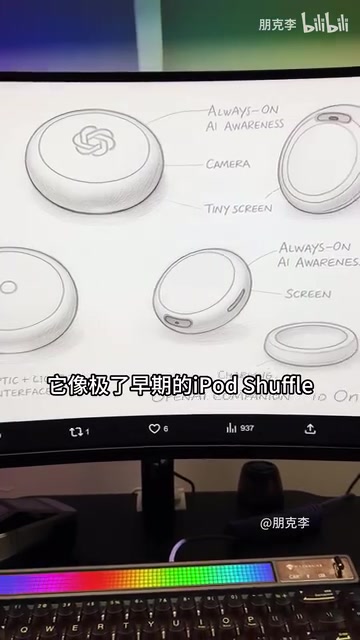
OpenAI is no longer content with being just a software company. According to the latest leaked information, OpenAI has teamed up with legendary Apple designer Jony Ive to create an entirely new AI hardware device. This isn't a simple smart speaker or wearable band — it's a revolutionary clip-on AI device that defies conventional thinking. No screen, no buttons — just a microphone and a camera as its two core interaction modules.

Sam Altman personally tested the device, which aims to "redefine human-computer interaction." In terms of appearance, it closely resembles the original iPod Shuffle — minimalist to the extreme, yet packed with intelligence far beyond its predecessor.
The Interaction Revolution Behind Minimalist Design
Goodbye Screens: The Interaction Logic of OpenAI's Screenless Device
The boldest design decision in this AI hardware is the complete elimination of the screen. It's not glasses, not a phone, and it doesn't display any visuals whatsoever. Users simply speak, and the device understands voice commands through its microphone while perceiving the surrounding environment through its camera to execute corresponding actions.
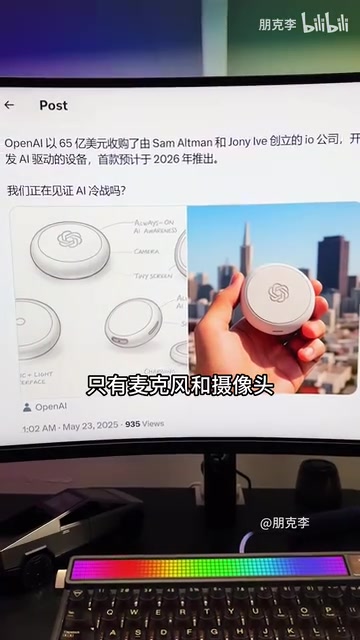
The essence of this interaction model is transforming AI from "something you need to look at" into "something that listens and watches alongside you." Looking at the evolution of human-computer interaction — from keyboard and mouse, to touchscreens, to voice assistants — OpenAI is pursuing a more natural, seamless form of ambient intelligent interaction.
This concept is known in academia as Ambient Intelligence (AmI), first proposed by the EU's Information Society Technologies Advisory Group in 2001. Its core idea is to embed computing devices into the environment, using sensor networks to perceive user states and intentions, proactively providing services rather than passively waiting for commands. Realizing this vision requires three technological pillars: Natural Language Processing (NLP), Computer Vision (CV), and edge computing. OpenAI's multimodal models like GPT-4o already possess the ability to process voice and images simultaneously, providing a solid technical foundation for a screenless device. In other words, it's precisely because the underlying AI models have crossed the threshold of "understanding both speech and vision simultaneously" that screenless hardware has moved from concept to reality.
Jony Ive's Design Philosophy: The Ultimate Expression of Minimalism
Choosing Jony Ive to lead the design of this product was no accident. As the designer behind epoch-defining products like the iMac, iPod, and iPhone, Ive's greatest strength has always been "design by subtraction." He once simplified the phone from a full keyboard to a single touchscreen — and now he's taken it a step further by eliminating the screen entirely.
After officially leaving Apple in 2019, Ive founded the independent design firm LoveFrom. He never strayed far from the tech industry, collaborating with multiple companies as an independent design consultant. In 2023, the collaboration between Ive and Sam Altman was first reported by the Financial Times, which noted that the two had been in deep discussions for months. Ive's company later merged with OpenAI to form a new hardware company called io, raising $6.5 billion at an estimated valuation of approximately $10 billion — making it one of the highest-valued hardware startups at inception in history. This massive investment underscores the strategic importance OpenAI places on this hardware product.
This minimalist design philosophy perfectly complements the capabilities of today's large AI models: when AI is smart enough to understand natural language and visual information, complex interfaces become nothing more than a redundant middle layer.
Ambition and Controversy Coexist
A Disruptive Market Position: 100 Million Units by 2027
Some believe this could be the most disruptive hardware product since the iPhone. OpenAI has set an extremely aggressive target for this device: mass production in 2027, with a shipping goal of 100 million units. That number means OpenAI isn't building a niche gadget for tech enthusiasts — it's targeting the mass consumer market.

Annual shipments of 100 million units represent a landmark threshold in consumer electronics. For reference, Apple shipped approximately 230 million iPhones in 2024, AirPods sell around 90 million units annually, and Meta's Quest VR headset series has only just surpassed 20 million in cumulative total sales. A target of 100 million units means this device would need to achieve market penetration close to AirPods levels, requiring an affordable price point (industry speculation puts it in the $200–300 range), sufficiently high-frequency use cases, and a massive supply chain infrastructure.
Notably, OpenAI isn't the first company to attempt AI-native hardware. In late 2023, startup Humane launched the AI Pin, which also featured a screenless design, using laser projection and voice interaction at a price of $699. However, the product met with catastrophic market reception — slow response times, limited functionality, and severe overheating led multiple media outlets to label it the "worst tech product of the year." Another highly anticipated AI hardware device, the Rabbit R1, performed equally poorly, criticized as "a $199 device that could be replaced by a phone app." These cautionary tales demonstrate that the success of AI hardware depends not only on the forward-thinking nature of the concept but also on the actual capabilities of the underlying AI model and the maturity of the engineering implementation. OpenAI's advantage lies in possessing the industry's most powerful multimodal large models — a core competitive edge that neither Humane nor Rabbit had at the time.
If this target is achieved, the device would become the core gateway device of the AI era, much like the smartphone was to the mobile internet era. OpenAI's true ambition isn't to build a chatbot — it's to make AI an extension of human perception and action capabilities. "Making AI a part of your body."
The Inescapable Privacy Concerns
However, a device carried on your person at all times, equipped with a camera and microphone, inevitably raises serious privacy concerns. Will it record audio and video at all times? Where does the data go? Do the people around you know they're being "observed"?
These concerns are far from unfounded. Meta's Ray-Ban smart glasses previously sparked widespread debate over similar privacy issues. An even earlier example is Google Glass in 2013 — this highly anticipated smart eyewear ultimately failed commercially due to privacy controversies. Wearers were even dubbed "Glassholes" by the public, and multiple restaurants and theaters explicitly banned them from their premises.
The privacy issues surrounding wearable AI devices go beyond public opinion — they involve complex legal compliance challenges. The EU's General Data Protection Regulation (GDPR) and various U.S. state privacy laws impose strict limitations on "continuous data collection." In particular, unconscious recording of third parties in public spaces may violate wiretapping laws and personality rights regulations in multiple jurisdictions. On the technical side, current industry solutions being explored include: on-device processing (all data processed locally on the device without uploading to the cloud), differential privacy (injecting statistical noise into data to protect individual information), and hardware-level privacy indicator lights (similar to the LED next to a laptop webcam, clearly signaling to those nearby that the device is active). OpenAI needs to present a convincing privacy protection plan before the product launch — otherwise, even the best design could face market resistance and repeat the fate of Google Glass.
From Software to Hardware: OpenAI's Strategic Transformation
From ChatGPT to hardware devices, OpenAI is executing a critical strategic leap. The ceiling for a pure software company is that it always depends on third-party hardware platforms (phones, computers) to reach users. Owning its own hardware entry point means OpenAI can control the entire chain from perception to computation to interaction.
This strategy has several important precedents in tech history. Google launched the Pixel phone in 2016 precisely to control the AI-first hardware experience; Amazon used the Echo smart speaker to push Alexa into hundreds of millions of homes; and Microsoft built the Surface product line to define the benchmark for Windows devices. These cases reveal a common logic: once software capabilities reach a certain level, hardware becomes the key to differentiated competition and user lock-in. For OpenAI, proprietary hardware also means access to first-party multimodal training data — users' voice commands, visual scenes, and interaction feedback. This data is irreplaceable for continuously optimizing AI models, creating a flywheel effect of "hardware collects data → data optimizes models → models enhance hardware experience."
This also explains why OpenAI was willing to invest heavily to bring in Jony Ive — they need more than just a good-looking shell; they need an entirely new product paradigm. 2027 may seem far off, but considering hardware R&D cycles and supply chain development, OpenAI actually doesn't have much time to spare.
Whether this device can ultimately deliver on its promise to "redefine human-computer interaction" depends on three critical factors: the actual capability boundaries of AI models, the solution to privacy concerns, and whether users are truly willing to embrace a completely screenless interaction paradigm. Regardless of the outcome, the very fact that OpenAI has taken this step has already opened up new possibilities for the future of AI hardware.
Key Takeaways
- OpenAI has partnered with Jony Ive to create a clip-on AI hardware device — no screen, no buttons, just a microphone and camera
- The device achieves natural interaction through voice and visual perception, aiming to redefine human-computer interaction
- Mass production is planned for 2027 with a target of 100 million units, positioned for the mass consumer market
- Privacy risks are the product's biggest controversy, with an always-on camera and microphone raising widespread concerns
- OpenAI's strategic shift from software to hardware signals its intent to control the core gateway device of the AI era
Related articles
 Tech Frontiers
GitHub Agent HQ Launch: AI Coding Tools Enter the Era of Platform Competition
GitHub Universe unveils Agent HQ platform for unified coding agent management, Copilot upgrades with multi-model support. OpenAI completes restructuring, Anthropic tests new model, NVIDIA open-sources AI models.
 Tech Frontiers
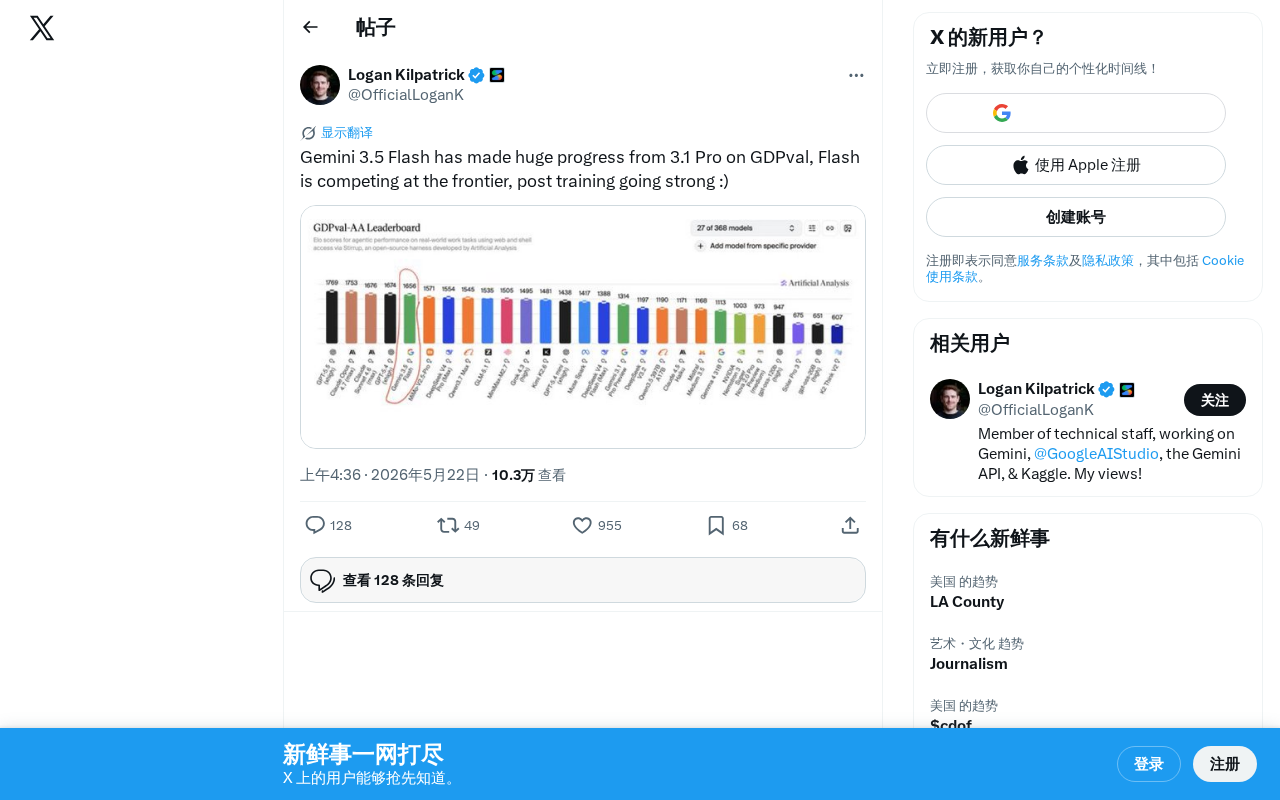
Gemini 3.5 Flash Achieves a Massive Leap on the GDPval Benchmark
Google Gemini 3.5 Flash surpasses Gemini 3.1 Pro on the GDPval benchmark. The lightweight Flash model leverages post-training techniques to approach frontier-level performance, redefining the balance between quality and cost.
 Tech Frontiers
Google Gemini Antigravity Weekly Quota Tripled — AI Coding Without Limits
Google Gemini triples Antigravity weekly quotas following a prior daily quota boost. Analyzing the impact on developers and its strategic significance in AI coding.