OpenCode Getting Started Guide: Choosing Your Installation Method & Core Features Explained

OpenCode is an open-source, highly extensible AI Agent coding assistant that excels in customization.
OpenCode is an open-source AI coding assistant built on Agent architecture. While its pure coding ability doesn't match commercial tools like Cursor, its core value lies in high extensibility — supporting custom commands, tools, MCP service integration, and Agent Skills. This article covers its Agent core concepts (memory + tool calling), three installation methods (Desktop, CMD, and the recommended WSL approach), and feature system, making it ideal for developers needing deeply customized AI coding workflows.
What is OpenCode?
OpenCode is an open-source AI Agent programming assistant and currently one of the more active projects in the AI coding space. In simple terms, it's a coding tool with Agent capabilities — it doesn't just help you write code, but can also accomplish more complex tasks by invoking various Tools and Skills.

That said, to be objective, OpenCode's pure coding ability isn't as impressive as advertised based on actual usage experience. Compared to mature AI coding tools like Cursor, Trae, and Copilot, OpenCode still has gaps in coding fluency and intelligence. The current AI coding tool market shows a multi-tiered competitive landscape: GitHub Copilot, as the pioneer, leverages the VS Code ecosystem to capture significant market share; Cursor, as a standalone IDE with deeply integrated AI capabilities (such as Composer multi-file editing and codebase indexing), has earned strong developer recognition; and emerging tools like Trae (a ByteDance product) and Windsurf are iterating rapidly. These commercial tools share a focus on out-of-the-box coding experiences but fall short in customizability and transparency.
OpenCode's value lies precisely in its high extensibility — supporting custom commands, custom tools, MCP service integration, and Agent Skills, giving it unique advantages in specific scenarios. As an open-source project, it takes a differentiated approach — trading some immediate coding experience for complete controllability and extensibility, which holds unique appeal for teams and individual developers with specialized workflow needs.
Understanding Agents: OpenCode's Core Concept
To understand OpenCode, you first need to grasp what an Agent is.
The concept of Agents originates from classical theories in artificial intelligence, traceable back to multi-agent system research in the 1990s. In the current era of large models, Agent specifically refers to autonomous systems built with a large language model (LLM) as the core reasoning engine, combined with Tool Use, Planning, and Memory modules. Since 2023, as models like GPT-4 demonstrated powerful instruction-following and reasoning capabilities, Agent architectures have rapidly become the mainstream paradigm for AI applications. Typical Agent frameworks include LangChain's Agent module, AutoGPT, MetaGPT, and others, all following the "perceive-reason-act" loop pattern.
Limitations of Large Models
Traditional large models have two obvious shortcomings:
- No memory capability: Each conversation is independent, unable to remember previous context. This is because large models are essentially stateless functions — given an input, they produce an output, and the model itself doesn't change its internal parameters due to a single conversation
- Knowledge cutoff problem: They only know information up to their training data cutoff date and cannot access the latest data. For example, a model with training data cut off in early 2024 cannot know about new frameworks or API changes released in the second half of 2024
How Agents Break Through These Limitations
Agents add two key capabilities on top of large models:
- Memory function: Maintaining context across multiple conversation turns. This is typically achieved through external storage — storing conversation history and key information in vector databases or structured storage, and retrieving relevant context to inject into prompts during each reasoning step
- Tool calling capability: Connecting to external data sources and calling APIs to compensate for the model's knowledge blind spots. The technical implementation of tool calling relies on the model's Function Calling capability — when the model determines during reasoning that it needs to call a tool, it outputs structured invocation instructions (including tool name and parameters), which the Agent framework executes and returns results to the model for continued reasoning
More importantly, Agents possess autonomous decision-making ability — they can independently determine which tools to call, and after completion, decide whether to call additional tools or provide a direct response. This autonomy enables Agents to handle tasks far more complex than simple Q&A. This "think-act-observe" loop is academically known as the ReAct (Reasoning and Acting) paradigm, the most mainstream operating mode for current Agent systems.
OpenCode is built on this Agent architecture. It includes multiple built-in large models (including free ones), supports configuring custom model providers, and combined with a rich ecosystem of tools and Skills, makes it a powerful programming assistant platform.
OpenCode Installation Methods Explained
OpenCode offers multiple installation methods suitable for users with different needs.
Method 1: Desktop Installation (Simplest)
Download the desktop application directly from the OpenCode official website, currently supporting Windows, macOS, and Linux. Just download and double-click to install — the lowest barrier to entry.
However, note that the desktop version is still in Beta, with immature features, particularly the inability to customize underlying configuration files. If you just want to quickly experience OpenCode's basic features, the desktop version is perfectly adequate; but if you need advanced features like custom commands and tool configuration, the command-line approach is recommended.
Method 2: Direct Installation via Windows CMD
Install directly in the Windows command line via npm commands, with the prerequisite of having Node.js installed. This method is simple to install, but subsequent configuration file operations can be relatively complex with Windows CMD syntax — many operations that take one line in Linux may require significant workarounds on Windows.
Method 3: WSL-Based Installation (Officially Recommended)
WSL (Windows Subsystem for Linux) is a lightweight Linux subsystem provided by Microsoft that runs a complete Linux environment within Windows. OpenCode's official documentation explicitly recommends that Windows users use WSL for the best experience.
From a technical perspective, WSL has evolved to version 2 (WSL 2), running a real Linux kernel based on lightweight virtualization technology (Hyper-V). Compared to WSL 1's system call translation approach, both performance and compatibility have seen qualitative improvements. WSL 2's file system performance approaches native Linux, while achieving interoperability with the Windows file system through the 9P protocol. For developers, WSL's greatest value is providing a native Linux development environment — including complete package managers (apt/yum), shell script support, and Linux-native toolchains — without needing dual-boot or a full virtual machine.
Why is WSL recommended? Three core reasons:
- Good command compatibility: Many of OpenCode's configuration operations are based on Linux commands and execute more smoothly in a Linux environment
- Consistency with enterprise environments: Production servers predominantly use Linux systems, and using WSL maintains consistency in operational habits
- Access to Windows files: The Linux system in WSL can directly access the Windows file system (through mount points like
/mnt/c/), without affecting project file operations
Note that this access is one-directional — Linux can access Windows files, but Windows cannot directly access files inside Linux (although WSL 2 provides the \\wsl$ network path for access, performance and convenience are inferior to the reverse direction).
OpenCode's Feature System
Based on the tutorial plan, OpenCode's core features can be divided into the following modules:
Model and Rules Configuration
OpenCode supports configuring multiple large models, including free models and custom model providers. You can also customize the Agent's behavior through rules files (similar to system prompts) to better match your development habits and project requirements. Rules files function similarly to .cursorrules files in Cursor, constraining and guiding the AI's output style, code standards, and response strategies through preset instructions.
Custom Commands and Tools
This is one of OpenCode's major highlights. You can:
- Custom commands: Create shortcut commands that fit your workflow
- Custom tools: Extend the Agent's capability boundaries
- MCP service integration: Use externally published tools to further enrich the feature ecosystem
MCP (Model Context Protocol) is an open standard protocol launched by Anthropic in late 2024, designed to establish a unified communication interface between AI models and external tools/data sources. Before MCP, every AI tool needed to write specialized integration code for different external services, leading to severe ecosystem fragmentation. By defining standardized request-response formats, MCP enables any protocol-compliant tool service to be called plug-and-play by AI Agents. This is similar to how the USB protocol unified hardware interfaces — with MCP, developers only need to publish tool services according to the protocol specification, and any MCP-supporting AI client can use them directly, significantly lowering the barrier to tool ecosystem integration.
Agent Skills
OpenCode supports an Agent Skill mechanism where you can both create custom Skills and obtain ready-made Skills from external communities for direct use. Skills are essentially predefined task templates or workflows that encapsulate prompts, tool calling sequences, and execution logic for specific scenarios into reusable units. For example, a "code review" Skill might include the complete flow of: read files → analyze code quality → generate review report → propose modification suggestions. This plugin-based design allows OpenCode's capabilities to continuously expand while lowering the barrier for users to build complex workflows.
Installation Method Recommendations
For different types of users, here are the installation method recommendations:
- Casual explorers: Download the desktop version directly for the fastest start
- Light users: npm command installation is sufficient
- Power users needing deep customization: WSL is strongly recommended — it will save you a lot of trouble with subsequent configuration
Finally, it's worth emphasizing that if your core need is AI-assisted coding, there are more mature options available (such as Cursor, Trae, etc.). OpenCode's true value lies in its open-source nature and highly extensible Agent architecture, making it suitable for developers who need deep customization of their AI coding workflows. For teams looking to deeply integrate AI coding tools with their own systems, or those needing AI coding capabilities in private deployment environments, OpenCode offers flexibility that commercial tools cannot match.
Related articles
 Tutorials
Cursor + Codex Dual-IDE Collaboration: A Practical Methodology for Open-Source Project Customization
A complete methodology for open-source project customization based on real-world experience, detailing the Cursor+Codex dual-IDE workflow, seven-stage process, MVP validation, and AI source code reading techniques.
 Tutorials
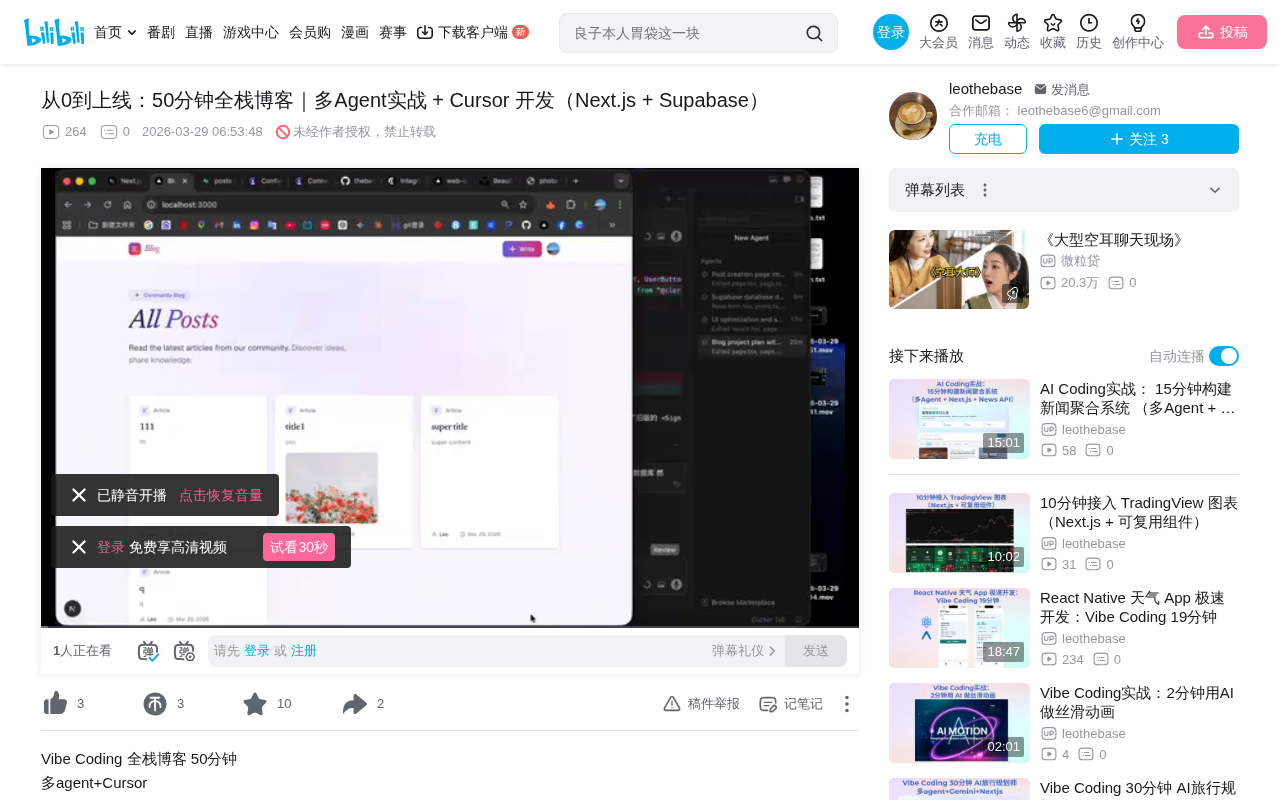
Cursor Multi-Agent in Practice: Building a Full-Stack Next.js Blog in 50 Minutes
Build a full-stack blog in 50 minutes using Cursor IDE's multi-Agent mode with Next.js, Clerk auth, and Supabase. Learn the 4-phase AI Agent workflow and key integration pitfalls.
 Tutorials
Building an AI Software Factory from Scratch: A Cursor Engineer's Hands-On Experience with Multi-Agent Collaboration
Cursor engineer Eric shares practical insights on building an AI software factory: automation levels, guardrail design, parallel Agent management, and scaling to 1000+ Agents for 24/7 development.