Politicization of the 2026 World Cup: How the Trump Administration Is Undermining the Fairness of the Tournament

Trump administration politicizes 2026 World Cup by targeting referees, teams, and fans from multiple nations.
The Trump administration is undermining the 2026 World Cup's fairness through at least three politically motivated actions: barring Somali referee Omar Attan from entering the U.S., detaining Iraqi players for hours at the border, and revoking Iran's ticket allocation so players' families cannot attend. These moves violate the host nation's guarantees to FIFA and have sparked global outrage over the politicization of the world's biggest sporting event.
The 2026 World Cup has arrived in the United States, but a series of political maneuvers by the host government are casting a shadow over the world's biggest sporting event. From barring an African referee from entering the country, to detaining the Iraqi national team, to restricting Iran's ticket allocation — the Trump administration is politicizing the World Cup in at least three distinct ways.
Somali Referee Barred from Entry: A Historic Moment Blocked by Politics
The Trump administration banned top African referee Omar Attan from entering the United States, directly preventing him from officiating at this World Cup. Attan was set to become the first Somali referee ever to officiate at a World Cup finals — a milestone moment for both him personally and for Somali football as a whole.
To appreciate the significance of this event, one must understand the rigorous nature of FIFA's referee selection process. Referees must work their way up from domestic leagues, pass through multiple rounds of evaluation by their continental confederation (such as CAF for Africa), and ultimately earn a place on FIFA's elite referee roster. Those selected for the World Cup typically have years of international experience, having been tested repeatedly in continental tournaments, World Cup qualifiers, and other high-level matches. Somali football has long been affected by domestic instability, and the country has had an extremely limited presence on the international football stage. For a Somali referee to rise through all these layers of selection is, in itself, an extraordinary achievement.
The decision sparked strong protests within Somalia. The U.S. government claimed Attan had ties to terrorism, but given the administration's track record of lacking transparency and credibility on similar matters, this claim warrants careful scrutiny.
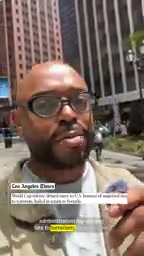
Notably, this entry ban is consistent with the Trump administration's broader travel ban policies. These trace back to the restrictions targeting several Muslim-majority countries during his first term, with Somalia being one of the primary targets. After Trump returned to the White House in 2025, these restrictions were further strengthened and expanded. Critics have long argued that these policies use "national security" as a pretext for discriminatory enforcement based on nationality and religion. In the specific context of the World Cup, host nations typically sign guarantee agreements with FIFA committing to visa facilitation for all tournament personnel, making the refusal to admit a referee particularly noteworthy within the framework of international sports law.
Blocking a FIFA-certified referee from participating in the World Cup on "counter-terrorism" grounds — without presenting sufficient public evidence — not only harms the individual but also challenges the integrity and international character of the tournament.
Iraqi National Team Detained: Striker Held for Seven Hours
The Trump administration's treatment of Iraq's World Cup delegation has also sparked widespread controversy. The Iraqi team was detained upon entry, with one striker held for as long as seven hours. Even more baffling, the U.S. has continued to refuse entry to the team's official photographer.
Iraq's football history is both glorious and turbulent, which makes this incident all the more ironic. In 2007, the Iraqi national team miraculously won the Asian Cup while their country was engulfed in war — a victory the world celebrated as a classic example of sport transcending conflict and division. Shia, Sunni, and Kurdish players fought side by side, delivering a rare moment of unity for a fractured nation. Yet Iraqi football has also long suffered from political interference; during the Saddam era, his son Uday Hussein infamously tortured players who performed poorly. U.S.-Iraq relations have been complex and sensitive since the 2003 Iraq War. Although Iraq is nominally a U.S. ally, deep tensions persist between the two countries over issues such as Iranian influence and the presence of U.S. troops. It is hard not to see the prolonged detention of Iraqi players at the border in the context of these broader geopolitical dynamics.
As official delegation members of a World Cup participating nation, players and staff should receive facilitated entry. Detaining athletes for hours and denying entry to support personnel not only violates the spirit of sport but also contravenes the international obligations a World Cup host is expected to uphold. Such treatment is difficult to interpret as anything other than politically motivated selective enforcement.
Iran's Ticket Allocation Revoked: Players' Families Unable to Attend
The third controversial measure involves the Iranian national team. Reports indicate that Iran was denied its rightful ticket allocation, meaning players' family members and friends are largely unable to attend matches in person.
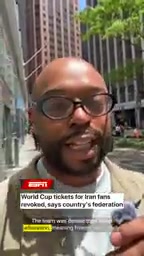
To understand the severity of this measure, one must be familiar with FIFA's ticket allocation system. For each World Cup match, tickets are distributed proportionally among the football associations of the two competing teams, FIFA partners, the host organizing committee, and public sales channels. Each participating team's football association typically receives an allocation of several thousand tickets, a portion of which is specifically reserved for players' family and friends — known as "Player Friends & Family tickets" — a standard practice at major international tournaments. This mechanism is not merely a logistical arrangement; it directly affects athletes' psychological support and competitive performance. Sports psychology research shows that having family present at matches has a significant positive impact on athlete performance. Stripping away this allocation effectively creates an unfair competitive disadvantage.
The adversarial relationship between the U.S. and Iran dates back to the 1979 Iranian Islamic Revolution and the subsequent U.S. embassy hostage crisis, after which the two countries severed diplomatic ties — a break that persists to this day. In sports, U.S.-Iran matchups have always carried political symbolism far beyond the game itself. The 1998 France World Cup group stage match between the two teams was called "one of the most politically charged World Cup matches in history," and the iconic image of Iranian players presenting flowers to their American counterparts before kickoff became a classic moment of sports diplomacy. The Trump administration unilaterally withdrew from the Iran nuclear deal (JCPOA) during its first term and implemented a "maximum pressure" policy; the second term has continued this hardline stance toward Iran. Against this backdrop, restricting Iran's ticket allocation has been widely interpreted as yet another extension of diplomatic pressure into the sporting arena.
Revoking ticket allocation rights effectively punishes athletes and their families rather than any political entity. This approach directly projects U.S.-Iran geopolitical tensions onto the playing field.
Historical Context of World Cup Politicization and the Current Controversy
To be fair, the World Cup has never existed in a political vacuum. During the 2022 Qatar World Cup, the host's human rights record and labor issues drew widespread criticism — reports indicated that thousands of migrant workers from South and Southeast Asia died or suffered severe exploitation during the construction of World Cup infrastructure. The 2018 Russia World Cup was similarly accompanied by geopolitical controversy, as Russia had annexed Crimea in 2014 and multiple countries debated whether to boycott the event. The intertwining of sports and politics is almost a given at major international tournaments.
However, the current U.S. actions differ fundamentally from previous controversies. Past political disputes typically centered on the host nation's domestic policies or issues during event preparation. The U.S. government's actions, by contrast, involve imposing discriminatory restrictions on personnel from specific countries during the tournament itself. This touches on a fundamental legal and institutional issue: World Cup hosts are required to submit a series of Government Guarantees to FIFA during the bidding process. These explicitly include guaranteeing visa and entry facilitation for all participating nations' personnel, ensuring no discriminatory treatment based on nationality, race, religion, or political stance toward any participant, and providing a safe and fair tournament environment. These guarantees are legally binding and serve as preconditions for FIFA to award hosting rights. The 2026 World Cup is co-hosted by the United States, Canada, and Mexico, with the U.S. hosting the vast majority of matches, including the final. When the host government's political actions contradict its commitments to FIFA, whether FIFA has the capacity and willingness to intervene effectively becomes an urgent question.
The core philosophy of the World Cup has always been to unite the world through football. As the host, the United States should be demonstrating openness and inclusivity, providing a fair competitive environment for all participating teams. The current actions — from barring referees to detaining players to restricting tickets — send precisely the opposite message.
This is exactly why a growing chorus of voices around the world is expressing dissatisfaction with the United States' performance as host. The World Cup should be a stage that transcends borders, race, and political divisions. When the host government uses it as a tool for exerting political influence, the damage extends beyond the interests of the affected nations — it strikes at the heart of international sportsmanship itself.
Conclusion: Sport Should Not Become a Political Battleground
The power of sport lies in its ability to build bridges across the deepest divides. From the "Ping-Pong Diplomacy" of 1971 that opened the door to U.S.-China relations, to the 1995 South Africa Rugby World Cup that helped Nelson Mandela heal racial divisions, history has repeatedly shown that sport possesses a unique and irreplaceable power to promote understanding and peace. When politics excessively intrudes upon sporting events, what is lost is not just the purity of competition, but humanity's precious opportunity to achieve understanding and peace through shared passion.
For the 2026 World Cup, what people want to see is great football — not a political battleground. FIFA, national football associations, and the global sports community must speak with one voice to defend the independence and inclusivity of sport, and ensure that the World Cup does not become a political tool for any government.
Related articles
The Complete Guide to OpenAI Codex CLI: From Installation and Configuration to Enterprise-Level Practice
In-depth guide to OpenAI Codex CLI: covering installation, agents.md design, multi-agent collaboration, MCP protocol integration, and a RAG customer service project.
Decoding Google's AI Control Roadmap: A Defense Framework for When AI Goes Off the Rails
Google releases its AI Control Roadmap, a new safety paradigm that assumes alignment may fail and builds defenses at the system architecture level.
Agent Factory: Voice-Driven AI Coding — A Hands-On Guide to Building Apps for Free
Agent Factory wraps Claude Code into a voice-driven AI coding tool with dozens of free models, letting you build apps, games, and websites through conversation.