Python Complete Tutorial for Beginners (568 Episodes): In-Depth Course Structure Analysis and Study Tips
A detailed review of a 568-episode Python tutorial series with study tips for beginners.
This article provides an in-depth analysis of a 568-episode Python tutorial series on Bilibili, examining its three-module structure (Fundamentals, Intermediate, and Practical). It objectively evaluates the course's strengths — such as systematic coverage and rich supplementary resources — alongside concerns about content depth, unrealistic completion claims, and the absence of AI-related topics. The article also offers actionable study tips for Python beginners.
Course Overview: A Python Tutorial Series Claiming to Be "the Most Comprehensive and Detailed"
Recently, a Python tutorial series boasting "a full 568 episodes" appeared on Bilibili, claiming to cover a complete learning path from absolute beginner to hands-on projects. The creator states it took over 2,000 hours and three months of refinement, using a teaching approach that "tightly integrates theory with hands-on practice."
Python was first released by Guido van Rossum in 1991, with a design philosophy emphasizing code readability and simplicity, centered on the principles of "elegance, clarity, and simplicity." After more than three decades of development, Python has become one of the most popular programming languages in the world, consistently ranking near the top on authoritative lists such as TIOBE and Stack Overflow. Python is the go-to language for beginners primarily because of its near-natural-language syntax, its rich third-party library ecosystem (with over 500,000 packages on PyPI), and its wide-ranging applications in data science, artificial intelligence, web development, DevOps automation, and more.
For beginners looking to get started with Python, choosing the right course from the overwhelming number of programming tutorials on Bilibili can be a real challenge. It's worth noting that Bilibili has evolved into one of China's largest informal online learning platforms, jokingly dubbed "Bilibili University" by its users. According to official Bilibili data, over 200 million users watched educational content on the platform in 2023, with programming tutorials being one of the most popular categories. This ecosystem has a unique dynamic: content creators (known as "UP hosts") build audiences and influence through free content, then monetize through paid courses, consulting services, or platform incentive programs. The advantage of this model is that it lowers the barrier to learning, but it also leads to inconsistent content quality — some courses suffer from excessive marketing, filler content, or outdated information. When choosing a course, learners should pay attention to genuine feedback in the comments and bullet chat (danmaku), as well as the creator's professional background and update frequency. This particular course at least makes a solid attempt at being systematic. Let's take a closer look at its structure and content design.
Course Structure: Fundamentals, Intermediate, and Practical — A Progressive Approach
This complete Python tutorial is divided into three major modules: Fundamentals, Intermediate, and Practical, following the classic path of programming education: build a foundation first, then dive deeper into core concepts, and finally solidify knowledge through projects.
Fundamentals: Building a Solid Python Foundation
The fundamentals section covers the core content needed to get started with Python:
- Environment Setup: Starting from installing the Python development environment to lower the entry barrier
- Variables and Data Types: Understanding Python's basic data structures
- Control Flow Statements: Mastering conditionals, loops, and other program flow controls
- Function Definitions: Learning code reuse and modular thinking
- Modules and Packages: Understanding how to organize and manage code

These topics essentially cover all the knowledge points needed for a Python beginner, and the starting point is well-calibrated for those with zero experience. Environment setup may seem simple, but it's actually the first hurdle that causes many beginners to give up on programming — differences in installation across operating systems, virtual environment configuration, and choosing an IDE (Integrated Development Environment) can all be confusing for newcomers. Currently, the mainstream Python development environments include PyCharm, VS Code, and Jupyter Notebook, each suited to different scenarios: PyCharm is feature-rich and ideal for large-scale project development, VS Code is lightweight and flexible with a rich plugin ecosystem, and Jupyter Notebook is the standard tool in data analysis and machine learning.
Intermediate: Diving Deep into Python's Core Mechanisms
The intermediate section noticeably ramps up the difficulty, covering key skills that mid-level Python developers need to master:
- Object-Oriented Programming (OOP): Understanding classes, objects, encapsulation, and more
- Inheritance and Polymorphism: Mastering the core features of OOP
- Regular Expressions: A powerful tool for text matching and replacement
- File I/O Operations: The foundation of data persistence
- Exception Handling: An essential skill for writing robust code
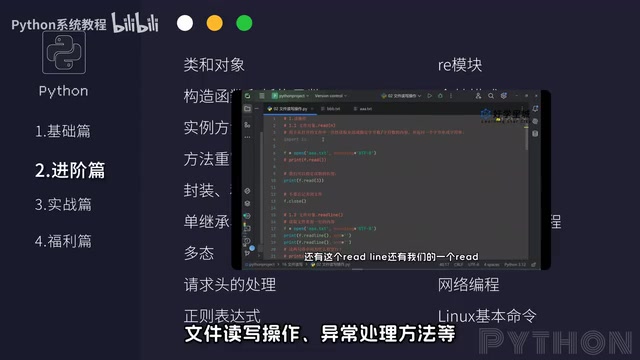
Object-Oriented Programming is a programming paradigm centered on "objects," which bundles data (attributes) and the methods that operate on that data (behaviors) into abstract templates called "classes." The four core pillars of OOP are: encapsulation (hiding internal implementation details and exposing only necessary interfaces), inheritance (subclasses reusing attributes and methods from parent classes), polymorphism (the same interface exhibiting different behaviors across different objects), and abstraction (extracting common characteristics into generalized models). Python's support for OOP is highly flexible — it supports multiple inheritance, duck typing, and other features that differ from strictly object-oriented languages like Java. Understanding OOP is crucial for writing maintainable and scalable large-scale projects, and it represents a key turning point in the journey from "script writer" to "software developer."
Regular Expressions (regex) are equally worth exploring in depth. A regex is a mini-language for describing string matching patterns, originally proposed by mathematician Stephen Cole Kleene in the 1950s and later widely adopted in text processing. Python provides regex support through its built-in re module. Regular expressions are used in web scraping to extract specific data from HTML, in data cleaning to format and validate text, and in log analysis to filter key information. Although regex syntax may look cryptic at first glance, mastering it can dramatically improve text processing efficiency, making it an indispensable tool in any Python developer's toolkit.
From a course design perspective, the intermediate section makes pragmatic content choices — these are all high-frequency skills used in real-world development. However, whether the 568-episode volume contains filler content can only be determined by actually watching the course.
Practical: Bridging the Gap from Theory to Real Projects
The practical section is the highlight of this course, covering several popular application areas:
- Web Scraping: Crawling web pages for images, videos, and other resources
- Office Automation: Practical skills for boosting work efficiency
- Data Analysis and Mining: The full pipeline of data storage, analysis, and visualization
Web crawling (also known as web scraping or spidering) is one of Python's most classic use cases. It's an automated program that simulates browser behavior to visit web pages and extract desired data. Python has a mature tech stack for web scraping: the requests library for sending HTTP requests, BeautifulSoup and lxml for parsing HTML, Scrapy as a full-featured crawling framework, and Selenium for handling JavaScript-rendered dynamic pages. However, when learning web scraping, it's essential to understand the legal boundaries: scraping personal data without authorization, bypassing anti-scraping mechanisms to access protected content, or placing excessive load on target servers may violate cybersecurity and data protection laws. Learners should always respect a website's robots.txt protocol and practice scraping skills within legal and ethical boundaries.
The practical projects are directly aligned with Python's most mainstream application scenarios. For learners hoping to turn their Python skills into career opportunities, these directions offer genuinely high practical value.
Objective Analysis: Strengths and Weaknesses of This Python Tutorial
Strengths
High degree of systematization is this course's biggest selling point. Compared to the many scattered Python tutorials on Bilibili, a complete 568-episode system can genuinely help beginners avoid the fragmented learning problem of picking up bits and pieces from different sources. The creator mentions "deeply analyzing the learning path from the perspective of an absolute beginner" — if this is truly delivered, it offers real value to newcomers.
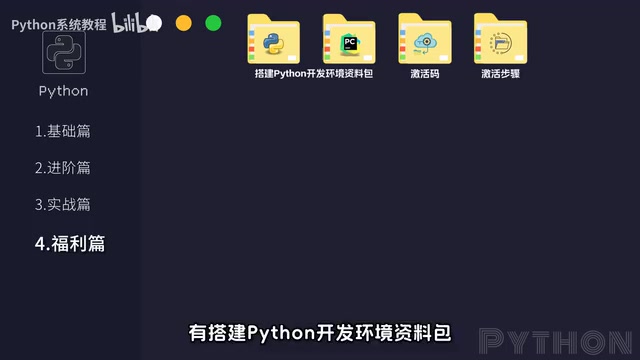
Rich supplementary resources are another plus. The course provides an environment setup resource pack, study plan templates, e-books, and courseware. These supplementary materials can significantly reduce learning friction for self-learners.
Points of Concern
Is the 568-episode volume reasonable? The claim of "finishing in one week" clearly contradicts the sheer volume of 568 episodes. Even if each episode is only 5 minutes long, the total runtime approaches 50 hours — completing and absorbing all this content in a single week is unrealistic for most people. According to cognitive science research, programming requires extensive "deliberate practice" — repeatedly coding to reinforce understanding after grasping a concept. Simply watching videos without hands-on practice typically results in a knowledge retention rate of no more than 10%. Learners should create a realistic study plan based on their own circumstances rather than blindly chasing speed.
Content depth is questionable. The quality of free courses varies widely. Whether the 568 episodes contain significant repetition or filler can only be judged through actual experience. It's advisable to watch the first few episodes as a trial, assess the teaching quality, and then decide whether to commit to the entire series.
Lack of AI-related content. A Python course positioning itself as the "latest version" that doesn't cover AI, large language model API integration, LangChain, or other trending topics may fall short in terms of cutting-edge relevance. Since 2023, with the explosion of large language models like ChatGPT, Python's position in the AI field has only strengthened. The hottest AI-related skills for Python developers today include: calling LLM APIs from companies like OpenAI and Anthropic; building LLM-powered applications using the LangChain framework (such as RAG — Retrieval-Augmented Generation — and AI Agents); fine-tuning models with Hugging Face's Transformers library; and rapidly building AI application frontends with tools like Streamlit and Gradio. For Python learners, mastering these cutting-edge skills not only boosts employability but also provides a better understanding of technological trends in the AI era. A comprehensive Python tutorial that lacks this content does feel somewhat behind the times in the 2024–2025 context.
Study Tips: How to Make the Most of Free Python Tutorials
Regardless of which tutorial you choose, the following tips apply to all Python beginners:
- Don't just watch — practice: Programming is a hands-on skill. You should write code after learning each concept. Research shows that "output-based learning" (such as writing code to solve problems yourself) is far more effective than "input-based learning" (such as passively watching videos). After completing each chapter, aim to finish at least 2–3 related coding exercises. Platforms like LeetCode and Nowcoder are great for practice.
- Set clear goals: Do you want to do data analysis, web development, or AI applications? Different goals require different learning priorities. For data analysis, focus on mastering libraries like Pandas, NumPy, and Matplotlib. For web development, concentrate on frameworks like Django or Flask. For AI, you'll need to learn deep learning frameworks like PyTorch or TensorFlow.
- Leverage multiple resources: Don't limit yourself to a single tutorial. When you encounter a concept you don't understand, cross-reference official documentation and other tutorials. The official Python documentation (docs.python.org) is the most authoritative reference. Stack Overflow and open-source projects on GitHub are also excellent learning resources.
- Start building projects early: Once you've grasped the basic syntax, start attempting small projects — don't wait until you've "finished learning" to get your hands dirty. Begin with a simple to-do app, a weather lookup tool, or a personal blog. The problems you encounter in real projects are often far more growth-inducing than textbook exercises.
Overall, this course makes a commendable effort in terms of systematization and coverage, and it's worth considering as one of several reference resources for getting started with Python. However, learners should maintain realistic expectations — there are no shortcuts to improving programming skills. The key lies in consistent practice and project experience.
Related articles
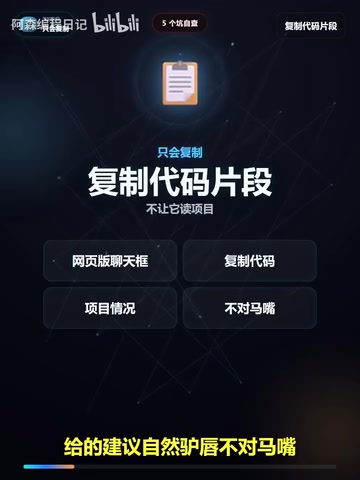
Five Common Claude Code Mistakes — How Many Are You Making?
Five common Claude Code mistakes developers make: copy-pasting code, skipping CLAUDE.md, inefficient prompting, ignoring docs, and poor context management — with fixes.
Andrew Ng's New Course Explained: A Practical Guide to Using OpenAI's O1 Reasoning Model
Deep dive into Andrew Ng and OpenAI's Reasoning with O1 course covering test-time scaling, new prompting paradigms, multi-model orchestration, and practical applications for developers.

Learning AI After College Entrance Exams: A Complete Path from Zero to Freelancing
How to efficiently learn AI skills during summer break after exams? A complete path from mastering prompts and hands-on projects to freelancing on platforms.