Claude Code Localization Tutorial: A Zero-Barrier Approach to Having AI Translate Itself

An open-source project lets Claude Code use its own AI capabilities to self-localize its interface.
The open-source project Qt Cloud Hoax offers an innovative approach to localizing Claude Code: feed the project code — containing 151 translation entries — to Claude Code and let the AI autonomously read the translation dictionary and replace English text in local files, achieving full interface localization. The solution also provides Hook scripts for real-time hints on 100+ commands. Since the AI adaptively executes the process, there are no version compatibility issues — just rerun the command after updates to restore localization.
The Pain Points of Claude Code's English-Only Interface
Claude Code, the AI programming tool from Anthropic, is powerful but comes with an entirely English interface — a significant barrier for developers in non-English-speaking regions, especially beginners. Unlike code completion tools such as GitHub Copilot, Claude Code is a command-line AI programming assistant that runs in a terminal environment with full agentic coding capabilities. It can autonomously browse codebases, edit files, execute terminal commands, manage Git operations, and even handle complex multi-step development tasks. This agent mode means Claude Code isn't just a passive code suggestion tool — it's a programming agent that actively understands context and takes action. Because it's built on a command-line interface (CLI), all interaction prompts, status messages, and command descriptions are presented as plain text. From the welcome message to the configuration panel, from keyboard shortcuts to command descriptions, the wall of English text is enough to deter many potential users.
Recently, an open-source project called Qt Cloud Hoax introduced a clever approach — instead of manually translating everything, you let Claude Code "localize itself." The essence of this solution: hand the open-source project's code to Claude Code as a "localization manual" and let the AI handle all the translation and replacement work on its own.
The Core Principle: Teaching AI to Read a Translation Dictionary
Trigger the Full Localization with a Single Sentence
The entire process is remarkably simple. All you need to do is send the Qt Cloud Hoax GitHub URL to Claude Code and say:
"Follow the code in this project and localize my interface."
Once Claude Code receives the project, it automatically performs the following steps:
- Read the translation dictionary: The project contains a comprehensive translation dictionary covering 151 entries — from the welcome message to the configuration panel, from keyboard shortcuts to command descriptions — encompassing virtually all common English text in the Claude Code interface.
- Locate local NPM package files: Claude Code automatically identifies the relevant files in its own installation directory. Claude Code is globally installed on the user's system via npm (Node Package Manager), with its core code stored as compiled JavaScript/TypeScript in the node_modules directory. All text strings displayed in the interface — welcome messages, menu items, prompt information — are hardcoded in these local JavaScript files. Localization essentially means locating these strings and performing text replacement. Since they're local files, changes take effect immediately without recompilation.
- Replace one by one: Following the dictionary's mapping, it completes each text replacement sequentially.
After the process finishes, open Claude Code and you'll see "Welcome back" replaced with your target language equivalent, "Auto Compact" translated accordingly, and the configuration panel, slash commands, and keyboard shortcut hints all fully localized.
Why There Are No Version Compatibility Issues
This approach has a natural advantage: your own Claude Code is modifying its own files. It has complete knowledge of its current version's file structure and content locations, eliminating the version incompatibility issues common with traditional localization patches. No matter which version of Claude Code you're running, it knows exactly what to change.
This is fundamentally different from the traditional "create a localization pack → user downloads → overwrite files" model. Traditional software localization typically follows a reverse engineering path: the localizer needs to decompile the target software, locate strings in resource files, create translation mapping tables, repackage, and distribute patches. This model is highly dependent on a specific version's file structure — once the software updates, the localization patch often breaks immediately. Claude Code's approach is essentially AI-driven adaptive localization — separating translation knowledge (the dictionary) from execution capability (the AI agent). The dictionary provides the "what to translate" knowledge, while the AI handles the "how to translate" execution. Since the AI can understand code structure and contextual semantics, even if file paths change or string positions shift, it can intelligently locate and complete replacements. This essentially upgrades deterministic find-and-replace into intelligent adaptation with comprehension capabilities.
Advanced Feature: Real-Time Chinese Hints for 100+ Commands
Beyond interface localization, Qt Cloud Hoax offers a second practical feature — localized command hints.
The project includes a Hook script that, once installed, automatically displays a line of explanation in your language every time Claude Code executes an operation. A Hook is a common software design pattern that allows users to insert custom logic when specific events occur. In Claude Code, Hooks can trigger user-defined scripts before and after command execution — similar to how Git Hooks work, where Git allows custom scripts to run before and after operations like commit and push. Specifically for the command hint feature, the mechanism works as follows: when Claude Code is about to execute a shell command, the Hook script intercepts it, looks up the corresponding explanation in a preset command-description mapping table, and outputs it to the terminal. For example:
git push→ "Push code to remote repository"npm install→ "Manage project dependencies"
The project covers over 100 common commands, each with a clear description. This is hugely valuable for beginners — you can finally understand in real time what Claude Code is doing, instead of staring at a stream of unfamiliar commands in confusion.
Hook Script Configuration Notes
Everyone's computer environment is different — Windows and Mac have different paths, and Bash configurations vary. Globally installed NPM packages are stored in different locations across systems: on macOS, typically at /usr/local/lib/node_modules or under the ~/.nvm directory when managed by nvm; on Windows, at the %AppData%/npm/node_modules path. Hook scripts are usually written as shell scripts (.sh) or JavaScript and require correct file path configuration and execution permissions to work properly. When configuring Hook scripts, it's recommended to have Claude Code check the Hook configuration for you and make adjustments based on your specific environment — this ensures more stable operation.
Three Reasons This Localization Approach Is Worth Recommending
The Open-Source Project Has Already Done the Hard Work
If you were to localize Claude Code from scratch, you'd need to figure out: How should 151 entries be translated? Which files need modification? How do you back up? How do you restore? All these questions are already answered in Qt Cloud Hoax's code.
Having Claude Code read this project is like giving it a detailed "localization manual" — following it avoids a lot of trial and error. This also demonstrates an interesting paradigm: using the accumulated experience of the open-source community as reference knowledge for AI, and letting AI execute the specific operations.
MIT License — Completely Free and Fully Customizable
The project uses the MIT open-source license and is completely free. The MIT License is one of the most permissive open-source licenses available, created by the Massachusetts Institute of Technology. It allows anyone to freely use, copy, modify, merge, publish, distribute, sublicense, and sell copies of the software — the only requirement is to retain the original copyright notice. By comparison, the GPL license requires derivative works to also be open-sourced, while the Apache license includes patent grant clauses. Choosing the MIT license means you can modify translation entries to your preference, adjust hint colors, customize command descriptions, and even build your own toolchain on top of it — truly making "your Claude Code, your rules."
AI Adaptability — No More Repetitive Work After Version Updates
Since the localization process is executed by Claude Code itself, even when the tool updates, you only need to rerun the localization command once and the AI will automatically adapt to the new version's file structure — saving you from waiting for third-party localization packs to be updated. Note that each time you update Claude Code via npm update, the previous localization modifications will be overwritten by the new version's files, but rerunning the localization command restores everything — the entire process typically takes just a few dozen seconds.
Conclusion: A New "AI Self-Service" Approach to Localization
The core value of this localization approach lies not only in solving the language barrier but in demonstrating an "AI self-service" paradigm: rather than painstakingly creating localization patches compatible with every version, let the AI tool understand the requirements and make the modifications itself. The scalability of this model far exceeds traditional approaches — the same concept can be applied to localization in other languages, interface theme customization, and even feature extensions. As long as you can provide a sufficiently clear "instruction manual," the AI agent can autonomously handle the execution.
For developers who work primarily in non-English languages, lowering the barrier to AI programming tools and enabling more people to get started with Claude Code without friction is inherently valuable. If you've been hesitating about Claude Code because of its English-only interface, give this approach a try.
Related articles
 Tutorials
Cursor + Codex Dual-IDE Collaboration: A Practical Methodology for Open-Source Project Customization
A complete methodology for open-source project customization based on real-world experience, detailing the Cursor+Codex dual-IDE workflow, seven-stage process, MVP validation, and AI source code reading techniques.
 Tutorials
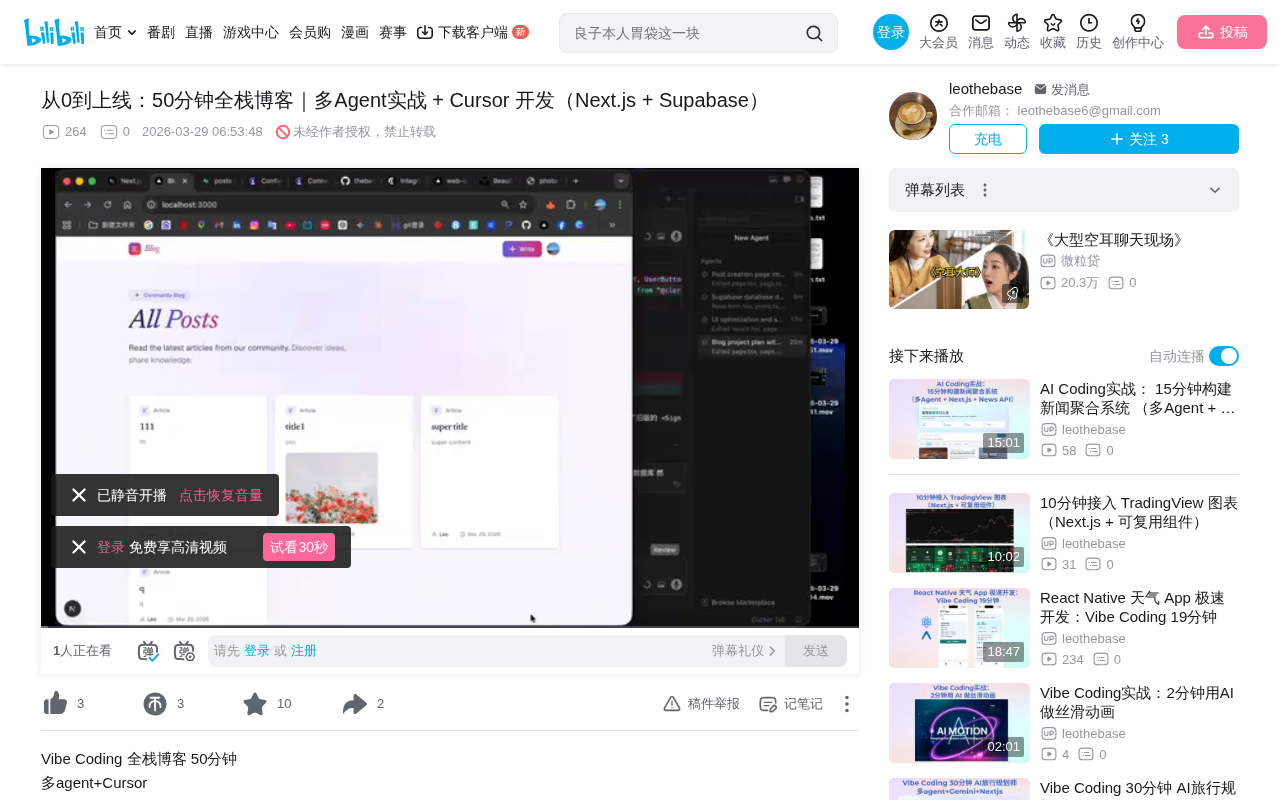
Cursor Multi-Agent in Practice: Building a Full-Stack Next.js Blog in 50 Minutes
Build a full-stack blog in 50 minutes using Cursor IDE's multi-Agent mode with Next.js, Clerk auth, and Supabase. Learn the 4-phase AI Agent workflow and key integration pitfalls.
 Tutorials
Building an AI Software Factory from Scratch: A Cursor Engineer's Hands-On Experience with Multi-Agent Collaboration
Cursor engineer Eric shares practical insights on building an AI software factory: automation levels, guardrail design, parallel Agent management, and scaling to 1000+ Agents for 24/7 development.