Rent a Human Platform: AI Hiring Humans to Do Work — The Truth Behind 700,000 Sign-ups

Rent a Human platform lets AI Agents directly hire humans for physical tasks, with 700,000 people signed up.
The Rent a Human platform allows AI Agents to hire humans for real-world physical tasks, solving AI's "last mile" problem of lacking a body. With over 700,000 registered users, its work model is essentially similar to delivery riders — only the task initiator has changed from humans to AI. Before humanoid robot technology matures, humans serving as AI's "physical interface" represents a transitional market demand, but it also raises deeper discussions about workers' rights and human-machine power dynamics.
When AI Becomes the Employer: Rent a Human Shatters Expectations
We've been debating whether AI will replace human jobs, but now an even more surreal scenario has emerged — AI directly hiring humans to do work. A platform called Rent a Human has recently attracted widespread attention, with its core function being to let AI Agents hire real-world humans to perform physical labor.
The platform was built by a developer named Alex. The underlying logic isn't particularly complex, but the trend it reveals is worth serious reflection.
Why Does AI Need to Hire Humans?
AI's Capability Boundary: Lacking a Physical Body
Today's AI Agents already possess powerful capabilities — they can plan tasks, make decisions, and autonomously invoke various tools. But there's one fundamental limitation: they don't have physical bodies.
To understand this, you need some background on AI Agent technology. AI Agents are one of the hottest development directions in artificial intelligence today. Unlike traditional conversational AI, Agents possess capabilities for autonomous planning, tool invocation, memory management, and multi-step task execution. A typical Agent architecture includes a perception module (receiving input), a planning module (decomposing tasks), an execution module (invoking tools to complete subtasks), and a reflection module (evaluating results and adjusting strategies). Since 2024, companies like OpenAI, Google, and Anthropic have all released Agent frameworks, enabling AI to autonomously complete complex task chains from web browsing and code writing to business bookings. However, all these capabilities remain confined to the digital world.
No matter how strong an AI's reasoning capabilities are, when a task involves physical operations in the real world (like going somewhere to pick something up, installing equipment, or moving items), it's completely helpless. While the humanoid robotics field is developing rapidly, current technology levels are far from meeting the demands of complex, ever-changing real-world scenarios.
Specifically, the humanoid robotics field has made significant progress in recent years, but remains a considerable distance from general-purpose deployment. Products like Tesla's Optimus, Figure AI's Figure 02, and Boston Dynamics' Atlas perform impressively in demonstrations, but still face technical bottlenecks in flexible manipulation in unstructured environments, fine force control, and long-duration battery life. Currently, humanoid robots are primarily applied in relatively standardized scenarios like warehouse logistics. The industry generally estimates that achieving autonomous completion of diverse physical tasks in complex urban environments will require another 5-10 years of technological iteration. This creates a clear time window for platforms like Rent a Human.
How Rent a Human Solves AI's "Last Mile" Problem
Rent a Human is positioned to solve AI's "last mile" execution problem. AI handles all the planning, decision-making, and coordination, then dispatches the parts requiring physical execution to human workers on the platform. This is essentially an AI-to-human task distribution system.
From a technical implementation perspective, this platform involves multiple key components: task understanding and decomposition (converting AI Agent abstract requirements into specific physical task descriptions), intelligent matching (matching personnel based on dimensions like geographic location, skill tags, and historical ratings), real-time communication protocols (instruction transmission and status feedback between AI and human executors), and payment settlement systems. This architecture essentially wraps "human labor" as an API service callable by AI, built on top of AI tool-calling protocols like MCP (Model Context Protocol). In other words, from an AI Agent's perspective, hiring a human to complete a physical task is structurally identical to calling a search engine API — both are invoking external tools to obtain capabilities the AI itself doesn't possess.
Users simply fill in their skills, location, and acceptable task types on the platform, and AI may dispatch tasks to them based on demand.
700,000 Sign-ups: Why Are People Willing to Work for AI?
According to reports, over 700,000 people have registered on the platform, applying to become AI's "executors." This number alone demonstrates the real existence of market demand.
Essentially No Different from Delivery Riders
Think about it carefully — this isn't fundamentally different from food delivery or ride-hailing:
- Delivery riders: Platform algorithm dispatches orders → riders execute deliveries
- Ride-hailing drivers: System matches orders → drivers complete pickups and drop-offs
- Rent a Human: AI Agent dispatches tasks → humans complete physical tasks
The only difference is that the "boss" behind you used to be an algorithm designed by human product managers, and now it's directly an AI Agent itself. From the worker's perspective, the experience may be identical — accept a task, execute it, get paid.
A New Form of the Gig Economy
This is actually an extension of the Gig Economy. The gig economy refers to an economic model based on short-term contracts or freelance work, rather than traditional long-term employment relationships. According to McKinsey research, approximately 150 million people globally engage in some form of gig work. This model exploded starting with Uber's founding in 2009, then expanded into food delivery (DoorDash, Meituan), home services (TaskRabbit), freelancing (Fiverr, Upwork), and other areas. The core characteristic of the gig economy is the platform serving as intermediary, achieving supply-demand matching through algorithms, where workers have time flexibility but lack the benefit protections of traditional employment relationships.
Over the past decade, platforms like Uber and Meituan have already accustomed hundreds of millions of people to "task-based work." Rent a Human simply changes the task initiator from humans to AI — the work model itself hasn't fundamentally changed. However, it's worth noting that when the task initiator becomes AI, task types may become more diverse and fragmented — AI might decompose a complex goal into many tiny physical subtasks, each potentially completable in just a few minutes, further driving the "atomization" trend of labor.
AI Hiring Humans: Dystopia or New Opportunity?
An Unsettling Narrative
The phrase "AI hiring humans" certainly carries strong dystopian overtones. It implies an inversion of power relations — humans shifting from being tool users to being used by tools. This narrative easily triggers anxiety: if AI becomes the decision-maker and employer, are humans being reduced to pure execution machines?
This concern isn't unfounded. In the existing platform economy, algorithmic control over workers has already sparked widespread social discussion — from the time pressure delivery riders face being trapped in the system, to the dynamic pricing opacity that ride-hailing drivers encounter. When the decision-making entity upgrades from "human-designed algorithms" to "autonomously deciding AI Agents," this control may become more precise and harder to resist.
A More Rational Perspective
But consider it from another angle:
- AI doesn't truly "hire" humans — behind it all, human users are still using AI Agents to complete tasks, with AI serving only as the coordination layer. Just like when you order through Meituan, the one truly hiring the rider is you, not Meituan's recommendation algorithm.
- This may create new employment opportunities — for people with specific skills but lacking customer acquisition channels, AI task dispatch actually lowers the barrier to finding work. Especially in non-standardized skill areas (like specific equipment repair, localized procurement, on-site surveys, etc.), traditional platforms struggle to cover these, while AI Agents' flexible task decomposition capabilities may open new markets.
- Efficiency gains benefit everyone — AI handles planning and optimization, humans focus on execution, and overall efficiency may improve dramatically. This human-machine collaboration model is similar to the division of labor between machines and workers during the Industrial Revolution — machines handle standardized repetitive labor, humans handle parts requiring flexibility and judgment — except this time the "machine" is cognitive-level AI, and humans are responsible for physical-level execution.
Trend Assessment: An Inevitable Evolution of the AI Agent Ecosystem
From a technological development perspective, the emergence of Rent a Human was almost inevitable. As AI Agent capabilities strengthen, they need to interact with the physical world more and more. Before robotics technology matures, humans are the best "physical interface."
This trend is also consistent with the overall evolutionary direction of the AI Agent ecosystem. Current Agent development is transitioning from "single Agent completing single tasks" to "multi-Agent collaboration completing complex goals." In this multi-Agent collaboration network, human workers can be viewed as a special type of "Agent" — possessing irreplaceable physical world interaction capabilities. In future AI system architectures, standardized "Human-as-a-Service" interface layers will likely emerge, enabling any AI Agent to seamlessly invoke human capabilities when needed.
It's foreseeable that similar platforms will become increasingly common in the future, and AI-human collaboration models will become increasingly diverse. The key question isn't "whether AI will hire humans," but rather:
- How do we protect workers' rights? When the employer is an AI Agent, does the traditional labor law framework apply? How do we define the responsible party?
- Is task pricing fair? Will AI exploit information asymmetry to suppress the price of human labor?
- Do humans have sufficient autonomy in this system? Can workers refuse tasks, negotiate conditions, or are they forced to passively accept AI's arrangements?
These are the questions we truly need to focus on and discuss.
Key Takeaways
- The Rent a Human platform lets AI Agents hire humans to complete tasks in the physical world, solving AI's "last mile" problem of lacking a body
- Over 700,000 people have registered on the platform; users fill in their skills and location to receive AI-dispatched tasks
- The model is essentially similar to delivery riders and ride-hailing drivers, with the only difference being the task initiator changing from humans to AI
- Before humanoid robot technology matures, humans serving as AI's "physical interface" may represent a transitional but real market demand
- This phenomenon sparks deeper social discussions about workers' rights and human-machine power dynamics
Related articles
 Tech Frontiers
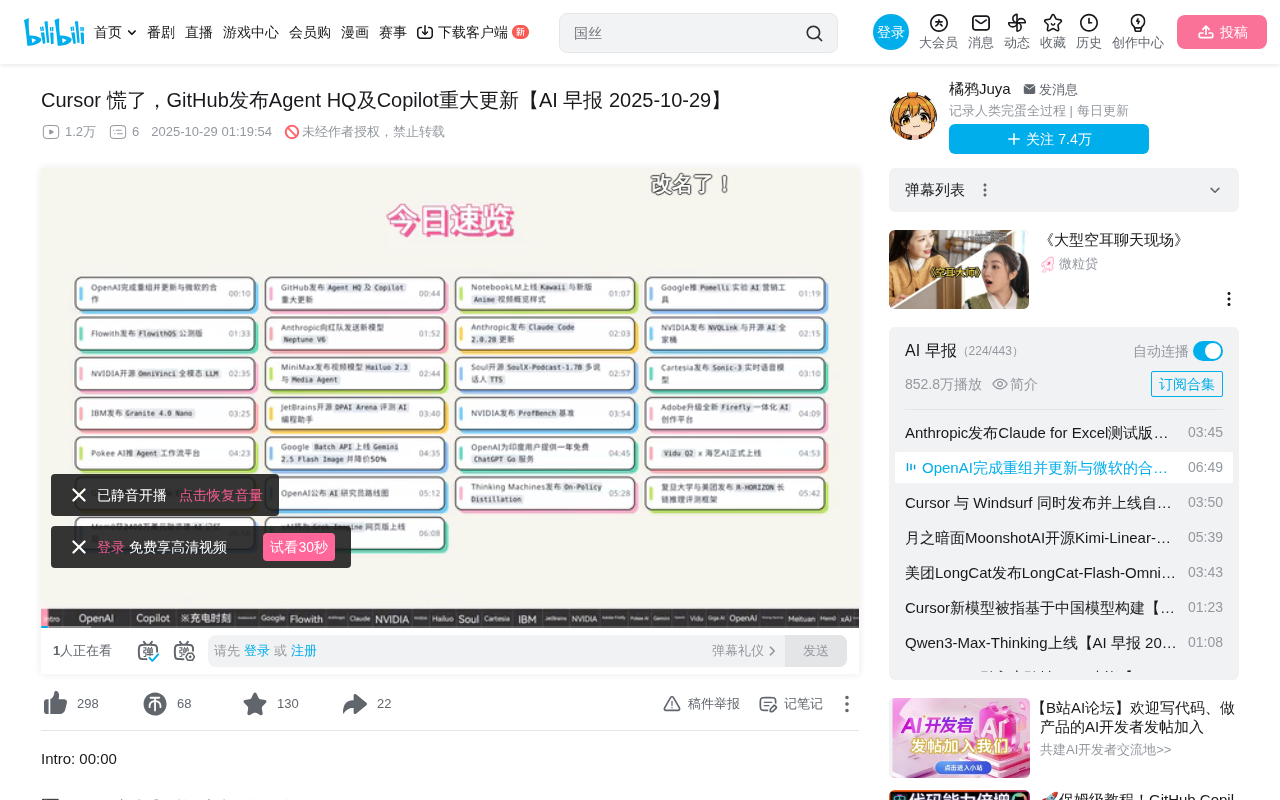
GitHub Agent HQ Launch: AI Coding Tools Enter the Era of Platform Competition
GitHub Universe unveils Agent HQ platform for unified coding agent management, Copilot upgrades with multi-model support. OpenAI completes restructuring, Anthropic tests new model, NVIDIA open-sources AI models.
 Tech Frontiers
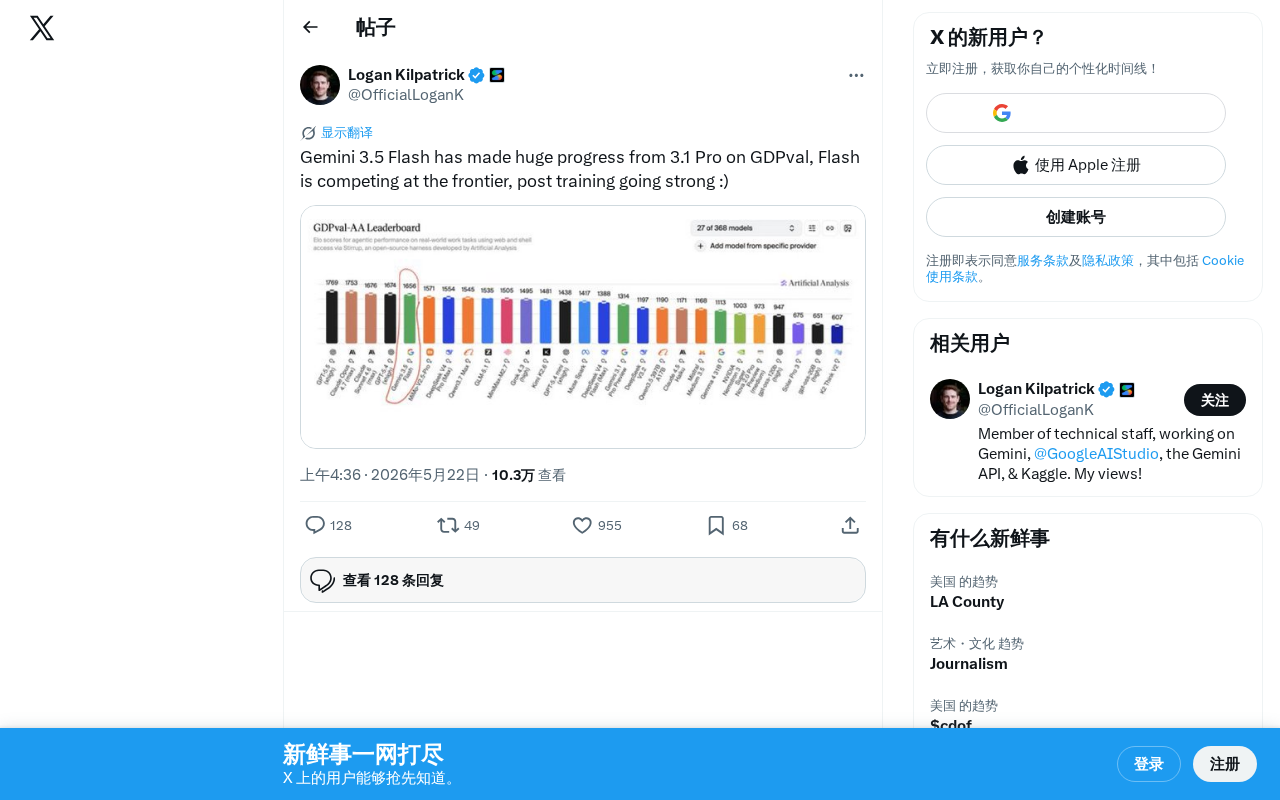
Gemini 3.5 Flash Achieves a Massive Leap on the GDPval Benchmark
Google Gemini 3.5 Flash surpasses Gemini 3.1 Pro on the GDPval benchmark. The lightweight Flash model leverages post-training techniques to approach frontier-level performance, redefining the balance between quality and cost.
 Tech Frontiers
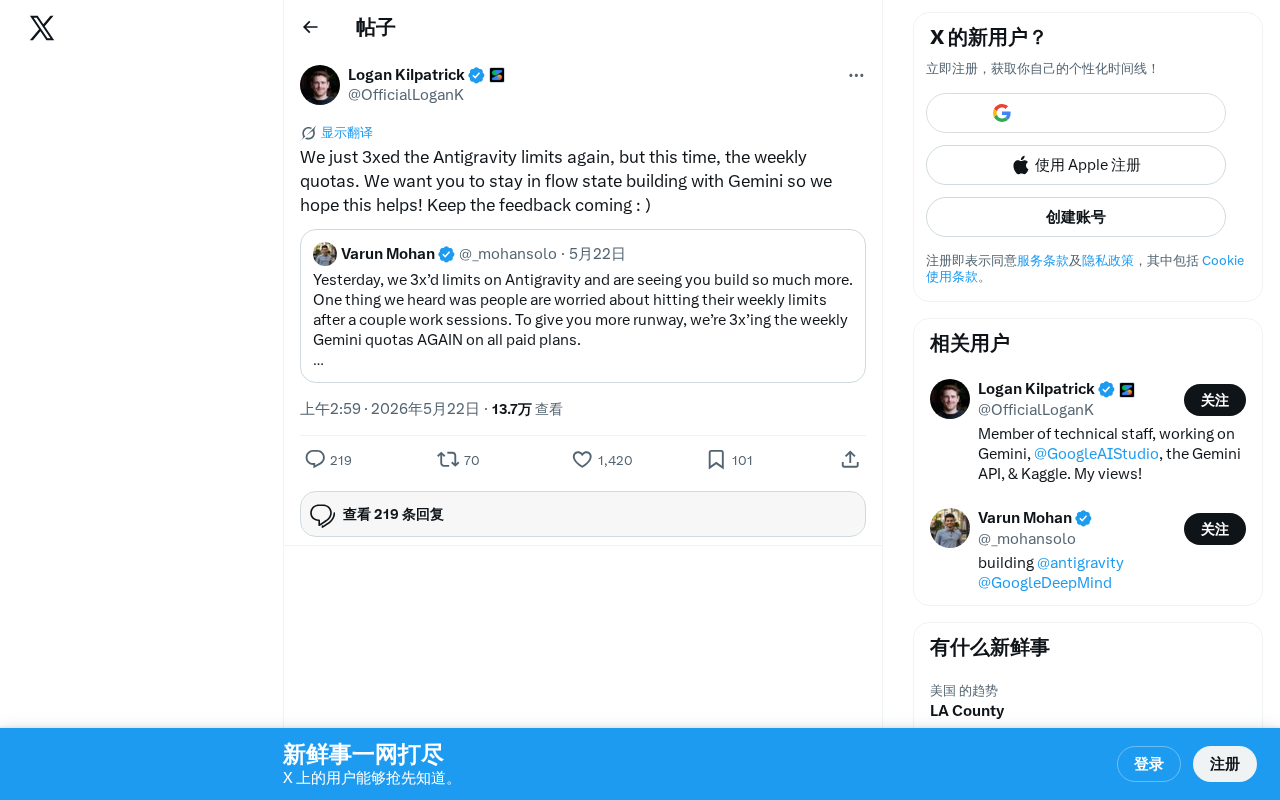
Google Gemini Antigravity Weekly Quota Tripled — AI Coding Without Limits
Google Gemini triples Antigravity weekly quotas following a prior daily quota boost. Analyzing the impact on developers and its strategic significance in AI coding.