Research on 832 Malicious Accounts: How AI-Powered Cyberattacks Challenge Traditional Security Defenses
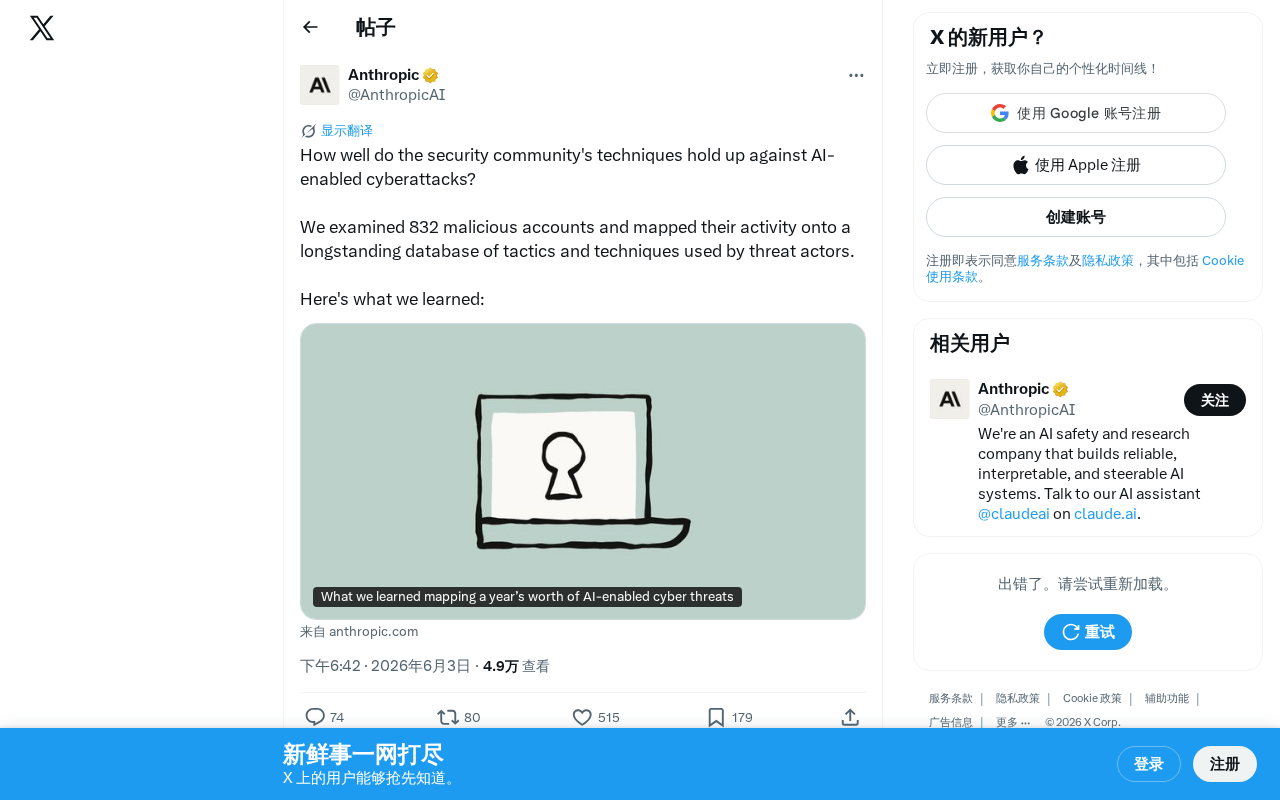
Study of 832 malicious accounts reveals how AI-powered attacks are outpacing traditional cybersecurity defenses.
A research study analyzing 832 malicious accounts mapped their behaviors to established TTP frameworks, revealing that AI-enabled cyberattacks achieve massive efficiency gains over traditional methods while not entirely departing from known attack patterns. The findings highlight the failure risk of signature-based detection, the urgent need for AI-powered defensive automation, and the critical importance of cross-community threat intelligence sharing.
AI Cyberattacks Are Reshaping the Security Defense Landscape
When artificial intelligence is weaponized by malicious actors, can traditional security defense systems still respond effectively? This is the core question facing the entire cybersecurity community today.
Recently, an in-depth study of 832 malicious accounts has drawn widespread attention across the industry. The research team systematically analyzed the attack behaviors of these accounts and mapped them to a long-established database of threat actor tactics and techniques, attempting to answer a critical question: How well do the security community's existing defense technologies perform against AI-driven cyberattacks?
Research Methodology: TTP Mapping Analysis of 832 Malicious Accounts
The core methodology of this research deserves attention. Rather than simply counting attack volumes, the research team employed a more in-depth analytical framework—mapping the activity patterns of malicious accounts to an existing Tactics, Techniques, and Procedures (TTPs) database.
TTPs are a standardized framework in cybersecurity for describing threat actor behavior patterns. Tactics refer to the attacker's strategic objectives (such as initial access, lateral movement, and data exfiltration), Techniques refer to the specific technical methods used to achieve those objectives (such as spear phishing and credential dumping), and Procedures are the concrete implementation steps. The most widely used TTP knowledge base is the ATT&CK framework maintained by MITRE, a U.S. nonprofit organization, which covers hundreds of known attack techniques and is continuously updated based on real-world attack incidents. The core value of mapping malicious behaviors to the TTP framework lies in transforming fragmented attack events into structured behavioral descriptions, enabling different organizations to communicate threat intelligence using a unified language and allowing defense strategies to be precisely deployed against specific technical stages.
The advantages of this approach include:
- Strong comparability: By cross-referencing with historical databases, it clearly identifies similarities and differences between AI-enabled attacks and traditional attacks
- Broad coverage: A sample size of 832 malicious accounts is sufficient to reveal statistical-level trends
- Structured analysis: Based on a standardized TTP framework, it avoids biases introduced by subjective judgment
This research approach provides the security community with a reproducible and verifiable assessment method, helping to systematically examine the effectiveness of existing defense measures.
Evolutionary Characteristics of AI Attacks: An Efficiency Leap Rather Than Complete Disruption
From the direction of the research, a core finding is likely this: AI-enabled attacks have not completely departed from traditional attack frameworks at the tactical level, but have achieved a qualitative leap in execution efficiency and scale.
This implies several important trends:
Dramatically Increased Attack Automation
AI enables attackers to execute attack operations at unprecedented speed and scale. Phishing emails and social engineering attacks that previously required careful manual planning can now be mass-generated with highly personalized content through large language models, significantly lowering the barrier to entry for attacks.
Large Language Models (LLMs) such as the GPT series possess powerful natural language generation capabilities, which pose serious security threats when exploited maliciously. Attackers can use LLMs to generate phishing emails with perfect grammar and contextual relevance, and can even automatically customize personalized social engineering attack content based on a target's social media information. Furthermore, LLMs can be used to automate the writing of malicious code, generate obfuscation scripts that bypass security detection, and simulate legitimate user conversation patterns to deceive customer service systems. Models specifically designed for malicious purposes, such as WormGPT and FraudGPT, have already appeared on dark web markets, signaling that AI weaponization has moved from theory to practice.
Traditional Detection Methods Face the Risk of Failure
When malicious content is generated by AI, traditional detection methods based on rules and signature matching may fail. AI-generated attack payloads exhibit stronger polymorphism, with each generated variant potentially bypassing signature detection.
Signature-based Detection is a cornerstone technology of traditional cybersecurity defense. Its principle involves storing the signatures of known malware or attack behaviors (such as file hashes, specific byte sequences, and network traffic patterns) in a database, triggering alerts when matching signatures are detected. This method is efficient and reliable against known threats but has inherent weaknesses against polymorphic attack payloads. Polymorphic malware automatically changes its code structure each time it propagates while maintaining its malicious functionality, making each variant's signature different. The introduction of AI has exponentially increased the generation efficiency of polymorphic attacks—attackers can use generative AI to produce thousands of functionally equivalent but characteristically distinct variants in seconds, far exceeding the update speed of traditional signature databases. This is also a key driver behind the industry's accelerated transition toward behavioral analysis and heuristic detection.
The Adaptability of Defense Systems Is Being Tested
The TTP databases accumulated by the security community over the years still hold reference value, but need continuous updates to incorporate AI-specific attack patterns. Defenders also need to adopt AI technology, forming a new paradigm of "fighting AI with AI."
"Fighting AI with AI" is not merely a slogan but a technical approach already implemented across multiple security domains. At the threat detection level, machine learning-based User and Entity Behavior Analytics (UEBA) systems can establish normal behavior baselines and automatically identify anomalous activities that deviate from those baselines without relying on predefined rules. At the endpoint protection level, next-generation Endpoint Detection and Response (EDR) products have widely adopted deep learning models to identify unknown malware. At the security operations level, AI-driven Security Orchestration, Automation, and Response (SOAR) platforms can reduce average incident response times from hours to minutes. Additionally, research in the field of Adversarial Machine Learning (Adversarial ML) is exploring how to make defensive models more robust against AI-generated attacks, including techniques such as adversarial training and model hardening.
Practical Implications for Cybersecurity Practitioners
This research raises several directions worth deep consideration for cybersecurity practitioners:
First, existing threat intelligence frameworks remain valuable but need to evolve. Traditional threat intelligence frameworks (such as MITRE ATT&CK) remain effective tools for understanding and classifying attack behaviors, but need to add AI-related tactics and technique entries to cover new attack vectors.
The MITRE ATT&CK framework, created in 2013, has become the common language of the global cybersecurity community. The framework is organized in a matrix format, with the horizontal axis representing the stages of the attack lifecycle (from reconnaissance to impact) and the vertical axis representing specific techniques at each stage, currently cataloging over 200 attack techniques and more than 600 sub-techniques. However, AI-driven attacks are giving rise to new behavioral patterns that are difficult to classify within existing categories, such as using AI for real-time adversarial sample generation, deepfake-based identity impersonation, and using AI to automatically discover zero-day vulnerabilities. MITRE has begun incorporating AI-related threats into its framework system, with the ATLAS (Adversarial Threat Landscape for AI Systems) project released in 2023 specifically classifying attack tactics against AI/ML systems, which can be seen as an extension of ATT&CK into the AI security domain.
Second, deploying automated defenses is urgently needed. Facing large-scale AI-driven attacks, purely manual security operations models are no longer sustainable. Security teams need to accelerate the deployment of AI-assisted threat detection and response systems.
Third, cross-community threat intelligence sharing becomes even more important. If the research findings from these 832 malicious accounts can be widely shared within the security community, it will greatly enhance overall defense capabilities. Open threat intelligence sharing mechanisms are particularly critical in the era of AI attacks.
Threat intelligence sharing already has a relatively mature infrastructure at the technical standards level. STIX (Structured Threat Information Expression) and TAXII (Trusted Automated Exchange of Intelligence Information) are two core standards: STIX defines the structured expression format for threat intelligence, while TAXII defines the transmission protocol for intelligence. Globally, various industries have established multiple Information Sharing and Analysis Centers (ISACs), such as the Financial Services ISAC (FS-ISAC) and the Health ISAC (H-ISAC). However, threat intelligence sharing still faces numerous challenges in practice: companies are reluctant to disclose attack details due to reputational concerns, trust-building between different organizations is difficult, and cross-border data sharing faces legal compliance barriers. In the era of AI attacks, the accelerated pace of attack evolution demands higher timeliness of intelligence, and traditional manual review and publication processes may not meet these requirements, making automated intelligence generation and distribution mechanisms increasingly urgent.
Conclusion: Cybersecurity's Offensive-Defensive Game Enters a New Phase
This research based on 832 malicious accounts provides us with an important window into the current state of AI cyberattacks. It demonstrates that the security community's traditional defense technologies have not completely failed, but are indeed facing unprecedented pressure.
As AI technology continues to evolve, the offensive-defensive game in cybersecurity is entering an entirely new phase. Defenders need to actively embrace AI technology while maintaining traditional security capabilities, building more intelligent and adaptive security defense systems. This is not merely a technical issue but a strategic challenge concerning the security of the entire digital ecosystem.
Related articles
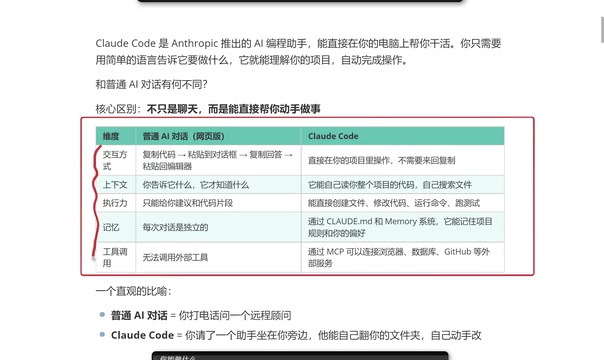
Getting Started with Claude Code: 5 Key Differences from Traditional AI Chatbots
Explore 5 key differences between Claude Code and traditional AI chatbots like ChatGPT, covering interaction, context, execution, memory, and tool integration.

Your Pension Forced to Buy AI Bubble Stocks: The Truth Behind Nasdaq's Rule Changes
Nasdaq's fast-track rule changes may force your 401K and pension funds to buy SpaceX, OpenAI, and Anthropic stock. Analysis of the $4T valuation bubble and what investors can do.

GPT 5.6 Internal Testing Codename Revealed, Google Pays SpaceX $920M Monthly for Computing Power
OpenAI begins GPT 5.6 Kindle Alpha internal testing with stronger base reasoning. Google partners with SpaceX at $920M/month for computing power. Gemma 4 QAT enables edge deployment, Claude Cowork doubles credits.