SDD (Specification-Driven Development) in Practice: AI Programming Methodology from Cursor to Claude Code

SDD methodology emerges as the core framework for industrial-scale AI programming with Cursor and Claude Code.
An AI application development startup founder shares his team's full transition to AI programming, proposing SDD (Specification-Driven Development) as the core methodology that emphasizes specification-based constraints over arbitrary AI code generation. The course teaches end-to-end AI programming capabilities through four progressive hands-on projects (intelligent data querying, open-source secondary development, multimodal knowledge base, enterprise compliance platform), marking AI programming's evolution from tool usage to an engineering discipline.
AI Programming Is an Irreversible Trend: From Hand-Written Code to Specification-Driven Development
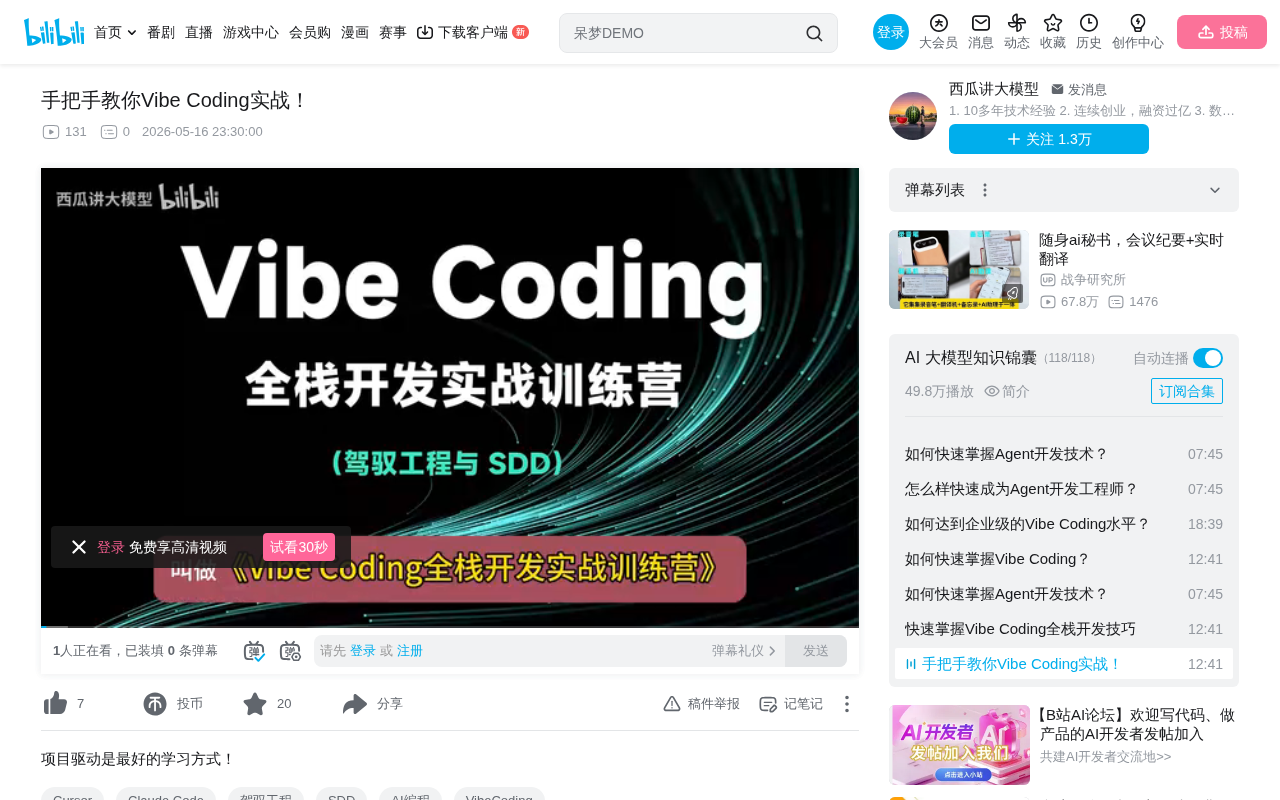
A startup founder (known as Teacher Xigua) with a data architecture background and nearly four years of leading a team in AI large model application development recently published a course introduction on Bilibili called "Vibe Coding Full-Stack Development Bootcamp." He shared a key decision: starting from the second half of 2025, his entire R&D team is mandated to stop writing code by hand and fully transition to AI programming.
He mentioned that Claude Code's CEO has announced that their internal studio barely writes code by hand anymore, and his own team consumed tens of billions of tokens on AI programming in just the second half of 2025. To understand the concept of tokens: a token is the basic unit of measurement for how large language models process text. A Chinese character typically corresponds to 1-2 tokens, while an English word corresponds to roughly 1-1.5 tokens. Tens of billions of tokens means a massive volume of interactions with AI models—including code generation, code review, debugging conversations, documentation generation, and more. Using GPT-4-level models as a reference, this scale of consumption corresponds to API costs ranging from hundreds of thousands to over a million dollars, indirectly confirming the industrial scale of their AI programming practice. These experiences don't come from simple demo exercises but from industrial-grade projects delivered to enterprise clients—over 70 projects have been deployed.
It's worth noting that Claude Code is an AI programming tool launched by Anthropic, based on their Claude large model series. Unlike IDE plugin formats such as Cursor, Claude Code leans more toward a command-line interactive programming assistant that can directly understand project context, execute file operations, and modify code within the terminal. The Anthropic team has publicly stated multiple times that the company internally uses AI extensively to complete daily coding work—a stance widely regarded in the industry as a landmark signal of AI programming transitioning from an auxiliary tool to a primary productivity driver.
He offered a controversial but thought-provoking judgment: Traditional programmers (those still stuck in the hand-coding stage) will be obsolete within six months.
SDD (Specification-Driven Development): The Core Methodology of AI Programming
What Is SDD?
SDD (Specification-Driven Development) is a widely recognized and proven development philosophy in the current AI programming field. Its core principle is: programming driven by specifications, rather than letting AI generate code arbitrarily.
The intellectual roots of SDD can be traced back to formal methods and Design by Contract in software engineering. In traditional development, TDD (Test-Driven Development) emphasizes writing tests before implementation, while BDD (Behavior-Driven Development) emphasizes describing behavioral specifications in natural language. SDD's innovation in the AI programming context is that it uses specification documents (such as PRDs, API contracts, and data model definitions) as input constraints for AI code generation, ensuring that AI isn't "freestyling" but working within clearly defined boundaries. This solves the most common problem in AI programming—generated code that runs but doesn't meet business requirements or architectural standards.
This concept sounds simple, but implementation requires a systematic approach. All projects in the course—from intelligent data querying to secondary development of open-source projects—are implemented using the SDD approach, forming a replicable AI programming methodology.
The Importance of Prompt Engineering
The course treats Prompt Engineering as a core chapter for two reasons:
- Understanding AI programming tool principles: Only by mastering Prompt Engineering can you truly understand the working mechanisms behind AI programming tools like Cursor and Claude Code
- Building complex agents: Enterprise-level complex agent development requires applying Prompt Engineering principles
Prompt Engineering in AI programming scenarios goes far beyond simply "writing good prompts." It involves multiple layers including system prompt design, context window management strategies, few-shot example construction, and Chain-of-Thought reasoning guidance. In tools like Cursor, the .cursorrules file is essentially a project-level system prompt; in Claude Code, the CLAUDE.md file serves a similar role. By mastering these principles, developers can understand why the same requirement description produces vastly different code quality with different prompting strategies, and can quickly identify the root cause when AI "makes mistakes."
Four Hands-On Projects: From Beginner to Enterprise-Level Full-Stack Development
Project 1: CHAT BI (Intelligent Data Querying)
This is the entry-level project, covering complete front-end and back-end development from scratch. Through this project, students develop a basic feel for AI programming and master the usage methods and best practices of Cursor.
CHAT BI (Conversational Business Intelligence) is an application scenario that combines natural language processing with database querying. Users ask questions in natural language (e.g., "What was the sales revenue in the East China region last month?"), and the system converts them into SQL queries and returns visualized results. This scenario involves the combination of multiple AI capabilities including Text-to-SQL technology, database schema understanding, and natural language generation of query results. It's a classic introductory project in large model application development with clear commercial value—lowering the technical barrier for enterprise data analysis.
Project 2: Secondary Development Based on OPCFlow (Lobster)
This project targets another common scenario: secondary development based on existing open-source or legacy projects. A popular open-source project with a large codebase and high complexity was chosen, with the key deliverable being the methodology for AI programming in secondary development scenarios.
Secondary development based on existing codebases is a recognized high-difficulty scenario in AI programming. The challenge lies in: AI needs to understand tens of thousands or even hundreds of thousands of lines of existing code, grasp the project's architectural style and design patterns, and add new features without breaking existing functionality. This requires developers to have strategies for "feeding" large codebases to AI—including code indexing, key module summarization, dependency graph mapping, and other context management techniques. Compared to greenfield projects built from scratch, secondary development better tests the practical value of AI programming methodologies.
Project 3: Multimodal Knowledge Base (Developed with Claude Code)
Developed with Claude Code, the core challenge of this project is: it requires using some newer technology stacks that the large models themselves aren't very familiar with. This is a common problem encountered in real development—when AI tools lack knowledge about certain technologies, how should the SDD approach be adjusted?
Large language models have a training data knowledge cutoff, meaning they may lack accurate knowledge about new frameworks or new API versions released after the training data cutoff. For example, for a new UI framework released at the end of 2024, the model might generate code using old version API syntax. Solutions typically include: injecting the latest documentation as context (RAG approach), explicitly specifying API signatures and usage examples in specification files, and using protocols like MCP (Model Context Protocol) to dynamically retrieve the latest technical documentation. This is also a typical scenario where the SDD methodology needs flexible adjustment.
Project 4: Intelligent Document Compliance Review Platform
This is the capstone project of the course, covering the complete enterprise-level development workflow:
- Market research → Requirements analysis → Business modeling
- Architecture design → Technology selection → PRD document generation
- Front-end UI design → Back-end code generation → Front-end code generation
- Front-end/back-end integration → Code management → Deployment, testing & operations
Target Audience and Learning Outcomes
Three Types of Target Students
- Traditional programmers: Developers still caught up in framework version differences and syntax details who need to embrace the AI programming paradigm as soon as possible
- Beginner AI tool users: People who can install and do basic operations with AI programming tools but get "lost" when facing complex features, spending more time fixing errors than writing code manually
- Product/Project managers: Internet professionals who need to quickly produce product prototypes or conduct implementation validation
Core Outcomes
After completing the course, students should be able to independently complete the full chain of AI programming from architecture design and technology selection to front-end/back-end development, testing, and deployment. More importantly, they'll master the SDD programming methodology and Prompt Engineering thinking—these are tool-agnostic foundational capabilities that can be transferred regardless of which AI programming tool is used in the future.
The Future Direction of AI Programming
From the design philosophy of this course, we can observe several trends in the AI programming field:
- From "knowing how to use tools" to "mastering methodology": Simply being able to install and use AI programming tools is no longer sufficient; systematic development methods are needed
- Specifications first: SDD emphasizes establishing specifications before having AI execute, which is fundamentally different from the traditional "code-and-iterate" approach
- Accelerating full-stack trend: AI programming lowers technical barriers, making it a reality for one person to complete full-stack development
- Replicable experience: A methodology validated across 70+ projects demonstrates that AI programming has moved from "trial and error" to an "engineering" stage
For technology professionals still on the sidelines, regardless of whether you agree with the "six-month obsolescence" claim, proactively learning AI programming methodologies and best practices is already an urgent matter.
Key Takeaways
- Starting from the second half of 2025, the team fully transitioned to AI programming, having deployed 70+ industrial-grade projects and consumed tens of billions of tokens
- SDD (Specification-Driven Development) is the core methodology of AI programming, emphasizing specification-based constraints rather than letting AI generate code arbitrarily
- The course is driven by four progressively advanced projects, covering scenarios from building from scratch to secondary development of open-source projects
- Prompt Engineering is the key capability for understanding AI programming tool principles and building complex agents
- AI programming is transitioning from the tool-usage stage to an engineering methodology stage, with full-stack development barriers significantly lowered
Related articles
 Tutorials
Cursor + Codex Dual-IDE Collaboration: A Practical Methodology for Open-Source Project Customization
A complete methodology for open-source project customization based on real-world experience, detailing the Cursor+Codex dual-IDE workflow, seven-stage process, MVP validation, and AI source code reading techniques.
 Tutorials
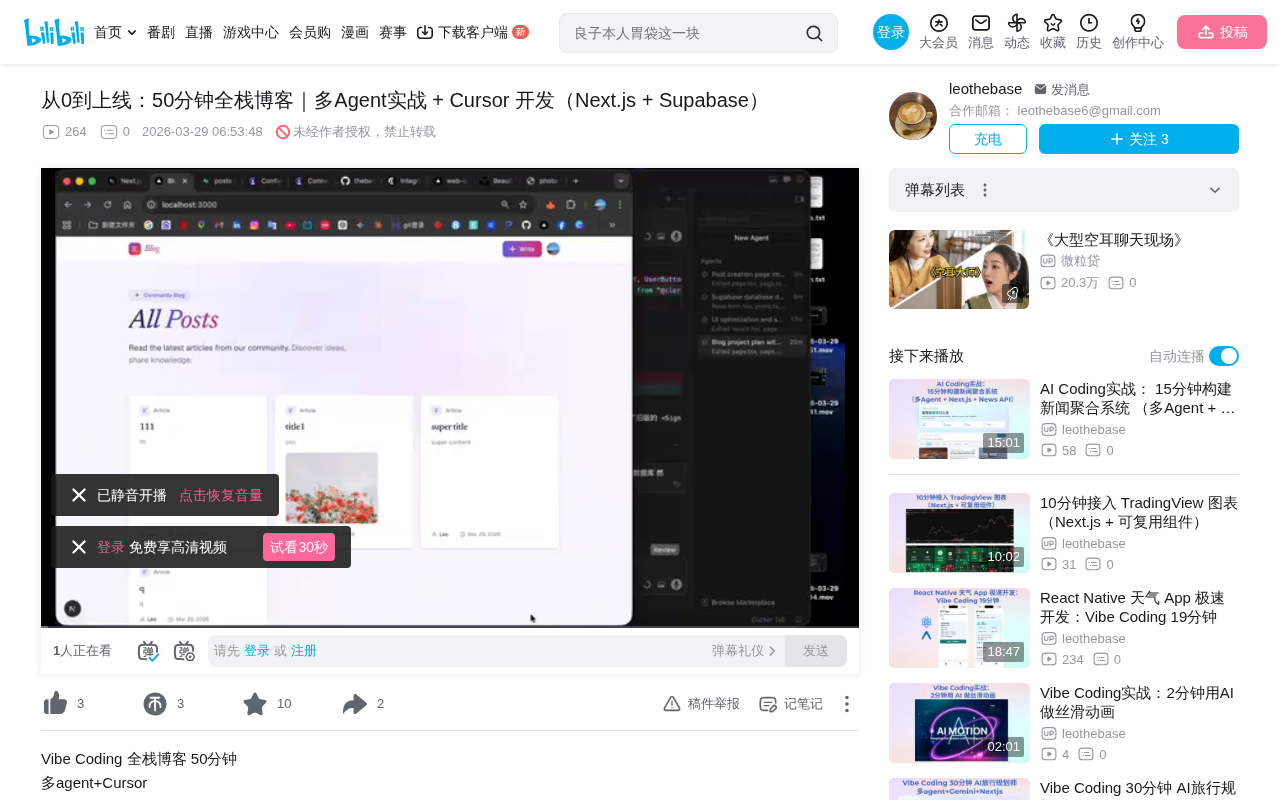
Cursor Multi-Agent in Practice: Building a Full-Stack Next.js Blog in 50 Minutes
Build a full-stack blog in 50 minutes using Cursor IDE's multi-Agent mode with Next.js, Clerk auth, and Supabase. Learn the 4-phase AI Agent workflow and key integration pitfalls.
 Tutorials
Building an AI Software Factory from Scratch: A Cursor Engineer's Hands-On Experience with Multi-Agent Collaboration
Cursor engineer Eric shares practical insights on building an AI software factory: automation levels, guardrail design, parallel Agent management, and scaling to 1000+ Agents for 24/7 development.