Semantic Code Diff, In-Database Workflows & Mac-Native Containers: Open Source Projects Worth Watching This Week
Five open source projects reshaping code diff, workflows, containers, collaboration, and document processing for the AI era.
This week's tech roundup highlights five open source projects: SAM, a Rust-based semantic code diff tool that boosts AI Agent accuracy by 2.3x; Microsoft's PG Durable for running durable workflows directly in PostgreSQL; Apple Container, Apple's official lightweight Linux container solution for Mac; Mattermost, an enterprise-grade open source Slack alternative focused on DevSecOps; and Extend UI, a component library targeting document processing. Together, they reflect a trend of tools being redesigned for the AI era.
This week's tech roundup focuses on five noteworthy open source projects and technical developments: SAM semantic code diff tool, Microsoft's PG Durable persistent workflows, Apple's official Linux container solution, the Mattermost open source collaboration platform, and the Extend UI component library for document processing. Each represents a fresh approach in its respective domain.
SAM: Redefining Code Diff for the AI Agent Era
Traditional code diff tools compare changes line by line, which was sufficient in the era when humans were the primary code readers. But as AI Agents increasingly participate in writing and reviewing code, line-level diff information feels too raw and fragmented.
Traditional diff tools (like Unix diff and Git diff) are based on the Myers diff algorithm or similar longest common subsequence algorithms, comparing text changes line by line. This approach is completely unaware of code's syntactic structure — moving a function to another location in the file gets identified as a massive block of line deletions and additions, rather than a simple position change.
SAM is a command-line tool written in Rust that understands what a commit actually changed at the level of semantic entities like functions and classes. Its core technology relies on Abstract Syntax Tree (AST) parsing — AST is the intermediate tree-structured representation that compiler front-ends produce from source code, where each node corresponds to a syntactic construct (function definitions, class declarations, conditional statements, etc.). By comparing AST differences between two versions rather than text differences, SAM can precisely identify semantic-level events like "function signature changed," "method body modified," or "new class member added." It provides three core commands:
- sam-diff: Semantic-level difference identification — instead of simple line additions and deletions, it tells you "which function was modified and how"
- sam-blame: Attributes changes to specific developers
- sam-impact: Analyzes cross-file dependency impacts
On the performance side, SAM supports 26 programming languages, typically completes a diff in just 8 milliseconds, and integrates with Git with zero configuration. SAM's ability to support so many languages while maintaining millisecond-level performance is largely thanks to incremental parsing frameworks like Tree-sitter — Tree-sitter provides independent grammar definition files for each language and can convert source code to AST in extremely short timeframes. More importantly, the author claims that feeding SAM's output to AI Agents yields accuracy 2.3 times higher than raw line-level diffs.
The logic behind this is clear: AI Agents need structured, semantic change information, not human-readable line-level annotations. Through static code analysis, SAM provides Agents with a much friendlier input format. In the current explosion of AI programming tools, this kind of "built for Agents" infrastructure tooling deserves ongoing attention.
PG Durable: Microsoft Puts Persistent Workflows Inside PostgreSQL
Durable Execution has been extremely hot in recent years, with dedicated orchestration systems like Temporal and Restate being the mainstream solutions. The core idea behind durable execution originates from the Event Sourcing pattern — instead of storing current state, the system stores the complete sequence of events that led to the current state, and can recover the state at any point in time by replaying events. Temporal (formerly Uber's Cadence) is the benchmark project in this space. It intercepts side-effect calls in code (such as HTTP requests and timers), records their results in an event history, and returns the recorded values during replay rather than re-executing them.
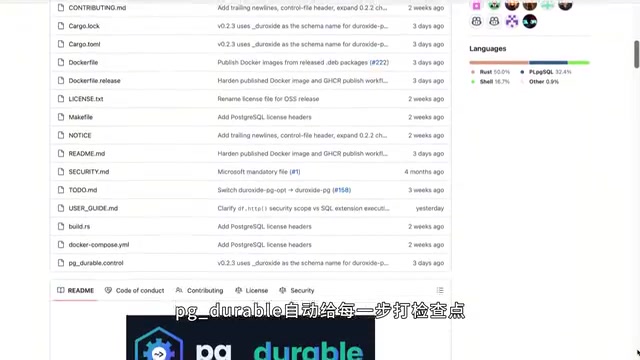
Microsoft took the opposite approach with PG Durable, enabling long-running, fault-tolerant workflows to be defined and executed directly in PostgreSQL using SQL.
Here's how it works: you write your workflow as a series of SQL steps, and PG Durable automatically creates checkpoints at each step. After a database crash or step failure, it can recover from the nearest checkpoint without manually rebuilding state. PG Durable's innovation lies in embedding this mechanism directly into PostgreSQL — leveraging the database's own ACID transaction guarantees for checkpoint atomicity and durability, eliminating the need for a separate state storage layer. On the tech stack side, it's developed with Rust and PGRX (PGRX is a framework for writing PostgreSQL extensions in Rust, allowing PG Durable to run as a native extension within the database process, avoiding cross-process communication overhead). It requires no external orchestration services like Redis or Temporal, comes with built-in background Worker execution, and uses row-level security for multi-tenant isolation.
Use Cases and Limitations
Suitable scenarios include: vector embedding pipelines, batch data scraping, scheduled tasks, and more. For teams that already store their state in PostgreSQL, PG Durable can eliminate an entire Worker and queue infrastructure layer, significantly reducing operational cognitive overhead.
But the tradeoffs are clear: workflows are tightly coupled to the database, and complex orchestration across languages and services may not be a good fit. If your workflows need to coordinate multiple microservices and multiple languages, dedicated orchestration systems like Temporal remain the better choice.
Apple Container: Apple's Official Mac-Native Linux Container Solution
For a long time, running containers on Mac primarily relied on Docker Desktop, which runs a single large virtual machine under the hood. Specifically, Docker Desktop launches a full Linux VM on Mac via HyperKit or QEMU (typically a customized distribution based on Alpine Linux), where all containers share this VM's Linux kernel, with inter-container isolation relying solely on Linux's namespace and cgroup mechanisms.
Apple has now released Apple Container, an official command-line tool that lets Mac users run Linux containers on Apple silicon as lightweight virtual machines.
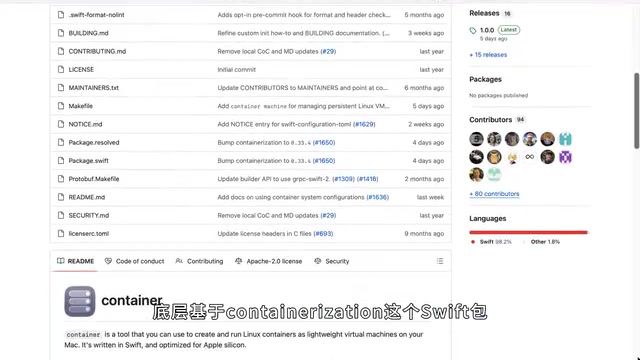
On the technical side, Apple Container is written entirely in Swift, built on the Containerization Swift package for container, image, and process management. At a deeper level, it relies on macOS's Virtualization.framework — Apple's native virtualization API available since macOS 11, which directly leverages the hardware virtualization support built into Apple silicon (based on ARM's EL2 privilege level), requiring no third-party virtualization layer. It supports OCI (Open Container Initiative) standard images, meaning developers can directly use existing images from Docker Hub without any modifications, maintaining full compatibility with the existing container ecosystem. It requires a Mac with Apple silicon and macOS 26 or later.
Core Differences from Docker Desktop
Apple's approach is to assign each container its own independent lightweight virtual machine (microVM), rather than having all containers share a single large VM. This architecture shares the same philosophy as AWS Firecracker — Firecracker similarly uses microVMs to isolate AWS Lambda functions and Fargate containers. This brings two significant advantages:
- Better isolation: Each container has its own independent kernel and resource boundaries, elevating the isolation level from OS-level to hardware virtualization-level
- Faster startup: The overhead of lightweight VMs is far less than full virtual machines, with microVMs typically booting in the hundreds-of-milliseconds range
Additionally, it's deeply optimized for Apple silicon — something third-party solutions can't easily match. For Mac developers, this means there's finally a native, lightweight, officially maintained container solution.
Mattermost: The Enterprise-Grade Contender Among Open Source Slack Alternatives
Mattermost is the most mature open source, self-hosted alternative to Slack. It offers real-time chat, workflow automation, voice calls, screen sharing, and AI-assisted capabilities.
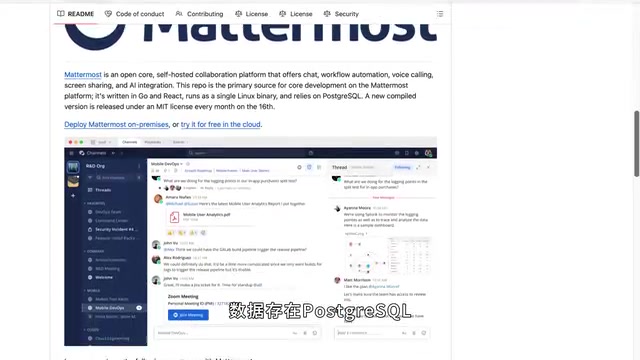
Architecturally, the backend is written in Go and the frontend in React, running as a single Linux binary with data stored in PostgreSQL. The choice of Go for the backend has deep reasoning: Go's single-binary compilation characteristic greatly simplifies deployment — the entire server-side is packaged into one executable with no runtime dependencies. This is especially important for enterprise self-hosting scenarios, as many security-sensitive organizations (such as government agencies, financial institutions, and defense contractors) need to deploy communication tools in air-gapped networks (internal networks completely disconnected from the internet).
It's MIT licensed, supports Docker, Kubernetes, Helm, and various other deployment methods, with over 700 integrations available in its marketplace. The MIT license choice is also noteworthy — compared to strong copyleft licenses like AGPL, the MIT license allows enterprises to freely modify and deploy privately without open-sourcing their modifications, eliminating concerns from corporate legal teams and lowering the adoption barrier.
Differentiated Positioning: Focusing on DevSecOps and Security Operations
Mattermost doesn't try to compete head-on with Slack's consumer-grade experience. Instead, it focuses on development and security operations scenarios, targeting DevSecOps, incident response, and IT service desks. DevSecOps (the fusion of Development, Security, and Operations) emphasizes embedding security practices throughout the entire software development lifecycle. Mattermost positions itself as a collaboration hub for security incident response — not just a simple instant messaging replacement — through built-in Playbook functionality (predefined incident response workflows) and deep integrations with tools like PagerDuty, Jira, and GitLab. By embedding itself into the DevSecOps toolchain, this differentiated positioning has helped it gain a solid foothold in the enterprise market. For teams with data compliance requirements that need self-hosting, Mattermost is almost the default choice.
Extend UI: A Vertical Component Library Targeting Document Processing
The general-purpose UI component library space is already a red ocean, so Extend UI smartly chose the document processing niche. Its first public release plans 15 components covering PDF viewers, Docs viewing and editing, Excel viewing and editing, CSV viewing, and other document editors.
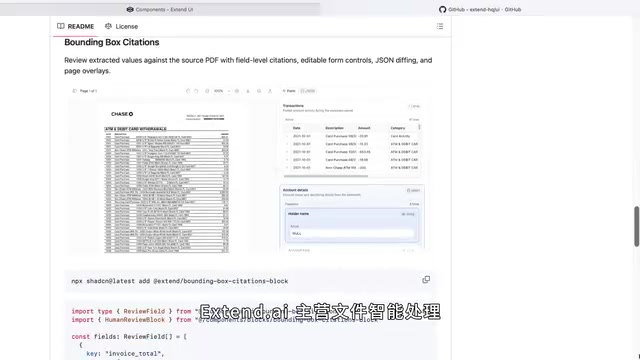
These components are heavy and tedious to build — PDF rendering, spreadsheet editing, and signatures are all tough nuts to crack, and there aren't many high-quality open source solutions available. The fundamental reason is the complexity of document formats: the PDF specification (ISO 32000) is nearly a thousand pages long, supporting 14 font encodings, multiple image compression algorithms, form interactions, digital signatures, and more. Fully implementing a PDF renderer is comparable in effort to building a small browser engine. Excel's OOXML format is equally complex — an .xlsx file is actually a ZIP archive containing dozens of XML files describing cell data, styles, formulas, charts, and more. Implementing Excel-level spreadsheet editing on the web requires handling a formula engine (supporting 400+ built-in functions), virtual scrolling (rendering performance for millions of rows), collaborative editing conflict resolution, and other challenges. Currently in the open source space, PDF.js (maintained by Mozilla) provides basic PDF rendering capabilities but lacks editing features, while projects like Luckysheet/Univer offer online spreadsheet capabilities but with varying levels of maturity.
Extend AI's core business is intelligent file processing, and open-sourcing their internally refined capabilities serves both as technical brand building and as a developer acquisition funnel.
This is a common playbook among AI companies today: use open source components as a funnel, and monetize through commercial services. For teams building document, contract, or data extraction applications, this is a ready-made wheel worth bookmarking.
Bonus: FabricPool — An AI Agent Crowdfunding Platform
Finally, FabricPool is worth mentioning — an experimental platform that publishes Prompts in a crowdfunding format. It lets a group of people pool money to fund a software project, which AI Agents then transparently advance milestone by milestone, with all expenditures recorded on a public ledger. The platform currently hosts over 70 projects.
What makes this experiment interesting is that it treats Agents as equal productive contributors while making crowdfunded spending completely transparent. Although still in its early stages, it represents a new model for project organization and funding in the AI era.
Summary
The projects in this week's roundup share a common trend: tools are being redesigned for the AI era. SAM provides Agents with semantic-level code understanding, PG Durable simplifies workflow orchestration complexity, Apple Container offers a lighter container solution, and Extend UI fills the gap in document processing components. Each one is doing subtraction in its respective niche, reducing developers' cognitive and operational burden.
Related articles
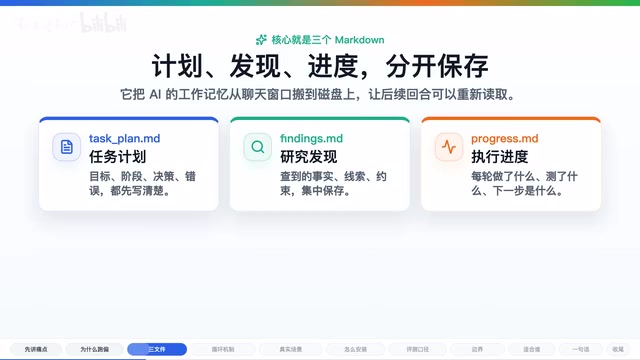
Planning with Files: Solving AI Coding's "Amnesia" Problem with Three Files
Planning with Files uses three Markdown files and Hooks to solve the context loss problem in AI coding tools like Claude Code and Cursor during long tasks.
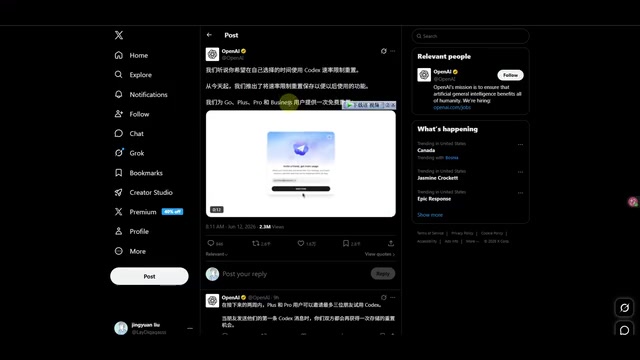
How to Claim Your Free OpenAI Codex Rate Limit Reset Pack
OpenAI is giving Plus, Pro, and Business users free Codex rate limit resets — 1 free reset per user, plus up to 3 more via referrals. Learn how to claim and use them before the 30-day deadline.

Building a WeChat Mini Program with AI + Cursor: A Full Workflow from Ideation to Frontend
A hands-on guide using DeepSeek, Claude, and GPT for product ideation, then Cursor to build a WeChat Mini Program. Four iterations from zero to frontend.