Siri's New UI Revealed: From Orb to Full-Screen Glow — A Complete Interaction Overhaul

Apple's new Siri UI features edge-glow effects and text interaction, marking a shift toward immersive ambient AI.
Apple's Siri is getting a major interface overhaul, replacing the traditional bottom orb with a flowing edge-glow effect and introducing a text interaction area for multimodal use. Behind this change is the rollout of Apple Intelligence, which deeply integrates large language model capabilities into Siri through an edge-cloud collaborative architecture — enabling contextual understanding, cross-app operations, and personalized responses to compete with Google Gemini, Microsoft Copilot, and other rivals.
Siri's New Interface Design Unveiled
Recently, Apple's all-new Siri user interface has drawn widespread attention across the tech community. Based on the leaked visuals, Siri is undergoing a major overhaul in both visual design and interaction paradigm — a clear signal of Apple's continued push in the AI assistant space.

Core Changes in Interface Design
From Orb to Full-Screen Glow
The most striking change in the new Siri is a complete transformation of its visual presentation. The traditional bottom-of-screen orb animation has been replaced by a new edge-glow effect — when users activate Siri, the entire screen edge displays a flowing, colorful luminous halo, creating an immersive experience of AI ambient awareness.
Looking back at Siri's visual evolution since its debut in 2011, its visual identity has gone through multiple iterations. It started as a full-screen interface with waveform animations, then shrank to a colorful orb at the bottom of the screen in iOS 14 — a design that persisted for nearly four years. The orb was originally intended to minimize disruption to the user's current task, but it inadvertently confined Siri's presence to a corner of the screen. The full-screen edge-glow design draws from the concept of Ambient Computing — the idea that technology should surround users like air rather than occupy their focal attention. This shift from a concrete icon to an abstract light effect is known in industrial design as "Dematerialization," signifying that the AI assistant is evolving from a visible "object" into a pervasive "presence."
This design language shift is not merely an aesthetic upgrade — it signals Siri's functional repositioning from "point-based response" to "holistic awareness." Apple aims to convey through visual design that the new Siri is no longer a tool waiting for commands, but an intelligent companion constantly ready to understand context.
Introduction of Text Interaction Mode
The new UI also incorporates a more intuitive text input and display area, allowing users to see Siri's comprehension process and responses alongside voice interaction. This multimodal interaction approach lowers the barrier to using voice assistants in public settings and makes the execution of complex tasks more transparent and controllable.
From a technical perspective, Multimodal Interaction refers to a system that simultaneously supports multiple input/output channels including voice, text, gestures, and vision. In the AI assistant space, pure voice interaction has long faced several core pain points: privacy concerns in public places, decreased recognition accuracy in noisy environments, and the difficulty of efficiently conveying complex information (such as long lists or code snippets) through audio alone. ChatGPT's success largely proved the irreplaceable value of text interfaces in AI interaction — users need to "see" the AI's thinking process to build trust. Apple's introduction of a text display area in Siri essentially adds a visual confirmation layer on top of a voice-first approach, aligning with the "Dual-Coding Theory" in cognitive psychology: when information is delivered simultaneously through both auditory and visual channels, user comprehension and retention improve significantly.
Technical Evolution Driven by Apple Intelligence
The new UI launch is closely tied to Apple's Apple Intelligence strategy. Apple Intelligence is the AI strategic framework officially announced at WWDC 2024, featuring a unique hybrid inference architecture: a highly optimized small language model (reportedly around 3 billion parameters) runs on-device to handle everyday simple tasks and privacy-sensitive data, while more complex requests are processed in the cloud through Apple's proprietary Private Cloud Compute architecture. The core innovation of Private Cloud Compute lies in its use of Apple Silicon chips on the server side, running within a Secure Enclave, with data destroyed immediately after processing — even Apple itself cannot access user data. This "edge-cloud collaborative" architecture attempts to strike a balance between AI capability and privacy protection, differentiating itself from the fully cloud-dependent inference approaches of OpenAI, Google, and others. Additionally, Apple has partnered with OpenAI to allow ChatGPT to handle complex tasks that Siri cannot complete independently, with explicit user authorization.
Apple is deeply integrating large language model capabilities into Siri, enabling:
- Contextual Understanding: The ability to comprehend screen content and conversation history. Technically, this relies on what Apple calls "Screen Awareness" and "Semantic Index" — two core technologies. Screen Awareness allows Siri to understand in real-time what's displayed on the user's current screen — whether it's an email, a photo, or a webpage — and use it as conversational context. Semantic Index is a personal knowledge graph built entirely on-device that performs semantic-level indexing (rather than simple keyword matching) of the user's emails, messages, calendar, photos, and other data, enabling Siri to answer complex questions like "What was the restaurant address mom sent me last week?" that require cross-app, cross-temporal retrieval.
- Cross-App Operations: Seamlessly executing complex tasks across different apps
- Personalized Responses: Providing customized suggestions based on user habits
The interface redesign is precisely meant to support these more powerful underlying capabilities, enabling users to interact more naturally and deeply with the enhanced Siri.
Impact on the AI Assistant Competitive Landscape
Apple's Siri UI update, viewed within the broader AI assistant competitive landscape, is a direct response to competitors like Google Gemini and Microsoft Copilot. All major tech giants are using interface innovation to lower the barrier to AI adoption, and Apple's longstanding design advantage could play a pivotal role in this competition.
The 2024-2025 AI assistant market is experiencing unprecedented fierce competition. Google has deeply integrated Gemini into the Android system, with advantages in powerful search capabilities and multimodal understanding (especially image and video comprehension); Microsoft Copilot leverages the Office ecosystem to gain first-mover advantage in productivity scenarios, reaching billions of PC users through Windows system-level integration; Samsung Galaxy AI, Meta AI, and others are also rapidly expanding within their respective ecosystems. Apple's differentiated competitive strategy manifests on three levels: first, a privacy-first technical architecture that holds unique appeal in a market with growing data security awareness; second, unmatched hardware-software-chip vertical integration that enables AI experiences to penetrate to the deepest system level; third, a massive installed base of over 2 billion active devices — once features mature, adoption speed will far exceed any third-party AI application. However, Apple also faces challenges: its AI feature rollout pace is notably slower than competitors, and initial support is limited to English, with global coverage requiring time.
For everyday users, the significance of the new Siri UI is this: AI is no longer a new tool that requires dedicated learning, but a natural extension woven into daily workflows. This may well be the correct path for AI to truly reach the mainstream.
Summary
The reveal of Siri's new UI signals Apple's new direction in AI interaction design. The comprehensive overhaul — from visual language to interaction logic — reflects Apple's deep thinking about the core question of "how AI should integrate into users' lives." As Apple Intelligence features gradually roll out, a smarter, more natural Siri experience is well worth anticipating.
Key Takeaways
- Siri's new UI replaces the traditional orb animation with screen-edge glow effects, delivering a comprehensive visual upgrade
- The new interface introduces a text interaction area supporting multimodal interaction
- Behind the UI overhaul is deep integration of Apple Intelligence's large language model capabilities
- The new design emphasizes a shift from point-based response to holistic awareness in AI assistant positioning
- Apple responds to competition from Google, Microsoft, and others in the AI assistant space through interface innovation
Related articles
 Tech Frontiers
GitHub Agent HQ Launch: AI Coding Tools Enter the Era of Platform Competition
GitHub Universe unveils Agent HQ platform for unified coding agent management, Copilot upgrades with multi-model support. OpenAI completes restructuring, Anthropic tests new model, NVIDIA open-sources AI models.
 Tech Frontiers
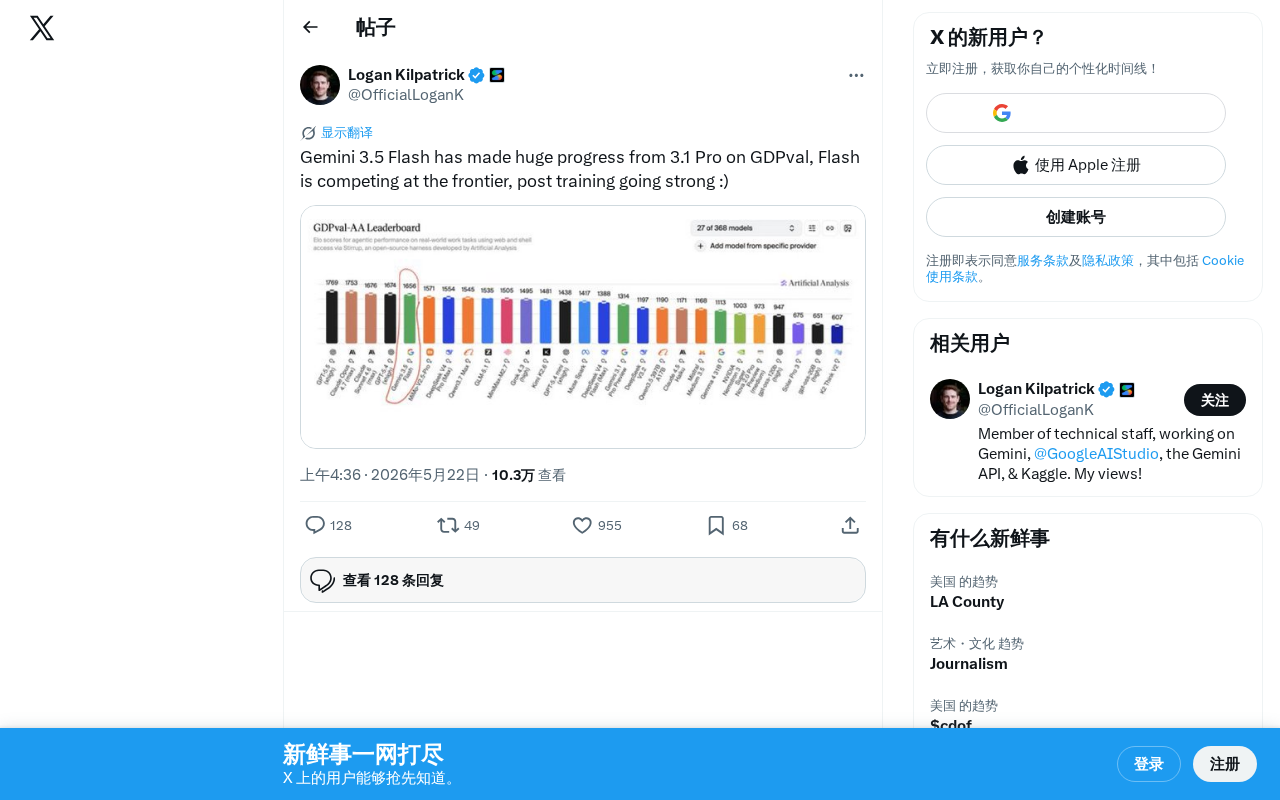
Gemini 3.5 Flash Achieves a Massive Leap on the GDPval Benchmark
Google Gemini 3.5 Flash surpasses Gemini 3.1 Pro on the GDPval benchmark. The lightweight Flash model leverages post-training techniques to approach frontier-level performance, redefining the balance between quality and cost.
 Tech Frontiers
Google Gemini Antigravity Weekly Quota Tripled — AI Coding Without Limits
Google Gemini triples Antigravity weekly quotas following a prior daily quota boost. Analyzing the impact on developers and its strategic significance in AI coding.