Six Foundational Upgrades to Claude Code: AI Programming Moves from Lab to Industrial Scale
Six Foundational Upgrades to Claude Co…
Anthropic's six foundational upgrades transform Claude Code from a smart tool into reliable infrastructure.
Anthropic has delivered the largest foundational upgrade in Claude Code's history, simultaneously fixing six persistent developer pain points: terminal flickering, thinking freezes, cryptic errors, context deadlocks, unstable connections, and session crashes. The standout session self-healing feature gives AI a rudimentary "digital immune system." This upgrade signals a paradigm shift in the AI programming tools race from the capability layer to the infrastructure layer, with Anthropic pursuing a differentiated "compete on reliability" strategy to build irreplaceable developer trust and dependency.
Introduction: A Precision Strike on Developer Pain Points
Over the past 48 hours, Anthropic launched the largest foundational upgrade in Claude Code's history. This isn't about adding a flashy new plugin or optimizing a single model parameter—it's about solving six persistent issues that have made developers want to smash their keyboards: terminal flickering, thinking freezes, cryptic errors, context deadlocks, unstable connections, and session crashes.
Behind these six problems lies the biggest obstacle preventing AI programming tools from evolving from "clever add-ons" to "reliable partners" over the past two years. Anthropic's signal is crystal clear—in the AI coding agent race, having the smartest brain is no longer enough. The competition has now moved to the foundational infrastructure layer.
Competitive Context: Intelligence Is the Entry Ticket, Reliability Is the Real Currency
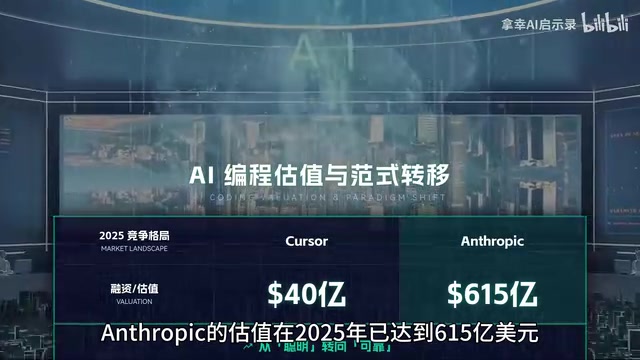
The AI programming tools arena in 2025 is white-hot. Cursor has achieved a $4 billion valuation on the strength of its smooth interaction experience. OpenAI launched Codex CLI to attack the terminal battlefield directly. GitHub Copilot has surpassed 15 million enterprise users, with Microsoft's ecosystem lock-in growing ever stronger.
Anthropic faces a brutal reality: at the AI programming tools table, intelligence has become table stakes—no longer a differentiator. Valued at $61.5 billion, Anthropic doesn't need to prove it's smart anymore. It needs to prove it's reliable.
The real killer move in this upgrade: it shifts the battlefield from the capability layer to the experience layer, and then from the experience layer down to the infrastructure layer. When a tool goes 30 consecutive days without making you wonder "is it broken?", your dependence on it has already surpassed any preference for competitors.
The First Three Punches: Solving Single-Session Experience Issues
Punch One: The Flickering Disappears
Under the old rendering logic, every data exchange was accompanied by spasmodic screen flickering. This wasn't just visual noise—it was a constant erosion of developer focus.
The brand-new full-screen renderer (TUI) completely restructures the terminal display architecture. TUI (Text User Interface) is a technical paradigm for building interactive interfaces in terminal environments, with a history tracing back to the Unix-era curses library. Modern TUI frameworks solve flickering through differential rendering algorithms—only redrawing screen regions that have actually changed, rather than refreshing the entire terminal buffer each time. Different terminal emulators have subtle variations in their ANSI escape sequence implementations: iTerm2 supports proprietary extension protocols, VS Code's built-in terminal is based on xterm.js's web rendering engine, and Warp uses a GPU-accelerated custom renderer. These underlying differences cause the same rendering logic to behave differently across environments, and precise adaptation requires massive engineering investment in edge cases. By conquering each of these three mainstream environments one by one, Claude Code has ended the flickering plague. Great tools don't demonstrate value through their presence—they achieve greatness through "not getting in the way."
Punch Two: Visible Thinking
Previously, after entering a complex command in the terminal, the screen would go dead silent. You couldn't tell whether Claude was performing logical reasoning or had gotten stuck in some low-level driver deadlock. This "interaction black hole" was the biggest enemy of AI programming tools integrating into productivity workflows.
The real-time streaming of thinking and tool calls introduced in this upgrade essentially gives AI a "heartbeat monitor." Streaming in AI inference scenarios refers to the server pushing tokens incrementally to the client via Server-Sent Events (SSE) protocol, rather than waiting for the complete response before returning it all at once. For models with Chain-of-Thought capabilities, this means intermediate reasoning steps can be displayed in real time. Streaming visibility for tool calls is even more complex—the model needs to first generate JSON parameters for the tool call, wait for the external tool to execute and return results, then continue reasoning, forming a multi-round asynchronous loop. Displaying this process in a human-readable way in real time requires fine-grained state management and UI mapping at the protocol level for each event type (thinking_delta, tool_use, tool_result). Now every decision step is clearly visible, with the logic chain flowing through the terminal like water. Humans can tolerate AI thinking, but they cannot tolerate AI being dead or alive unknown.
Punch Three: The End of Cryptic Errors
Those error messages that read like "incantations from a higher-dimensional civilization" were the nightmare of countless developers—letting you know something went wrong without ever telling you what.
Anthropic dove deep into the protocol layer, tracing the root causes of countless edge cases. Now mysterious logic conflicts are replaced by more readable, more actionable language. AI no longer just throws an error code—it attempts to explain the fault context to you. When errors are no longer cryptic, AI programming assistants truly descend from being "black-box oracles" to becoming technical partners you can actually have a conversation with.
The Last Three Punches: Solving Deep Industrial Deployment Issues
Punch Four: Invisible Memory Management
When handling complex projects spanning weeks or months, AI's memory management is often as fragile as tissue paper. Previously, the process of compressing conversation history was not only a black box—it frequently hit blocking bugs when prompts grew too long.
To understand this pain point, you need to grasp the fundamental technical challenges of context compression. Although large language models' context windows keep expanding—Claude 3 series supports up to 200K tokens—in long-term engineering projects, the accumulation of conversation history, code files, and tool call records still hits the ceiling. Context compression extends effective conversation length through summarization or selective retention of key information, but the core challenge is: the compression process itself consumes context space, and summary quality directly affects subsequent reasoning accuracy. Even more dangerous is the "self-deadlock" scenario—when the history to be compressed is already approaching the context limit, the compression operation cannot start, forming a deadlock. This upgrade not only brings a speed leap but also fundamentally solves this "self-deadlock" problem by reserving safe thresholds for compression triggers at the architecture level and designing asynchronous compression pipelines, complemented by intuitive progress displays. True intelligence lies not just in how much it remembers, but in how elegantly it handles forgetting.
Punch Five: Robust MCP Connection Layer Upgrade

MCP (Model Context Protocol) is a standardized protocol open-sourced by Anthropic in November 2024, designed to solve interoperability between AI models and external tools and data sources. Its architecture adopts a client-server model: Claude acts as the MCP client, calling local or remote MCP servers through standardized interfaces, which can encapsulate file systems, databases, APIs, and various other resources. The protocol supports two transport methods at the underlying level—stdio and HTTP+SSE—the former suited for local process communication, the latter for remote services.
However, this "nerve ending" connecting AI to the local file system was previously plagued by network environment noise—OAuth authorization failures, proxy rate limiting, connection timeouts. Every tiny fluctuation could instantly disable the Agent. In enterprise proxy environments, VPNs, or bandwidth-throttled scenarios, handshake timeouts and token refresh failures were especially common. Through concentrated patch fixes, Anthropic strengthened the connection layer's resilience, optimizing handshake protocols and retry mechanisms at the underlying level. MCP's open ecosystem has already attracted hundreds of third-party server implementations, and improved stability means the entire ecosystem's usability leaps forward simultaneously. Claude Code is no longer an island floating in the cloud—it's a "digital citizen" firmly rooted in the developer's local ecosystem. An AI agent's right to exist depends not on its brain capacity, but on the robustness of its connection to the real environment.
Punch Six: A Digital Immune System—Session Self-Healing
This is the most eye-catching part of the Claude Code upgrade. Previously, encountering a corrupted file or oversized image was like feeding AI a "logic poison pill"—it would cause the entire session to crash and brick, with no option but to restart.
Session Recovery represents a critical step in AI Agent evolution from "fragile automation" to "robust autonomy." In traditional software engineering, fault-tolerant design relies on developers pre-enumerating all exception types and writing corresponding handling logic. But the exception space facing AI Agents is virtually unbounded—corrupted binary files, oversized images, malformed API responses, file system permission conflicts... any one could become a fatal trigger. Self-healing mechanisms typically combine three architectural layers: exception isolation sandboxes (executing dangerous operations in independent processes), checkpoint snapshots (periodically saving session state for rollback), and exception classifiers (distinguishing recoverable errors from fatal ones)—this is highly consistent in design philosophy with the Circuit Breaker Pattern in distributed systems, with the core principle being "graceful degradation rather than total collapse." Now Claude Code can automatically detect and bypass these fatal exceptions, maintaining session continuity. Combined with one-click packaging of long-term memory, it has not only learned how to "survive" but also how to extract evolutionary nutrients from failure. When an AI agent learns self-diagnosis and repair, it possesses a rudimentary "survival instinct."
Deeper Impact: A Paradigm Shift in the AI Programming Tools Race
Digging deeper beneath these six punches, Anthropic's true intent becomes clear: it was never about building the best code generator—it's about becoming the most irreplaceable developer infrastructure.
Look at competitors' strategic choices:
- Cursor: Competing on interaction experience and model switching
- OpenAI: Competing on multimodality and ecosystem integration
- GitHub Copilot: Competing on enterprise compliance and Microsoft ecosystem lock-in
- Anthropic: Competing on reliability
The reliability path isn't sexy or spectacular. It won't trigger cheers at launch events. But it accumulates "trust compound interest" bit by bit in developers' daily usage. Once this dependency forms, migration costs become unimaginably high.
Future Outlook: From Showing Off to Entrusting
In the next 12 months, reliability will become the passing grade for all AI Agent products—not a bonus. Cursor, OpenAI, and GitHub Copilot must follow with similar infrastructure hardening, or developers will vote with their feet.
The deeper impact: when AI programming tools evolve from "clever add-ons" to "reliable partners," developer workflows will be completely rewritten—no longer "humans write code, AI assists" but "humans set direction, AI executes, humans make judgments." This shift in collaboration patterns will directly impact traditional software engineering management methodologies and even reshape technical team organizational structures.
Three words summarize this upgrade's core philosophy: Stable, Transparent, Resilient. Stable means the terminal doesn't crash. Transparent means thinking is visible. Resilient means exceptions self-heal. When these three become industry standards, the AI programming tools race will enter its next phase—not competing on who writes better code, but on who better understands business, manages projects, and bears responsibility for outcomes.
The next stop for AI programming tools isn't about flashier tricks—it's about causing less trouble. Tomorrow's winner may not be the AI that best answers questions, but the one that can keep running steadily through the chaotic, prolonged, real-world software engineering battlefield.
Key Takeaways
- Anthropic delivers six foundational upgrades to Claude Code: solving terminal flickering, thinking freezes, cryptic errors, context deadlocks, unstable connections, and session crashes
- The standout "self-healing" feature gives AI its first digital immune system, automatically detecting and bypassing fatal exceptions to maintain session continuity
- The AI programming tools race is shifting from the capability layer to the infrastructure layer—reliability will become the passing grade for all AI Agent products, not a bonus
- Anthropic's differentiated strategy of "competing on reliability" builds irreplaceable trust dependency by eliminating developer doubt
- This upgrade marks AI programming's leap from lab toy to production-line equipment, pushing developer workflows from "humans write code with AI assistance" toward "humans set direction, AI executes"
Related articles
 Industry Insights
AI Product Development in Practice: Model Selection, Building Moats, and Paths to Commercialization
Practical strategies for AI product development: why not to train models from scratch, when to use APIs vs. fine-tuning, building product moats, and the full path from evaluation systems to commercialization.
 Industry Insights
No Product Fits Your Needs? Building It Yourself Is the Best Starting Point for Indie Developers
Can't find a product that fits? Building from personal pain points is the best entry for indie developers. Niche needs + AI tools = rapid product creation.
 Industry Insights
OpenAI Codex Tutorials Mass-Copied on Bilibili, Highlighting AI Content Farm Problem
At least 9 Bilibili accounts mass-published identical OpenAI Codex tutorial videos, exposing content farm operations in the AI tools space.