Getting Started with Spring AI Alibaba: The Go-To Framework for Java Developers Integrating LLMs

Java developers should learn Spring AI Alibaba to stay competitive in the AI-driven job market.
This article explains the urgency for Java developers to learn AI frameworks, noting that the job market now treats AI skills as a requirement rather than a bonus. Spring AI Alibaba, as a bridge between Java programs and LLMs (similar to JDBC for databases), has become the best entry point for Java developers transitioning into AI application development due to its domestic ecosystem adaptation, Spring compatibility, and enterprise-grade support.
Why Java Developers Must Learn AI Frameworks
The tech industry is undergoing a profound transformation. If you're a Java developer, a quick glance at job boards reveals a harsh reality: resumes with pure Java tech stacks barely get any responses. AI capabilities have shifted from a "nice-to-have" to a "must-have" for employers.
Interview questions are also evolving rapidly: LangChain, LangGraph, RAG (Retrieval-Augmented Generation), MCP protocol, Agents, vectorization... If these concepts are completely foreign to you, your technical awareness has already fallen out of sync with the market.
Let's clarify these core concepts: LangChain is the earliest popular framework for building LLM applications, originally built in Python. It chains multiple LLM operations together through a Chain-based approach. LangGraph is an advanced framework from the LangChain team that supports orchestrating complex AI workflows using directed graphs. RAG (Retrieval-Augmented Generation) is a technical paradigm that enables LLMs to retrieve information from external knowledge bases before answering questions, effectively reducing model "hallucination" issues. MCP (Model Context Protocol) is a protocol proposed by Anthropic to standardize interactions between LLMs and external tools or data sources. Agents refer to AI systems with autonomous planning, tool-calling, and task execution capabilities — they go beyond simple Q&A to decompose complex tasks and complete them step by step.
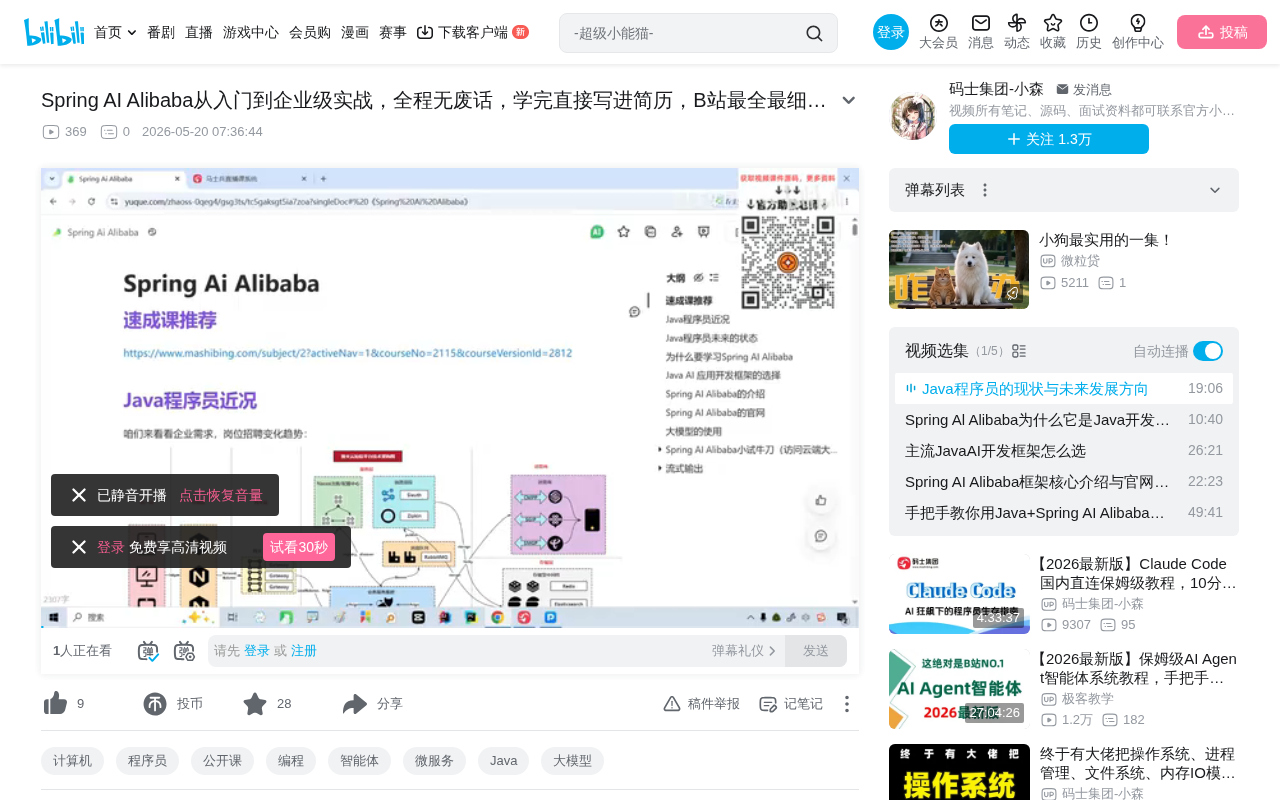
The explosive popularity of WebCoding tools (like Cursor and Claude Code) demonstrates that AI's impact on the programming industry is very real. A complete project can be up and running in minutes with AI coding tools. This isn't fearmongering — it's happening every day.
What Exactly Is Spring AI Alibaba
An Analogy to Help You Understand Instantly
Think back to when you first learned Java: Java programs and databases are two completely different technology systems, connected through JDBC as a bridge. JDBC enables Java code to operate on databases, linking two technical worlds together.
This analogy deserves deeper technical exploration: JDBC (Java Database Connectivity) is the standard API for accessing relational databases on the Java platform. It defines a unified set of interface specifications, allowing Java programs to work with MySQL, Oracle, or PostgreSQL through the same code patterns without worrying about the underlying database. Spring AI Alibaba plays a highly similar role: it abstracts away the API differences between various LLM providers (such as Qwen, GPT, ERNIE Bot, etc.) and provides a unified programming interface. Developers only need to code against Spring AI Alibaba's API — switching the underlying model requires only configuration changes, not business code rewrites. This design pattern is known as the "Adapter Pattern" or "Facade Pattern" in software engineering, a classic practice for reducing system coupling.
Following the same logic, Java programs and LLMs are also two independent technology systems. We need a "bridge" to connect them, enabling Java applications to leverage LLM capabilities. Spring AI Alibaba is that bridge.
Core Positioning and Features
Spring AI Alibaba is a Java AI application framework with these core functions:
- Enabling Java programs to seamlessly integrate LLM capabilities
- Providing a standardized approach for adding AI to existing Java projects
- Completing AI integration within the Spring ecosystem without switching to Python
Similar frameworks include Spring AI and LangChain4J, but Spring AI Alibaba is the most widely used in the Chinese domestic ecosystem.
Why Choose Spring AI Alibaba Over Other Frameworks
There are three main frameworks that bridge "Java + LLMs":
| Framework | Characteristics |
|---|---|
| LangChain4J | Java version of LangChain, active community |
| Spring AI | Official Spring product, deeply integrated with Spring Boot |
| Spring AI Alibaba | Built on Spring AI, optimized for the Chinese ecosystem |
All three frameworks essentially do the same thing — master one, and the others become intuitive. But if you can only choose one, Spring AI Alibaba is currently the most recommended choice for these reasons:
- Domestic ecosystem adaptation: Smoother integration with Alibaba Cloud's Tongyi (Qwen) series models
- Spring ecosystem compatibility: Lowest integration cost if your project already uses Spring Boot/Spring Cloud
- Enterprise-grade support: Alibaba's influence in enterprise services means more production environment validation
- Chinese documentation and community: Lower learning barriers
Tongyi Series Models and Domestic Ecosystem Advantages
The Tongyi series is a family of LLMs developed by Alibaba's DAMO Academy, including Tongyi Qianwen (text dialogue), Tongyi Wanxiang (image generation), Tongyi Tingwu (speech recognition), and models across multiple modalities. Spring AI Alibaba is deeply integrated with Alibaba Cloud's model service platform (Bailian/百炼), allowing developers to call these models directly through Alibaba Cloud's DashScope API without deploying inference services themselves. Compared to using overseas models like OpenAI directly, using the Tongyi series in China offers clear compliance advantages (data stays within borders), network latency advantages (no VPN or proxy needed), and cost advantages (the domestic model price war has significantly reduced API call costs). Additionally, Spring AI Alibaba supports connecting to open-source models (such as Llama and Qwen deployed locally via Ollama), providing flexible options for enterprise private deployments.
Current Industry Demand for Java + AI Hybrid Talent
Resumes Without AI Experience Lack Competitiveness
Here's a harsh reality: if your resume is filled entirely with traditional Java tech stack items (Spring Boot, Spring Cloud, middleware, Docker deployment) without any LLM-related content, your chances of getting interview invitations drop dramatically. This is the real state of the current Java job market.
High-Frequency AI Interview Questions
Based on actual interview feedback, Java positions now involve these AI-related questions:
- Experience with LangChain/LangGraph
- How Java and Python collaborate to deliver AI features
- Solutions for LLM hallucination problems
- Memory system design
- Building RAG systems and document update strategies
- Vector database selection and usage
- Understanding of new paradigms like Agent/MCP
Deep Dive: Vectorization and Vector Databases
Among the interview topics above, Embedding (vectorization) and vector databases are fundamental to understanding RAG systems. Vectorization is the process of converting unstructured data like text and images into high-dimensional numerical vectors. For example, after processing through an Embedding model, a piece of text becomes an array containing hundreds to thousands of floating-point numbers, where semantically similar content is closer together in vector space. Vector databases (such as Milvus, Pinecone, Weaviate, and Alibaba Cloud's AnalyticDB) are specifically designed to store and retrieve these high-dimensional vectors. They support Approximate Nearest Neighbor (ANN) search algorithms, capable of finding the most semantically similar results from millions of vectors in milliseconds. In a RAG system, the user's question is first vectorized, then relevant document fragments are retrieved from the vector database, and finally the retrieved results are passed to the LLM as context to generate answers.
Deep Dive: LLM Hallucination and Memory Systems
LLM Hallucination refers to the model generating content that appears reasonable but is actually incorrect or fabricated. This occurs because LLMs are fundamentally probability-based text generation systems — they don't truly "understand" facts but predict the next most likely token based on patterns in training data. Common mitigation strategies include: introducing external knowledge sources through RAG for fact verification, setting the Temperature parameter to reduce randomness, and using Chain of Thought prompting to make the model show its reasoning process.
Memory Systems are key components for solving the LLM "forgetfulness" problem — since each LLM call is stateless, conversation history must be maintained through external memory mechanisms. Common memory designs include short-term memory (context within the conversation window), long-term memory (persistently stored user preferences and historical summaries), and working memory (intermediate states of the current task). In Spring AI Alibaba, the framework provides out-of-the-box Memory components that support storing conversation history in backends like Redis or databases, so developers don't need to implement this complex state management logic from scratch.
Recommended Learning Path
For developers who want to systematically learn Spring AI Alibaba, the recommended prerequisites include:
- Java fundamentals: At least familiarity with core Java syntax and object-oriented programming
- Spring Boot: Understanding of core concepts like auto-configuration and dependency injection
- Basic AI concepts: Knowledge of what LLMs, Prompts, Tokens, and other basic terminology mean
Here are a few additional basic terms: Prompt refers to the input text given to an LLM — its quality directly determines the output quality, which is why "Prompt Engineering" has become an independent skill. Token is the smallest unit of text processing for LLMs. In Chinese, each character corresponds to roughly 1-2 tokens. The model's context window size (e.g., 128K tokens) determines how much information can be processed in a single call and directly affects API costs.
For learning strategy, a "breadth-first, then depth" approach is recommended: quickly build a complete knowledge framework and establish a global understanding, then dive deep into specific modules. Don't start by grinding through a 30-hour systematic course — first use a fast-track approach to understand the role and positioning of each technology component.
Summary: Java + AI Is a Definitive Trend
Whether you're focused on pure Java or LLM development, the convergence of both is an irreversible trend. As the bridge connecting these two worlds, Spring AI Alibaba is the best entry point for Java developers transitioning into AI application development.
Now is the perfect time to get started. Rather than waiting until you're left behind and feeling anxious, proactively embrace change while the opportunity is ripe. After all, a technologist's greatest competitive advantage is the ability to keep learning.
Related articles
 Tutorials
Cursor + Codex Dual-IDE Collaboration: A Practical Methodology for Open-Source Project Customization
A complete methodology for open-source project customization based on real-world experience, detailing the Cursor+Codex dual-IDE workflow, seven-stage process, MVP validation, and AI source code reading techniques.
 Tutorials
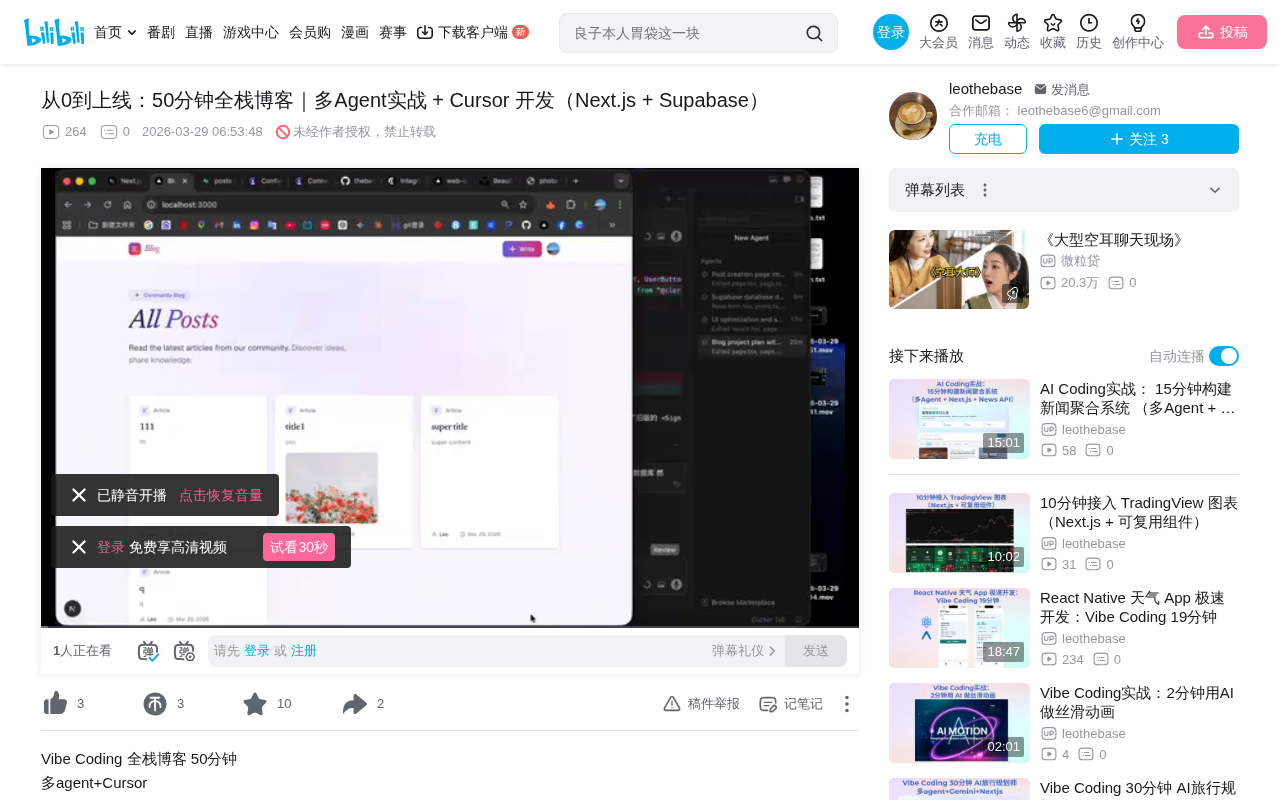
Cursor Multi-Agent in Practice: Building a Full-Stack Next.js Blog in 50 Minutes
Build a full-stack blog in 50 minutes using Cursor IDE's multi-Agent mode with Next.js, Clerk auth, and Supabase. Learn the 4-phase AI Agent workflow and key integration pitfalls.
 Tutorials
Building an AI Software Factory from Scratch: A Cursor Engineer's Hands-On Experience with Multi-Agent Collaboration
Cursor engineer Eric shares practical insights on building an AI software factory: automation levels, guardrail design, parallel Agent management, and scaling to 1000+ Agents for 24/7 development.