Spring Framework 6 Learning Guide: A Complete Knowledge System from IOC and AOP to AOT
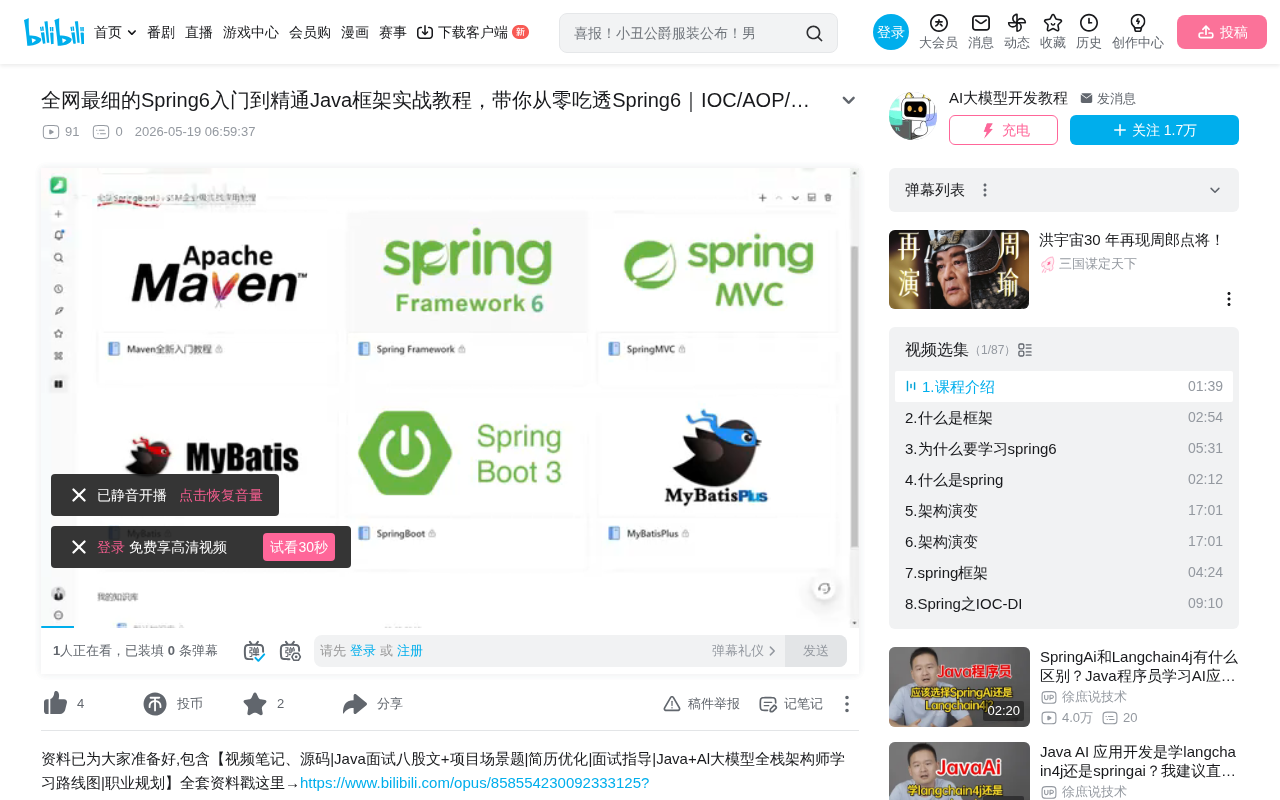
A complete learning guide to Spring Framework 6 covering IOC, AOP, transactions, AOT, and source code mastery.
This article systematically outlines the core knowledge system of Spring Framework 6, covering IOC (Inversion of Control), AOP (Aspect-Oriented Programming), declarative transactions, Spring AOT native compilation, and underlying source code principles. It provides a six-stage learning path from beginner to expert, with practical advice on focusing on annotation-driven configuration and modern Spring 6 features.
Why Learn Spring Framework 6
Spring Framework is one of the most essential frameworks in the Java ecosystem — virtually all mainstream Java enterprise development relies on it. Whether it's Spring Boot, Spring Cloud, or the traditional SSM architecture, Spring Framework serves as the underlying foundation. With the release of Spring 6, the framework has seen significant improvements in performance, modularity, and modern Java support, making it a must-learn for Java developers.
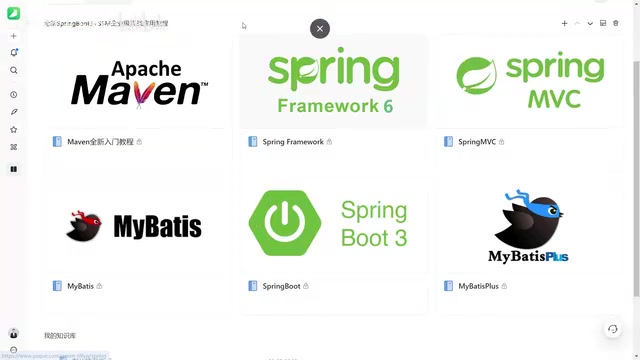
This article is based on Teacher Xu Shu's Spring Boot 3 + SSM Enterprise-Level Practical Tutorial on Bilibili. It outlines the core learning path and knowledge system for Spring Framework 6, helping developers build a clear learning framework.
Spring Framework 6's Role and Framework Dependency Relationships
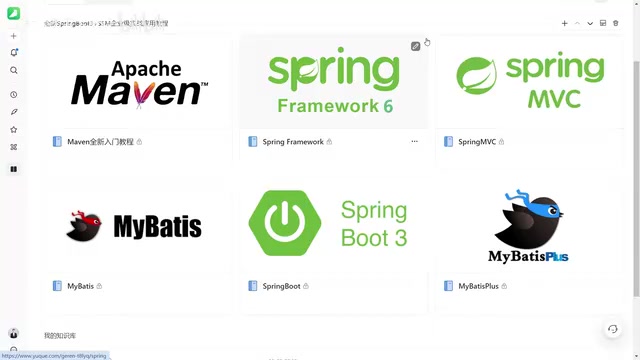
In the entire Java enterprise development ecosystem, Spring Framework sits at the most fundamental core level. Upper-layer frameworks and tools like Spring Boot, Spring MVC, and MyBatis integration all depend on the foundational capabilities provided by Spring Framework. Therefore, mastering Spring Framework before learning SSM or Spring Boot is the most logical learning path.
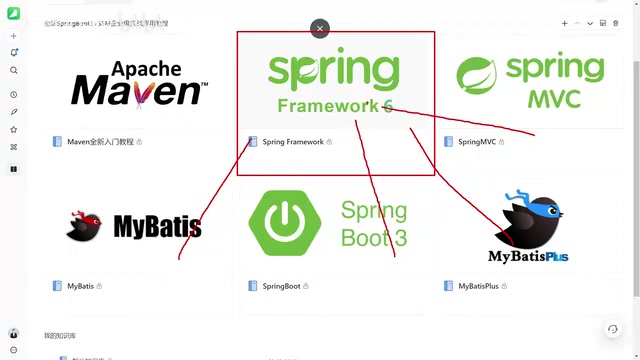
As emphasized in the tutorial: "All other frameworks depend on the Spring framework, so we'll cover it first." This is especially important for beginners — if you skip Spring Framework and jump straight into Spring Boot, you'll often lack the underlying understanding needed to troubleshoot problems.
Connection with Maven
Learning Spring Framework 6 builds upon a foundation of Maven knowledge. Through Maven's dependency management capabilities, you can quickly create SSM and Spring Boot project structures and manage various Spring-related dependency packages. Mastering Maven before diving into Spring significantly lowers the barrier of environment configuration.
IOC (Inversion of Control): Spring's Most Core Design Philosophy
IOC (Inversion of Control) is the most fundamental design philosophy of the Spring framework. It extracts object creation and dependency relationship management from your code and hands it over to the Spring container for unified management. Spring 6 has further optimized IOC container performance and enhanced support for Java 17+ features.
Key learning focuses for IOC include:
- Bean definition and registration methods
- Multiple implementations of Dependency Injection (DI): constructor injection, setter injection, and field injection
- Container lifecycle management
- Choosing between annotation-driven configuration vs. XML configuration
Mastering IOC and dependency injection is a prerequisite for learning all other Spring modules. It's recommended to invest sufficient time in this area.
AOP (Aspect-Oriented Programming): Achieving Separation of Concerns
AOP (Aspect-Oriented Programming) allows developers to separate cross-cutting concerns (such as logging, transaction management, and permission validation) from business logic, achieving high cohesion and low coupling in code. Spring 6's AOP module maintains its mature and stable capabilities in proxy mechanisms and aspect expressions.
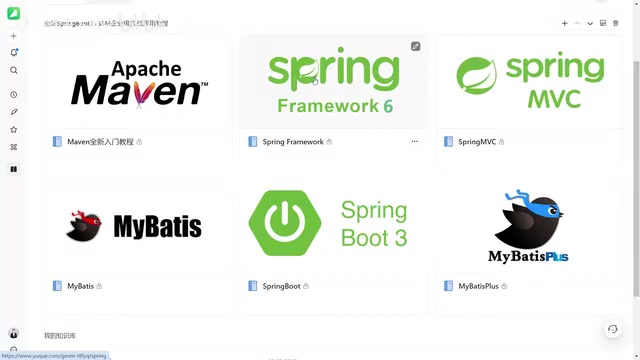
The core concepts of AOP include Aspect, JoinPoint, Pointcut, Advice, and Weaving. Understanding these concepts is the foundation for using AOP correctly.
Declarative Transactions: An Essential Capability for Enterprise Applications
Transaction management is an indispensable part of enterprise application development. Spring's declarative transactions are implemented through the AOP mechanism — developers only need to use the @Transactional annotation to manage transactions, eliminating the need to write tedious transaction control code.
Key learning points for declarative transactions:
- Understanding and configuring transaction propagation behaviors
- Choosing transaction isolation levels
- Setting exception rollback rules
- Common scenarios where transactions fail and how to troubleshoot them
Spring AOT: Compilation Optimization for Cloud-Native
Spring AOT (Ahead-of-Time compilation) is an important new feature introduced in Spring 6. It supports ahead-of-time processing during compilation, providing support for GraalVM native image compilation. This means Spring applications can be compiled into native executables, achieving millisecond-level startup times and lower memory consumption.
For cloud-native and microservice scenarios, Spring AOT cannot be overlooked:
- Startup time improves from seconds to milliseconds
- Memory consumption is significantly reduced
- Better suited for Serverless and containerized deployments
Underlying Principles and Source Code: The Leap from Usage to Mastery
Deeply understanding Spring's underlying principles and source code implementation is the key leap from "knowing how to use it" to "true mastery." The following knowledge points are extremely important in both interviews and real-world troubleshooting:
- The complete Bean creation process
- The BeanPostProcessor extension mechanism
- The three-level cache solution for circular dependencies
- The ApplicationContext initialization process
Effective Learning Methods and Recommended Path
Focus on the Core, Discard Outdated Content
The tutorial emphasizes an important learning philosophy: "Discard outdated knowledge and use a completely new approach to teaching, improving learning efficiency and reducing learning costs." Specific recommendations:
- Prioritize annotation-based configuration: XML configuration is worth understanding, but annotations and Java Config are the mainstream in actual development
- Focus on Spring 6 new features: Such as AOT, Jakarta EE support, etc.
- Understand principles through practice: Don't study theory in isolation from real projects
- Progress step by step: First master IOC and DI, then learn AOP and transactions, and finally dive into source code
Six-Stage Learning Path
- Stage 1: Introduction to Spring and quick start — build your first Spring project
- Stage 2: Deep dive into the IOC container — master various Bean management approaches
- Stage 3: Learn AOP programming — understand the proxy pattern
- Stage 4: Declarative transactions and data access
- Stage 5: Spring AOT and native compilation
- Stage 6: Source code reading and underlying principles
Conclusion
As the cornerstone framework for Java enterprise development, the importance of Spring Framework 6 is self-evident. For Java developers, systematically learning Spring 6 not only improves daily development efficiency but also lays a solid foundation for subsequently learning upper-layer frameworks like Spring Boot 3 and Spring Cloud. It's recommended to follow the progressive path of IOC → AOP → Transactions → AOT → Source Code, deepening your understanding through practice and gradually building a complete Spring technology stack capability.
Related articles
 Tutorials
Cursor + Codex Dual-IDE Collaboration: A Practical Methodology for Open-Source Project Customization
A complete methodology for open-source project customization based on real-world experience, detailing the Cursor+Codex dual-IDE workflow, seven-stage process, MVP validation, and AI source code reading techniques.
 Tutorials
Cursor Multi-Agent in Practice: Building a Full-Stack Next.js Blog in 50 Minutes
Build a full-stack blog in 50 minutes using Cursor IDE's multi-Agent mode with Next.js, Clerk auth, and Supabase. Learn the 4-phase AI Agent workflow and key integration pitfalls.
 Tutorials
Building an AI Software Factory from Scratch: A Cursor Engineer's Hands-On Experience with Multi-Agent Collaboration
Cursor engineer Eric shares practical insights on building an AI software factory: automation levels, guardrail design, parallel Agent management, and scaling to 1000+ Agents for 24/7 development.