Superpowers: The Must-Have Codex Plugin That Makes AI Ask Questions to Clarify Your Requirements

Superpowers plugin solves the hard-to-write-prompts problem in AI coding through AI reverse questioning.
Superpowers is an intelligent planning plugin for Codex and Claude Code. Its core highlight is the reverse questioning mechanism: when users provide vague requirements, AI doesn't blindly write code but proactively identifies ambiguities, presents options, and asks follow-up questions until all key decisions are clarified before executing. This transforms AI from a passive executor into an active collaborator, lowering prompt writing barriers, reducing rework, and improving human-AI collaboration efficiency.
Why You Need This Plugin
What's the biggest pain point when using Codex or Claude Code to write code? It's not that AI isn't smart enough — it's that we can't write clear prompts.
Codex is OpenAI's code generation editor environment, built on large language models that can generate, modify, and debug code based on natural language descriptions. Claude Code is Anthropic's command-line coding assistant, powered by the Claude model, supporting direct interaction with codebases from the terminal. Both represent the cutting edge of "AI-assisted programming" tools, with the core philosophy of letting developers describe their intent in natural language while AI handles the actual code implementation. However, the effectiveness of these tools is highly dependent on the quality of input instructions — that is, the level of Prompt Engineering.
Often, we have a vague idea in our heads, but precisely describing it as instructions that AI can understand is itself an exhausting task. Prompt engineering requires developers to include functional goals, technical constraints, boundary conditions, expected code style, and architectural preferences in their input. Research shows that for the same requirement, prompts of different quality can lead to AI output quality varying by several times. Expecting every developer to master prompt writing is clearly unrealistic. Just like when we encounter complex problems at work, we need to discuss with colleagues and take time to organize our thoughts — now, there's a plugin that can serve as that "discussion partner."
This is the Superpowers plugin.

What Superpowers Is: An Intelligent Planning Plugin for Codex
Superpowers is a plugin for Codex (and Claude Code) that you can find and install from the plugin marketplace in the upper-left corner of the editor. Its core capabilities cover several key stages of software development:
- Planning: Helps you organize requirements and formulate implementation plans
- Test-Driven Development (TDD): Assists in writing test cases
- Debugging: Helps locate and fix issues
- Delivery Workflow: Connects the entire development process
Test-Driven Development (TDD) is a classic software development methodology with a core cycle of: write a failing test case first (Red) → write the minimum code to make the test pass (Green) → refactor the code (Refactor). In AI programming scenarios, TDD is especially valuable — if AI first helps you generate test cases, it essentially defines requirements precisely in code language, and then having AI implement features based on those tests significantly reduces error rates. Superpowers integrates TDD into the workflow, leveraging this methodology's advantage of "defining correct behavior first, then implementing functionality."
Among all features, the most core and valuable one is the reverse questioning mechanism during the planning phase.
Core Highlight: AI Proactively Asks You Questions
The Problem with Traditional AI Programming Modes
In traditional AI programming workflows, the process is one-directional: you write a prompt → AI executes. This means you must think through and clearly articulate all details from the very beginning. But the reality is that many requirements are vague in the early stages — we ourselves haven't figured out how to handle certain edge cases.
Superpowers' Reverse Questioning Solution
The reverse questioning mechanism is not an entirely new concept in software engineering. It originates from "Elicitation" techniques in Requirements Engineering. Traditional requirements analysts use structured interviews, prototype demonstrations, and scenario walkthroughs to "excavate" real requirements from clients. Superpowers automates this process — AI plays the role of a requirements analyst, proactively initiating clarification dialogues by identifying ambiguous terms, undefined boundary conditions, and implicit assumptions in descriptions. The cognitive science basis behind this design is that humans provide more accurate and complete information when being questioned than when actively recalling.
After installing Superpowers, when you provide a requirement that isn't clearly described, AI won't blindly start writing code. Instead, it will:
- Identify ambiguities: Automatically analyze where in your description there are ambiguities or gaps
- Present options: For each unclear point, offer multiple alternative approaches for your decision
- Progressively deepen: After answering one question, continue asking follow-up questions based on your response
- Execute after confirmation: Only begin actual code writing after all key decisions are clarified
This process is like an experienced technical lead conducting a requirements review — they won't just take a single sentence and start working. Instead, they'll ask: "Which approach do you want to use here? How should that edge case be handled? Do you have a preference for this API's response format?"
Actual Usage Experience
According to real project experience shared by a Bilibili content creator, during development, Superpowers presents solution options one by one for areas that aren't clearly described. You just need to make selections like a multiple-choice test, and AI can accurately understand your intent. This interaction method has several clear advantages:
- Lowers the prompt writing barrier: No need to write a perfect prompt from the start
- Reduces rework: Through upfront requirement confirmation, avoids code rewrites caused by AI misunderstanding
- Assists thinking: The questions AI raises can themselves help you discover points you hadn't considered
Use Cases for the Superpowers Plugin
This plugin is particularly suitable for the following situations:
- Complex requirements that are hard to describe: Such as features involving multiple module interactions
- Multiple implementation paths exist: When you're unsure which approach is better, AI will list options and analyze pros and cons
- Solo developers: When there are no colleagues to discuss with, AI serves as your "rubber duck"
- Rapid prototyping phase: When ideas aren't mature yet and you need to think while building
It's worth expanding on the "rubber duck" concept here. "Rubber duck debugging" is a classic method in programmer circles, originating from the book The Pragmatic Programmer. The principle is: when you explain your code line by line to an object that doesn't understand technology at all, you often discover the problem yourself. This is essentially a technique for activating metacognition through externalizing thought. Superpowers upgrades this concept — it's not just a passive listener but can proactively ask targeted questions, guiding you to discover blind spots in your thinking. This is more effective than a traditional rubber duck because it possesses domain knowledge and can ask truly valuable follow-up questions.
Summary
The essential value of the Superpowers plugin is: transforming AI from a passive executor into an active collaborator. It doesn't solve the problem of "AI writing code" — it solves the problem of "how humans and AI communicate efficiently."
For everyone using Codex or Claude Code for daily development, this plugin is worth trying. It won't directly improve your code quality, but it will significantly enhance your collaboration efficiency with AI — because good results start with good requirement definitions.
Related articles
 Tutorials
Cursor + Codex Dual-IDE Collaboration: A Practical Methodology for Open-Source Project Customization
A complete methodology for open-source project customization based on real-world experience, detailing the Cursor+Codex dual-IDE workflow, seven-stage process, MVP validation, and AI source code reading techniques.
 Tutorials
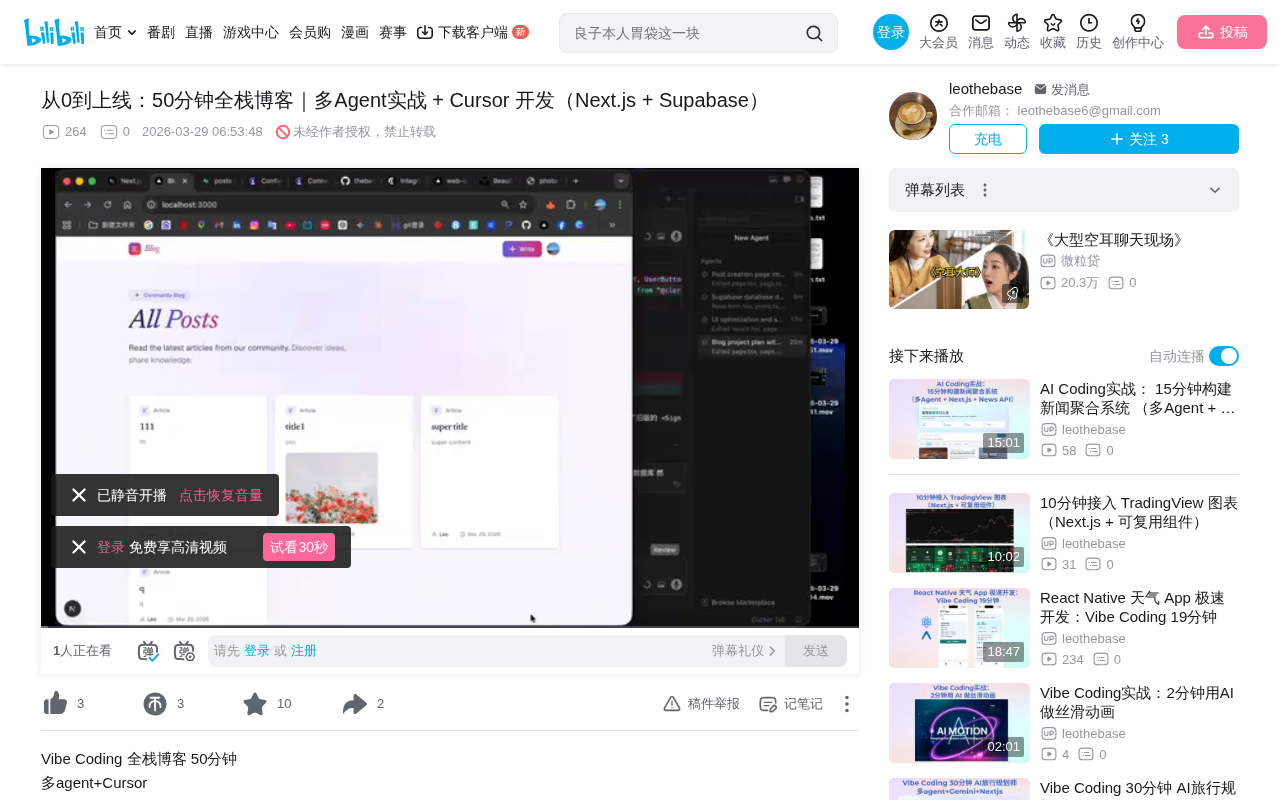
Cursor Multi-Agent in Practice: Building a Full-Stack Next.js Blog in 50 Minutes
Build a full-stack blog in 50 minutes using Cursor IDE's multi-Agent mode with Next.js, Clerk auth, and Supabase. Learn the 4-phase AI Agent workflow and key integration pitfalls.
 Tutorials
Building an AI Software Factory from Scratch: A Cursor Engineer's Hands-On Experience with Multi-Agent Collaboration
Cursor engineer Eric shares practical insights on building an AI software factory: automation levels, guardrail design, parallel Agent management, and scaling to 1000+ Agents for 24/7 development.