Tech Weekly: OpenAI Swarm Framework, Claude Data Visualization & Lightweight OS Analysis

Tech weekly covering open-source projects in security, cloud computing, AI orchestration, and frontend tools.
This tech weekly covers several cutting-edge open-source projects: Kali Linux as the premier penetration testing system, Unikraft advancing millisecond-startup Unikernel cloud platforms, Go Blueprint providing standardized Go project scaffolding, OpenAI's open-source Swarm lightweight Agent orchestration framework (positioned as a learning tool), Anthropic's open-sourced Claude data visualization app as a reference for LLM application development, and the shadcn-form-builder form generator. The common theme is that open source is accelerating technology adoption and best practice dissemination.
This week's tech roundup covers several noteworthy open-source projects and technology developments, ranging from lightweight operating systems to AI Agent orchestration frameworks and data visualization tools — each representing cutting-edge practices in their respective fields.
Lightweight Operating Systems: The Dual Pursuit of Security and Performance
Kali Linux: The Go-To Tool for Penetration Testing
Kali Linux is an operating system purpose-built for penetration testing, pre-loaded with a vast array of security testing tools that greatly simplify configuration and installation workflows. Security researchers can use various tools directly on Kali, eliminating tedious environment setup time and focusing on actual security testing work.
Kali Linux is deeply customized based on the Debian distribution, with over 600 built-in penetration testing tools covering the complete attack-defense chain including information gathering, vulnerability scanning, password cracking, wireless attacks, and reverse engineering. Its toolset is continuously maintained by the Offensive Security team, ensuring synchronization with the latest vulnerability research. Notably, Kali's design philosophy of running as root by default is fundamentally different from mainstream Linux distributions — this is a deliberate trade-off optimized for security testing scenarios. In controlled testing environments, security researchers need full system control rather than the principle of least privilege used in everyday computing.
It's worth mentioning that Kali supports multiple platforms — whether desktop, cloud services, or mobile devices, it's available anytime, anywhere. For beginners, Kali offers extensive documentation and tutorials, combined with active community support and continuous tool updates, making it an indispensable tool for security professionals.
Unikraft: A Lightweight Solution for Future Cloud Services
Unikraft is an open-source Unikernel development toolkit that helps developers customize and build lightweight, performance-optimized operating systems. Its modular design allows developers to select only the components they need, thereby reducing system overhead and improving runtime performance — particularly suited for cloud computing and edge computing environments.
To understand Unikraft's value, you first need to grasp the underlying concept of Unikernel technology. A Unikernel is a technique that compiles an application together with a minimized OS kernel directly into a single executable image. Unlike traditional operating systems, Unikernels strip away all unnecessary kernel components, retaining only the system calls and library functions required for the application to run. This design delivers three key advantages: a minimal attack surface (fewer system calls means fewer vulnerability entry points), lower memory footprint (image sizes can be compressed to just a few MB), and faster boot times (typically achieving cold starts in milliseconds, far superior to the minute-level startup of traditional VMs and second-level startup of containers). Unikraft's modular toolchain dramatically reduces the engineering complexity of this technology, enabling developers to build their own Unikernel images without deep kernel development expertise.
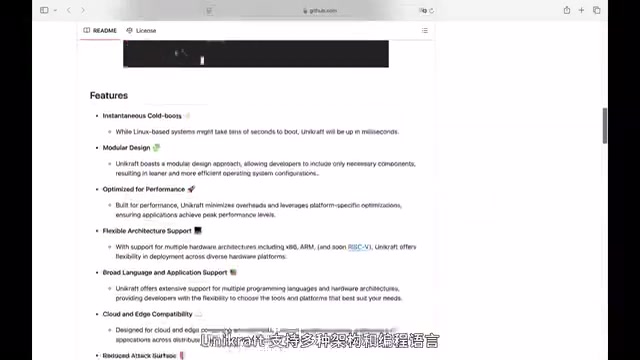
The Unikraft team is currently advancing the development of Unikraft Cloud, aiming to provide a Serverless platform with millisecond-level startup and low latency based on Unikernel technology, while offering interfaces similar to container solutions like Docker to reduce the learning curve. Industry experts also believe that compared to traditional VM solutions, Unikernels are more likely to bring transformative breakthroughs to future cloud services.
Go Blueprint: Best Practices for Standardized Go Projects
Go Blueprint is a practical CLI tool designed to simplify the Go project creation process by providing a robust and standardized project structure. It not only helps developers easily initialize projects but also seamlessly integrates popular Go frameworks like Gin and Echo, allowing developers to focus on business code from the very start.
The Go ecosystem has long lacked strong conventions for project structure like those found in Ruby on Rails or Spring Boot. The official team only provides a loosely defined Standard Go Project Layout reference, resulting in significant structural differences across teams and higher onboarding costs for new members. Go Blueprint fills this gap by incorporating years of engineering practices refined by the Go community: using the internal directory to isolate private packages, managing multiple entry points with the cmd directory, and decoupling the business layer from infrastructure through dependency injection. At the framework selection level, Gin is renowned for high-performance routing while Echo offers more flexible middleware design — Go Blueprint's support for both allows teams to freely choose their technical preferences within a unified project skeleton.
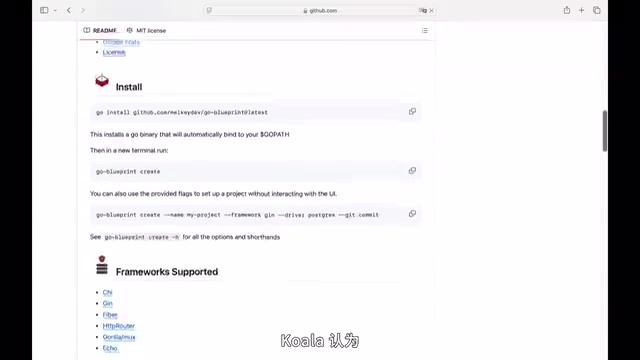
Whether you prefer using the standard library's HTTP package or third-party frameworks, Go Blueprint provides community-maintained, high-quality templates. For teams that heavily use Go for development, this tool delivers value in two ways: first, gaining access to community best practices for project structure; and second, publishing team-specific custom templates to maintain consistency and standardization across multiple projects.
OpenAI Swarm: A Lightweight Agent Orchestration Framework
Swarm is a lightweight Agent orchestration framework open-sourced by OpenAI, designed with reference to concepts from the OpenAI Cookbook while maintaining a lightweight and easy-to-use interface. The framework can handle complex Agent relationships and tool calls, supporting multi-Agent collaboration patterns including scenarios where Agents pass tasks to each other.
To understand Swarm's positioning, you need to grasp the technical context of AI Agent orchestration. A single LLM call struggles to handle complex tasks requiring multi-step reasoning, tool invocation, or cross-domain knowledge, which led the industry to develop orchestration paradigms that organize multiple specialized Agents into workflows. Current mainstream frameworks include LangGraph (defining Agent state machines with graph structures), AutoGen (Microsoft's multi-Agent conversation framework), and CrewAI (emphasizing role-based team collaboration), each with different focuses and relatively high engineering complexity. Swarm's core abstraction is extremely minimal: Agents are defined by system prompts and callable tools, task handoffs are triggered through function return values, and the entire framework introduces no additional state management mechanisms. This minimalist design makes it an ideal educational tool for understanding the essence of multi-Agent collaboration — developers can see the core operational logic of an orchestration framework within a few hundred lines of code.
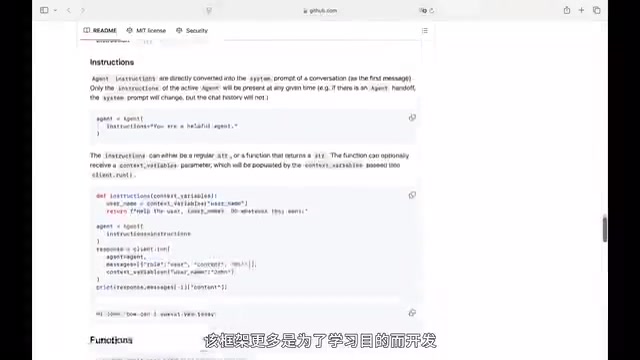
Although numerous AI Agent orchestration frameworks already exist on the market, as one of the teams that "understands large models best," OpenAI's solution attracted widespread attention upon release. However, it's important to note that the OpenAI team explicitly states this framework was developed primarily for learning purposes, aimed at helping developers understand the core concepts of Agent orchestration, and is not recommended for direct use in production environments.
This positioning is actually very valuable — it provides developers with an official OpenAI-endorsed "reference implementation" that enables deep understanding of multi-Agent collaboration design patterns and best practices, which can then be applied to their own production-grade frameworks.
Anthropic Open-Sources Claude Data Visualization Application
When introducing their latest Claude model, Anthropic demonstrated combining Claude's intelligent analysis capabilities with interactive data visualization to help users analyze financial data through conversation. Now, they've open-sourced the complete code for this application. Core features include:
- Intelligent Data Analysis: Natural language data analysis powered by the Claude model
- Multi-Format Support: Support for uploading multiple file formats
- Interactive Visualization: Generation of interactive data charts and visualization results
The technical architecture of this application reflects the mainstream paradigm of current AI data analysis products: after users upload structured data, Claude dynamically generates data queries and statistical analysis code through Tool Use functionality, then passes results to frontend visualization libraries (such as Vega-Lite or Plotly) to render as interactive charts. Compared to traditional BI tools, this "conversation-driven data exploration" model dramatically lowers the barrier to data analysis — users don't need to master SQL or Python, they simply describe their analytical intent in natural language. The deeper significance of Anthropic open-sourcing this project lies in demonstrating how to handle engineering challenges such as code execution security, multi-turn conversation context management, and streaming responses while ensuring analytical accuracy — these are all core issues that must be addressed when building production-grade AI data products.
The significance of this project extends beyond the financial domain to environmental monitoring, sports analytics, social media, and many other scenarios. As the developers of Claude, a top-tier commercial LLM, the AI application code released by Anthropic can be regarded as an authoritative reference for best practices in large model application development, offering high reference value for developers looking to build similar AI data analysis products.
Form Builder: A Productivity Booster for Frontend Development
As developers, we inevitably create forms over and over throughout our careers. After extensive form development work, the author of shadcn-form-builder decided to build an open-source form generator using shadcn/ui, React Hook Form, and Zod to help developers reduce repetitive labor.
This technology combination represents the de facto standard for form development in the current React ecosystem. shadcn/ui is a component library built on Radix UI primitives and Tailwind CSS, with a rather unique core philosophy: copying component source code directly into your project rather than installing it as an npm dependency, giving developers full customization control over every component and completely solving the traditional UI library pain point of "styles being difficult to override." React Hook Form manages form state using an uncontrolled component pattern, avoiding the performance issue of full re-renders triggered by every keystroke — an advantage particularly pronounced in large, complex form scenarios. Zod, as a TypeScript-first runtime type validation library, can share the same validation Schema between browser and server, achieving end-to-end type safety. shadcn-form-builder visualizes the integration pattern of these three technologies, allowing developers to generate form code following best practices through drag-and-drop configuration — its source code itself serves as an excellent reference for learning how this tech stack works together.
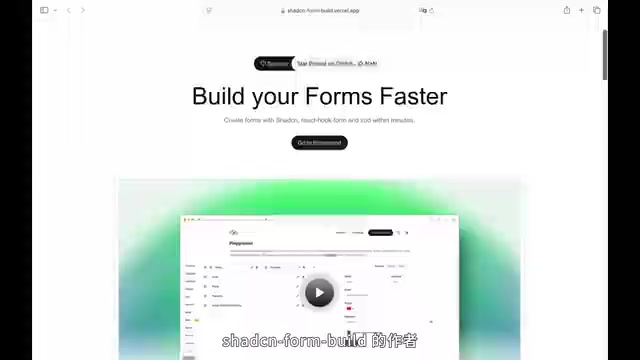
Although there are already many ready-made form solutions on the market and AI can assist in generating form code, as a newly launched open-source project, its learning value outweighs its practical utility. Currently the code quality is solid and complexity is manageable — if you want to deeply understand the implementation details of a form designer, it's worth reading through the source code.
Summary
The projects covered in this week's roundup span security, cloud computing, AI, and frontend development, but share a common theme: open source is accelerating the democratization of technology and the spread of best practices. Whether it's OpenAI's Swarm framework or Anthropic's data visualization application, top AI companies are conveying their technical understanding and practical experience to the developer community through open-source code — a positive signal for the development of the entire industry.
Related articles
 Tech Frontiers
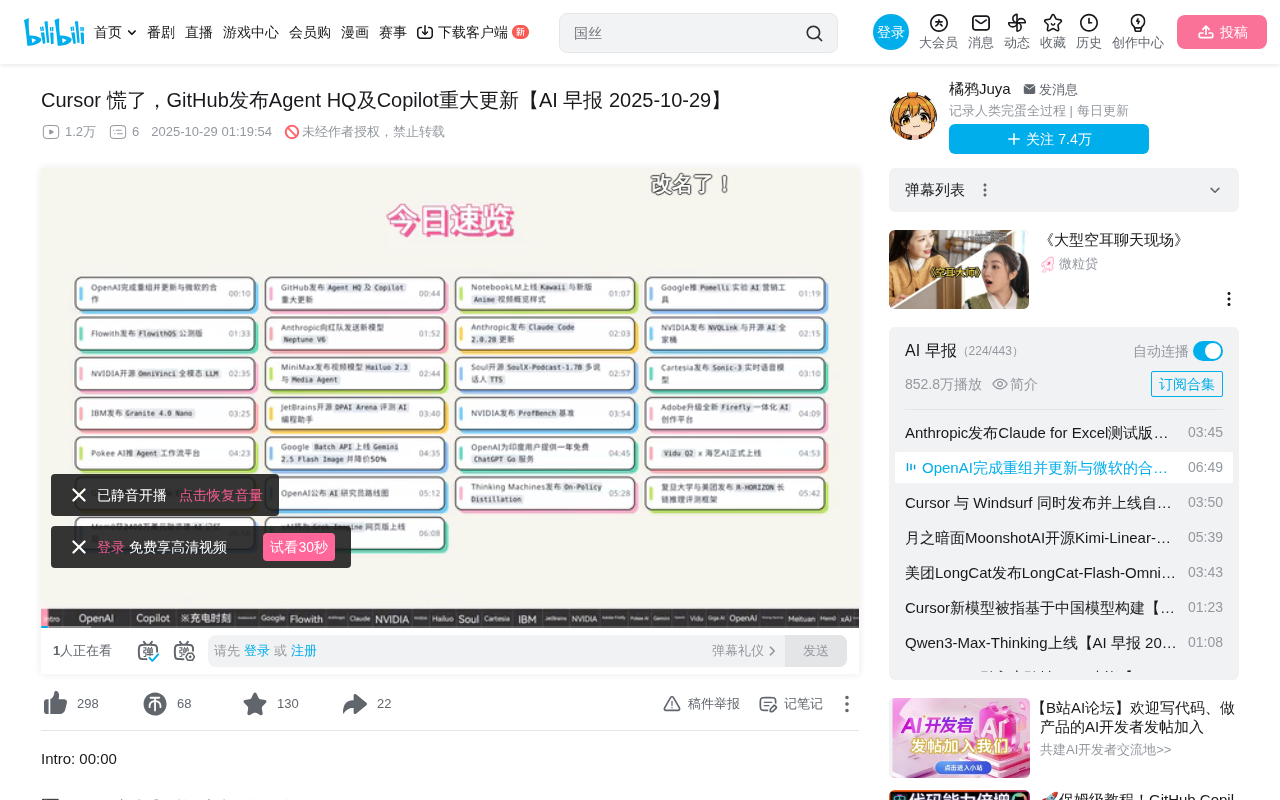
GitHub Agent HQ Launch: AI Coding Tools Enter the Era of Platform Competition
GitHub Universe unveils Agent HQ platform for unified coding agent management, Copilot upgrades with multi-model support. OpenAI completes restructuring, Anthropic tests new model, NVIDIA open-sources AI models.
 Tech Frontiers
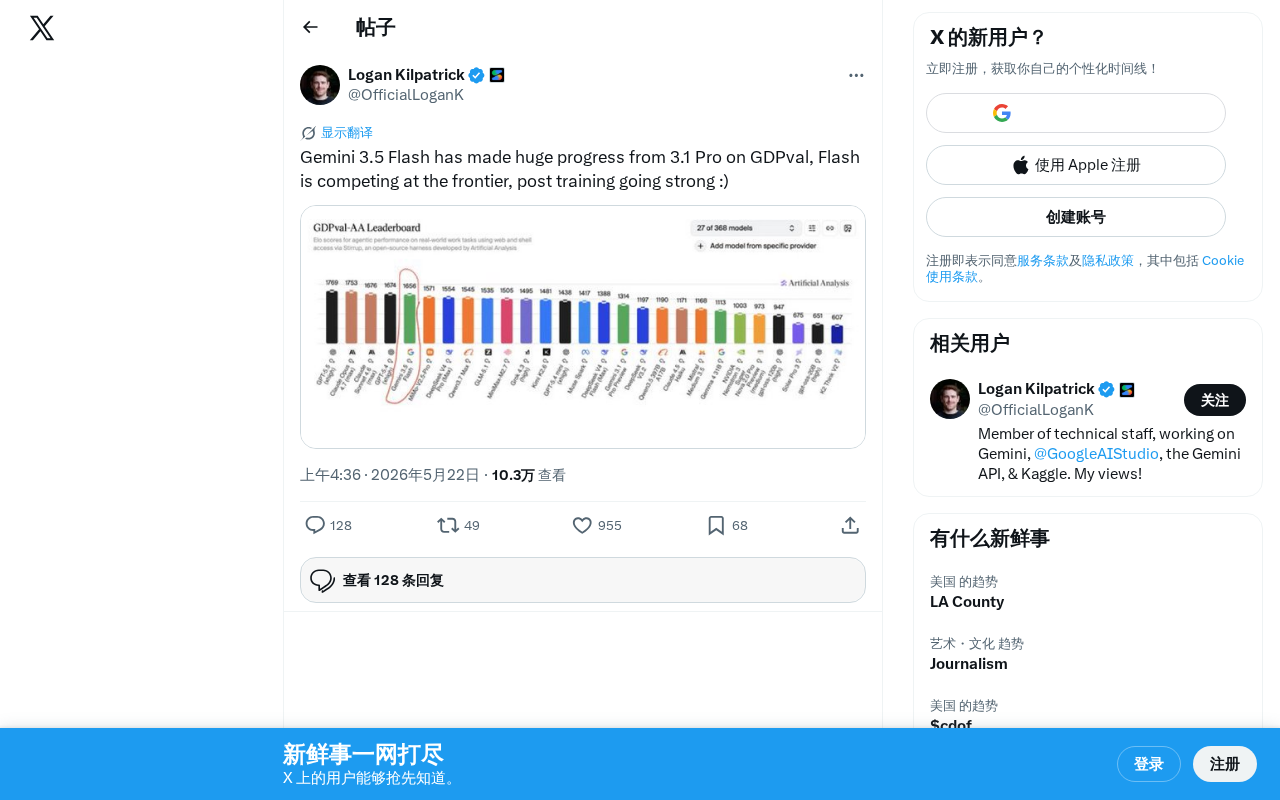
Gemini 3.5 Flash Achieves a Massive Leap on the GDPval Benchmark
Google Gemini 3.5 Flash surpasses Gemini 3.1 Pro on the GDPval benchmark. The lightweight Flash model leverages post-training techniques to approach frontier-level performance, redefining the balance between quality and cost.
 Tech Frontiers
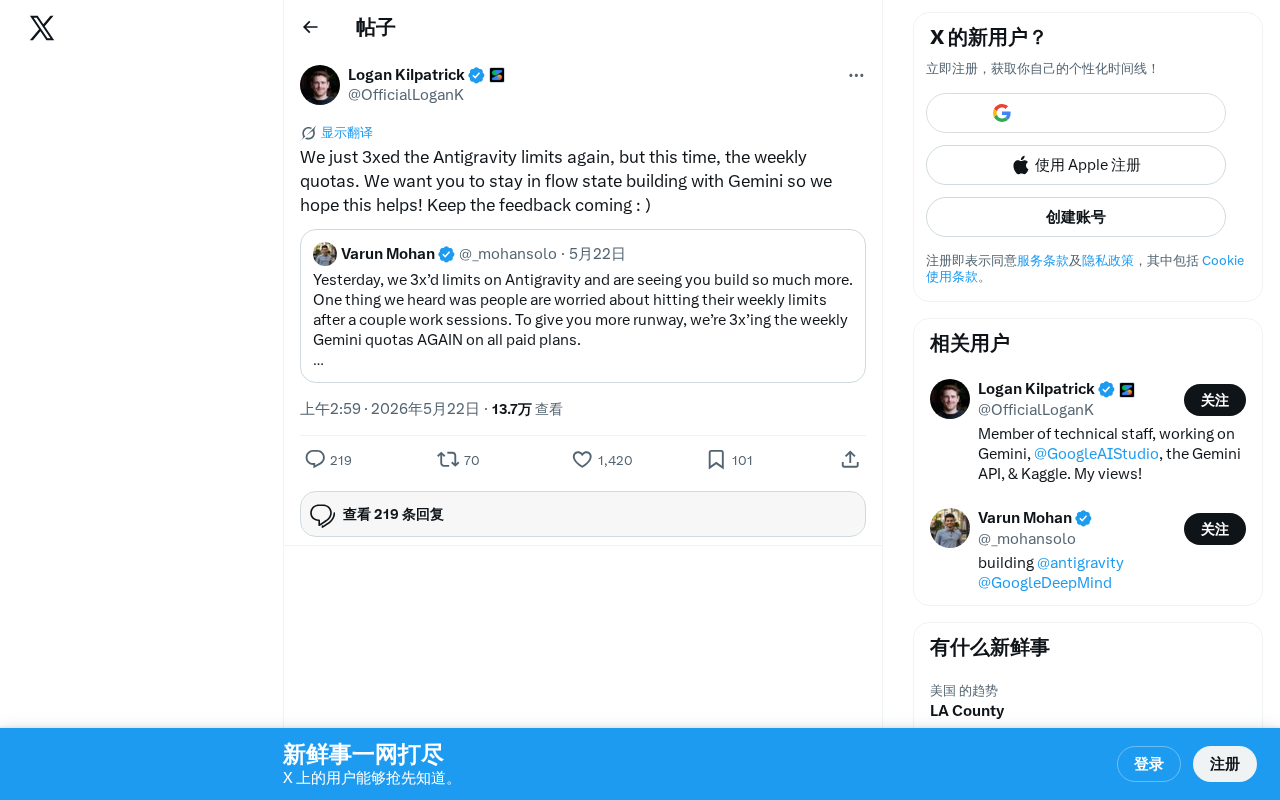
Google Gemini Antigravity Weekly Quota Tripled — AI Coding Without Limits
Google Gemini triples Antigravity weekly quotas following a prior daily quota boost. Analyzing the impact on developers and its strategic significance in AI coding.