The AI Programming Era: How Ordinary People Can Build Software with AI Tools and Monetize It
How ordinary people can use AI tools like Codex to build and monetize software products.
AI programming tools have dramatically lowered the barrier to software development. This article details a three-step approach for non-developers: identifying market needs, leveraging AI tools like Codex and Claude Code for development, and monetizing through platforms like Taobao and Xianyu. It also analyzes why model quality matters and why ordinary people may have unique advantages over professional developers in this new era.
The rapid evolution of AI programming tools is fundamentally reshaping the software development industry. Software projects that once required professional teams, substantial funding, and lengthy development cycles can now potentially go from idea to launch in a single evening — by an ordinary person armed with AI tools. This article examines the core changes AI has brought to software development, along with the opportunities and challenges ordinary people face in this new era.
Industry Upheaval: Full AI Integration Across Frontend and Backend
Looking back at software development workflows just a few years ago, a complete project required: an individual or company defining requirements → hiring a designer for the frontend → hiring a programmer for the backend → debugging and deployment → launch and operations. Every step demanded specialized talent and significant costs.
A real-world example: simply customizing a WordPress theme template cost 800 RMB and took two to three days of back-and-forth. Now, the same work can be completed in half an hour with zero coding background — with full control over every aspect of the layout, changing whatever you want.
The Frontend Design Revolution: Design platforms like Figma, Modao, and Stitch were once tools exclusively for professional designers — now they've fully integrated AI capabilities. Figma is a browser-based collaborative design tool that has long been the industry standard for UI/UX designers; Modao is a popular prototyping platform in China. In recent years, these tools have integrated generative AI features, with underlying technology primarily relying on multimodal large language models and diffusion models. You simply describe your requirements in a single sentence, and AI generates the entire page for you. This "natural language → interface" capability essentially transforms a user's text description into structured design elements (layouts, components, color schemes) via large models, then renders them into editable design drafts. This process involves the fusion of multiple technologies including Natural Language Understanding (NLU), design system knowledge graphs, and code generation. Emerging tools like Stitch go even further, generating interactive frontend pages directly from text descriptions, bypassing the traditional lengthy pipeline of design drafts → slicing → coding. The designer's work of assembling assets is being replaced by AI's end-to-end generation capabilities.
The Backend Development Revolution: Programmers' coding work is similarly being taken over by AI on a massive scale. You simply hand your design mockups to AI, tell it what functionality you want, and AI generates all the code. AI programming tools like Codex aren't simple chat boxes — they can enter a project, read code, modify files, run tests, and truly push ideas forward into executable code. It's worth noting that Codex here refers to the programming agent feature integrated into ChatGPT by OpenAI, representing a major leap in AI programming tools from "code completion" to "autonomous agent." Traditional AI coding assistance (like early GitHub Copilot) primarily provided line-level or function-level code suggestions within editors, with developers still driving the entire development process. As a coding agent, Codex can autonomously execute complete development tasks in a sandbox environment: it first reads the existing codebase to understand context, then plans an implementation approach based on user instructions, creates or modifies multiple files, and finally runs tests to verify results. This workflow is similar to a remote developer handling tasks asynchronously — users submit requirements and can walk away, returning to review results once Codex finishes.
The Three-Step Method for Ordinary People to Build Software
Since both frontend and backend can be delegated to AI, the core workflow for ordinary people doing software development has been dramatically simplified:
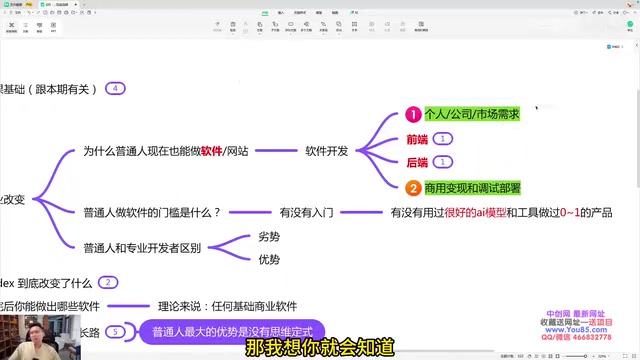
Step 1: Define the Requirements
This is one of the most important capabilities in the AI programming era. You need to clearly articulate your own requirements, or keenly identify unmet needs in the market. Extensive market exposure, studying existing product cases, understanding who needs what, whether current products meet those needs, and whether there's room for development — these are the real core competencies.
Step 2: Learn to Let AI Do It for You
Mastering AI programming tools is key. Once you've learned Codex, you can expand to other tools like Claude Code; domestic options like Doubao and Kimi can also be used collaboratively. A more advanced approach is to build a "multi-AI collaboration" workflow: have Codex write development requirements and plans, and have Kimi execute specific coding tasks.
This multi-AI collaboration model is a cutting-edge practice in current AI applications. The core idea is leveraging the respective strengths of different AI models for division of labor. For example, OpenAI's models excel at architectural planning and complex reasoning, Anthropic's Claude Code has unique advantages in code execution and long-context processing, while domestic options like Doubao (under ByteDance) and Kimi (under Moonshot AI) have their own strengths in Chinese language understanding and specific scenarios. In practice, users can have one AI write the PRD (Product Requirements Document) and technical plan, pass the output to another AI for actual coding, and even use a third AI for code review. This model essentially assigns the traditional software team roles of product manager, development engineer, and test engineer to different AI models, while the human plays the role of project director for overall coordination.
Step 3: How to Monetize After Building It
Debugging, deployment, and commercial monetization after product development is the final piece. If you want to monetize, you also need to know how to integrate commercial components like license key verification systems. A license key verification system (also known as a license authorization system or License Key System) is one of the foundational components for independent software commercialization. It works as follows: developers generate a unique activation code (license key) for each software product, users enter the key after purchase to activate it, and the system verifies the key's validity, usage count, and expiration period through server-side validation. This mechanism is very popular among independent developers and small software studios in China because it avoids the complexity of integrating sophisticated payment systems.
Selling through channels like Xianyu (Idle Fish), WeChat Official Accounts, and Taobao — whether doing custom work for others or selling your own products — are all viable monetization paths. Among these channels, Xianyu, originally a second-hand trading platform, has evolved into an important venue for independent developers to sell digital products and custom services; WeChat Official Accounts serve as private traffic entry points, attracting potential customers through content marketing; Taobao is suitable for developers with standardized products looking to sell at scale. Together, these channels form a complete ecosystem for domestic independent developers from product development to commercial monetization.
Tool Selection: Why Model Quality Matters
The key to getting started with AI programming isn't "whether you've used AI before" but "whether you've used a high-quality AI model to build a product from zero to one." The gap in model quality directly impacts the development experience and efficiency.
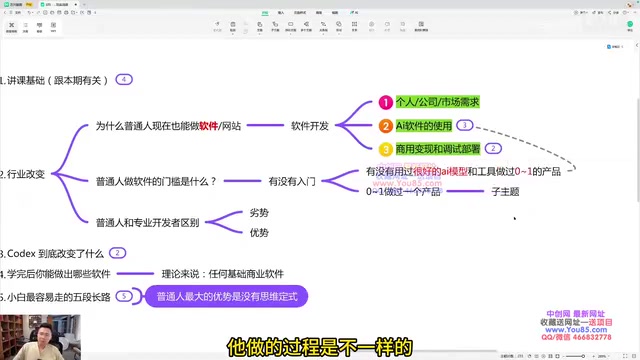
Pain Points of Low-End Models: When developing with ordinary models, you frequently encounter situations where "fixing something downstream breaks something upstream." For example, the first version has payment, articles, and login features working perfectly, but when the second version tries to add QR code login, the previous features break. This forces you to spend enormous effort on fixes, severely slowing development progress.
This problem is technically known as a "Regression Bug" and is a very typical pain point in AI programming. Its root cause lies in differences in large language models' context window limitations and long-range dependency processing capabilities. Low-end models have smaller context windows (possibly only 8K-32K tokens), and when project code exceeds their effective processing range, the model can't "remember" or fully understand the complete logic of existing features while modifying new ones, leading to destructive changes. Higher-end models (like OpenAI's o3 series) not only have larger context windows (up to 128K-200K tokens), but more critically possess stronger "chain of reasoning" capabilities — they analyze the potential impact scope of changes before modifying code, similar to how experienced programmers do impact assessments before making changes. Additionally, Codex's agent mode automatically runs test suites to detect regression issues, further reducing the risk of breaking existing functionality.
Codex's Advantages: As OpenAI's official AI programming tool, Codex can use the latest high-end models with intelligence levels adjustable to ultra-high. It relies on OpenAI's latest reasoning models (such as the o3/o4-mini series), which possess stronger long-chain reasoning and code comprehension capabilities. In comparison, other platforms may only have access to slightly lower-tier models. While the gap may seem small, the experience difference becomes very noticeable in complex projects.
Cost-Effectiveness Analysis
Codex's pricing model is also quite friendly:
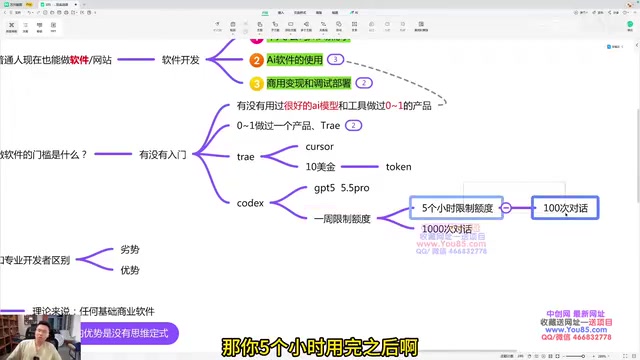
- Base models are essentially free to use, completely sufficient for beginners and lightweight projects
- Quota recovers on a time-window basis: five-hour cycles and weekly major cycles, with automatic recovery after depletion
- Plus version is about 130 RMB/month, sufficient for regular use; Pro version is about 800 RMB/month, suitable for heavy users
Let's look at this from another angle: for 800 RMB per month, you get a developer working 24/7, a strategist providing professional advice on demand, and a designer creating graphics whenever you need them. From a boss's perspective, this cost is practically negligible. More importantly, AI can accomplish in one hour what a human employee might take days or even a month to complete.
Advantages and Disadvantages: Ordinary People vs. Professional Developers
The biggest disadvantage is not knowing professional terminology. When communicating with AI and troubleshooting issues, the lack of specialized knowledge does create some obstacles. Understanding computer languages and code is a plus, but in the AI programming era, it's no longer a prerequisite.
The biggest advantage, however, is precisely "having no technical baggage and not going down rabbit holes":
- Not insisting on "using a specific architecture to complete the project"
- Not obsessing over "tracking down exactly where the problem is"
- Not forcing yourself to "understand the logic of every single line of code"
- Not stressing over "whether the code is elegant enough"
These qualities, traditionally considered professional virtues in software development, can actually become stumbling blocks to efficiency in the AI programming era. This comparison touches on a deep paradigm shift in the software industry. Traditional software development follows a "technology-driven" model: first determine the technical architecture, then choose the tech stack, and build the product according to software engineering best practices (code reuse, design patterns, performance optimization). In this model, code quality and architectural elegance are considered core values.
The AI programming era has given rise to a "demand-driven" model: core value has shifted to the speed of market insight and product iteration efficiency. This aligns closely with the Lean Startup methodology — first validate market hypotheses quickly with a Minimum Viable Product (MVP), then iterate based on user feedback. In this model, whether the code is elegant or the architecture is perfect is secondary; what matters is whether you can quickly deliver the features users actually need. This also explains why "having no technical baggage" becomes an advantage — people unburdened by technical perfectionism can often complete the transformation from idea to product much faster.
Product manager thinking is more suited to this era than programmer thinking — discover a market need today, develop tonight, launch the product tomorrow, start profiting the day after. From discovering a need to monetizing a product, it might just be one evening's work.
Conclusion
The maturation of AI programming tools has transformed software development from a high-barrier professional field into a new arena where "market insight" and "AI tool proficiency" are the core competencies. Ordinary people don't need to become coding experts — they just need to continuously improve in three areas: constantly understanding market demands, flexibly using AI programming tools, and mastering product commercialization pathways.
This isn't something that happens overnight — it's a process of continuous improvement. But the barrier to entry has never been lower.
Related articles
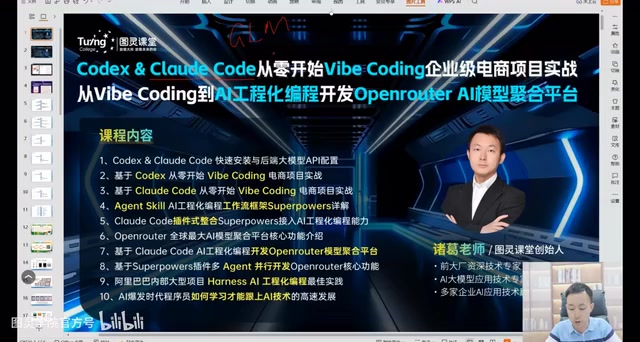
Codex + Claude Code in Practice: From Vibe Coding to Enterprise-Grade AI Engineering
A deep dive into Codex and Claude Code for real-world AI programming—from Vibe Coding prototypes to Plan mode and SuperPAL engineering, with LLM selection strategies and enterprise workflows.

Hands-On Tutorial: Building an AI Trending News Dashboard from Scratch with Claude Code
Learn to build an AI trending news dashboard from scratch with Claude Code — no coding required. Covers CC setup, domestic model integration, and full-stack development.
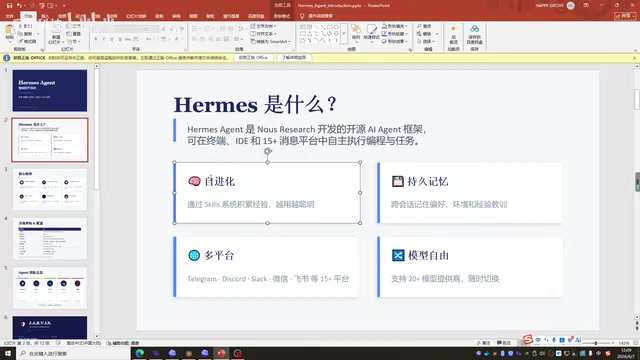
HAMAS Multi-Agent Framework in Practice: A Guide to Building 5 AI Personas Working in Harmony
Learn how to build a multi-Agent AI team with the HAMAS framework: 5 role configurations, Skill mechanisms, gradient model scheduling, and solutions for AI hallucination and deception.