The Five-Tier Pyramid of IT Careers in the AI Era: Your Position Determines Your Career Ceiling
The Five-Tier Pyramid of IT Careers in…
AI-era IT careers form a five-tier pyramid — your position determines your career ceiling.
The AI era is stratifying IT careers into five distinct tiers: AI tool usage, Agent development, large model API integration, model fine-tuning/private deployment, and self-developed large models. Each tier has different barriers, learning costs, and career prospects. With AI application skills learnable in ~60 days, the window of opportunity is narrowing fast — IT professionals must identify their tier and act immediately.
AI Is Reshaping the IT Career Landscape
As more companies require employees to use AI-assisted workflows, and as traditional programmer job postings continue to shrink, an unavoidable reality confronts all IT professionals: The IT industry in the AI era is rapidly stratifying, and the tier you occupy will directly determine your career ceiling.
Recently, Bilibili creator "码士集团" (Code Group) published an in-depth analysis of the AI-era IT employment landscape, dividing AI-related job positions into five distinct tiers and offering practical career advice for professionals with different educational backgrounds. This analysis strikes at the core anxiety of many programmers and IT professionals today — it's not whether AI will replace you, but which tier you should be standing on.
The Five-Tier Pyramid of AI Job Positions
Tier 1: AI Tool Usage — Lowest Barrier, Essential for Everyone
This is the base of the pyramid and the tier everyone should embrace immediately. Whether you're a programmer, designer, or content creator, learning to use AI to assist your work is no longer optional — it's mandatory.
This tier requires no AI technical background. The core is about building the mental habit of "thinking about AI tools first when encountering a problem." A wealth of entrepreneurial opportunities based on AI tool usage has already emerged: AI-generated novels, AI-created comic dramas, AI virtual IPs, and more. According to the analysis, in the AI comic drama space alone, multiple startup teams of around a dozen people have secured investment, with the largest single round reaching 20 million RMB.
A typical example: someone used AI to transform a real actor's image into a virtual IP, accumulated a large following on social platforms, and then monetized through advertising and e-commerce. This demonstrates that opportunities at the AI tool usage level are far richer than most people imagine. The current mainstream AI tool ecosystem covers virtually all content formats — text generation (ChatGPT, Claude), image creation (Midjourney, Stable Diffusion), video generation (Runway, Kling), audio synthesis (ElevenLabs) — and the combined use of these tools is giving rise to entirely new content production pipelines.
Tier 2: AI Agent Development — Entry Point for Intelligent Applications
AI Agent development is the first step into professional AI positions. An Agent refers to an AI system capable of perceiving its environment, making decisions, and autonomously executing tasks. Unlike traditional single-turn Q&A AI, Agents possess memory, planning, and tool-calling capabilities, enabling them to decompose complex tasks into multiple steps and complete them sequentially. Current mainstream Agent development frameworks include LangChain, AutoGPT, CrewAI, and others, which provide standardized toolchains allowing developers to build fully functional intelligent agent applications without deeply understanding the underlying model principles.
An interesting example: a developer built a "dating advice" agent — users input basic information about their target (height, occupation, zodiac sign, personality, etc.), and the AI provides specific pursuit strategies and suggestions. While such Agents have a low technical barrier, they genuinely address market demand.
On the enterprise side, Agent applications are even more widespread: government service window guidance, internal corporate Q&A systems, business process automation, and more. Agent development itself is relatively the simplest type of AI development, making it an ideal entry point for those transitioning into AI. Notably, the core difficulty of Agent development often lies not in code implementation but in the logical design of task decomposition and fine-tuning of Prompts — how to maintain consistency and accuracy across multi-step execution is what separates junior from senior Agent developers.
Tier 3: Large Model API Integration Development — The Core of Business Implementation
The core of this tier is calling existing large model APIs to solve specific business problems. Large model API integration refers to the development pattern of sending requests to cloud-deployed large language models via HTTP interfaces and receiving responses. Current mainstream API providers include OpenAI (GPT series), Anthropic (Claude series), Google (Gemini series), as well as domestic providers like Baidu's ERNIE, Alibaba's Tongyi, and Zhipu's GLM.
For example, to build an intelligent customer service system for an enterprise, developers don't need to train a model from scratch — they call an existing model's API and embed it into the business system. In this process, developers typically need to master several core technologies: Prompt Engineering (carefully designing input prompts to guide model output toward desired results), RAG (Retrieval-Augmented Generation — combining enterprise private knowledge bases with large models by retrieving relevant documents before generating answers to improve accuracy), and Function Calling (enabling large models to invoke external tools and APIs to complete specific operations).
Compared to Agent development, large model API integration requires more technical preparation: understanding API calling methods, parameter passing logic, and fundamental principles of large models. But essentially, for programmers, this is equivalent to learning a new technical framework — it just happens to be called "AI." RAG architecture is one of the most critical technical solutions in enterprise-level AI applications today. It stores enterprise documents in vector databases, retrieves the most relevant content fragments when users ask questions, and passes them as context to the large model, dramatically reducing model "hallucinations" (fabricating non-existent information). This is why developers who master RAG technology are particularly sought after in the market.
Tier 4: AI Model Fine-tuning and Private Deployment — The Deep End of the Industry
When general-purpose large models cannot meet specific industry needs, fine-tuning and private deployment based on open-source models become necessary. This is one of the fastest-growing demand areas in the current market.
Model fine-tuning refers to secondary training of a pre-trained large model using domain-specific datasets to make the model perform more professionally in that domain. Common fine-tuning methods include Full Fine-tuning, LoRA (Low-Rank Adaptation), QLoRA (Quantized Low-Rank Adaptation), and others. LoRA has become the most popular fine-tuning approach because it significantly reduces memory requirements and computational costs — it inserts low-rank decomposition matrices into the model's weight matrices, training only a minimal number of parameters while achieving results close to full fine-tuning. Private deployment involves model quantization, inference optimization, GPU cluster management, and other engineering capabilities, typically requiring mastery of high-performance inference frameworks like vLLM and TensorRT-LLM.
Typical application scenarios include:
- Legal industry: General models lack deep understanding of legal provisions and need retraining with private legal data to accurately cite statutes and understand case law logic
- Medical industry: Training specialized diagnostic models with large volumes of medical imaging data to assist doctors in preliminary screening of CT, MRI, and other imaging
- Academic field: For paper writing, making models prioritize real literature references to avoid the "fabricated citations" problem
A notable detail: many job postings labeled "Algorithm Engineer" on recruitment websites are actually doing work at this tier — personalized fine-tuning and deployment on existing models, rather than true algorithm R&D. Current mainstream open-source base models include Meta's LLaMA series, Alibaba's Qwen series, and Zhipu's GLM series, which provide solid starting points for fine-tuning work.
Tier 5: Self-developed Large Models — The Pyramid's Apex, A Battlefield for the Few
This is the realm of true AI algorithm engineers and a tier that the vast majority of people cannot reach. Developing large models from scratch requires two simultaneous conditions: massive funding and top-tier talent — and the number of enterprises that can satisfy both conditions can be counted on one hand.
From a resource threshold perspective, taking a GPT-4-level model as an example, a single training run requires tens of thousands of high-end GPUs (such as NVIDIA A100/H100) running for months, with computing costs alone potentially reaching hundreds of millions of dollars. Additionally, it requires PB-scale high-quality training data, research teams of hundreds, and deep expertise in cutting-edge areas like Transformer architecture, distributed training, and RLHF (Reinforcement Learning from Human Feedback). Domestically, enterprises with this capability are concentrated among a few leading institutions: ByteDance, Alibaba, Baidu, Tencent, Zhipu AI, DeepSeek, and others.
From an educational threshold perspective: a master's degree in algorithms or mathematics from a 211-tier university is merely "barely touching the edge" — core team members and leaders are essentially PhDs and master's graduates from 985-tier universities. A single large model training run can cost over 100 million RMB, far beyond what small and medium enterprises can afford.
Therefore, while job opportunities at this tier offer extremely high compensation (core R&D personnel typically earn annual salaries exceeding one million RMB), positions are limited and competition is fierce. For the vast majority of practitioners, focusing energy on the first four tiers is the pragmatic choice.
Learning Costs and the Window of Opportunity: Is It Too Late to Start Now?
AI's Learning Barrier Is Far Lower Than You Think
A crucial insight: The learning difficulty of AI at the application level is far lower than traditional development. Learning Java from zero to architecture level takes far more than one to three months — you need to master JVM principles, the Spring ecosystem, distributed systems, microservices architecture, and a vast body of knowledge. But learning AI application development (the first four tiers) involves approximately 200 hours of course content, and at a pace of 2-3 hours per day, you can reach entry level in about 60 days.
The reason behind this is that the core work of AI application development is "assembly" rather than "creation" — the large model itself has already encapsulated extremely complex capabilities, and what developers need to do is understand how to correctly invoke and orchestrate these capabilities. This is fundamentally different from traditional development, where you need to build systems step by step from the ground up.
What does this mean? It means AI skills will spread very quickly. Currently, there's a significant gap in job opportunities and competitiveness between programmers who have mastered AI skills and those who haven't. But as more people rapidly acquire these skills, this window of opportunity is narrowing. Historical experience shows that the biggest beneficiaries of technology dividends are invariably the earliest practitioners — just like programmers who learned mobile development around 2010, and entrepreneurs who entered the WeChat ecosystem around 2014.
Traditional Positions Are Being Replaced
Market data already shows a clear trend: pure traditional programmer job postings continue to decrease, while positions requiring AI capabilities as part of a composite skill set are growing. Agent development and API integration skills at Tiers 2 and 3 are shifting from "nice-to-have" to "must-have."
Specifically, AI's impact on traditional positions follows a clear pattern: jobs that are highly repetitive, rule-based, and low in creativity are affected first. Junior front-end development, basic CRUD back-end development, simple testing work, and standardized operations roles are seeing their demand significantly compressed by AI tools. Meanwhile, positions requiring deep understanding of business logic, system architecture design, and complex interpersonal communication are actually becoming more valuable in the short term thanks to AI empowerment.
A Rational View of AI: Optimists Create Value
Facing the transformation brought by AI, two diametrically opposed attitudes exist. Pessimists focus on infringement, security, and ethical issues — these concerns are indeed valid. Copyright ownership of AI-generated content, the abuse risks of deepfakes, and discrimination caused by algorithmic bias all urgently need resolution. But optimists are already using AI tools to create value and find opportunities.
As the analysis states: "Pessimists are always right, but optimists are already making money." Every technological revolution — the internet, smartphones — follows the same pattern: conservatives appear correct but miss opportunities, while the open-minded may make mistakes but are more likely to capture dividends. Looking back at history, those who questioned the commercial value of the internet in 1995 were "correct" (there was indeed no mature business model at the time), but the wealth created by the internet after 2000 far exceeded everyone's imagination. Those who questioned whether the iPhone could replace keyboard phones in 2007 were also "correct" (early iPhones were indeed rough around the edges), but mobile internet ultimately reshaped the entire business world.
As the capabilities of underlying large models continue to strengthen, upper-layer application scenarios will emerge endlessly. If breakthroughs are achieved in physical world perception — for example, Embodied AI enabling robots to understand and manipulate physical environments like humans — and hardware keeps pace, AI application scenarios will grow exponentially, giving rise to entirely new professions and industry forms that we cannot imagine today.
Find Your Tier and Take Action Immediately
For IT professionals, the urgent priority is not agonizing over whether AI will replace programmers, but clearly recognizing which tier you should be standing on, and then taking immediate action. 99% of people should focus on the application level, treating AI as a tool for improving efficiency and expanding capability boundaries. Rather than passively learning when AI skills become the industry's default requirement, it's better to proactively embrace them now and build your competitive advantage while the window of opportunity remains open.
Specific action recommendations: If you have a non-technical background, start from Tier 1 and immediately integrate AI tools into your daily workflow. If you're a junior programmer, spend 1-2 months mastering Agent development and API integration (Tiers 2 and 3) — this will be your highest-ROI skill investment. If you're a developer with 3+ years of experience, dive into Tier 4 and learn model fine-tuning and private deployment — this direction has the largest talent gap and highest salary premium. Regardless of your current stage, there's only one core principle: Don't wait — start now.
Related articles
Anthropic London Developer Conference: Claude Model Upgrades, Enterprise Agent Platform, and Developer Tools Fully Evolved
Anthropic's first London Code with Claude event unveiled Opus 4.7, Mythos, Cloud Managed Agents, Claude Code Routines, and more for AI-assisted development.
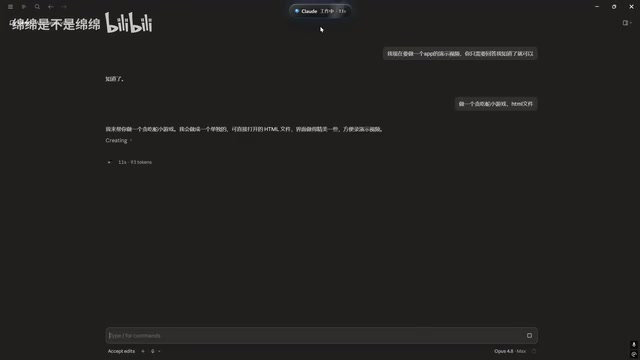
Claude Code Desktop Status Capsule: An Open-Source Widget for Real-Time AI Coding Status Monitoring
An open-source desktop status capsule that monitors Claude Code's idle, working, and completed states in real time, with multi-conversation management, memos, and music control for developers.
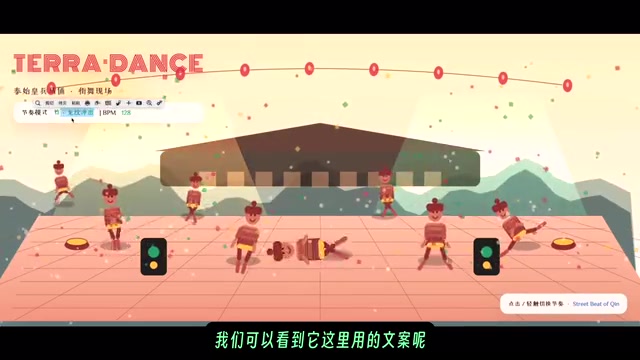
GPT-5.2 Codex vs Opus 4.5 Hands-On: A Comprehensive Comparison of Coding Ability, Speed, and Developer Experience
Hands-on comparison of GPT-5.2 Codex vs Opus 4.5 across frontend generation, physics simulation, 3D scenes, and code refactoring, with practical selection advice.