The Gaming DNA of an AI Game Team: From Battle City to Fruit Ninja
The Gaming DNA of an AI Game Team: Fro…
AI game team members' gaming origins span 30 years, with diverse backgrounds fueling development innovation
Members of an AI game development team shared their earliest gaming experiences, spanning nearly 30 years from 1985's Battle City to 2014's Fruit Ninja. The interview also revealed heartwarming stories about fathers introducing Chinese Paladin and helping steal virtual crops, plus an amusing anecdote about racing game skills transferring to real driving. This diverse gaming background provides the team with cross-generational design inspiration and a unique advantage in AI game development.
What were the first games that members of an AI game development team ever played? A casual office interview revealed the fascinating "gaming DNA" behind this group of tech professionals — some trace their gaming memories back to the NES era, while others are native to mobile gaming. This decades-spanning difference in gaming experience may well be their unique advantage in developing AI games.
Gaming Origins Spanning Three Decades
This interview came from the daily life of an AI game development team. When asked "What was the first game you ever played?", the range of answers from team members was astonishing.
Some immediately named Delta Force and Need for Speed: Porsche Unleashed — two classic PC games from 1998 and 2000 respectively, which were the hottest titles in internet cafés back in the day. Others mentioned the even more ancient Battle City, a 1985 FC (Famicom) game that prompted colleagues to joke about sending them "back to the Jurassic Museum" as a "living fossil."
About the FC (Famicom) and Battle City: Battle City was released in 1985, developed by Namco for Nintendo's FC platform (also known as the Famicom, or Family Computer). The FC launched in Japan in 1983 and entered the Chinese market around 1985 through various channels, later achieving massive household penetration in China through clone consoles like the "Subor Learning Machine." Games of this era ran on 8-bit processors with pixel-based graphics, yet it was precisely this simple two-player cooperative combat mode that cemented Battle City's unshakeable position in the hearts of several generations of Chinese gamers.

The younger generation on the team gave completely different answers. One member said their first game was Fruit Ninja, and they didn't start playing until 2014 — prompting veteran gamers to exclaim, "What a baby!"
About Fruit Ninja and the Rise of Mobile Gaming: Fruit Ninja was released in 2010 by Australia's Halfbrick Studios and became one of the iconic early smartphone touchscreen games. Its core mechanic was extremely simple — swipe your finger across the screen to slice flying fruit — perfectly leveraging the interactive characteristics of touchscreen devices. It also represented an important philosophy in mobile game design: creating intuitive experiences through hardware features. Around 2014, as smartphones became widely adopted in China, a massive wave of users who had never touched console or PC games entered the gaming industry through casual titles like Fruit Ninja and Angry Birds, becoming what's known as "mobile gaming natives."
From 1985 to 2014, nearly thirty years of gaming origin stories, all compressed into a single office.

Heartwarming Stories Behind Gaming Memories
Beyond the games themselves, the stories surrounding them were even more interesting.
One team member recalled how their father introduced them to Chinese Paladin: Legend of Sword and Fairy as a child. This 1995 Chinese RPG classic carried not just gaming memories, but a precious father-son bonding experience.
About Chinese Paladin and the Golden Age of Chinese RPGs: Chinese Paladin: Legend of Sword and Fairy was released in 1995 by Taiwan's Softstar Entertainment. It stands as a milestone in Chinese-language RPG history, deeply fusing Chinese classical mythology and martial arts culture with Japanese-style turn-based combat systems, creating the unique genre of "Chinese immortal-hero RPGs." The game's main storyline — the love tragedy between Li Xiaoyao and Zhao Ling'er — moved countless players to tears and made "Chinese Paladin" a shared cultural symbol for an entire generation. Its success directly spawned the ongoing Chinese Paladin series and profoundly influenced narrative styles across the entire Chinese-language gaming industry.
Another member shared what colleagues dubbed an "OG boosting service" story: back in school, his father had a light workload and would steal crops for him during office hours (referring to QQ Farm/Happy Farm, the wildly popular social farming games of that era). As a result, he became the highest-level player in his class. This "dad plays games for you" arrangement was crowned by colleagues as "the true pioneer of game boosting."
About QQ Farm and Happy Farm: China's Social Gaming Craze: Between 2008 and 2010, social farming games led by Happy Farm (developed by Five Minutes) and Tencent's QQ Farm swept across the Chinese internet, becoming one of the most representative social phenomena on the eve of China's mobile internet era. Players needed to log in at scheduled times to plant and harvest crops, and could "steal" mature crops from friends' farms — a design that deeply bound social relationships to game mechanics. At its peak, Happy Farm had over 30 million daily active users, and the term "stealing crops" even made it onto annual trending vocabulary lists. This nationwide craze forced companies to issue regulations restricting employees from logging into farming games during work hours — this member's father was clearly one who slipped through the cracks.

The Unexpected Transfer of Gaming Skills
The interview also featured a particularly entertaining segment: one member mentioned that when getting their driver's license, the instructor was amazed at how skilled they were behind the wheel and asked if they had driven before or previously held a license. Their answer was — "No, but I'm really good at QQ Speed, and I passed my driving test on the first try."
This seemingly joking answer actually touches on a fascinating topic: Can gaming experience transfer to real-world skills?
Scientific Basis for Gaming Skill Transfer: This question has substantial research support in cognitive science. Multiple studies have shown that long-term action video game players perform better in visual attention, spatial reasoning, and hand-eye coordination. Research on racing games has found that players do exhibit positive transfer effects in speed perception, hazard anticipation, and muscle memory for steering control. Professor Daphne Bavelier at the University of Rochester has conducted long-term research on gaming's impact on cognitive abilities, with her team finding that action game players have significant advantages in rapid decision-making and multitasking. Of course, fundamental differences remain between game driving and real driving in terms of physical feedback and risk perception, but the training effects of racing games like QQ Speed on spatial awareness and speed judgment are not without scientific basis.
While racing games and real driving are fundamentally different, abilities like spatial perception, reaction speed, and speed judgment can indeed be trained to some degree through gaming.

How Diverse Gaming Backgrounds Empower AI Game Development
From the Famicom to mobile devices, from single-player RPGs to social farming games, from racing games to casual fruit-slicing — this AI game team's members collectively cover virtually every major stage of Chinese gaming history.
This diverse gaming background is actually a rare asset for an AI game development team. Game design philosophies, interaction methods, and user experiences from different eras can all serve as sources of inspiration for AI gaming innovation. Understanding the evolutionary arc from the pixel era to AAA titles enables better thinking about how AI technology will reshape the next generation of gaming experiences.
The Deep Value of Diverse Gaming Backgrounds for AI Game Development: In the field of AI game development, the historical span of team members' gaming experiences isn't merely an interesting cultural difference — it carries substantial engineering and design value. One of the core challenges in game AI is how to make systems understand and generate gaming experiences that meet different players' expectations — and player expectations themselves are highly historicized products. Members familiar with 8-bit era design philosophy understand why "difficulty curves" and "instant feedback" are the foundation of game retention; those who lived through the social gaming era have intuitive understanding of "viral spread mechanisms" and "asynchronous multiplayer interaction"; mobile gaming natives naturally grasp the importance of "session-based design." When AI technology begins handling tasks like level generation, NPC behavior, and dynamic difficulty adjustment, this collective gaming memory spanning thirty years effectively constitutes an irreplicable training dataset — only stored in human brains rather than on servers.
When "Jurassic players" and "Gen-Z players" sit in the same office making games with AI, the sparks they create may be exactly what this industry needs most — understanding the classics while embracing the future.
Key Takeaways
- The AI game team members' gaming origins span nearly 30 years, from 1985's Battle City to 2014's Fruit Ninja
- Team members shared heartwarming gaming memories like fathers introducing them to Chinese Paladin or helping steal crops
- Diverse gaming backgrounds provide cross-generational design inspiration for AI game development
- The transfer of gaming skills to real-world abilities sparked interesting discussion, such as the connection between QQ Speed and actual driving
- Cognitive science research shows that spatial perception and decision-making abilities trained through gaming have real-world transfer effects
Related articles
 Tech Frontiers
GitHub Agent HQ Launch: AI Coding Tools Enter the Era of Platform Competition
GitHub Universe unveils Agent HQ platform for unified coding agent management, Copilot upgrades with multi-model support. OpenAI completes restructuring, Anthropic tests new model, NVIDIA open-sources AI models.
 Tech Frontiers
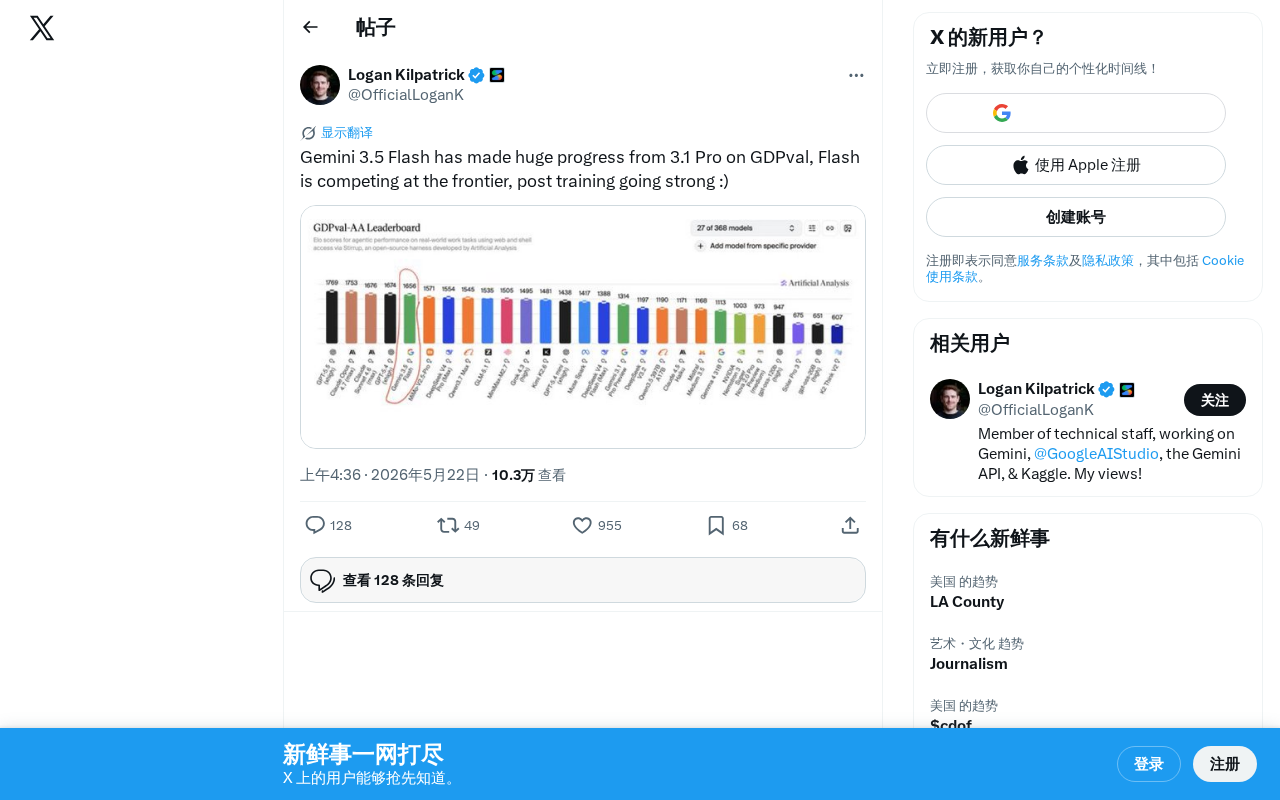
Gemini 3.5 Flash Achieves a Massive Leap on the GDPval Benchmark
Google Gemini 3.5 Flash surpasses Gemini 3.1 Pro on the GDPval benchmark. The lightweight Flash model leverages post-training techniques to approach frontier-level performance, redefining the balance between quality and cost.
 Tech Frontiers
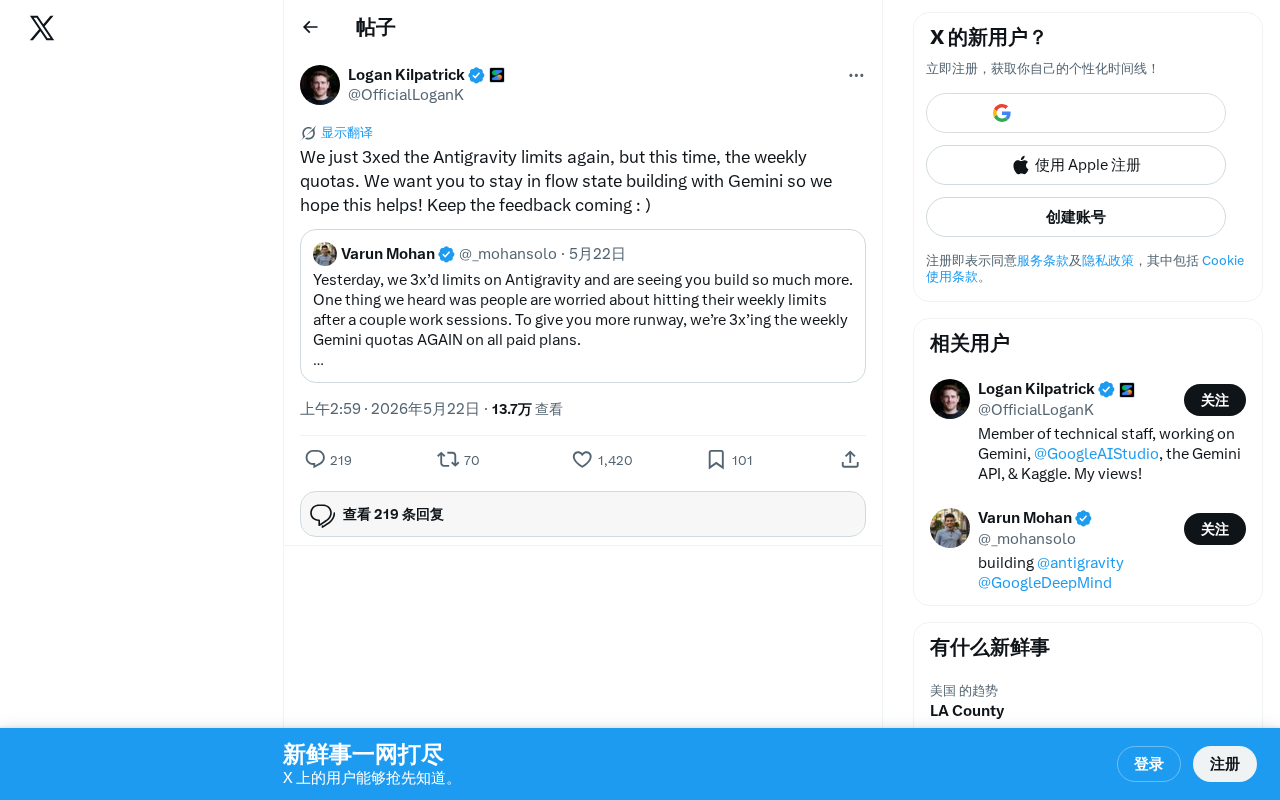
Google Gemini Antigravity Weekly Quota Tripled — AI Coding Without Limits
Google Gemini triples Antigravity weekly quotas following a prior daily quota boost. Analyzing the impact on developers and its strategic significance in AI coding.