Top Cambridge Lecture: Why Quantum Mechanics' Century-Long Impact May Far Exceed AI's
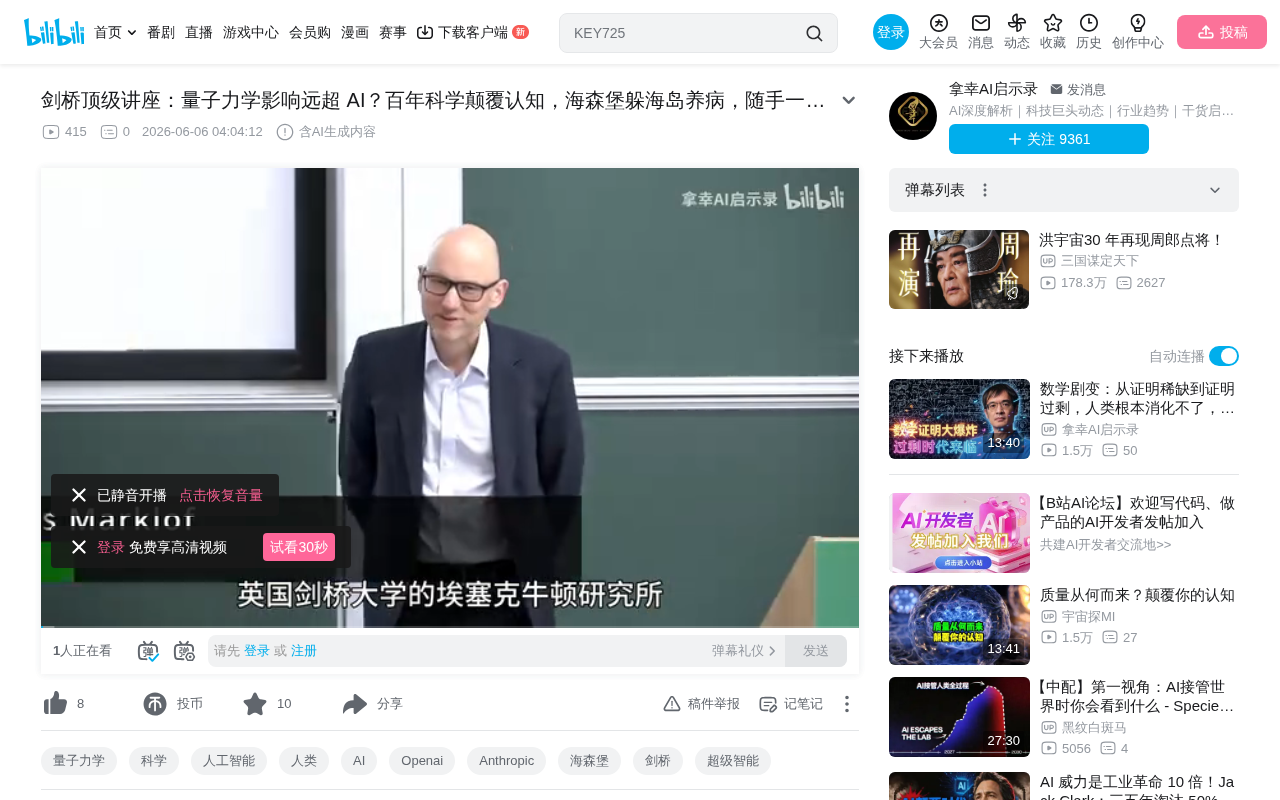
Cambridge lecture argues quantum mechanics' century-long civilizational impact may ultimately exceed that of AI.
At a 2024 Rothschild Lecture at Cambridge's Newton Institute, Professor Jens Marklof of the University of Bristol argued that quantum mechanics has spent a century reshaping every corner of modern civilization — from semiconductors and lasers to nuclear energy — and that AI's ultimate impact remains uncertain by comparison. He traced the field's origins through Heisenberg, Schrödinger, and Dirac, clarified Einstein's actual stance, and warned that concentrating all research funding on AI and quantum computing risks missing the next revolution from an unexpected field.
On May 19, 2024, the Isaac Newton Institute at the University of Cambridge hosted a prestigious Rothschild Open Lecture. The speaker, Professor Jens Marklof, posed a thought-provoking argument: in an era where AI dominates every headline, it's all the more necessary to reflect on quantum mechanics as a century-long scientific revolution — because it has reshaped virtually every detail of modern life, while whether AI can achieve equally profound impact remains to be seen.
Lecture Background and Speaker Introduction
The Rothschild Open Lecture series dates back 34 years to the founding of the Newton Institute, and has always invited the world's most distinguished scientists and mathematicians. The speaker for this session, Jens Marklof, is Dean of the Faculty of Science at the University of Bristol and former President of the London Mathematical Society. His research spans dynamical systems, quantum chaos, random matrices, and other frontier areas.
Marklof's academic credentials are remarkable: he conducted postdoctoral research at the Institute for Advanced Study in Princeton, delivered a plenary lecture at the International Congress of Mathematical Physics in 2009, was invited to the International Congress of Mathematicians in Seoul in 2014, and was elected Fellow of the Royal Society in 2015. He has received numerous prestigious honors including a European Research Council Advanced Grant and the Royal Society Wolfson Research Merit Award.
Quantum Mechanics vs. Artificial Intelligence: Which Has Greater Impact?
Marklof stated plainly at the outset: we don't yet know how artificial intelligence will transform society in the future. But quantum mechanics has spent a century proving that it has reshaped virtually every corner of modern civilization. He even expressed uncertainty about whether AI could ultimately achieve the same depth of impact as quantum mechanics.
This assessment is far from unfounded. From nuclear power generation to semiconductor chips, from laser communications to medical imaging, from solar cells to LED lighting — the technologies that form the infrastructure of modern society are all products of quantum mechanics. Ironically, today's hottest AI itself is built upon chip technology born from quantum mechanics.
The Birth of Quantum Mechanics: Legendary Stories of Three Geniuses
Heisenberg: A 15-Page Paper Written While Recovering on an Island That Changed Physics
In June 1925, the 23-year-old Heisenberg traveled to the island of Helgoland in the North Sea to recover from severe hay fever. This rocky island with sparse vegetation allowed him to escape distractions and think deeply. Just one month later, he submitted a 15-page paper that completely altered the trajectory of physics.
Heisenberg's core idea was extraordinarily bold: theory should only describe physically observable quantities. He abandoned the concept of electron orbits from the Bohr model — since trajectories cannot be observed, they should not be included in the theoretical framework. The mathematical relations he derived were later identified by his friend Max Born as matrix operations. The non-commutative property of matrix multiplication became the defining hallmark that distinguishes quantum mechanics from all classical theories.
Schrödinger: The Wave Equation Born in a Sanatorium
In 1926, Schrödinger, who had long suffered from tuberculosis, retreated to a sanatorium in the Swiss Alps to recuperate. There, he published four consecutive papers introducing the famous Schrödinger equation. The equation incorporated the imaginary unit i, and its solutions contained imaginary numbers — highly unusual at the time. But because physicists were familiar with solving wave equations, the community quickly accepted the theory.
Schrödinger also proved that his wave mechanics was mathematically equivalent to Heisenberg's matrix mechanics, bringing renewed attention to the latter. The square of the wave function represents the probability of observing a particle — this is the famous Copenhagen interpretation.
Dirac: Pure Theoretical Derivation Predicting the Existence of Antimatter
With his profound mathematical prowess, Dirac derived the Dirac equation, which is consistent with the principles of relativity. The "antiparticle" concept corresponding to the latter two wave function components was completely beyond the understanding of the time. Heisenberg even described it as "the most bewildering and sorrowful chapter in the history of modern physics." It wasn't until the positron was experimentally confirmed that everything fell into place. In 1933, Dirac and Schrödinger shared the Nobel Prize in Physics.
Einstein Did Not Oppose Quantum Mechanics
Marklof specifically clarified a widespread misconception: many people believe Einstein rejected quantum mechanics, which is completely contrary to the facts. Einstein was a crucial founding figure in the development of quantum mechanics — his Nobel Prize-winning work was on the photoelectric effect, which is one of the core cornerstones of quantum theory.
What Einstein opposed was the Copenhagen interpretation's conclusion that "the objective world is fundamentally governed by probability." His famous quote "God does not play dice" expressed philosophical dissatisfaction, not a rejection of quantum mechanical theory itself.
The Technological Revolution Spawned by Quantum Mechanics
Marklof systematically reviewed the key technological transformations brought about by quantum mechanics:
Nuclear Technology: From the discovery of nuclear fission in 1938, to the first nuclear explosion in 1945, to widespread civilian applications including nuclear power generation, medical diagnostics (PET scans, radiation therapy), and industrial inspection.
Semiconductor Technology: The invention of transistors and integrated circuits relied entirely on band theory from quantum mechanics. Without quantum mechanics, there would be no computers, smartphones, internet, and certainly no artificial intelligence.
Optoelectronic Technology: Solar cells exploit the photoelectric effect discovered by Einstein; the invention of blue LEDs made high-brightness white lighting possible; laser technology is based on the stimulated emission principle proposed by Einstein, with applications spanning fiber-optic communications, medical surgery, and industrial cutting.
Quantum Computing: Once a practical quantum computer capable of running Shor's algorithm is built, existing public-key cryptography systems will be completely broken.
From Order to Chaos: Frontier Research in Quantum Chaos
The second half of the lecture focused on the frontier field of quantum chaos. The core of classical chaos is the "butterfly effect" — tiny changes in initial conditions leading to enormous deviations in outcomes. But Heisenberg pointed out that observable particle trajectories don't exist in the quantum world, so how can chaos — defined in terms of trajectories — exist in quantum systems?
Eugene Wigner proposed a breakthrough approach: treating the high-dimensional matrices describing complex atomic nuclei as random matrices and studying the statistical distribution of their energy spectra. The remarkable agreement between theoretical predictions and experimental data caused a sensation in the scientific community.
The famous Berry-Tabor conjecture distinguishes two types of systems: the energy level spacings of integrable systems follow a Poisson distribution, while chaotic systems follow the Wigner distribution predicted by random matrix theory. Marklof and his collaborators recently proved this conjecture for quantum particles in a three-dimensional rectangular box, achieving an important breakthrough.
A Warning for Current Research Policy
During the Q&A session, Marklof issued an important reminder: countries today are generally concentrating resources on AI and quantum technology, which is certainly justified, but they must also maintain support for other fundamental disciplines. Disruptive major breakthroughs can always emerge from seemingly obscure fields — just as quantum mechanics a century ago began as nothing more than pure curiosity-driven exploration by a few scientists.
He also joked self-deprecatingly that in 1997, while at the Newton Institute, he attended a talk by Geoffrey Hinton on machine learning and thought the field was "unlikely to go anywhere" — a judgment that proved spectacularly wrong in hindsight. This precisely confirms his point: we can never predict which field will produce the next revolution.
Only by maintaining the integrity of the entire basic science ecosystem can we avoid missing the next technological revolution.
Related articles
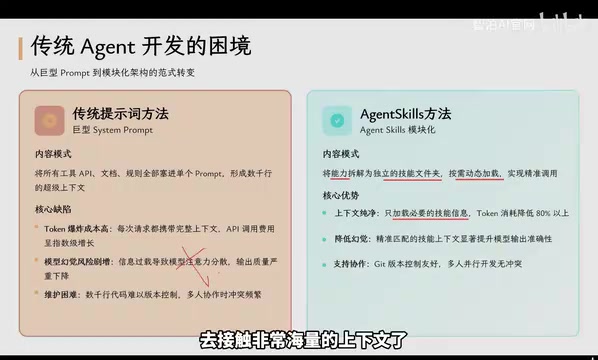
Agent Skills: Folders as Skills — Making AI Produce Precise, Template-Based Output
Agent Skills splits AI capabilities into independent skill folders with on-demand loading and progressive disclosure, cutting token costs by 80% and reducing hallucinations for template-based output.

Five Common Claude Code Mistakes — How Many Are You Making?
Five common Claude Code mistakes developers make: copy-pasting code, skipping CLAUDE.md, inefficient prompting, ignoring docs, and poor context management — with fixes.
Andrew Ng's New Course Explained: A Practical Guide to Using OpenAI's O1 Reasoning Model
Deep dive into Andrew Ng and OpenAI's Reasoning with O1 course covering test-time scaling, new prompting paradigms, multi-model orchestration, and practical applications for developers.