U.S. Congressional Candidate Responds to Controversy Over Deleting 3,500 Tweets: A Reflection on Rhetoric and Values
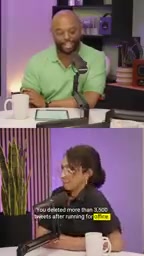
Congressional candidate addresses deleted tweets controversy, reflecting on rhetoric and digital footprint challenges.
U.S. Congressional candidate Darializa Avila Chevalier responded to controversy over deleting 3,500 tweets from 2019–2020, clarifying the deletion predated her campaign. She expressed regret over past rhetoric while reaffirming her core values, advocating for unifying, accessible, and kind political language — highlighting the growing tension between social media history and political candidacy in the digital age.
Background: The Disappearance of 3,500 Tweets
U.S. Congressional candidate Darializa Avila Chevalier recently addressed head-on the controversy surrounding her deletion of over 3,500 tweets during an interview. The tweets, primarily posted between 2019 and 2020, drew widespread attention from the public and her opponents after she announced her candidacy.
The interviewer asked directly: looking back at that 2019–2020 period, how does she view the statements she made at the time? The question strikes at an increasingly sensitive issue in American politics — the impact of social media history on political figures.
In the digital age, a political candidate's social media history has become a key target of campaign scrutiny. American political research institutions have found that since 2016, over 60% of campaign attack ads have cited opponents' social media posts. Opposition research teams systematically mine candidates' tweets, Facebook posts, and blog entries from years or even decades past, searching for potentially controversial content. This "digital archaeology" has spawned specialized political consulting services that help prospective candidates audit and manage their online footprint before announcing a run.
The Candidate's Response: The Tweets Weren't Deleted Because of the Campaign
Chevalier first clarified a key fact: she didn't delete the tweets because she was running for office — she had deleted her entire Twitter account years earlier. Her stated reason was that stepping away from social media helped her focus on her doctoral studies and community organizing work.
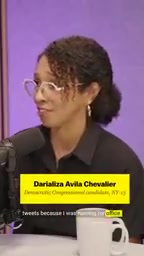
She made clear that her campaign opponents were spreading the narrative that she deleted posts because of her candidacy, but that this was simply not true. This clarification attempted to decouple the deletion from any political motive, framing it instead as a decision about personal productivity and focus.
The interviewer also expressed agreement — "getting off social media is always helpful" — a brief response that somewhat eased the tension of the conversation.
Reflecting on Past Statements: The Power of Rhetoric Cannot Be Ignored
While denying any political motive behind the deletions, Chevalier did not shy away from reflecting on the content of her past statements. She candidly admitted feeling regret about how she expressed herself on Twitter at the time, emphasizing that her core values have always centered on dignity, accountability, and justice.
Notably, 2019–2020 was a period of intense social activism in the United States. The killing of George Floyd in May 2020 sparked a nationwide wave of Black Lives Matter protests, with millions taking to the streets and political expression on social media reaching unprecedented levels of intensity. Simultaneously, the outbreak of COVID-19, the heated 2020 presidential race, and fierce debates over police reform, racial justice, and immigration policy turned platforms like Twitter into primary outlets for emotional expression and political stance-taking. Many people made strongly worded statements during this period — language that may have seemed like normal expression in the social climate of the time but often appears overly extreme in retrospect. It is against this backdrop that Chevalier's reflection carries particular significance.
She stated: "Rhetoric matters. I certainly would not use a lot of the language that I used back then today." This acknowledgment reflects a mature approach to political communication — language is not merely a tool for expression but a bridge for building consensus.
She further elaborated on her understanding of political language:
- Unifying: Using language that brings people together rather than divides them
- Accessible: Making your positions understandable to people from all backgrounds
- Kind: Expressing yourself in a way that allows others to empathize and understand
This response traces a trajectory from radical expression to inclusive communication — a shift that is quite representative in today's deeply polarized American political environment.
The Political Cost of the Social Media Era: How Digital Footprints Affect Candidates
This incident reflects a broader issue of our time: In an era where social media is ubiquitous, anyone's digital footprint can become a future political liability.
The political impact of digital footprints touches on a deeper legal and ethical question — the "Right to be Forgotten." A landmark ruling by the European Union in 2014 established that individuals have the right to request search engines remove outdated or irrelevant information about them. However, no comparable comprehensive protection exists in the U.S. legal system, where the First Amendment's robust protection of free speech creates greater legal and cultural resistance to deleting public records. For political candidates, this contradiction is especially acute: as public figures, their speech records are considered part of voters' right to be informed; but as individuals, they also undergo evolution and growth in their views. The existence of tools like the Internet Archive (Wayback Machine) makes "completely erasing" digital records a near-impossible task.
For political candidates, this dilemma is particularly pronounced. The 2019–2020 period was one of heightened social activism in the U.S., and many people posted heated statements on social media. When these individuals later enter the public sphere, how to confront their past digital records becomes an unavoidable question.
Chevalier's approach is worth analyzing: she neither fully denied her past statements nor defended them, instead choosing a middle path of "acknowledging regret while emphasizing growth." In political communication, this strategy is known as a "qualified apology" — admitting that the manner of expression was inappropriate while maintaining consistency in values.
From a political communication perspective, the "qualified apology" is a classic crisis response strategy, systematically articulated by communication scholar William Benoit in his "Image Restoration Theory." The core of this strategy lies in acknowledging that the behavior or expression was problematic without repudiating the underlying motivation or values. Alternative strategies include "full denial" (which may appear disingenuous), "full apology" (which may be perceived as weak or lacking conviction), and "shifting blame" (which may provoke even greater backlash). In American political practice, successful applications of the qualified apology include numerous political figures who adopted an "I've grown" narrative framework when confronting early controversial statements — a framework that demonstrates the capacity for self-reflection while avoiding alienation of core supporters. Chevalier's response is a textbook application of this strategy.
Implications for Public Discourse: How Political Figures Should Face Their Social Media History
Regardless of Chevalier's election outcome, this interview raises several questions worth considering for all public figures:
- There is an inherent tension between spontaneous expression on social media and thoughtful public communication
- Does deleting digital records amount to evading responsibility, or is it a reasonable personal choice?
- Should political figures be forever bound to statements made at a particular moment in the past?
As millennials and Gen Z increasingly enter the political arena, an unprecedented phenomenon is emerging: these candidates are the first generation of political participants who have been active on social media since their teenage years. Unlike previous generations of politicians, their growth trajectories, evolving viewpoints, and even impulsive adolescent expressions have been digitally recorded and permanently preserved. Data from the Pew Research Center shows that approximately 84% of Americans aged 18–29 use at least one social media platform, and content on these platforms often lacks context and is easily taken out of context. This generational characteristic is reshaping America's political talent selection mechanism — some potentially excellent public servants may abandon political careers out of fear that early social media records will be unearthed, creating a so-called "chilling effect" that could ultimately shrink the pool of political talent.
In an era where more and more people are growing from social media natives into participants in public affairs, the answers to these questions will profoundly shape the future political landscape. Chevalier's call to "use unifying, accessible, and kind language" may be a gentle antidote to today's polarized discourse environment.
Key Takeaways
Related articles

Vue3 NetEase Cloud Music Clone Tutorial: Core Feature Modules & Technical Highlights
In-depth analysis of a Vue3 NetEase Cloud Music clone project covering component development, QR code login, Vue Router, and Audio API playback with complete source code.

Claude Code Workflow in Practice: Hundreds of Agents Automatically Migrating PHP to Golang
Deep dive into Claude Code Workflow's multi-Agent auto-orchestration: a real-world PHP to Golang migration running 14 hours with 100+ Agents, covering planning, execution, and Token cost analysis.
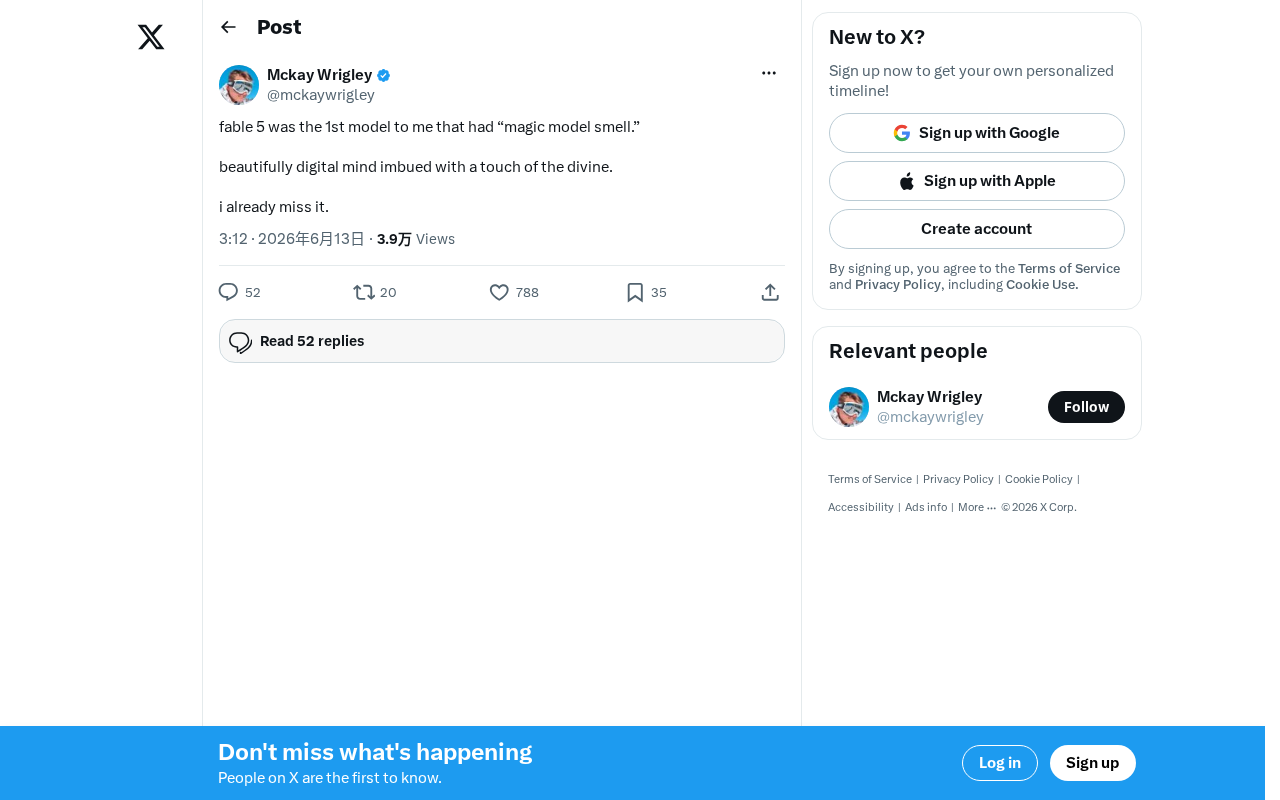
Fable 5: What It Means to Be the First AI Model with a 'Magic Model Smell'
Fable 5 is hailed as the first AI model with a "magic model smell." This article explores what that means and the industry shift from benchmarks to experience quality.