Using AI Tools to Write Your Graduate Thesis: Completing Deep Learning Experiments Without a CS Background
A practical guide for non-CS grad students to complete deep learning theses using AI coding tools.
This article outlines a practical workflow for non-computer science graduate students to complete deep learning experiments in their thesis using AI-assisted programming tools like Cursor and GitHub Copilot. The approach involves finding suitable data, adapting existing open-source code rather than writing from scratch, and leveraging AI tools for code modifications. It also discusses applicability boundaries, potential risks, and recommended learning priorities.
Core Argument: Insufficient Coding Ability Is No Longer a Barrier
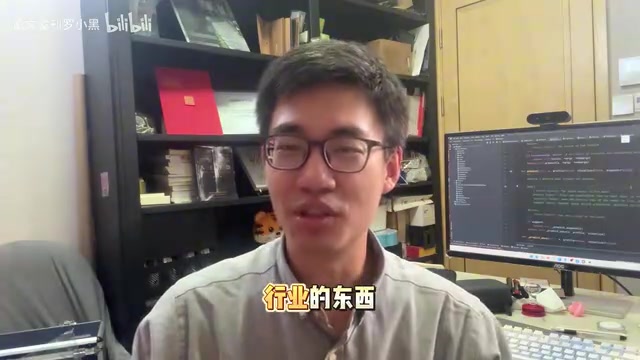
In an era of rapidly evolving AI tools, the way graduate students write their theses is undergoing a fundamental transformation. An academic professional shared his views on Bilibili about how current graduate students—especially those without a computer science background—can leverage AI to complete their papers. The core argument is clear: Three to five years ago, you needed to write code and derive formulas yourself, but that era is now over.
While this viewpoint is somewhat radical, it genuinely reflects the ongoing revolution in academic research toolchains. The maturation of AI-assisted programming tools (such as Cursor, GitHub Copilot, etc.) now enables graduate students without technical backgrounds to incorporate deep learning methods into their research. Behind these tools are breakthrough advances in large language models' code comprehension and generation capabilities—GitHub Copilot is based on OpenAI's Codex model, trained on massive amounts of open-source code to auto-complete code based on context; Cursor goes further as a complete IDE with built-in LLM capabilities, allowing users to understand, modify, and generate code through natural language conversation. The core strength of these tools lies not just in generating syntactically correct code, but in understanding project-level code structure and dependencies, enabling non-professional programmers to make meaningful modifications to existing codebases.
The Practical Path for Non-CS Graduate Students
Step 1: Establish Your Data Foundation
Whether you're in biology, civil engineering, or any other traditional discipline, if you want to incorporate AI methods into your thesis, the first thing to do is NOT to learn Python basics, but to confirm:
- Does your field have usable data?
- Is the data annotated?
Having data with annotations is what enables you to conduct AI-based experiments. This is the most fundamental prerequisite, and many students take a wrong turn at this step—spending enormous amounts of time learning algorithm theory only to discover that their research topic lacks a suitable dataset.
It's worth emphasizing the critical role of Data Annotation in AI research. Annotation means assigning "ground truth" labels to raw data—for example, marking tumor regions in medical images, labeling building outlines in remote sensing imagery, or flagging anomalous time points in time-series data. Annotation quality directly determines the upper bound of model training. In practice, data annotation is often the most time-consuming and expensive step: domain-specific annotation requires expert participation, and inter-annotator agreement must be strictly controlled. Without high-quality annotated data, even the most advanced algorithms are useless. In recent years, semi-supervised and self-supervised learning have been alleviating this bottleneck, but for most non-CS graduate students, using existing public annotated datasets or working with data already available in their advisor's research group remains the safest choice.
Step 2: Find Source Code Rather Than Starting from Scratch
A core strategy repeatedly emphasized in the video is: Adapt existing source code rather than writing from scratch.
The specific workflow:
- Determine your task type (visual data / text data / time-series data, etc.)
- Find open-source code that accomplishes similar tasks on platforms like GitHub and PaperWithCode
- Modify and adapt the source code to your needs
PaperWithCode is one of the most important paper-code linking platforms in academia. It systematically matches published academic papers with their corresponding open-source implementations and indexes them. The platform also maintains leaderboards for various tasks (such as image classification, object detection, natural language processing, etc.), allowing researchers to quickly find the best-performing methods and their source code for a specific task. The existence of this platform has greatly promoted reproducibility in academic research and provides non-CS graduate students with an efficient starting point—you can directly find the method implementation most relevant to your research topic without having to reconstruct it from pseudocode in papers.
This approach is actually nothing new in academia—a large number of top-conference papers are improvements built upon prior work. The key is whether your improvements are meaningful and whether they bring performance gains.
Step 3: Use AI-Assisted Programming Tools to Complete Code Modifications
Once you have the source code, modifications can be accomplished with AI-assisted programming tools:
- Want to swap the model? Let AI help you modify it
- Want to add an attention module? Let AI help you add it
- Want to modify the loss function? Let AI help you write it
The "attention modules" and "loss functions" mentioned here are the two most common improvement directions in deep learning papers, and are worth understanding deeply for non-CS students.
Attention Mechanism is one of the most important architectural innovations in deep learning, originally proposed by Bahdanau et al. in 2014 for machine translation tasks, and later popularized by Vaswani et al. in the 2017 Transformer paper Attention Is All You Need. Its core idea is to allow the model to dynamically "focus" on the most relevant parts of the input when processing data, rather than treating all inputs equally. In computer vision, common attention modules include SE (Squeeze-and-Excitation) channel attention, CBAM (Convolutional Block Attention Module) spatial-channel joint attention, etc. "Adding attention modules" to existing models is a common and effective improvement strategy because it typically trades a small computational overhead for performance gains, making it one of the most accessible model improvement directions for non-CS graduate students.
Loss Function is the core driving force of deep learning model training, defining the "gap" metric between model predictions and ground truth labels. The essence of model training is continuously adjusting parameters through backpropagation to minimize the loss function value. Different tasks typically require different loss functions: classification tasks commonly use Cross-Entropy Loss, regression tasks use Mean Squared Error (MSE), and object detection tasks may combine classification loss and localization loss. Modifying the loss function is a common innovation point in papers—for example, introducing Focal Loss to address class imbalance, or designing specific regularization terms to constrain model behavior.
Cursor, GitHub Copilot, and similar tools can already understand code context and provide reasonable modification suggestions. For non-CS students, this significantly lowers the technical barrier.
Applicability Boundaries and Risks of This Approach
Who Is This Suitable For?
This "find source code + AI-assisted modification" approach is best suited for:
- Graduate students in non-CS fields who need to use AI methods in their thesis
- Students whose advisors take a hands-off approach and lack technical guidance
- Students under time pressure who need to produce results quickly
Potential Issues to Watch Out For
However, this approach has clear limitations:
- Insufficient depth of understanding: If you don't understand the code logic and algorithm principles at all, you may be unable to answer in-depth questions from committee members during your thesis defense. Defense committees typically probe the motivation behind model design, the rationale for hyperparameter choices, and the essential differences compared to baseline methods—questions that cannot be addressed by having AI tools generate answers on the spot.
- Limited innovation: Simply adapting source code and tweaking parameters makes it difficult to produce truly valuable academic contributions. The core value of academic papers lies in proposing new insights or methodological contributions. If improvements remain at the level of "swapping an attention module or changing a backbone," peer reviewers will easily question the contribution level (so-called "incremental work").
- Questionable reproducibility: If you don't fully understand what the code is doing, the reproducibility and reliability of your experiments are hard to guarantee. One of the basic requirements of academic research is that experimental results should be reproducible. If you cannot explain certain experimental details (such as data preprocessing pipelines, training strategies, random seed settings, etc.), the credibility of your paper will be significantly undermined.
Therefore, my recommendation is: AI tools can accelerate your workflow, but they cannot completely replace your understanding of methodology. At minimum, you should be able to clearly explain why your model is designed the way it is and what each module does.
Practical Advice: Building Your AI-Powered Thesis Workflow
Combining the video content with practical experience, non-CS graduate students can prioritize their learning as follows:
- High priority: Understand the core ideas behind the methods you use (you don't need to derive every formula, but you need to grasp the intuition). For example, if you're using a Convolutional Neural Network (CNN), you should at least understand how convolution operations extract local features, why pooling layers enhance translation invariance, and how different network depths affect performance. If using a Transformer architecture, you need to understand how self-attention captures global dependencies, the role of positional encoding, etc.
- Medium priority: Learn to use AI programming tools for code modification and debugging. This includes learning to accurately describe your requirements in natural language, understanding the basic logic of AI-generated code, and mastering basic debugging skills (such as reading error messages, checking tensor dimensions, etc.).
- Low priority: Writing code from scratch, in-depth mathematical derivations
This priority ranking assumes that your goal is to complete a satisfactory graduation thesis, not to become a researcher in the AI field. If you plan to pursue AI-related work in the future, the fundamentals remain indispensable.
Conclusion
The current development of AI tools has indeed provided unprecedented convenience for interdisciplinary research. A "hands-off advisor" is no longer an insurmountable obstacle—as long as you can find suitable data, suitable source code, and make good use of AI-assisted tools, completing a graduation thesis that incorporates deep learning methods is entirely feasible. But remember: tools lower the execution barrier, not the thinking barrier. Your depth of understanding of the problem is what truly determines the quality of your thesis.
Related articles
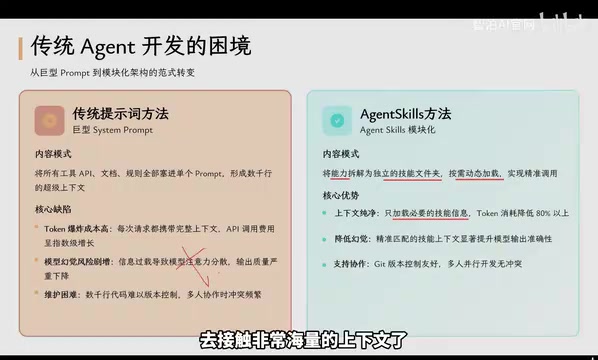
Agent Skills: Folders as Skills — Making AI Produce Precise, Template-Based Output
Agent Skills splits AI capabilities into independent skill folders with on-demand loading and progressive disclosure, cutting token costs by 80% and reducing hallucinations for template-based output.

Five Common Claude Code Mistakes — How Many Are You Making?
Five common Claude Code mistakes developers make: copy-pasting code, skipping CLAUDE.md, inefficient prompting, ignoring docs, and poor context management — with fixes.
Andrew Ng's New Course Explained: A Practical Guide to Using OpenAI's O1 Reasoning Model
Deep dive into Andrew Ng and OpenAI's Reasoning with O1 course covering test-time scaling, new prompting paradigms, multi-model orchestration, and practical applications for developers.