Vibe Coding from Zero to $1 Million: A Complete Playbook for Indie Developers Going Global
Vibe Coding from Zero to $1 Million: A…
Indie developer Owen launches a free Vibe Coding course sharing a full-stack methodology for going global with AI.
Indie developer Owen has launched a free course series on Bilibili — "Vibe Coding from Zero to $1 Million" — covering the entire indie development pipeline from idea discovery to growth flywheels. He operates multiple complementary products including a community traffic hub, AI design tools, SaaS templates, and an SEO knowledge base. His strategy centers on validating domestically then replicating globally, while productizing development experience for near-zero marginal cost monetization.
Introduction: Indie Developer Opportunities in the Vibe Coding Wave
Vibe Coding is becoming the hottest topic in the indie developer community. The concept was coined by OpenAI co-founder Andrej Karpathy in early 2025, referring to the practice of using AI coding assistants like Cursor, Claude, and Bolt.new to generate code through natural language descriptions. Developers take on the role of "product directors" rather than "code engineers." This paradigm shift has compressed the technical barrier to indie development from "years of programming experience" down to "the ability to clearly describe product requirements," fundamentally redefining the productivity ceiling for solo developers.
With these AI coding tools, even those without deep programming skills can rapidly build and launch products. However, paid courses on the market are often expensive and vary wildly in quality.
Indie developer Owen has announced a completely free course series on Bilibili — "Vibe Coding from Zero to $1 Million" — planned to cover the entire pipeline of indie development for global markets, from idea discovery and product implementation to traffic acquisition, monetization, and growth flywheels. This article breaks down his product portfolio, methodology, and course roadmap to help aspiring indie developers find a replicable path.
The Indie Developer Product Portfolio: A Multi-Track Monetization Strategy
Owen currently operates multiple products spanning community, SaaS tools, templates, and paid content — forming a mutually reinforcing product matrix.
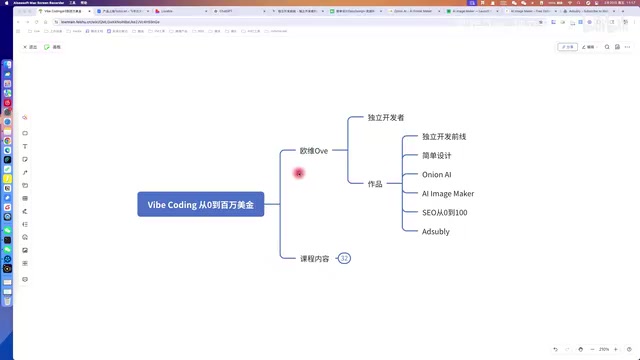
Indie Dev Frontline: A Community-Driven Traffic Entry Point
"Indie Dev Frontline" is a growth guide platform for indie developers, consisting of a website and a WeChat community. The website receives around 1,000 daily visits, the community has over 1,000 active users, and the site's DR (Domain Rating) has reached 27.
DR is a domain authority scoring system developed by the SEO tool platform Ahrefs, with a maximum score of 100, measuring the quality and quantity of a website's backlinks. A DR of 27 for a niche community run by an indie developer means the site has accumulated a significant number of high-quality backlinks and holds meaningful ranking competitiveness in search engines. Improving DR typically takes months or even years of content creation and link building — this is precisely why "Indie Dev Frontline" serves as a stable traffic entry point. It represents the moat Owen has built through long-term investment in SEO.
The core value of this product isn't direct monetization — it's about building a developer brand and trust foundation. Through consistent content contributions and community engagement, Owen has established a stable traffic entry point and user outreach channel, creating fertile ground for promoting his other products.
Simple Design & Ani AI: Validate Domestically, Replicate Globally
"Simple Design" is an AI design tool for Xiaohongshu (RED) cover images. After over two years of operation, it receives 3,000–5,000 daily visits and generates approximately ¥10,000 RMB in monthly revenue. The product has entered its mature phase with steady growth.
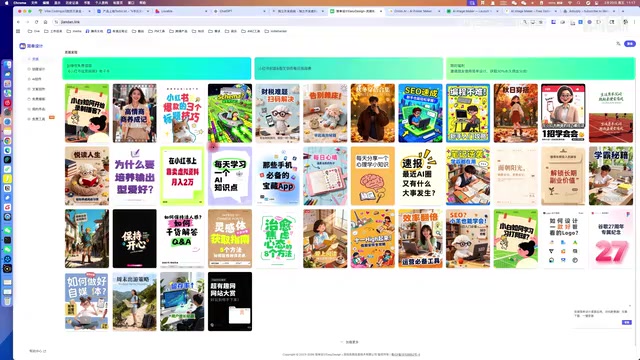
"Ani AI" is the English version of Simple Design — an AI Poster Maker. With 300–500 daily visits, it's still in its early stage but already showing a stable growth trajectory.
This "validate domestically → replicate globally" go-to-market strategy is worth paying attention to. Overseas markets, especially North America and Europe, have more mature online payment habits and higher average order values — similar products are typically priced 5 to 10 times higher abroad than domestically. By first proving out the product logic and business model in the domestic market, then adapting the mature product for overseas markets, you can dramatically reduce trial-and-error costs. The underlying logic of this strategy aligns closely with the MVP (Minimum Viable Product) mindset from lean startup methodology: validate core assumptions at minimal cost, then scale gradually. In the Vibe Coding era, AI tools have compressed the MVP build cycle from weeks to days, further reducing the execution cost of this incremental global expansion strategy.
AI Image Maker: The Leverage Effect of SaaS Templates
AI Image Maker is an image tool SaaS template that comes with 20 free image processing tools, priced at $49, with over 20 copies sold.
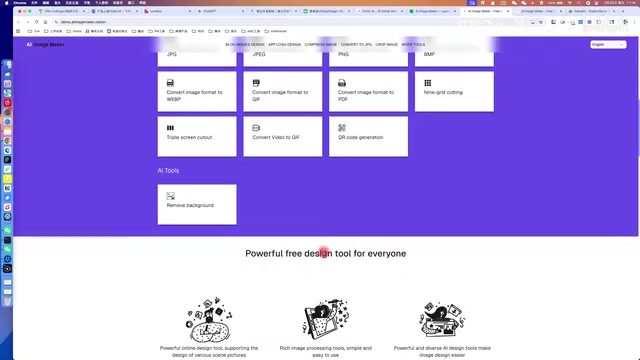
This product embodies a crucial mindset for indie developers — productizing your development experience. The code and architecture accumulated while building his own image tools were abstracted into a reusable template sold to other developers. The core advantage of this B2D (Business to Developer) model is that marginal costs approach zero — once the code is written, each additional sale incurs virtually no extra cost, making every sale pure profit. The rise of platforms like Gumroad and Lemon Squeezy has also provided indie developers with low-friction infrastructure for selling digital products.
The $49 price point is also strategically chosen: below the $100 "impulse purchase" psychological threshold, low enough to reduce purchase decision friction, yet high enough above free to effectively filter for users with genuine needs.
SEO Knowledge Base & Ad Sublet: Closing the Loop from Traffic to Revenue
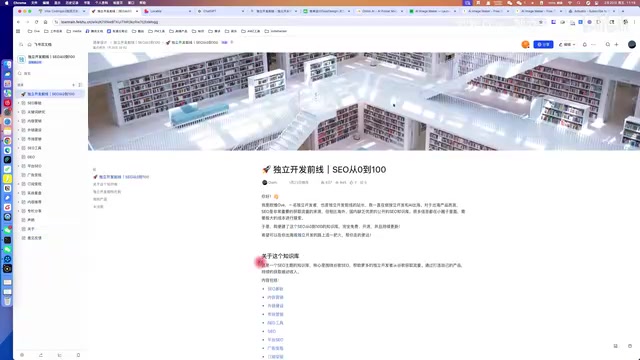
"SEO from Zero to One Hundred" is a knowledge base hosted on Feishu Docs, with over 3,000 unique visitors and more than 4,000 page views. It covers a complete system including SEO fundamentals, page structure design, keyword research, and link building.
"Ad Sublet" is an ad space subscription sales tool that helps indie developers sell website ad placements through monthly subscriptions. This tool directly addresses a pain point in the indie developer monetization chain — how to efficiently convert traffic into advertising revenue.
The combined logic of these two products is clear: the SEO knowledge base helps developers acquire traffic, and Ad Sublet helps developers monetize that traffic, forming a complete closed loop.
Vibe Coding Course Roadmap: A Five-Step Systematic Methodology
Owen's published course framework contains five core modules:
- Discover Ideas: How to find product directions with real market demand
- Build the Product: Rapidly construct an MVP using Vibe Coding and AI programming tools
- Acquire Traffic: Traffic acquisition strategies across SEO, social media, and other channels
- Monetize: Designing the conversion path from free to paid
- Drive Growth: Sustained product growth and scaling operations
This framework covers the complete lifecycle of indie development. What you might not have noticed is that many Vibe Coding tutorials only focus on "building the product"
Related articles
 Tutorials
Cursor + Codex Dual-IDE Collaboration: A Practical Methodology for Open-Source Project Customization
A complete methodology for open-source project customization based on real-world experience, detailing the Cursor+Codex dual-IDE workflow, seven-stage process, MVP validation, and AI source code reading techniques.
 Tutorials
Cursor Multi-Agent in Practice: Building a Full-Stack Next.js Blog in 50 Minutes
Build a full-stack blog in 50 minutes using Cursor IDE's multi-Agent mode with Next.js, Clerk auth, and Supabase. Learn the 4-phase AI Agent workflow and key integration pitfalls.
 Tutorials
Building an AI Software Factory from Scratch: A Cursor Engineer's Hands-On Experience with Multi-Agent Collaboration
Cursor engineer Eric shares practical insights on building an AI software factory: automation levels, guardrail design, parallel Agent management, and scaling to 1000+ Agents for 24/7 development.