Vibe Jam 2026 First Round Judging Complete: A Quality Leap Across Nearly 1,000 AI Games

Vibe Jam 2026 receives nearly 1,000 AI game entries with a huge quality leap over last year
Vibe Jam 2026, the AI game development contest, received nearly 1,000 submissions with judges noting a huge quality leap over last year. Co-sponsored by Cursor, Bolt, Glif, and Tripo AI, the competition uses a three-round progressive judging system with a custom-built review platform. The event reflects maturing AI tool chains that are lowering game development barriers, enabling more non-traditional developers to create playable games.
Vibe Jam 2026: The AI Game Development Contest Enters a Critical Phase
Vibe Jam 2026—the AI game development contest co-sponsored by Cursor, Bolt, Glif, and Tripo AI—has officially completed its first round of judging. The competition received nearly 1,000 submissions, and the judging panel noted that this year's entries represent a "huge leap" in quality compared to last year.
This number alone speaks to the explosive growth of AI-assisted game development. From the inaugural Vibe Jam last year to nearly a thousand submissions this year, both participation scale and quality are rapidly climbing—reflecting how AI coding tools are lowering the barriers to game development and enabling more creators to turn ideas into playable games.
Three-Round Judging System: Selecting Winners from Nearly 1,000 Games
Vibe Jam 2026 employs a three-round progressive judging system to ensure every game receives a fair evaluation:
Round 1: Initial Screening (Complete)
The judging team reviewed all nearly 1,000 submissions one by one, completing the initial screening. The organizers specifically emphasized their desire to "give every game a real chance rather than hastily skipping through them." This attitude is particularly commendable in a competition of this scale.
Round 2: Scoring (In Progress)
The competition has now entered its second round, where two primary judges are scoring the games that passed initial screening on a scale of 1 to 10. This phase is expected to be completed within the week.
Round 3: Final Review (Coming Soon)
After Round 2 scoring is complete, additional judges will join to evaluate the final 50 to 100 games and determine the winners. This progressively narrowing approach ensures both efficiency and that top entries receive in-depth evaluation from multiple judges.
Technical Highlight: A Custom-Built Judging System
Notably, one of the judges, s13k, built a dedicated judging system specifically for this competition. The system supports running and playtesting most submissions directly within an iframe, while games that can't run properly in an iframe can be opened in a new tab for scoring.
An iframe (inline frame) is an HTML tag that allows embedding and loading another independent webpage or application within the current page. For games built with web technologies (HTML5, JavaScript, WebGL), iframes are the most straightforward solution for "play without navigating away." However, iframes come with limitations: browsers enforce strict same-origin policies on cross-origin iframes for security reasons, and some games that use specific fullscreen APIs, keyboard event capture, or advanced WebGL features may not function properly in an iframe sandbox environment. This explains why the judging system needs to support both "iframe embedding" and "open in new tab" modes—an engineering decision that balances judging efficiency with game compatibility.
This detail embodies the AI development community's "eat your own dog food" spirit—using technical tools to solve technical review problems. Given the volume of nearly a thousand games to evaluate, completing individual reviews without such system support would be virtually impossible.
Trend Observations in AI Game Development
Looking at the scale and quality of Vibe Jam 2026 entries, several trends are worth noting:
Maturing tool chains. The appearance of Cursor, Bolt, and other AI coding tools as sponsors itself demonstrates that these tools can now support complete game development workflows. Cursor is an AI code editor built on VS Code, known for its powerful multi-file context understanding and code completion capabilities; Bolt is StackBlitz's browser-based AI full-stack development platform that lets users generate and run complete web applications through natural language without local environment setup; Glif is an AI visual workflow platform supporting drag-and-drop composition of different AI model nodes to generate images and animations; Tripo AI specializes in rapidly generating game-engine-ready 3D models from text or images. From code generation to 3D asset creation to visual design, AI tool chains are covering every aspect of game development.
Diversification of participants. Nearly a thousand submissions means a large number of non-traditional game developers are entering the field. Vibe Coding—a programming paradigm coined and popularized by OpenAI co-founder Andrej Karpathy in early 2025—finds its core philosophy fully embodied here: developers don't need to understand and write code line by line; they simply describe their intent in natural language, let AI tools generate the code, then "vibe" with the overall direction and iterate. This lowers the programming barrier from "knowing how to write code" to "knowing how to describe ideas," enabling creators who "have ideas but lack programming experience" to produce playable games.
Significant quality improvement. Judges explicitly stated that this year's entries represent a "huge leap" compared to last year. Current AI-assisted game development primarily follows a lightweight web-based path—built on frameworks like HTML5 Canvas, Phaser.js, and Three.js, combined with AI code generation tools to rapidly build browser-playable games. Games following this path require no installation, are easy to share and judge, and represent the mainstream format of Vibe Jam entries. The quality leap from last year to this year largely stems from continuous improvements in AI models' code generation accuracy and game logic comprehension. As tools iterate and community experience accumulates, this trend is expected to continue accelerating.
Final Thoughts
The final results of Vibe Jam 2026 are expected to be announced in the coming weeks. Regardless of who ultimately wins, the concentrated emergence of nearly a thousand AI-generated games is itself a milestone event. It proves that AI can not only write code, create art, and compose music, but can integrate all these capabilities to create complete interactive experiences.
For those following AI's real-world applications, game development may be one of the most intuitive and compelling AI creative scenarios available today. After all, a playable game speaks louder than any demo.
Related articles
 Tech Frontiers
GitHub Agent HQ Launch: AI Coding Tools Enter the Era of Platform Competition
GitHub Universe unveils Agent HQ platform for unified coding agent management, Copilot upgrades with multi-model support. OpenAI completes restructuring, Anthropic tests new model, NVIDIA open-sources AI models.
 Tech Frontiers
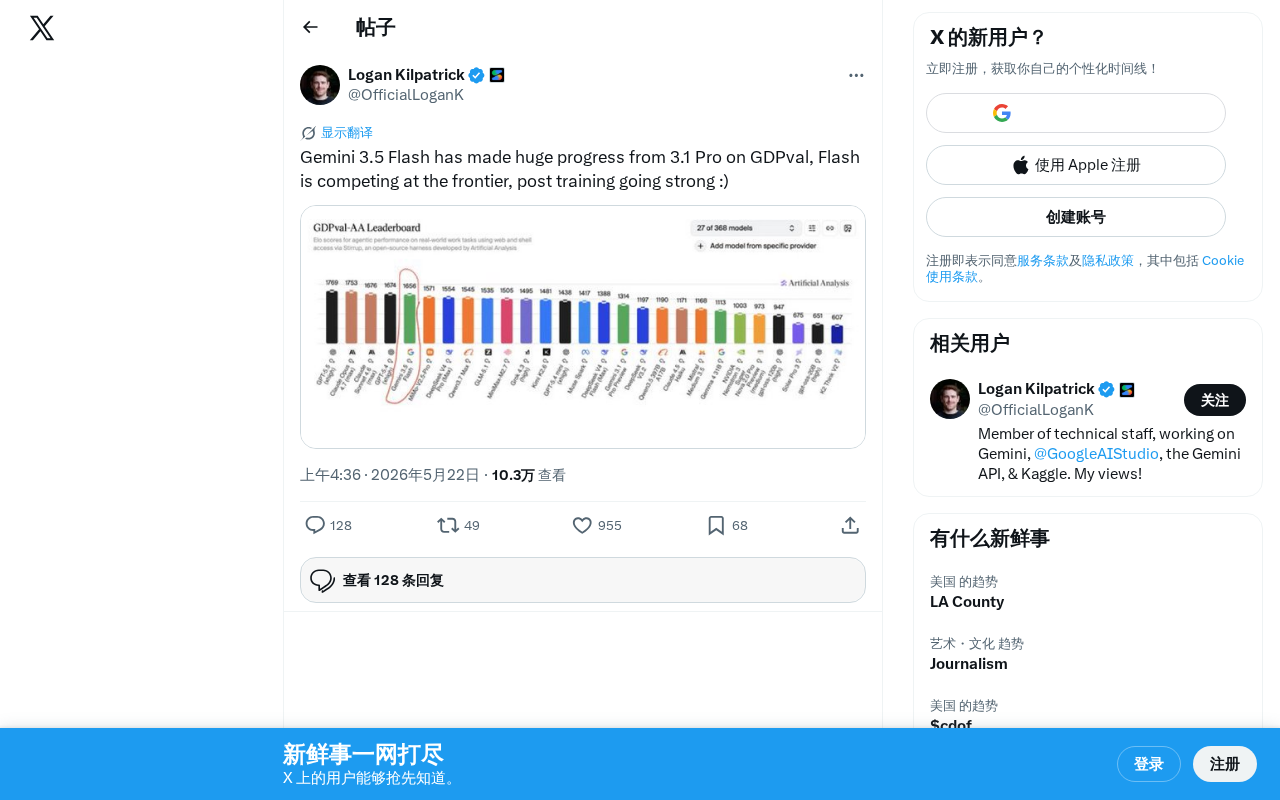
Gemini 3.5 Flash Achieves a Massive Leap on the GDPval Benchmark
Google Gemini 3.5 Flash surpasses Gemini 3.1 Pro on the GDPval benchmark. The lightweight Flash model leverages post-training techniques to approach frontier-level performance, redefining the balance between quality and cost.
 Tech Frontiers
Google Gemini Antigravity Weekly Quota Tripled — AI Coding Without Limits
Google Gemini triples Antigravity weekly quotas following a prior daily quota boost. Analyzing the impact on developers and its strategic significance in AI coding.