What Is Juneteenth? The History and Significance of America's Black Freedom Day
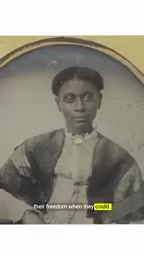
The history and significance of Juneteenth, America's federal holiday commemorating the end of slavery.
Juneteenth, observed on June 19th, commemorates the day in 1865 when Union troops arrived in Galveston, Texas, to announce freedom for the last enslaved people — two and a half years after the Emancipation Proclamation. Made a federal holiday in 2021, it carries deep historical significance as a celebration of liberation, an act of resistance, and a reminder that freedom was hard-won through centuries of struggle.
What Is Juneteenth?
Juneteenth, observed annually on June 19th, is a profoundly significant commemorative day in American history. On this day in 1865, federal troops arrived in Galveston, Texas, and announced that all enslaved people were free — a full two and a half years after the Emancipation Proclamation was signed.
The Emancipation Proclamation was initially issued by President Lincoln on September 22, 1862, and took effect on January 1, 1863. However, the document had important legal limitations: it applied only to the Confederate states that were in rebellion against the federal government, excluding the slaveholding border states that had remained in the Union (such as Maryland, Kentucky, Missouri, and Delaware). More critically, the proclamation's actual enforcement depended entirely on the advance of Union troops — only when federal forces gained control of an area could the enslaved people there truly gain their freedom. Because of its remote geographic location as the westernmost Confederate state, Texas wasn't reached by Union troops until June 1865, which explains why the enslaved people in Galveston didn't learn of their freedom until two and a half years after the proclamation was signed.
In 2021, Juneteenth officially became a federal holiday in the United States — the first new federal holiday since Martin Luther King Jr. Day was established in 1983. The road to federal recognition was long and winding. As early as the 1980s, Texas state representative Al Edwards pushed to make Juneteenth a state holiday in Texas in 1980, making it the first state to officially recognize the day. In the decades that followed, activist Opal Lee — known as the "Grandmother of Juneteenth" — walked from Texas to Washington, D.C. at the age of 89 to advocate for making Juneteenth a federal holiday. The nationwide racial justice movement sparked by the killing of George Floyd in 2020 dramatically accelerated the effort. On June 17, 2021, the U.S. Congress passed the Juneteenth National Independence Day Act by an overwhelming majority, and President Biden signed it into law, making Juneteenth the 12th federal holiday.
Recently, a deep-dive video on YouTube exploring the historical significance of Juneteenth has garnered widespread attention. Told from the perspective of enslaved people, the video explains why this day carries such profound emotional weight and why all Americans should commemorate it.
Centuries of Longing for Freedom Among the Enslaved
The video points out that Juneteenth was "an incredibly profound emotional moment" for enslaved people. For centuries, the enslaved pursued freedom through every means available — they prayed, they hoped, they launched slave revolts, they risked death to escape, and when possible, they purchased their own freedom with money.
As the video emphasizes: "If you've read slave narratives, if you've listened to the spirituals from the era of slavery, you know how deeply the enslaved longed for freedom."
Slave Narratives are autobiographical literary works written or dictated by formerly enslaved people, and they represent the most direct and powerful primary sources for understanding American slavery. The most famous works include Frederick Douglass's Narrative of the Life of Frederick Douglass, an American Slave (1845) and Harriet Jacobs's Incidents in the Life of a Slave Girl (1861). These works played an enormous role in the abolitionist movement, confronting Northern white readers with the brutal realities of slavery for the first time. Additionally, in the 1930s, the Federal Writers' Project systematically interviewed more than 2,300 former slaves, leaving behind an invaluable archive of oral histories that became a vital resource for subsequent scholarship on slavery.
These Spirituals were not merely religious music — they were vehicles through which the oppressed expressed their inner pain and hope, imbued with a fervent longing for liberation. Spirituals were a unique musical form created by African Americans during the era of slavery, blending African musical traditions with Christian hymn elements. While these songs appeared to be religious hymns on the surface, many actually contained double meanings: for example, "Follow the Drinking Gourd" referred to the direction of the North Star, guiding fugitives along the Underground Railroad toward free states in the North; "Swing Low, Sweet Chariot" is believed to allude to the hope of escape. Spirituals later profoundly influenced the development of gospel music, blues, and jazz, and during the Civil Rights Movement of the 1960s, they once again became spiritual weapons of resistance.

Yet this freedom "was something people had always hoped for, but many believed it might never come." This statement captures the cruelest essence of slavery — it didn't just strip people of physical freedom; it sought to destroy their hope for the future.
From Emancipation Day to Juneteenth: The Evolution of Celebrations
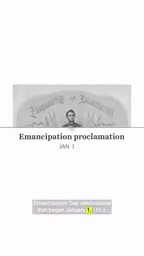
The video places Juneteenth within the broader historical context of Emancipation Day Celebrations. On January 1, 1863, President Lincoln signed the Emancipation Proclamation, and Emancipation Day celebrations began from that point forward.
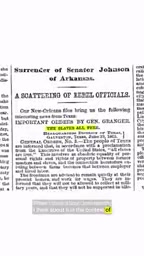
When slavery was officially abolished in 1865, these celebrations "took on an entirely new meaning." It's worth noting that the formal abolition of slavery across the entire United States was achieved not through the Emancipation Proclamation, but through the Thirteenth Amendment to the U.S. Constitution, ratified in December 1865. The amendment explicitly states: "Neither slavery nor involuntary servitude... shall exist within the United States, or any place subject to their jurisdiction." This constitutional guarantee meant that emancipation was no longer an executive order that could be revoked — it became part of the nation's fundamental law.
The video paints a vivid historical picture: African American veterans who had served in the Civil War appeared prominently in celebrations wearing their military uniforms; formerly enslaved people delivered speeches; the most distinguished Black political leaders sang hymns and spirituals; people discussed voter registration.
During the Civil War, approximately 180,000 African Americans served in the Union Army, forming what were known as the United States Colored Troops (USCT). They participated in about 40 major battles and hundreds of smaller engagements, with approximately 40,000 losing their lives in the war. One of the most famous units was the 54th Massachusetts Volunteer Infantry Regiment, whose courageous performance at the Battle of Fort Wagner in 1863 became an iconic moment in American military history. The service of these soldiers not only made a substantive contribution to the war's outcome but fundamentally challenged prevailing societal prejudices about Black capabilities, laying the moral groundwork for the postwar fight for civil rights. Their appearance in military uniforms at Juneteenth celebrations therefore carried profoundly deep symbolic significance.
These details reveal the multiple dimensions of Juneteenth celebrations — they were at once a joyous marking of suffering's end, an active pursuit of political rights, and a public declaration of a new identity.
Publicly Celebrating Freedom Was Itself an Act of Resistance
Perhaps the most thought-provoking point in the video is this: "The formerly enslaved celebrating their newfound freedom in public was itself an act of resistance."
This assertion deserves careful reflection. Under slavery, public gatherings of Black people were strictly limited or outright prohibited. Across the slaveholding states of the American South, a series of laws known as Slave Codes and Black Codes severely restricted the behavior of both enslaved and free Black people. These laws commonly prohibited Black people from assembling without white supervision, banned them from learning to read and write, forbade them from possessing weapons, and even restricted their movement at night. After Nat Turner's Rebellion in 1831, these restrictions became even more severe — Turner's uprising resulted in the deaths of approximately 60 white people, after which Southern states used it as justification to dramatically tighten control over Black populations, even banning or requiring white supervision of Black religious gatherings. Violators faced whipping, imprisonment, or even death.
Therefore, when formerly enslaved people took to the streets to openly celebrate their freedom, the act itself was a challenge to and subversion of the old order. It proclaimed a fact: these people were no longer property but free persons with civil rights. Every public gathering, every speech, every spiritual sung aloud was a direct repudiation of centuries of oppression.
From a historical research perspective, the significance of Juneteenth extends far beyond commemorating a single historical event. It is a vital window for understanding American race relations, the civil rights movement, and contemporary social issues. The journey of the enslaved — from prayer to resistance, from despair to hope, from silence to public celebration — reflects the universal human spirit in the pursuit of freedom and dignity.
Why All Americans Should Commemorate Juneteenth
Juneteenth deserves commemoration by all Americans because it is not solely African American history — it is an inseparable part of the entire American story. It reminds us that freedom is never to be taken for granted; it was won through the blood, tears, courage, and indomitable will of countless people.
Today, understanding and commemorating Juneteenth helps foster understanding and empathy across different communities, and helps people develop a more complete appreciation of the complexity of American history. As the video demonstrates, when we deeply engage with the real experiences and emotional worlds of the enslaved, history ceases to be cold text on a page and becomes a bridge connecting the past to the present.
Key Takeaways
Related articles

ChatGPT Schedule Planning Feature Explained: How AI Helps Teams Organize Work Efficiently
A deep dive into ChatGPT's schedule planning feature: coordinate team schedules and assign tasks through natural language. Learn AI planning strategies and practical tips to boost collaboration.

Vibe Coding in Practice: Three Strategies for Building an English Learning Game with Dramatically Different Results
Three controlled experiments compare pure Prompt, pre-prepared assets, and Godot engine strategies for Vibe Coding an English learning game — revealing dramatic differences in quality and Token cost.

Build an App in 30 Minutes with Zero Code: A Complete Hands-On Walkthrough Using the AI Tool Tusi
Build a fully installable mobile app in 30 minutes with zero code using AI tool Tusi. A complete walkthrough from requirements to finished product, showing how AI shifts app development from coding skills to clear communication.